https://australia.rugby/news/2019/12/04/if-joint-statement-dec
Rugby Australia, NSW Rugby and Israel Folau have today settled their legal dispute following the dismissal of Israel Folau after he posted a religious message on social media (the Social Media Post).
The Social Media Post reflected Mr Folau’s genuinely held religious beliefs, and Mr Folau did not intend to harm or offend any person when he uploaded the Social Media Post. Mr Folau wants all Australians to know that he does not condone discrimination of any kind against any person on the grounds of their sexuality and that he shares Rugby Australia’s commitment to inclusiveness and diversity.
Rugby Australia and NSW Rugby do not in any way agree with the content of the Social Media Post. Inclusiveness is one of Rugby’s core values and it welcomes all people to the game, including all members of the LGBTI community. While it was not Rugby Australia’s intention, Rugby Australia acknowledges and apologises for any hurt or harm caused to the Folaus. Similarly, Mr Folau did not intend to hurt or harm the game of rugby and acknowledges and apologises for any hurt or harm caused.
Rugby Australia and Mr Folau wish each other well for the future. The Parties do not intend to comment further on the terms of their settlement as it is confidential.
- Rugby Australia Statement, 4th Dec 2019.
Yesterday, social media was awash with posts either praising or condemning both Rugby Australia and Israel Folau after the two parties settled out of court for an undisclosed sum. Now whatever you feel about this case, whether Israel Folau is a boofnut, or a martyr, or a saint, or a sinner, or whether Rugby Australia has sold out, been very canny, or caved in, the fact that there is an out of court settlement means that there is no test case and no precedent going forward.
As the chances of a 'normal' employee even having the funds to be able to challenge their employer over the validity of terms contained within codes of conduct and employment contacts are law, the chances of a 'normal' employee having the ability to win, may as well be nil. Future cases down these lines will now be fought via a war of monetary annihilation; which is excellent for businesses.
The open question of what happens to an employee who otherwise works very competently and professionally at their workplace but happens to like doing things on the weekend that their employer frowns upon, has by default been answered. The question of what exactly an employer owns of their employees' opinions outside of work, is now in effect exactly enough to fire someone without due cause.
Does an employer have the right to fire someone for being a Muslim? Or a Sikh? Section 772 of the Fair Work Act would suggest not however, the imposition of terms contained within codes of conduct and employment contacts would suggest otherwise. What happens if a player is citing verses from the Qu'ran. What happens then? Would it become societally acceptable to sack that person?
Presumably the right to express opinions, even unpopular or distasteful ones is a right; rather that something which can be bargained away or trampled because of the wishes of an employer?
The Fair Work Act 2009 which sets out what happens if bargaining parties do not meet good-faith requirements, has more or less been set aside in future; especially in relation to Section 772 of the act:
http://www5.austlii.edu.au/au/legis/cth/num_act/fwa2009114/s772.html
Employment not to be terminated on certain grounds
(1) An employer must not terminate an employee's employment for one or more of the following reasons, or for reasons including one or more of the following reasons:
(f) race, colour, sex, sexual orientation, age, physical or mental disability, marital status, family or carer's responsibilities, pregnancy, religion, political opinion, national extraction or social origin;
- Section 772, Fair Work Act 2009
I think that Mr Folau going after $14m for an imagined loss which he would have been paid had he stayed on and become the Captain of the Wallabies, to be both delusional and gauche but I suppose than in asking for such an amount, he has given himself enough bargaining space to make a settlement which sees him at least materially comfortable for the rest of his now non-existent rugby career.
I do however want to know what would happen if an NRL club tried to register Folau as a player. Presumably if Rugby Australia fired him on the grounds of his religious beliefs, then the current ban from the NRL is actually a open ban based upon religious discrimination. Again, the question is still open as to what rights an employer has to control the religious beliefs and views of players well away from the workplace; or refuse to hire someone on the grounds of religious discrimination.
I was hoping for a definitive legal outcome in this case, so that the people who do not have the money to play games in court, can have some hope of a proper legal separation of work and private life. That has not happened because yet again money is once again is more important than principle.
The new de facto position is that your employer can still fire you for what you say in a private capacity on social media; which is unconnected to your work; in almost complete impunity because they know that you will not be able to come back at them. This is a total win for employers, and this all happened on the same day that the Ensuring Integrity Bill was reintroduced to the parliament and the Medevac legislation was repealed. Well done Australia.

December 05, 2019


December 04, 2019
Horse 2632 - A Tale Of Two Greens
I just lost a game of clue and this is how far i got. 🤷♂️— Hank Green **PIH.org/hankandjohn** (@hankgreen) December 3, 2019
Also, free shipping on orders over $50 at https://t.co/WndOk0yWyD only until midnight tonight!!! pic.twitter.com/IXGJudzbXF
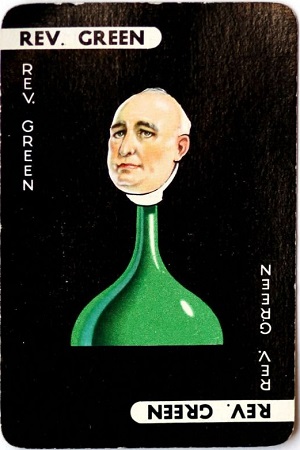
Dear Americans,
I will now show you something which might not blow your minds but it did, mine:
Dear Commonwealth countries,
I will now show you something which might not blow your minds but it did, mine:
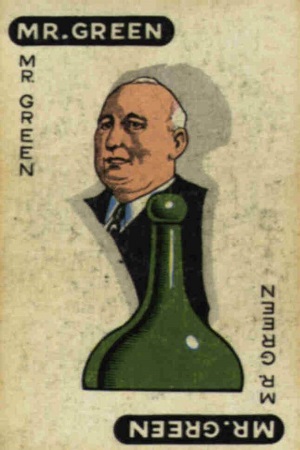
I was fully aware of the fact that there are regional variations in the board game Monopoly. The original version from America has street names from Atlantic City, while Commonwealth countries have street names from London, French editions of the game have Parisian street names, Italian editions have street names from Roma, and I honestly have no idea what they do in Japan where the streets have no name¹.
The idea that various pieces of intellectual property should be changed to fit a local culture is not at all strange to me, however the idea that the game Clue should have this kind of cultural change, strikes me as being both unnecessary and bizarre.
What is going on here?
Clue or Cluedo (presumably to make it sound more like Ludo) is a game set in some imagined past (probably the end of the 1920s), where there is a range of stereotypes and blatant sexism going on. The three male suspects, Colonel Mustard, Professor Plum, and Reverend Green, all have official titles; whereas the three female suspects, Mrs White, Mrs Peacock, and Miss Scarlett, all do not. They are reduced to being, the domestic, the old lady, and the bright young thing.
If were going to update this for a modern audience, it would be Dr White, Major Peacock, Governor Scarlett, with Sir Mustard being reduced to that of a dumb sports player. Major Peacock would be in the Air Force (or whatever the equivalent rank is). None of this explains why the Reverend Green was defrocked for an American audience.
Because I have grown up in the last burning embers of the British Empire, Cluedo sits in the imagined land of the stereotypical English village. For British people though, this isn't really a stereotype as small villages like this are plentiful. For Britain, this is just a reminder to the past. Nevertheless, the idea that you have a collared member of the clergy in a board game, fits the aesthetic perfectly. We need no backstory of why anyone is there, and in the case of the Reverend Green, we don't need to know if he is Catholic or Church of England².
I simply do not understand the implied cultural overlay which we are supposed to bring to the American version of the game. If this is an old money house in New England, then I don't understand why there aren't members of the clergy. If this is vulgar new money out in a California mansion, then I still don't get why the titles still fall on two of the men, other than for reasons of sexism.
I imagine that Mister Green is supposed to be some kind of industrialist businessman. I immediately think of Henry Ford II, who inherited what was then the second biggest company in the world and was as equally ruthless as his father (though probably not as blatantly anti-Semitic). Even so, why is this Mister Green the industrialist and not Reverend Green?
I married an American lady who it must be said is comprehensively more intelligent than I. I know for a fact that she grew up in a world with cross cultural pollination across the great divide of the Atlantic Ocean.
Also, I think that we are the sort of people who were the expected audience and if people like us have no problem with watching television with subtitles, then seeing a Reverend in a board game is not exactly that much of a culture shock.
What I also don't understand is that by the time that Cluedo was invented, the great detectives of literature, of Sherlock Holmes, Father Brown, Encyclopedia Jones, Hercules Poirot, and Miss Marple, had already been in print. Again, the people who play board games are probably also likely to have read books and if Father Brown who was an Catholic priest was already known as a detective, then the Reverend Green as a stock character is not particularly out of order.
I do not understand why this choice was made nor why it was necessary. I also find it weird that a country which has freedom of religion enshrined in the Constitution, should play this as a sensitivity in this way.
¹I do not think that Bono was singing about Tokyo though.
²You must have tea and cake with the vicar or you DIE!
December 03, 2019
Horse 2631 - When To Write On Liverpool's Season (Keep Hope Alive), Part II
Liverpool 2 - Brighton Hove & Albion 1
van Dijk 18', 24', Dunk 79'
Liverpool have gone 11 points clear of Manchester City with a 2-1 win over Brighton. Liverpool's goals both came from the head of Virgil van Dijk, and both came from crosses supplied by Trent Alexander-Arnold. Brighton's consolation goal came almost an hour later and deep into the second half; wherein they got a sniff of victory but it remained tantalisingly out of reach.
Allison's red card which is what triggered the three minutes of confusion which allowed Lewis Dunk to score, was for handling the ball outside of the area in an attempt to stop Leandro Trossard from scoring.
Now you'd think that going 11 points up would endow me with a sense of hope: happiness maybe but not hope. The problem with being a football fan is that you develop a very long memory; in my case, that extends to well over 35 seasons.
I happen to be one of those people who can remember the last time that Liverpool last won the league. The thing is though, that there is now literally a generation of fans who have grown up and had kids of their own who do not because they can not. Liverpool last won the league when Margaret Thatcher was Prime Minister and before the first Gulf War.
I know that I have been asked the question about when to write on Liverpool's league chances, as opposed to writing it off but we are in such strange territory now, that I have no idea how react to this.
Generally speaking, teams do not win the league after falling 10 points behind the leaders. The sole example of a team coming back from 11 points down was in 1998/99 when Manchester United had one of the most extraordinary runs and won the League, FA Cup and European Cup, in the same season. The side that faltered and threw away the 11 point lead was in fact Liverpool, during a horrorshow second half of the season. However, an 11 point lead before Christmas is unheard of; and if anyone could possibly muck it up, it's Liverpool.
The thing that I can not understand is how Jurgen Klopp is able to get these results from these players. Take this match against Brighton for instance. In season's past, I can imagine Liverpool conceding a second goal and giving up a draw but they still managed to get behind the ball and shut down most pushes forward. Lewis Dunk's goal came because Brighton were more lucky than good.
Apart from Mo Salah who is a certifiable superstar, the sprinkling of national representatives is not particularly out of the ordinary, nor are any of the players necessarily wildly gifted a they don't seem to out run the opposition; what they do have is a better sense of organisation and how to move the numbers around. Quite frankly, I think that this can only be to the management of Klopp.
To work out exactly what is different about what Jurgen Klopp is doing, I think that I have to go all the way back to 1959 and to the great Bill Shankly to find a parallel.
It must be said that at the, Bill Shankly arrived at a little club. His job of turning Liverpool from the little club sitting in the shadow of Everton, involved him changing the dimensions of the pitch and building a team which would play higher and wider up the pitch. Jurgen Klopp does not have that kind of luxury. He lives in a world where the pitches are standardised for European competition and where everyone is playing with that as the assumed standard. The days of travelling to the Arsenal Stadium and playing in a narrow blowing alley kind of affair are over. Although I should point out that Shankly was utterly ruthless in picking his playing staff. Within 12 months of him joining Liverpool as manager (14th Dec 1959), 24 players had resigned, left, or were fired.
Klopp's philosophy seems to be about making his players think about what happens between the formation shapes and the loose players are created as a result. It isn't even like Holland's famous 'Total Football' or Barcelona's 'Tika-Taka' and the really screwy thing is that to the tacticians who watch hours of football and who look for any one percent advantage, Klopp's sides (both this Liverpool side and Borussia Dortmund, where he won consecutive Bundesliga titles and took them to their first European final) look entirely conventional. There does appear to be an urgency to immediately to win back possession ball after losing it, rather than falling back to regroup, which is part of the general phliosophy that there is only one ball and you can not score if you don't have it but I do not know if that counts as anything other than common sense.
I find myself thinking that I do not understand why Liverpool keeps on winning matches and I do not understand why nobody else has worked it out either. I do know that they simply do keep on winning but I find myself looking back over there decades of sides with promise that have all collapsed in a heap. Even with an 11 point lead, which is a place that I have been in before, I've also seen that thrown away; so I'm going to reserve being hopeful for at least another month, to at least into the new year.
As someone who has seen decades of seasons of false dawns and unfulfilled promise, I will not be happy until I see the light of the open door; with a guaranteed title trophy waiting inside. One can hope though.
November 28, 2019
Horse 2630 - Do Not Explain The Joke (Also M&M's)
The man who could start a fist fight in an empty room, Kyle Busch, won his second NASCAR championship this month¹. His car, which carried the M&M's livery (the apostrophe is a possessive in this case), invariably led to a joke being posted on a motorsport forum I like:
How do you keep an idiot amused for hours?
Tell them to arrange a packet of M&M's alphabetically.
If you are prepared to lay the fact that this joke is unfunny aside, it poses the obvious challenge of doing precisely that: alphabetically arranging the chocolate bits (and as a bonus, arranging them by colour).
This poses three obvious questions:
1. Aren't they all M? No. Depending on the orientation, they will fall out of the bag as either a 3, E, M, or W.
2. Aren't you red-green colourblind? Yes I am. Thanks for asking.
3. What's the point? There isn't really any. This is a frivolous exercise.
When you pour out the packet of M&M's out onto the desk, some of them are label up and some are label down. I feel like the process of knolling these things and sorting them out, is like bringing order out of chaos.
If you were to just open the packed and let the bits spill onto the floor then ironically, that is actually a good way to stap a vampire.
Legend has it that if you are being chased by a vampire, then your best defence is to throw a handful of rice on the ground because all vampires have arithromania; which is a compulsive need to count things². I also have an extreme fear of being stabbed through the heart with a giant metal stake.
That may explain why I work in an accounting firm; both due to some hidden desire to count things and to work in a sufficiently safe workplace where accidental stabbing through the heart by giant metal stakes is not likely. One of the things which suggests that I am not part vampire, is that I have no desire to count the bits³. Truth be told, vampires are more likely to be found in fields like astronomy where they can work in the dark, or perhaps in a mail room for a very big corporation where they can also work in the dark.
I know that this is a massive aside but if you were to take two jars, one full of 50 black beans and one full of 50 white beans, then by operation of coin toss move one bean from one jar to the other while alternating which jar you do this for, then in the long run and it doesn't seem to matter if you add other rules and constraints, the two jars will over the long run tend towards 45-55 of both coloured beans in both jars. Unless you are prepared to take those end conditions as somehow 'ordered', then this is a practical display that entropy in a closed system always increases until completion.
I say that knolling the chocolate bits is like bringing order out of chaos, when I actual fact, I should have said that it is exactly bringing order out of chaos.
There is a a story which says that supposedly M&M's were invented during World War 2 because the US Army wanted to give the troops a chocolate ration that wouldn't melt.
The truth appears to be exactly the opposite because it seems that Frank Mars (one of the Ms) copied the the idea from Rowntree's Smarties; after he heard of soldiers in the Spanish Civil War eating them. He subsequently set up M&M Limited with Bruce Murrie of Hershey; hence the reason why they are M&M's. Also, according to the Mars Company website, M&M's were first introduced to the public on 10th Sep 1941 and unless they had the ability to see into the future, the story must be fraudulent as the United States didn't enter World War 2 until 7th Dec 1941; which FDR called a "date which will live in infamy".
I suppose that in my ignorance, I wasn't aware that there were six colours of M&M's: Blue, Yellow, Brown, Orange, Red, and Green. I can report that I had real difficulty trying to work out the difference between the red and the green ones. Since I am red-green colourblind and I have no frame of reference to work out which ones are which, this section of the task was impossible. I will admit though, that had I been around in World War 2, I would have been extremely useful as a navigator and spotter in the Air Force, as attempts at camouflage don't work nearly as well on me as they do for normal people. If I had been in the Air Force though, I wouldn't have needed to worry about M&M's though because by all accounts, a Lancaster bomber flying over Germany would have been freezing and on top of that, the castor oil which was still being used as an engine lubricant, sent so many oily fumes through the cabin that crews suffered from diarrhea.

After all is said and done, I was kept amused amused for hours because I arranged a packet of M&M's alphabetically. Thus the joke which was unfunny, actually became a truism and thus, even more unfunny. This could be a case that when a joke is exploded in an example of gestaltzerfall, it starts to take on a sense of semantic satiation.
It was EB White, the author of 'Charlottle's Web' who put this the best:
“Explaining a joke is like dissecting a frog. You understand it better but the frog dies in the process.”
¹https://www.youtube.com/watch?v=i17a-IwzMSY
²Which is why Count von Count on Sesame Street loves to count things. He is part of a great literary tradition. It does however pose the other problem that as a vampire, he probably also has the need to feast upon the blood of virgins (see Dracular (1897)).
³I have no idea what the singular of one of the things in a packet of M&M's is.
How do you keep an idiot amused for hours?
Tell them to arrange a packet of M&M's alphabetically.
If you are prepared to lay the fact that this joke is unfunny aside, it poses the obvious challenge of doing precisely that: alphabetically arranging the chocolate bits (and as a bonus, arranging them by colour).
This poses three obvious questions:
1. Aren't they all M? No. Depending on the orientation, they will fall out of the bag as either a 3, E, M, or W.
2. Aren't you red-green colourblind? Yes I am. Thanks for asking.
3. What's the point? There isn't really any. This is a frivolous exercise.
When you pour out the packet of M&M's out onto the desk, some of them are label up and some are label down. I feel like the process of knolling these things and sorting them out, is like bringing order out of chaos.
If you were to just open the packed and let the bits spill onto the floor then ironically, that is actually a good way to stap a vampire.
Legend has it that if you are being chased by a vampire, then your best defence is to throw a handful of rice on the ground because all vampires have arithromania; which is a compulsive need to count things². I also have an extreme fear of being stabbed through the heart with a giant metal stake.
That may explain why I work in an accounting firm; both due to some hidden desire to count things and to work in a sufficiently safe workplace where accidental stabbing through the heart by giant metal stakes is not likely. One of the things which suggests that I am not part vampire, is that I have no desire to count the bits³. Truth be told, vampires are more likely to be found in fields like astronomy where they can work in the dark, or perhaps in a mail room for a very big corporation where they can also work in the dark.
I know that this is a massive aside but if you were to take two jars, one full of 50 black beans and one full of 50 white beans, then by operation of coin toss move one bean from one jar to the other while alternating which jar you do this for, then in the long run and it doesn't seem to matter if you add other rules and constraints, the two jars will over the long run tend towards 45-55 of both coloured beans in both jars. Unless you are prepared to take those end conditions as somehow 'ordered', then this is a practical display that entropy in a closed system always increases until completion.
I say that knolling the chocolate bits is like bringing order out of chaos, when I actual fact, I should have said that it is exactly bringing order out of chaos.
There is a a story which says that supposedly M&M's were invented during World War 2 because the US Army wanted to give the troops a chocolate ration that wouldn't melt.
The truth appears to be exactly the opposite because it seems that Frank Mars (one of the Ms) copied the the idea from Rowntree's Smarties; after he heard of soldiers in the Spanish Civil War eating them. He subsequently set up M&M Limited with Bruce Murrie of Hershey; hence the reason why they are M&M's. Also, according to the Mars Company website, M&M's were first introduced to the public on 10th Sep 1941 and unless they had the ability to see into the future, the story must be fraudulent as the United States didn't enter World War 2 until 7th Dec 1941; which FDR called a "date which will live in infamy".
I suppose that in my ignorance, I wasn't aware that there were six colours of M&M's: Blue, Yellow, Brown, Orange, Red, and Green. I can report that I had real difficulty trying to work out the difference between the red and the green ones. Since I am red-green colourblind and I have no frame of reference to work out which ones are which, this section of the task was impossible. I will admit though, that had I been around in World War 2, I would have been extremely useful as a navigator and spotter in the Air Force, as attempts at camouflage don't work nearly as well on me as they do for normal people. If I had been in the Air Force though, I wouldn't have needed to worry about M&M's though because by all accounts, a Lancaster bomber flying over Germany would have been freezing and on top of that, the castor oil which was still being used as an engine lubricant, sent so many oily fumes through the cabin that crews suffered from diarrhea.
After all is said and done, I was kept amused amused for hours because I arranged a packet of M&M's alphabetically. Thus the joke which was unfunny, actually became a truism and thus, even more unfunny. This could be a case that when a joke is exploded in an example of gestaltzerfall, it starts to take on a sense of semantic satiation.
It was EB White, the author of 'Charlottle's Web' who put this the best:
“Explaining a joke is like dissecting a frog. You understand it better but the frog dies in the process.”
¹https://www.youtube.com/watch?v=i17a-IwzMSY
²Which is why Count von Count on Sesame Street loves to count things. He is part of a great literary tradition. It does however pose the other problem that as a vampire, he probably also has the need to feast upon the blood of virgins (see Dracular (1897)).
³I have no idea what the singular of one of the things in a packet of M&M's is.
November 27, 2019
Horse 2629 - The Great Cheque Swap And The Toxicity Of Nostalgia
One of the best opening lines in literature comes from L.P. Hartley's 1953 novel 'The Go-Between'. I think that it is a steaming, cloying, wreck of a work, which might very well be a satire on that most toxic of impulses: nostalgia. I think that it tries to imagine a world which never was, and does so through a frame which itself, isn't real. That opening line is:
The past is a foreign country; they do things differently there.
Allow me to mine my own nostalgia, for a world which was but might not be any more.
Long ago in the swirling mists of time, when Mr Howard was Prime Minister, and people thought that playing Snake on their Nokia 5110 was pretty neat, one of the very first jobs that I had was working as a teller at St George. After passing the exam and being trained at head office in Kogarah, I was then sent to the branch at Bondi Junction. The manager of the branch, was a lady who took an instant dislike to me because she was expecting to get a girl; so my life was made a living nightmare. It was like working at the Sheol branch of St George. I was there for two weeks and then dismissed; with no explanation at all and no reference.
As a 19 year old idiot with dreams which had not yet been broken, I then applied for a job at the Commonwealth Bank and got the job almost instantly because by coincidence, the person who was doing the hiring, had seen me behind the counter at St George, in that previous fortnight.
Rather than being employed at front of house, I was sent to the Liverpool Street operations centre and given a job in Cheque Acceptance. At the time, the Liverpool Street operations centre was officially a branch and had its own BSB number but it was purely an internal branch and had no external customers.
The biggest assets of that particular branch were these massive cheque readers; which could read thousands of cheques in an hour and sort them into batches, so that they could all be returned to their respective issuing banks and branches. The job of actually checking cheques for legitimacy is firstly done by a person at a normal branch and so a lot of the screening was already done for us. A lot of our work had to do with the cheques which had been flagged for investigation, on suspicion of being either fraudulent, irregular, or were just very large amounts.
The internet in the late 1990s was not the high speed marvel that it is today. In those days, if you wanted to download anything it would take several hours, and if you wanted to pay for anything 'online' you had use your credit card; provided that you trusted the person at the other end of the transaction with your very insecure details. As such, the backbone of the credit card network was still merchant paperwork and bank cheques flying around.
All of this meant that the sheer number of cheques that were being written was probably magnitudes larger than today, and that the process for dealing with them had to be different.
A cheque is an instruction to pay someone a sum specified from a bank account. There are all kinds of rules with regards whether or not that sum specified can be paid in cash, or whether or not the cheque can be on endorsed to pay someone else, or ever whether it must be paid into a bank account. In all cases, a cheque has to be returned to the issuing branch for verification purposes; which is still the nominal reason why it takes three days to clear the funds.
Getting a cheque back to the issuing branch, is itself an exercise in logistics.
At about 04:30pm every day a very big ceremonial toggle switch, like the sort of thing that you might see the villain of a schlocky movie or pantomime switch, would be flipped to the off position and all of the cheques which had been sorted into various bins would be all collated and then packed into B4 area Tupperware containers, and then packed into suitcases which must have been in use since the 1950s. If you can imagine thick wads of cheques, packed into four containers per suitcase, and as many as 20 suitcases coming from the very big branches, then that's an awful lot of cheques.
If you can imagine 80 suitcases for each of the big four banks, and then another 10 for the rest of the banking establishment; then multiply that by 4, then that means that the City of Sydney was generating something in the order of 360 suitcases full of cheques per day, every day. It is little wonder that the banking system was so intent on banking 'customers' becoming our own tellers at home with the advent of internet banking.
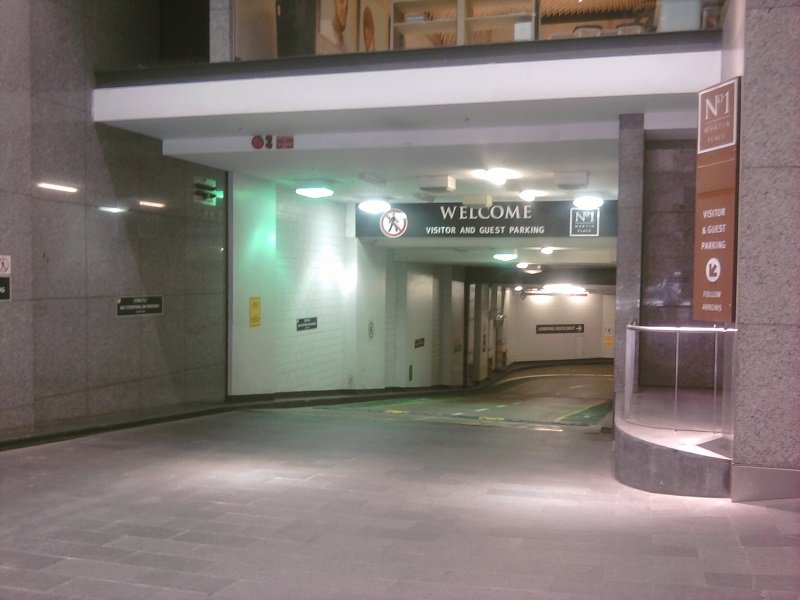
At about 5pm, a swarm of stationwagons would descend upon the underground car park at the GPO in Sydney, where they'd all park with their tailgates up, and the great cheque swap would begin.
Suitcases would travel to their respective destinations en masse and within about 20 minutes, the whole box and dice would be packed away and everyone would leave. I imagine that if you had been a particularly observant but stupid thief, then you might consider stealing one of those stationwagons but would be then highly disappointed as there was no cash and just a load of instructions to pay, in the boot.
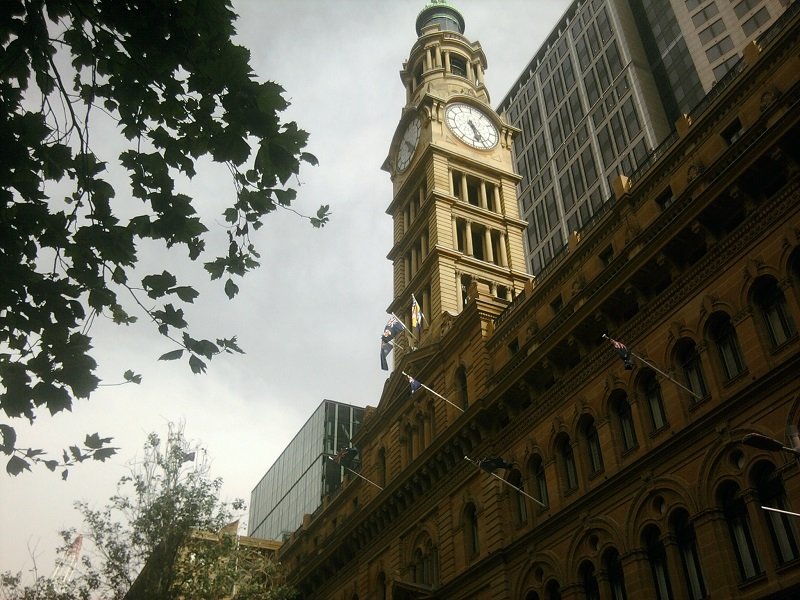
This whole entire scenario does not happen any more; or if it does, then I have no idea where. The GPO building no longer serves as the General Post Office and is instead a hotel. I thought about going underground to the carpark but very quickly realised that this would be trespassing and trying to explain myself would be seen as very highly suspicious.
I also imagine that the volume of cheques has probably fallen off a cliff by now. Writing a cheque was seen as so valuable a skill that I remember doing it in a high school Commerce class but I doubt that would happen anymore. There has been talk of abandoning cheques altogether but I guess that the banks still see the business of confused old people as sufficiently valuable enough to warrant their continued existence.
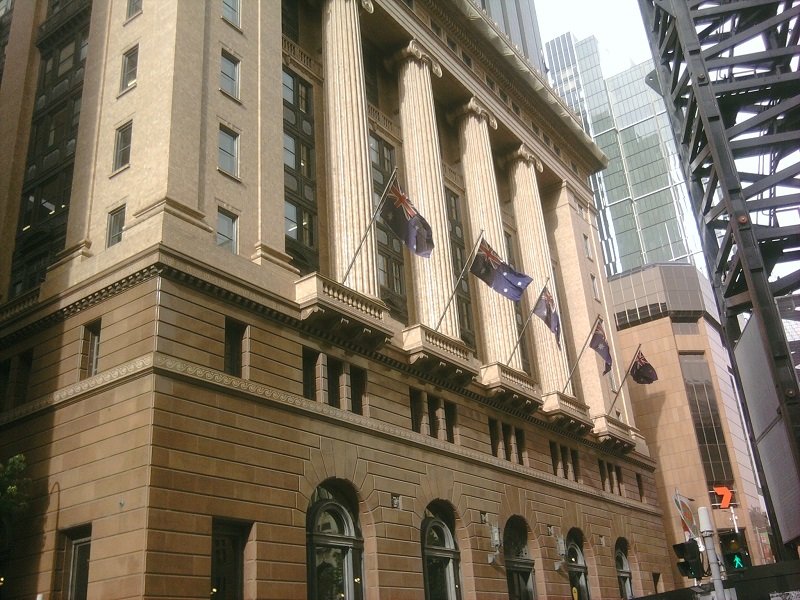
I was also reminded of just how toxic the impulse of nostalgia is. As I was looking back at the Money Box bank, I pondered that before 1959, this was also the central bank of Australia. I also pondered that since it was privatised, the people of Australia have been cheated out of more than a quarter of a trillion dollars in lost dividends. In fact, Martin Place is full stuff that we used to own but don't anymore.
What used to be the Trading Bank on Pitt Street is now inhabited by a series of retail shops, as is indeed the majority of the outward facing floor space of the GPO, which has been further stripped of its former glory by being given the almost humiliating moniker of No.1 Martin Place.
Even 48 Martin Place has been violated; with Macquarie Bank taking over part of the floor space. It sounds really daft to lament the invasion of floor space of a private bank, with another private bank but once upon a time, we the Commonwealth of Australia owned and operated that space.
I do not however lament the gradual passing of cheques into irrelevancy. Cash is still the fastest way to transfer money from one person to another, EFTPOS and the credit card system and internet banking runs a close second, but relying on bits of paper which take several days to verify and clear is all a bit twee.
Aside:
Check vs Cheque
Check is the older form of the word in English; which is still retained in the United States. English English changed after the time of the 'Practical Treatise on Banking' published by James William Gilbart in 1828, when he suggested adopting the French spelling as a practical way of distinguishing the two words.
Her Majesty's Chancellor of the Exchequer is literally the ceremonial head of the office that writes the cheques.
The past is a foreign country; they do things differently there.
Allow me to mine my own nostalgia, for a world which was but might not be any more.
Long ago in the swirling mists of time, when Mr Howard was Prime Minister, and people thought that playing Snake on their Nokia 5110 was pretty neat, one of the very first jobs that I had was working as a teller at St George. After passing the exam and being trained at head office in Kogarah, I was then sent to the branch at Bondi Junction. The manager of the branch, was a lady who took an instant dislike to me because she was expecting to get a girl; so my life was made a living nightmare. It was like working at the Sheol branch of St George. I was there for two weeks and then dismissed; with no explanation at all and no reference.
As a 19 year old idiot with dreams which had not yet been broken, I then applied for a job at the Commonwealth Bank and got the job almost instantly because by coincidence, the person who was doing the hiring, had seen me behind the counter at St George, in that previous fortnight.
Rather than being employed at front of house, I was sent to the Liverpool Street operations centre and given a job in Cheque Acceptance. At the time, the Liverpool Street operations centre was officially a branch and had its own BSB number but it was purely an internal branch and had no external customers.
The biggest assets of that particular branch were these massive cheque readers; which could read thousands of cheques in an hour and sort them into batches, so that they could all be returned to their respective issuing banks and branches. The job of actually checking cheques for legitimacy is firstly done by a person at a normal branch and so a lot of the screening was already done for us. A lot of our work had to do with the cheques which had been flagged for investigation, on suspicion of being either fraudulent, irregular, or were just very large amounts.
The internet in the late 1990s was not the high speed marvel that it is today. In those days, if you wanted to download anything it would take several hours, and if you wanted to pay for anything 'online' you had use your credit card; provided that you trusted the person at the other end of the transaction with your very insecure details. As such, the backbone of the credit card network was still merchant paperwork and bank cheques flying around.
All of this meant that the sheer number of cheques that were being written was probably magnitudes larger than today, and that the process for dealing with them had to be different.
A cheque is an instruction to pay someone a sum specified from a bank account. There are all kinds of rules with regards whether or not that sum specified can be paid in cash, or whether or not the cheque can be on endorsed to pay someone else, or ever whether it must be paid into a bank account. In all cases, a cheque has to be returned to the issuing branch for verification purposes; which is still the nominal reason why it takes three days to clear the funds.
Getting a cheque back to the issuing branch, is itself an exercise in logistics.
At about 04:30pm every day a very big ceremonial toggle switch, like the sort of thing that you might see the villain of a schlocky movie or pantomime switch, would be flipped to the off position and all of the cheques which had been sorted into various bins would be all collated and then packed into B4 area Tupperware containers, and then packed into suitcases which must have been in use since the 1950s. If you can imagine thick wads of cheques, packed into four containers per suitcase, and as many as 20 suitcases coming from the very big branches, then that's an awful lot of cheques.
If you can imagine 80 suitcases for each of the big four banks, and then another 10 for the rest of the banking establishment; then multiply that by 4, then that means that the City of Sydney was generating something in the order of 360 suitcases full of cheques per day, every day. It is little wonder that the banking system was so intent on banking 'customers' becoming our own tellers at home with the advent of internet banking.
At about 5pm, a swarm of stationwagons would descend upon the underground car park at the GPO in Sydney, where they'd all park with their tailgates up, and the great cheque swap would begin.
Suitcases would travel to their respective destinations en masse and within about 20 minutes, the whole box and dice would be packed away and everyone would leave. I imagine that if you had been a particularly observant but stupid thief, then you might consider stealing one of those stationwagons but would be then highly disappointed as there was no cash and just a load of instructions to pay, in the boot.
This whole entire scenario does not happen any more; or if it does, then I have no idea where. The GPO building no longer serves as the General Post Office and is instead a hotel. I thought about going underground to the carpark but very quickly realised that this would be trespassing and trying to explain myself would be seen as very highly suspicious.
I also imagine that the volume of cheques has probably fallen off a cliff by now. Writing a cheque was seen as so valuable a skill that I remember doing it in a high school Commerce class but I doubt that would happen anymore. There has been talk of abandoning cheques altogether but I guess that the banks still see the business of confused old people as sufficiently valuable enough to warrant their continued existence.
I was also reminded of just how toxic the impulse of nostalgia is. As I was looking back at the Money Box bank, I pondered that before 1959, this was also the central bank of Australia. I also pondered that since it was privatised, the people of Australia have been cheated out of more than a quarter of a trillion dollars in lost dividends. In fact, Martin Place is full stuff that we used to own but don't anymore.
What used to be the Trading Bank on Pitt Street is now inhabited by a series of retail shops, as is indeed the majority of the outward facing floor space of the GPO, which has been further stripped of its former glory by being given the almost humiliating moniker of No.1 Martin Place.
Even 48 Martin Place has been violated; with Macquarie Bank taking over part of the floor space. It sounds really daft to lament the invasion of floor space of a private bank, with another private bank but once upon a time, we the Commonwealth of Australia owned and operated that space.
I do not however lament the gradual passing of cheques into irrelevancy. Cash is still the fastest way to transfer money from one person to another, EFTPOS and the credit card system and internet banking runs a close second, but relying on bits of paper which take several days to verify and clear is all a bit twee.
Aside:
Check vs Cheque
Check is the older form of the word in English; which is still retained in the United States. English English changed after the time of the 'Practical Treatise on Banking' published by James William Gilbart in 1828, when he suggested adopting the French spelling as a practical way of distinguishing the two words.
Her Majesty's Chancellor of the Exchequer is literally the ceremonial head of the office that writes the cheques.
November 25, 2019
Horse 2628 - The Reason Why Pineapple Does Not Belong On A Pizza
About three years ago the Prime Minister of Iceland Guðni Th. Jóhannesson caused an international discussion about putting pineapple on pizza. He jokingly said that he would ban it, if he was allowed. Those comments have echoed around the world several times; causing echo booms along the way; with most people being totally unaware of the initial comments.
I was also privy to this discussion, being made by Italian people; and even though I do not speak Italian, it seems that this cuts across other fault lines such as the Neapolitan/Sicilian/Romana Tonda/etc. question. Far be it from me to proscribe or prescribe what's going on, I can only but observe and describe the general argument.
I will confess though that in prosecuting the case, I have fallen into the trap of looking at the specific rule, rather than the general underlying principle. Pineapple not being allowed on a pizza, is just one point of data in a general function; the latter I think I have found a descriptor for.
The things which are allowed on a pizza, can only be one of the three groups: Red, White, and Green. That's it. That's all. This is an exclusionary principle; which means that anything outside of those three classes (of which pineapple is a case I point) has no business being there.
To wit:
I think that the ultimate expression of a pizza is not the Supreme pizza¹ but Pepperoni. If the quality of the respective ingredients of a pepperoni pizza are all less than mediocre, they still add up to something which is better than those constituent parts.
Pizza Sauce (red), Cheese (white), and Pepperoni (red), are the three basic components and fall into two of the allowable categories.
Note on Cheese:
Cheese is white. It doesn't matter if it is the best quality mozzarella or the cheapest cheddar, cheese is always white for the purposes of complying with pizza law.
Notes on various ingredients:
Most meats are red. Pepperoni, salami, ground beef, ham, bacon, prosciutto... are all red. The two main exceptions are chicken and pork which are both white and therefore still allowable.
Onions and garlic can be all three. Most onions are white. Spanish onions are red. Spring onions, shallots, and salad onions are green. Garlic is white. Garlic and cheese, which is starting to encroach upon the territory of garlic bread, is still allowable because both of them are white.
Capsicums are green. This will sound mind blowing but all capsicums start out as green and only develop their colour later. For compliance sake, it is best not to put yellow capsicums on a pizza, even though they are technically green. Red capsicums can appear to be red even though they are green but even if we just want to look at the outside colour, they are still red and therefore allowable.
There are a bunch of other things which are allowable² on a pizza, even though some of them stretch the boundaries of sanity. Chili and chili flakes are red. Avocado (even though it is way too pretentious to be sensible) is green. Lime I green. Lime is one those rare examples where the acidity of a fruit can cut through the fattiness of meat, or play in concert with the fire of a chili. Lime is a rare example of a fruit that can go on a pizza but only the juice therein. If you put slices of lime on a pizza, you are madder than a gum tree full of galahs with meat axes³.
Fruits:
Be careful. Most fruits are destined to fail on a pizza.
Apple and pear are both red and green but should be exercised with extreme caution.
In general:
The Italian flag, with its tricolour of red, white, and green, is the guide. Pineapple fails on a pizza and under no circumstance belongs there because it is yellow. Hawaiian Pizza thought that it was allowable by trying to claim special status as its own thing but while Ham is red, Pineapple is the Mario Balotelli of pizza ingredients, which arrives at a new place and claims to be pretty flash, but is ultimately disappointing.
¹There is a theory that The Supremes, of which Diana Ross was a one time member, was named after the square pan Detroit-style pizza. I do not have suffcient evidence to prove or test this theory.
²Barbecue Sauce has one specific function; which is being at a barbecue. Barbecue sauce is specifically for those things which have been burnt. In general, barbecue sauce should not be used in any other context. Barbecue sauce is an allowable ingredient on a pizza (see above) because it is red, and may kind of work with chicken and possibly pork but it has clearly turned up at the wrong party. Just because it is allowable doesn't necessarily mean that it is good; your mileage may very however. Barbecue sauce will work with chips, though the best sauces for chips are mayonnaise, chili sauce, and tomato ketchup (in order of goodness); because chips are agreeable to virtually everything.
Barbecue sauce is designed for barbecues; where you have smokey flame licked meat. It can be painted onto the side of massive cuts of beef, where it will caramelise and truly shine. The southern states of America, South Africa, and Australia, are the places in the anglosphere where barbecue sauce has actually found its proper purpose.
To that effect, the place where barbecue sauce excels, is at a sausage sizzle. Buttered bread, a lightly burnt sausage, onion, and barbecue sauce. In Australia, that is also the taste of democracy.
Barbecue sauce has a specific function and in general it should not be used outside of that function. Brown sauce, chili sauce, and mustard, are better choices for most applications where you might think about using barbecue sauce.
³It should be noted that although Galahs are fond at doing carpentry, it would be more advisable for them to use basic panel saws.
I was also privy to this discussion, being made by Italian people; and even though I do not speak Italian, it seems that this cuts across other fault lines such as the Neapolitan/Sicilian/Romana Tonda/etc. question. Far be it from me to proscribe or prescribe what's going on, I can only but observe and describe the general argument.
I will confess though that in prosecuting the case, I have fallen into the trap of looking at the specific rule, rather than the general underlying principle. Pineapple not being allowed on a pizza, is just one point of data in a general function; the latter I think I have found a descriptor for.
The things which are allowed on a pizza, can only be one of the three groups: Red, White, and Green. That's it. That's all. This is an exclusionary principle; which means that anything outside of those three classes (of which pineapple is a case I point) has no business being there.
To wit:
I think that the ultimate expression of a pizza is not the Supreme pizza¹ but Pepperoni. If the quality of the respective ingredients of a pepperoni pizza are all less than mediocre, they still add up to something which is better than those constituent parts.
Pizza Sauce (red), Cheese (white), and Pepperoni (red), are the three basic components and fall into two of the allowable categories.
Note on Cheese:
Cheese is white. It doesn't matter if it is the best quality mozzarella or the cheapest cheddar, cheese is always white for the purposes of complying with pizza law.
Notes on various ingredients:
Most meats are red. Pepperoni, salami, ground beef, ham, bacon, prosciutto... are all red. The two main exceptions are chicken and pork which are both white and therefore still allowable.
Onions and garlic can be all three. Most onions are white. Spanish onions are red. Spring onions, shallots, and salad onions are green. Garlic is white. Garlic and cheese, which is starting to encroach upon the territory of garlic bread, is still allowable because both of them are white.
Capsicums are green. This will sound mind blowing but all capsicums start out as green and only develop their colour later. For compliance sake, it is best not to put yellow capsicums on a pizza, even though they are technically green. Red capsicums can appear to be red even though they are green but even if we just want to look at the outside colour, they are still red and therefore allowable.
There are a bunch of other things which are allowable² on a pizza, even though some of them stretch the boundaries of sanity. Chili and chili flakes are red. Avocado (even though it is way too pretentious to be sensible) is green. Lime I green. Lime is one those rare examples where the acidity of a fruit can cut through the fattiness of meat, or play in concert with the fire of a chili. Lime is a rare example of a fruit that can go on a pizza but only the juice therein. If you put slices of lime on a pizza, you are madder than a gum tree full of galahs with meat axes³.
Fruits:
Be careful. Most fruits are destined to fail on a pizza.
Apple and pear are both red and green but should be exercised with extreme caution.
In general:
The Italian flag, with its tricolour of red, white, and green, is the guide. Pineapple fails on a pizza and under no circumstance belongs there because it is yellow. Hawaiian Pizza thought that it was allowable by trying to claim special status as its own thing but while Ham is red, Pineapple is the Mario Balotelli of pizza ingredients, which arrives at a new place and claims to be pretty flash, but is ultimately disappointing.
Red, White, and Green, are the only things on a pizza which should be seen.
¹There is a theory that The Supremes, of which Diana Ross was a one time member, was named after the square pan Detroit-style pizza. I do not have suffcient evidence to prove or test this theory.
²Barbecue Sauce has one specific function; which is being at a barbecue. Barbecue sauce is specifically for those things which have been burnt. In general, barbecue sauce should not be used in any other context. Barbecue sauce is an allowable ingredient on a pizza (see above) because it is red, and may kind of work with chicken and possibly pork but it has clearly turned up at the wrong party. Just because it is allowable doesn't necessarily mean that it is good; your mileage may very however. Barbecue sauce will work with chips, though the best sauces for chips are mayonnaise, chili sauce, and tomato ketchup (in order of goodness); because chips are agreeable to virtually everything.
Barbecue sauce is designed for barbecues; where you have smokey flame licked meat. It can be painted onto the side of massive cuts of beef, where it will caramelise and truly shine. The southern states of America, South Africa, and Australia, are the places in the anglosphere where barbecue sauce has actually found its proper purpose.
To that effect, the place where barbecue sauce excels, is at a sausage sizzle. Buttered bread, a lightly burnt sausage, onion, and barbecue sauce. In Australia, that is also the taste of democracy.
Barbecue sauce has a specific function and in general it should not be used outside of that function. Brown sauce, chili sauce, and mustard, are better choices for most applications where you might think about using barbecue sauce.
³It should be noted that although Galahs are fond at doing carpentry, it would be more advisable for them to use basic panel saws.
November 22, 2019
Horse 2627 - I Love The Building Of Unknown Doom
One of the consequences of living in the remnants of empire, apart from the abuse of indigenous peoples and the stealing of their lands, the installation of parliamentary democracy and English common law, is the adoption of the otherwise absurd game of cricket.
The biggest criticism that people tend to have about cricket is that it is boring; fair play to them. That opinion is based on the very real fact that the one thing that cricket affords someone who is watching both at the ground and on television, is time; and lots of it. The game of cricket is sometimes a rare glimpse into the full face of eternity; especially when the run scoring by the flanneled fools in the centre of the field borders on glacial and you start to ponder the truly inane things of the universe.
The first test between Australia and Pakistan began yesterday and it happened at about 11am opening day, that my boss who was watching the match while he was on the phone with the Tax Office, noticed a very strange building on the screen. Of course, as I am a student of the game and knowing that this match was being held in Brisbane, I knew instantly what the building was.

The Brisbane Cricket Ground which is known as the Gabba after the suburb of Wollongabba, lies in between Vulture Street and Stanley Street. It also lies to the east side of the imaginatively named Main Street; which is the very northern end of the New England Highway, and which terminates with the Storey Bridge.
To the west of the ground is a bus terminal that looks like a train station and also has what I think is a bus donut pad but the building in question, had to have been the Wollongabba Telephone Exchange Building; which is pictured below.

I could be really impressive and bombard you with facts about this building, such as how many switches are inside and how many gabbawatts of power the building uses but the truth is that I have no idea whatsoever and to be honest I prefer it that way.
The whole thing could be full of nuclear weapons, or Dunlop Volleys, or Chocolate Smarties, or cream, sand, angry spiders, phosgene gas, or gold bullion, and I would be none the wiser.
What you don't know can't hurt you, right? The fact is that this monolithic, windowless, brutalist, faceless, murder death cult of a building, retains an air of terror and horror because I have no idea what goes on inside.
In the grand scheme of things, I am a very small thing. While I think that it is cool to know a bunch of stuff about a bunch of stuff because I like the idea of knowledge for its own sake, I also love the thought that the world is so complex and often so mysterious that I have no idea at all about things. It is fun to see other people who have spent a long time getting excited about a thing and watching them impart their excitement on others. It is also fun to see experts doing their thing I their chosen field. It is also fun to know that you are a dingus and to retain a sense of wonderment in the world.
As for the Wollongabba Telephone Exchange, I could just accept that it is a telephone exchange which is full of circuits and switches but even if I did that, I still couldn't tell you how any of it worked. I do have a rudimentary understanding of how electric circuits work but I still bet that there's about seven layers of abstraction and protocols required just to connect one telephone number to another.
To be fair, I think that it probably requires less brain power to just ignore it but it is more fun to imagine some kind of secret telephonic cabal in a windowless tower. The most obvious and practical reason why it is made of concrete and has no windows is that it saves money on heating and cooling and temperatures for the electric gear inside can remain more constant but there's no fun in that.
For me, the Woolongabba Telephone Exchange is a triumph of form. There are several of these windowless buildings across the country and this one in particular is the least pretentious. It makes no concession to fit into the landscape, it makes no concession to look like a regular building, and it makes no concession to give you a hint as to what's going on inside. It is stark and mysterious. It cares not for what your opinion is.
When you are watching the cricket at places like the MCG, Sydney Olympic Stadium, the new WACA and the Gabba, there are almost no visual reminders of where you are in the world; which is unlike the Sydney Cricket Ground, or the truly iconic grounds of Lord's or The Oval, which have been built as a higgle-piggledy hodge-podge. The only real reminder of where you are in the world from inside the Gabba is the Woolongabba Telephone Exchange and an apartment block which stands in between. For me, that makes it as iconic as the Gasometer at The Oval.
It is awful. It is terrible. It is ugly. It is stark. It is secretive. By no objective means is the Woolongabba Telephone Exchange a thing of beauty. Nevertheless, I like it.
The biggest criticism that people tend to have about cricket is that it is boring; fair play to them. That opinion is based on the very real fact that the one thing that cricket affords someone who is watching both at the ground and on television, is time; and lots of it. The game of cricket is sometimes a rare glimpse into the full face of eternity; especially when the run scoring by the flanneled fools in the centre of the field borders on glacial and you start to ponder the truly inane things of the universe.
The first test between Australia and Pakistan began yesterday and it happened at about 11am opening day, that my boss who was watching the match while he was on the phone with the Tax Office, noticed a very strange building on the screen. Of course, as I am a student of the game and knowing that this match was being held in Brisbane, I knew instantly what the building was.
- Uncle Google's Maps gave us this.
The Brisbane Cricket Ground which is known as the Gabba after the suburb of Wollongabba, lies in between Vulture Street and Stanley Street. It also lies to the east side of the imaginatively named Main Street; which is the very northern end of the New England Highway, and which terminates with the Storey Bridge.
To the west of the ground is a bus terminal that looks like a train station and also has what I think is a bus donut pad but the building in question, had to have been the Wollongabba Telephone Exchange Building; which is pictured below.
- Taken on Uncle Google's Road Trip to everywhere.
I could be really impressive and bombard you with facts about this building, such as how many switches are inside and how many gabbawatts of power the building uses but the truth is that I have no idea whatsoever and to be honest I prefer it that way.
The whole thing could be full of nuclear weapons, or Dunlop Volleys, or Chocolate Smarties, or cream, sand, angry spiders, phosgene gas, or gold bullion, and I would be none the wiser.
What you don't know can't hurt you, right? The fact is that this monolithic, windowless, brutalist, faceless, murder death cult of a building, retains an air of terror and horror because I have no idea what goes on inside.
In the grand scheme of things, I am a very small thing. While I think that it is cool to know a bunch of stuff about a bunch of stuff because I like the idea of knowledge for its own sake, I also love the thought that the world is so complex and often so mysterious that I have no idea at all about things. It is fun to see other people who have spent a long time getting excited about a thing and watching them impart their excitement on others. It is also fun to see experts doing their thing I their chosen field. It is also fun to know that you are a dingus and to retain a sense of wonderment in the world.
As for the Wollongabba Telephone Exchange, I could just accept that it is a telephone exchange which is full of circuits and switches but even if I did that, I still couldn't tell you how any of it worked. I do have a rudimentary understanding of how electric circuits work but I still bet that there's about seven layers of abstraction and protocols required just to connect one telephone number to another.
To be fair, I think that it probably requires less brain power to just ignore it but it is more fun to imagine some kind of secret telephonic cabal in a windowless tower. The most obvious and practical reason why it is made of concrete and has no windows is that it saves money on heating and cooling and temperatures for the electric gear inside can remain more constant but there's no fun in that.
For me, the Woolongabba Telephone Exchange is a triumph of form. There are several of these windowless buildings across the country and this one in particular is the least pretentious. It makes no concession to fit into the landscape, it makes no concession to look like a regular building, and it makes no concession to give you a hint as to what's going on inside. It is stark and mysterious. It cares not for what your opinion is.
When you are watching the cricket at places like the MCG, Sydney Olympic Stadium, the new WACA and the Gabba, there are almost no visual reminders of where you are in the world; which is unlike the Sydney Cricket Ground, or the truly iconic grounds of Lord's or The Oval, which have been built as a higgle-piggledy hodge-podge. The only real reminder of where you are in the world from inside the Gabba is the Woolongabba Telephone Exchange and an apartment block which stands in between. For me, that makes it as iconic as the Gasometer at The Oval.
It is awful. It is terrible. It is ugly. It is stark. It is secretive. By no objective means is the Woolongabba Telephone Exchange a thing of beauty. Nevertheless, I like it.
November 20, 2019
Horse 2626 - Merry Coffee?
I am informed by Mrs Rollo that in America which is the undisputed champion of celebrating holidays, that the term 'Happy Holidays' is an all inclusive one which encompasses Halloween, Thanksgiving, Christmas, Chanukah, Kwanzaa and even New Year's Day. Quite frankly I think that that is ace. What a top idea. I love this as a concept because as someone who belongs to the Association For The Perpetually Bewildered¹, it doesn't require as much brain power to think about.
In Australia though, Halloween is only really a thing because Woolworths and Coles want to sell lollies and chocolate, Thanksgiving is not a thing at all, and Chanukah and Kwanzaa are so small as to be not at all visible.
This means that without Halloween and Thanksgiving being in the way, marketing for Christmas begins as early as possible; sometimes as early as September in some shops.
As businesses in Australia (just like any other profit driven institution) are looking to spin a dollar in any way possible, we end up with marketing campaigns which are culturally nonsensical.
One such business is Starbucks, which is a Seattle founded company and which takes its marketing cues from head office.
Halloween is already a weird thing in Australia. In Sydney, the sun sets at about 10 past 7 in the evening; with astronomical twilight not ending until after 9 o'clock. It is really hard for the little goblins and ghouls that are walking around to look remotely scary, in broad daylight.
Starbucks, which wants to go all in on Halloween, brought their famed pumpkin spice latte to Australia, despite us having no real cultural roadmap to work out where this fits.
I am reliably informed that for Thanksgiving, which isn't actually a thing in Australia, that Starbucks has some kind of turkey spice cloves thing. I lack the ability to comprehend why this exists. This week though, I note that even the Australian Starbucks stores also have no idea what to do with the marketing push from head office.
As the phrase "Happy Holidays" doesn't really exist in Australia because two of them don't really make any cultural sense, Starbucks has decided to extend it's Christmas propaganda into mid-November and has come up with the following:

I pass this corner while on, the bus at least five times a week. Admittedly I have no reason to go to Starbucks and so I am not very likely to verify if this is a claim that they either sell merry coffee or that their coffee is going to make you merry but if nothing else, it does avoid the whole cultural holiday existence problem.
I expect that there will probably be a member of the 'taking Christ out of Christmas' crowd who will object to this but this goes one step beyond and takes the whole entire of Christmas out of Christmas. I think that that's fair as Starbucks already takes the coffee out of coffee.
This is many steps better than the confected holiday trend, where it's National Cupcake Day, or Beef Appreciation Day (and there's probably some marketing company inventing these things, somewhere) because Happy Coffee is so incredibly vague, there doesn't actually need to be a holiday. Presumably, every day can be Merry Coffee?
Probably not. There aren't really very many holidays which are associated with the word 'merry'. Merry Australia Day? Nope. Merry Easter? No. Merry ANZAC Day?No. Merry Thanksgiving and Merry Halloween also do not sound like they fit. Christmas has an unwritten almost monopoly on being 'merry', though I do not doubt that merriment is occuring at other times of the year. I say almost monopoly as Merry Unbirthday is completely acceptable; which coincidentally also features something that you might find at Starbucks (tea).
The graphics for this propaganda² (of trees and baubels) are so very obviously for the holiday that is not being named, that this is probably as close as Starbucks thinks that it can get without offending anyone. That suggests to me that if this is part of some worldwide directive, then they have thought of the possiblity that they are selling coffee in countries where Christmas doesn't exist.
Starbucks in Pakistan, can run an equally holiday agnostic campaign without offending Muslim folk. Starbucks in Japan, where Christmas is a thing³ albeit one which exists almost purely for sales purposes, can equally run this holiday agnostic campaign without offending Shintoists and Buddhists.
What I find really baffling though, is why Starbucks thinks that we in Australia would take offence to the phrase 'Merry Christmas' and why they think that they need to Bowdlerise it.
Who exactly do Starbucks think would be offended? Is it the Christians who they think are going to be offended at the commercialisation of Christmas? Is it the evangelistic atheists who want all shred of any mention of Christianity removed from public spaces?
We are a country that has Nativity scenes in shopping centres, and where the Mayor of Sydney was lambasted for not wanting to put up a Christmas Tree. I don't understand why Starbucks feels the need to not say 'Merry Christmas' at all.
I do not think that Starbucks cares enough about Christmas beyond whether or not they can sell coffee. Someone in the marketing department has thought that this is a good idea and nobody else has questioned it. I am personally not offended by then removing Christmas from Christmas but I am confused. There isn't even a good pun here; they could have gone with 'Berry Christmas' or 'Merry Bacon and Xmas', or anything with basic wordplay. 'Merry Coffee' is just plain daft.
¹Membership costs one peppercorn, a ball of string, a potato, and $49/yr. Why? Who knows?
²The first cut won't hurt at all.
The second only makes you wonder.
The third cut will pull you under.
You start bleeding; I start screaming.
³KFC in Japan sells elaborate Christmas Sets which also include champagne. - https://order.kfc.jp/menu/event-menu/party-barrel
In Australia though, Halloween is only really a thing because Woolworths and Coles want to sell lollies and chocolate, Thanksgiving is not a thing at all, and Chanukah and Kwanzaa are so small as to be not at all visible.
This means that without Halloween and Thanksgiving being in the way, marketing for Christmas begins as early as possible; sometimes as early as September in some shops.
As businesses in Australia (just like any other profit driven institution) are looking to spin a dollar in any way possible, we end up with marketing campaigns which are culturally nonsensical.
One such business is Starbucks, which is a Seattle founded company and which takes its marketing cues from head office.
Halloween is already a weird thing in Australia. In Sydney, the sun sets at about 10 past 7 in the evening; with astronomical twilight not ending until after 9 o'clock. It is really hard for the little goblins and ghouls that are walking around to look remotely scary, in broad daylight.
Starbucks, which wants to go all in on Halloween, brought their famed pumpkin spice latte to Australia, despite us having no real cultural roadmap to work out where this fits.
I am reliably informed that for Thanksgiving, which isn't actually a thing in Australia, that Starbucks has some kind of turkey spice cloves thing. I lack the ability to comprehend why this exists. This week though, I note that even the Australian Starbucks stores also have no idea what to do with the marketing push from head office.
As the phrase "Happy Holidays" doesn't really exist in Australia because two of them don't really make any cultural sense, Starbucks has decided to extend it's Christmas propaganda into mid-November and has come up with the following:
I pass this corner while on, the bus at least five times a week. Admittedly I have no reason to go to Starbucks and so I am not very likely to verify if this is a claim that they either sell merry coffee or that their coffee is going to make you merry but if nothing else, it does avoid the whole cultural holiday existence problem.
I expect that there will probably be a member of the 'taking Christ out of Christmas' crowd who will object to this but this goes one step beyond and takes the whole entire of Christmas out of Christmas. I think that that's fair as Starbucks already takes the coffee out of coffee.
This is many steps better than the confected holiday trend, where it's National Cupcake Day, or Beef Appreciation Day (and there's probably some marketing company inventing these things, somewhere) because Happy Coffee is so incredibly vague, there doesn't actually need to be a holiday. Presumably, every day can be Merry Coffee?
Probably not. There aren't really very many holidays which are associated with the word 'merry'. Merry Australia Day? Nope. Merry Easter? No. Merry ANZAC Day?No. Merry Thanksgiving and Merry Halloween also do not sound like they fit. Christmas has an unwritten almost monopoly on being 'merry', though I do not doubt that merriment is occuring at other times of the year. I say almost monopoly as Merry Unbirthday is completely acceptable; which coincidentally also features something that you might find at Starbucks (tea).
The graphics for this propaganda² (of trees and baubels) are so very obviously for the holiday that is not being named, that this is probably as close as Starbucks thinks that it can get without offending anyone. That suggests to me that if this is part of some worldwide directive, then they have thought of the possiblity that they are selling coffee in countries where Christmas doesn't exist.
Starbucks in Pakistan, can run an equally holiday agnostic campaign without offending Muslim folk. Starbucks in Japan, where Christmas is a thing³ albeit one which exists almost purely for sales purposes, can equally run this holiday agnostic campaign without offending Shintoists and Buddhists.
What I find really baffling though, is why Starbucks thinks that we in Australia would take offence to the phrase 'Merry Christmas' and why they think that they need to Bowdlerise it.
Who exactly do Starbucks think would be offended? Is it the Christians who they think are going to be offended at the commercialisation of Christmas? Is it the evangelistic atheists who want all shred of any mention of Christianity removed from public spaces?
We are a country that has Nativity scenes in shopping centres, and where the Mayor of Sydney was lambasted for not wanting to put up a Christmas Tree. I don't understand why Starbucks feels the need to not say 'Merry Christmas' at all.
I do not think that Starbucks cares enough about Christmas beyond whether or not they can sell coffee. Someone in the marketing department has thought that this is a good idea and nobody else has questioned it. I am personally not offended by then removing Christmas from Christmas but I am confused. There isn't even a good pun here; they could have gone with 'Berry Christmas' or 'Merry Bacon and Xmas', or anything with basic wordplay. 'Merry Coffee' is just plain daft.
¹Membership costs one peppercorn, a ball of string, a potato, and $49/yr. Why? Who knows?
²The first cut won't hurt at all.
The second only makes you wonder.
The third cut will pull you under.
You start bleeding; I start screaming.
³KFC in Japan sells elaborate Christmas Sets which also include champagne. - https://order.kfc.jp/menu/event-menu/party-barrel
November 19, 2019
Horse 2625 - Supercars Is One Giant Cheaty Mess Of Cheatery
Touring Car racing in Australia has for a very long time been built around bitter rivalries. In the 60s and 70s Ford and Holden put up some degree of manufacturer support to slug it to the other side and then Ford lost interest. After a period where European and Japanese developed cars won all and sundry, they took an interest again but now that nobody of any large scale makes cars at all in Australia, I don't think that we'll ever see anything like the active manufacturer support which existed in the past, ever again.
The 2019 season which has been dominated by DJR Penske, has shown that touring car racing in this country has entered some new phase; which has still not yet worked out what it wants to be. Scott MacLaughlin won the 2019 Supercars Championship in somewhat controversial circumstances, which also includes DJR Penske's use of obvious and cheatery orders to the second car at Bathurst. This whole season though, was predicated on the fact that the DJR Penske Mustang is itself a cheatery car.
Social media platforms which have Supercars boards have seen a level of toxicity which I have only previously seen among Formula One fans and NASCAR fans. Formula One has always been about squeezing every conceivable advantage from the machinery and the rules; while controversies in NASCAR mostly relate to the very high toleration of on track pugilism. The Supercars wants to straddle both worlds and the official outward appearance of trying to achieve parity between makes is why the current toxicity among race fans exists. Supercars' management for its part has been helping with a complete lack of transparency.
I also think that as a result of the Supercars Championship both heading over to pay TV and the manufacturers not wanting to play any more because they no longer see a commercial benefit for doing so (because pay TV has fewer eyeballs watching), that the community of followers which have remained burn hotter and nastier; but you would expect that as all of the casual fans have been thrown away. Supercars' management saw short term profits and decided to go with that, rather than plan beyond the end of the broadcast contract.
One thing that is obvious to me is that the fans openly know that the cars are more cheatery; but the biggest difference to previous seasons is that all the cars are more cheatery than ever before, except for the Nissans and they won't be playing in 2020.
The biggest reason why the cars are more cheatery than ever before is that the two biggest teams from both the Ford and Holden camps, are specifically built to exploit the rules which were based around cars which no longer exist. We have bespoke equipment, where the intellectual property is owned by the biggest teams; where the express purpose was to go out to win. In other words, DJR Penske won the championship in 2019 because they out cheated Triple Eight Engineering who previously had out cheated everyone else.
In 2018, everyone quite rightly accused Triple Eight Engineering of building a cheatery car because they had. VE and VF were already a bit cheatery because they had to be shortened, narrowed and reprofiled to fit the control chassis. ZB though is bespoke and cheatery from the outset.
In 2019, everyone has quite rightly accused DJR Penske of building a cheatery car because they have. As Ford wants to market its Mustang and not the Mondeo, they have had to make a car which was never going to fit around a control chassis designed for a four door sedan, do exactly that. The result is an equally bespoke bit of cheatery kit.

Then again, Australian motorsport is basically one giant line of cheatery. The Falcon GT, Monaro GTS, Falcon GT-HO, Torana XU1, Falcon Cobra, Torana A9X, Commodore VC, Mazda RX-7 13B, Nissan Bluebird, Jaguar XJ12, Volvo 240T, Sierra RS 500, Nissan GT-R, Commodore VE/VF, Falcon FG/X, Commodore ZB, and Mustang.
The whole story of top flight touring car racing in Australia is about who can out cheat everyone else at any given moment in time. The only difference now is that we effectively have a closed shop, where the number of racing entitlement contracts is fixed and the promoters themselves, are openly pandering to the two big teams.
Neither the current Commodore ZB nor the Mustang share any panels with the road cars. Neither the current Commodore ZB nor the Mustang share any technology from the drivetrain, to the wiring looms, to the suspension with the road cars. The Nissan Altima which Kelly Racing was running and will not be running in 2020 because it was uncompetitive, was the last car in the Supercars series which was actually based upon a road car.
As it stands, the bespoke cheatery war between DJR Penske and Triple Eight Engineering from 2020 will actually be baked into the DNA of the series.
I do not know if that is useful.
I also note that in 2021, NASCAR is looking at changing to a the so-called Gen-7 car. That is useful. If everyone plays with a car which is really tightly controlled, then the cheatery cheating tends to go away, a bit.
NASCAR has already been here before. From the late 1980s when none of the cars that the manufacturers wanted to go racing with, either had V8 engines nor met the size regulations, they were permitted to modify cars; which eventually led to whole cheatery machines being built from scratch.
Eventually they had had enough and mandated what is basically a single chassis but with minor differences in the folds of the sheet metal and different light clusters and the grille up front.
I think that that is where the Supercars Championship should be headed and that they should just buy into the Gen-7 cars. Why bother to reinvent the wheel if you don't need to?
In the meantime, Scott MacLaughlin is the 2019 Supercars Champion in a cheatery car which is the latest in a very long line of cheatery cars. Good on him! He made use of the machinery given to him, he won Bathurst in the same season and I think that he is a thoroughly worthy and deserving champion.
The 2019 season which has been dominated by DJR Penske, has shown that touring car racing in this country has entered some new phase; which has still not yet worked out what it wants to be. Scott MacLaughlin won the 2019 Supercars Championship in somewhat controversial circumstances, which also includes DJR Penske's use of obvious and cheatery orders to the second car at Bathurst. This whole season though, was predicated on the fact that the DJR Penske Mustang is itself a cheatery car.
Social media platforms which have Supercars boards have seen a level of toxicity which I have only previously seen among Formula One fans and NASCAR fans. Formula One has always been about squeezing every conceivable advantage from the machinery and the rules; while controversies in NASCAR mostly relate to the very high toleration of on track pugilism. The Supercars wants to straddle both worlds and the official outward appearance of trying to achieve parity between makes is why the current toxicity among race fans exists. Supercars' management for its part has been helping with a complete lack of transparency.
I also think that as a result of the Supercars Championship both heading over to pay TV and the manufacturers not wanting to play any more because they no longer see a commercial benefit for doing so (because pay TV has fewer eyeballs watching), that the community of followers which have remained burn hotter and nastier; but you would expect that as all of the casual fans have been thrown away. Supercars' management saw short term profits and decided to go with that, rather than plan beyond the end of the broadcast contract.
One thing that is obvious to me is that the fans openly know that the cars are more cheatery; but the biggest difference to previous seasons is that all the cars are more cheatery than ever before, except for the Nissans and they won't be playing in 2020.
The biggest reason why the cars are more cheatery than ever before is that the two biggest teams from both the Ford and Holden camps, are specifically built to exploit the rules which were based around cars which no longer exist. We have bespoke equipment, where the intellectual property is owned by the biggest teams; where the express purpose was to go out to win. In other words, DJR Penske won the championship in 2019 because they out cheated Triple Eight Engineering who previously had out cheated everyone else.
In 2018, everyone quite rightly accused Triple Eight Engineering of building a cheatery car because they had. VE and VF were already a bit cheatery because they had to be shortened, narrowed and reprofiled to fit the control chassis. ZB though is bespoke and cheatery from the outset.
In 2019, everyone has quite rightly accused DJR Penske of building a cheatery car because they have. As Ford wants to market its Mustang and not the Mondeo, they have had to make a car which was never going to fit around a control chassis designed for a four door sedan, do exactly that. The result is an equally bespoke bit of cheatery kit.
- Cheaty Car leading another Cheaty Car at Sandown
Then again, Australian motorsport is basically one giant line of cheatery. The Falcon GT, Monaro GTS, Falcon GT-HO, Torana XU1, Falcon Cobra, Torana A9X, Commodore VC, Mazda RX-7 13B, Nissan Bluebird, Jaguar XJ12, Volvo 240T, Sierra RS 500, Nissan GT-R, Commodore VE/VF, Falcon FG/X, Commodore ZB, and Mustang.
The whole story of top flight touring car racing in Australia is about who can out cheat everyone else at any given moment in time. The only difference now is that we effectively have a closed shop, where the number of racing entitlement contracts is fixed and the promoters themselves, are openly pandering to the two big teams.
Neither the current Commodore ZB nor the Mustang share any panels with the road cars. Neither the current Commodore ZB nor the Mustang share any technology from the drivetrain, to the wiring looms, to the suspension with the road cars. The Nissan Altima which Kelly Racing was running and will not be running in 2020 because it was uncompetitive, was the last car in the Supercars series which was actually based upon a road car.
As it stands, the bespoke cheatery war between DJR Penske and Triple Eight Engineering from 2020 will actually be baked into the DNA of the series.
I do not know if that is useful.
I also note that in 2021, NASCAR is looking at changing to a the so-called Gen-7 car. That is useful. If everyone plays with a car which is really tightly controlled, then the cheatery cheating tends to go away, a bit.
NASCAR has already been here before. From the late 1980s when none of the cars that the manufacturers wanted to go racing with, either had V8 engines nor met the size regulations, they were permitted to modify cars; which eventually led to whole cheatery machines being built from scratch.
Eventually they had had enough and mandated what is basically a single chassis but with minor differences in the folds of the sheet metal and different light clusters and the grille up front.
I think that that is where the Supercars Championship should be headed and that they should just buy into the Gen-7 cars. Why bother to reinvent the wheel if you don't need to?
In the meantime, Scott MacLaughlin is the 2019 Supercars Champion in a cheatery car which is the latest in a very long line of cheatery cars. Good on him! He made use of the machinery given to him, he won Bathurst in the same season and I think that he is a thoroughly worthy and deserving champion.
November 16, 2019
Horse 2624 - Paying A Licence Fee For A TV Which Is Impossible To Use?
I heard something on The Now Show on BBC Radio 4 that I find simply astonishing. It was so insane that I had to verify if it was in fact true. So, in order to fact check the premise of a comedy piece on the BBC, here is an excerpt from the Guardian:
https://www.theguardian.com/tv-and-radio/2019/nov/12/6000-uk-homes-still-have-black-and-white-tv-licences
More than 6,000 homes across the UK still have black and white television licences, half a century after the advent of colour on the BBC.
According to the latest figures published by TV Licensing, London leads the way with 1,311 black and white permits, followed by Birmingham with 323 and Manchester with 245.
Published on the 50th anniversary of colour television on BBC One, the figures show there were 6,586 black and white licences at the end of September this year – a fall of 575 from September 2018 and down from 212,000 at the turn of the millennium.
- The Guardian, 13th Nov 2019
On The Now Show and in The Guardian, this has been presented as fact; without questioning any further.
The reason for my astonishment is to do with another fact which I am in possession of:
https://www.bbc.com/news/uk-northern-ireland-20048154
The analogue TV signal in Northern Ireland has been switched off, completing the UK's transition to digital broadcasting.
It was the last UK region to switch off its signal, bringing an end to the 80-year-old transmission technology and heralding the dawn of the digital age.
It means anyone watching TV with an analogue signal lost all their channels and Ceefax at 23:30 BST on Tuesday.
- BBC News, 23rd Oct 2012
Here's the reason for my astonishment.
Black and White television was broadcast in analogue using the PAL 625 line standard. Colour TV which was then made compatible was also 625 lines. With the end of analogue television broadcast on 23rd of October 2012 it means that everyone with a Black and White television has seen nothing for 7 years unless they have a set top box.
Who are these people?
I can only assume that they are really old people who do not want to buy a new television, or misers who want to save £102.50 per year, as the black and white annual licence costs £52.00 while the colour licence costs £154.50 per year. It also could be that whoever is paying the TV licence is still paying for an old licence and have been so ignorant that they don't miss the 52 quid leaving their bank account every year.
The far less likely option is that we have moved so far into the digital age that we have people who don't watch terrestrial TV but still want to contribute something for the upkeep of the BBC. That says to me that the BBC is considered to be really really valuable by these people.
The BBC does run 40 local radio stations by region; in addition to Radios 1-6, Asian, 1 and 4 Extra, the World Service and 8 non-English Services in the UK. It makes sense that someone would see value in that.
I really want to know what kind of person pays for a licence, for a televsion upon which it is impossible to see any broadcast unless something extra is done to it. Moreover, I want to be such a person. I like the BBC; I want access to BBC TV out here in the remnants of empire.
November 13, 2019
Horse 2623 - ABC Radio Is The Best Media Outlet In Australia
On top of the world, or the bottom depending on your point of view, there sits an island which was stolen by the people from another island. This island on top of the world, is about the size of the contiguous United States but has a total population of no more than the broader environs of New York City.
It has at various times been at the forefront of political thinking and at other times been way at the back. Its two major political parties are one that forgot what its name means and one that refers to a different aspect of its agenda that it would rather not remember.
Some of this island's civic institutions are relics from when either the people who lived there actually cared about each other (or at least pretended to) or because they fought through wars together, thought it important to give itself nice things.
One of those nice things is the ABC.
In my general experience, the people who object to the existence of the ABC tend to live in one of 204 suburbs out of the more than several thousand in the country. They are almost always in possession of an income of $89,000 and also less likely to have derived their income from wages.
They are also on average, less likely to be aware of most of the suburbs in their own city, much less the existence of the rest of the country.
When it comes to issues of bias which are levelled at the ABC, they are almost always directed at one of three television programs: 7.30, QandA, and Insiders. If you actually press the people making the accusations of bias, then almost certainly they haven't actually seen the program in question and/or if they did, then the original source of the complaint will be someone at a media company who sees potential to either profit or manipulate the political narrative more, by eliminating the ABC. Less than 1% of accusations of bias, probably have any basis in fact. On top of that, they miss the biggest reason why the ABC is valuable, deliberately it seems.
A newspaper is of itself, a trivial object. The cost of producing the physical thing, is only about 6% of the input costs. The vast majority of the expenses which go into making a newspaper, are paying the journalists and sending them into the field to collect news. There are a few jobs like the cartoonists and the opinion writers who do not have to go into the field but they still have to create the content; so that is similar. The biggest costs of producing a newspaper, all relate to the cost of doing journalism and that means putting boots on the ground.
Television is far more capital intensive and there are far more creative people producing fiction. Nevertheless, the costs of running a news bureau are among the biggest costs per half hour of content.
Radio is less capital intensive but due to fact that the equipment for doing field journalism has always been smaller and cheaper than for television, and due to the fact that radio like television is an instantaneous medium, the news that can be produced is far more current than a newspaper could ever hope to be.
The ABC, even in spite of running television networks, has a bigger regional staff than every other media outlet in the country. Furthermore, due to the amount of technical reach that AM radio in particular has, I think that it is actually the only medium which can provide the most up to date news in real time. In many towns across the country, television which has gone digital is not exactly reliable, but AM radio can be picked up many hundreds of miles away.
ABC 1 and ABC News 24 (they dropped the number 24 but I will forever call it that) are the two biggest flagships of the corporation, however when it comes to the importance of components in the ABC media landscape, I do not think that any media outlet in the country is as equipped to handle the sorts of things that ABC Local Radio does. ABC Local Radio in sheer scope makes every other media outlet in Australia look like amateur hour; with 60 stations across 53 regions, including 52 regional stations and 8 metropolitan stations.
Quite a number of commercial newspaper mastheads and local news programs for television are made in the capital cities. They might deign to send someone out to a festival but they won't send someone to something as dull as a local council meeting. Especially in a time when commercial media outlets are shedding staff in the cities, much less regional and rural Australia, the ABC has become even more valuable because it is the only media outlet actually bothering to do boots on the ground journalism.
Just in New South Wales there are 23 ABC Local Radio Stations with coverage of the area currently being affected by bushfire. In contrast Prime/7 has 6 regional news bulletins, coming out of just 2 studios. Sky News has just 1 office in New South Wales.
During the current bushfires, there has been physical destruction of both power lines and of internet cable. People might be able to get their news on their mobile phone but, with the internet down, they will have to rely on the mobile network functioning; which in a lot of cases in northern New South Wales right now, is impossible.
ABC Local Radio can be picked up on radios, which can be many hundreds of miles away from the transmission source. That means despite what detractors say, the ABC is actually the best poised to bring the news to people, in the fastest possible time; which in the case of bushfires where you have flame fronts, might be able the difference between whether you live or die.
To claim that the ABC competes with commercial media is untrue in most fields where the ABC operates. The only reason that you would want to defund the ABC is if you have an ideological viewpoint which values profits for the few over the well-being of the people of Australia.
Aside:
Radio National and News Radio are also brilliant.
I personally love that the ABC still produces actual original content for radio, rather than doing endless talkback radio or simply spinning records.
From an absolutely selfish perspective, I like The Law Report, The Health Report, The Science Show, The Party Room, as well as the two absolute gold standards of journalism in Australia of AM and PM. Commercial media in Australia increasingly refuses to make documentaries because they do not see a way of making a profit and as far as I am aware, there is no such thing as pre-recorded or researched radio being produced by any commercial media outlet in the country, save for the components which make up news bulletins. There are certainly no half hour news programs in Australia on commercial radio.
It has at various times been at the forefront of political thinking and at other times been way at the back. Its two major political parties are one that forgot what its name means and one that refers to a different aspect of its agenda that it would rather not remember.
Some of this island's civic institutions are relics from when either the people who lived there actually cared about each other (or at least pretended to) or because they fought through wars together, thought it important to give itself nice things.
One of those nice things is the ABC.
In my general experience, the people who object to the existence of the ABC tend to live in one of 204 suburbs out of the more than several thousand in the country. They are almost always in possession of an income of $89,000 and also less likely to have derived their income from wages.
They are also on average, less likely to be aware of most of the suburbs in their own city, much less the existence of the rest of the country.
When it comes to issues of bias which are levelled at the ABC, they are almost always directed at one of three television programs: 7.30, QandA, and Insiders. If you actually press the people making the accusations of bias, then almost certainly they haven't actually seen the program in question and/or if they did, then the original source of the complaint will be someone at a media company who sees potential to either profit or manipulate the political narrative more, by eliminating the ABC. Less than 1% of accusations of bias, probably have any basis in fact. On top of that, they miss the biggest reason why the ABC is valuable, deliberately it seems.
A newspaper is of itself, a trivial object. The cost of producing the physical thing, is only about 6% of the input costs. The vast majority of the expenses which go into making a newspaper, are paying the journalists and sending them into the field to collect news. There are a few jobs like the cartoonists and the opinion writers who do not have to go into the field but they still have to create the content; so that is similar. The biggest costs of producing a newspaper, all relate to the cost of doing journalism and that means putting boots on the ground.
Television is far more capital intensive and there are far more creative people producing fiction. Nevertheless, the costs of running a news bureau are among the biggest costs per half hour of content.
Radio is less capital intensive but due to fact that the equipment for doing field journalism has always been smaller and cheaper than for television, and due to the fact that radio like television is an instantaneous medium, the news that can be produced is far more current than a newspaper could ever hope to be.
The ABC, even in spite of running television networks, has a bigger regional staff than every other media outlet in the country. Furthermore, due to the amount of technical reach that AM radio in particular has, I think that it is actually the only medium which can provide the most up to date news in real time. In many towns across the country, television which has gone digital is not exactly reliable, but AM radio can be picked up many hundreds of miles away.
ABC 1 and ABC News 24 (they dropped the number 24 but I will forever call it that) are the two biggest flagships of the corporation, however when it comes to the importance of components in the ABC media landscape, I do not think that any media outlet in the country is as equipped to handle the sorts of things that ABC Local Radio does. ABC Local Radio in sheer scope makes every other media outlet in Australia look like amateur hour; with 60 stations across 53 regions, including 52 regional stations and 8 metropolitan stations.
Quite a number of commercial newspaper mastheads and local news programs for television are made in the capital cities. They might deign to send someone out to a festival but they won't send someone to something as dull as a local council meeting. Especially in a time when commercial media outlets are shedding staff in the cities, much less regional and rural Australia, the ABC has become even more valuable because it is the only media outlet actually bothering to do boots on the ground journalism.
Just in New South Wales there are 23 ABC Local Radio Stations with coverage of the area currently being affected by bushfire. In contrast Prime/7 has 6 regional news bulletins, coming out of just 2 studios. Sky News has just 1 office in New South Wales.
During the current bushfires, there has been physical destruction of both power lines and of internet cable. People might be able to get their news on their mobile phone but, with the internet down, they will have to rely on the mobile network functioning; which in a lot of cases in northern New South Wales right now, is impossible.
ABC Local Radio can be picked up on radios, which can be many hundreds of miles away from the transmission source. That means despite what detractors say, the ABC is actually the best poised to bring the news to people, in the fastest possible time; which in the case of bushfires where you have flame fronts, might be able the difference between whether you live or die.
To claim that the ABC competes with commercial media is untrue in most fields where the ABC operates. The only reason that you would want to defund the ABC is if you have an ideological viewpoint which values profits for the few over the well-being of the people of Australia.
Aside:
Radio National and News Radio are also brilliant.
I personally love that the ABC still produces actual original content for radio, rather than doing endless talkback radio or simply spinning records.
From an absolutely selfish perspective, I like The Law Report, The Health Report, The Science Show, The Party Room, as well as the two absolute gold standards of journalism in Australia of AM and PM. Commercial media in Australia increasingly refuses to make documentaries because they do not see a way of making a profit and as far as I am aware, there is no such thing as pre-recorded or researched radio being produced by any commercial media outlet in the country, save for the components which make up news bulletins. There are certainly no half hour news programs in Australia on commercial radio.
November 09, 2019
Horse 2622 - Thirty Years Ago A Wall Fell Down
As far as anniversaries go, this weekend has a surfeit of them.
The 9th of November is both the 81st anniversary of Kristallnacht which was one of the most violent and destructive of pogroms in the Third Reich;it is also the 30th anniversary of the opening of the borders between East and West Germany. The 10th of November is the 50th anniversary of Sesame Street. The 11th of November is the 101st anniversary of the end of the First World War.
In those four things we have life and death, joy and sorrow, peace and violence, kindness and cruelty, loveliness and barbarity, all on display with the best and worst of the human condition.
It is the breaking one of the most charismatic walls which takes centre stage tomorrow; which completely overshadows the opening of the checkpoints up and down the internal German border.
30 years ago today, in 1989, the Berlin Wall was opened almost by accident. There were a series of confused messages which were sent through various DDR Government departments; which resulted in the official announcement at about 8pm in the evening.
Places like YouTube are full of footage of the event; so it is rather well documented but what I find somewhat amazing is that people are actually remarkably ignorant, about the geography of the place, even though they may have been there.
We had a client remark just yesterday that he couldn't understand why the people of East Berlin couldn't just go around the wall; even though he'd actually been to Berlin.
Here is the roughest of rough summaries to explain why it all melted like someone leaving cake out in the rain.
When the allies divided up occupied Germany immediately after the Second World War, the British, French and Americans were all on the left side of the map and the Soviets were on the right side of the map. Berlin was way over and deep on the right side of the map; so it was technically an exclave of West Germany which was completely surrounded by East Germany.
After the Cuban Missile Crisis, Kennedy's "I am a donut" speech¹, and loads of paranoia, the DDR started putting up borders and walls, mostly to keep their own citizenry inside rather than keeping people out. As far as I can tell, almost all of the walls and border construction was done by the communist east. This is about penning in Ossis rather than keeping out Wessis.
That is why asking why the people of East Germany couldn't just go around the wall such an odd question. They could literally go around the Berlin Wall if they wanted to. In fact, they could go all the way around and come back to where they started if they wanted to. Furthermore, they could take a U-Bahn train under the wall and under West Berlin and come back up again. It's just that they couldn't get out at any of the so-called 'ghost stations'.
If Ossis had gone over the Berlin Wall, then they would have been inside it and the only way out would have been by aeroplane.

Events like Able Archer which was a NATO exercise in 1982 scared the DDR because they weren't aware that the messages that they were intercepting were nothing more than war games.
Movements like Soldarnosc and the relaxing of borders in Poland, Czechoslovakia and Hungary, which all happened in 1989, sent officials way down the chain of command into a kind of confusion; so when the 9th of November did roll around and not even the government knew what was going on, nobody else could be expected to.
We are now 30 years away from that evening and 29 years away from German reunification. An entire generation of people literally has no memory of the DDR and they have started to have children of their own.
It is little wonder that people who have no memory because they weren't alive at the time, can only put events like that into the context of a modern history book. If would be like me trying to tell you about the events of 1948 and the splitting up of Germany in the first place.
As for the idea of the Berlin Wall itself, people tend to forget that it wasn't exactly one wall but a series of paired walls in most locations (and even some stretches where 'the wall' was actually a river), that originally started out as just a series of barbed wire installations. The walls got progressively higher and more heavily guarded but what they mainly served to do was ideologically hide the East from the West.
It must be said that actually of all the countries on the dismal side of the Iron Curtain, East Germany had it the best and was actually more progressive than the West in dealing with matters of both socio economic and gender equality. People of East Germany had televisions and washing machines and the coming down of the wall was semi akin to a kind of invasion by the West as perfectly normal industries were forced to close as a result of the reunification process.
The people of the East weren't completely ignorant of the West and as many as 600,000 people crossed the German borders as refugees. Officially only 80 people died in actual crossings of the Berlin Wall but that figure is almost certainly very hokey.
The 9th of November 1989 quite rightly deserves its place in history because the pictures are dramatic as the spectators became the spectacle, and although the whole Eastern Bloc had already started to crumble, this is the point where the physical manifestation of President Ronald Reagan's demands to Mikhail Gorbachev (who wasn't even East German) to 'tear down this wall' was made².
It kind of marks some sort of ideological victory of western liberal democracies over the command nature of soviet style socialsm; which played out nicely considering that this was framed as the Cold War.
As far as I was concerned as an 11 year old watching this play out on my birthday³, I had very little conception of what any of this meant other than that there wouldn't be two Germanys any more. I actually remember the events of the 22nd of October 1989 far more intensely as Senna and Prost came together in the Japanese Grand Prix. Equally, the importance of a united Germany winning the World Cup at Italia '90 wasn't lost on me, nor was the fact that the Soviet Union was in the middle of falling over; which is what the wall was doing.
Aside 1:
I naturally want to draw a parallel to an imagined future where the North Korean authorities open up the border to the South. In that case, there is no way around the border and so that's more like the old German internal border. I can imagine North Korean officials being incompetent and the government also being incompetent; which will lead to that border dissolving as well. Remember, it only took 11 months from the borders being opened to the old DDR ceasing to be.
¹Ich bin ein Berliner - I am a donut. https://www.youtube.com/watch?v=NaZ3onbUrew
²https://www.youtube.com/watch?v=Ei1HnWwzmNk
³https://www.youtube.com/watch?v=snsdDb7KDkg
The 9th of November is both the 81st anniversary of Kristallnacht which was one of the most violent and destructive of pogroms in the Third Reich;it is also the 30th anniversary of the opening of the borders between East and West Germany. The 10th of November is the 50th anniversary of Sesame Street. The 11th of November is the 101st anniversary of the end of the First World War.
In those four things we have life and death, joy and sorrow, peace and violence, kindness and cruelty, loveliness and barbarity, all on display with the best and worst of the human condition.
It is the breaking one of the most charismatic walls which takes centre stage tomorrow; which completely overshadows the opening of the checkpoints up and down the internal German border.
30 years ago today, in 1989, the Berlin Wall was opened almost by accident. There were a series of confused messages which were sent through various DDR Government departments; which resulted in the official announcement at about 8pm in the evening.
Places like YouTube are full of footage of the event; so it is rather well documented but what I find somewhat amazing is that people are actually remarkably ignorant, about the geography of the place, even though they may have been there.
We had a client remark just yesterday that he couldn't understand why the people of East Berlin couldn't just go around the wall; even though he'd actually been to Berlin.
Here is the roughest of rough summaries to explain why it all melted like someone leaving cake out in the rain.
When the allies divided up occupied Germany immediately after the Second World War, the British, French and Americans were all on the left side of the map and the Soviets were on the right side of the map. Berlin was way over and deep on the right side of the map; so it was technically an exclave of West Germany which was completely surrounded by East Germany.
After the Cuban Missile Crisis, Kennedy's "I am a donut" speech¹, and loads of paranoia, the DDR started putting up borders and walls, mostly to keep their own citizenry inside rather than keeping people out. As far as I can tell, almost all of the walls and border construction was done by the communist east. This is about penning in Ossis rather than keeping out Wessis.
That is why asking why the people of East Germany couldn't just go around the wall such an odd question. They could literally go around the Berlin Wall if they wanted to. In fact, they could go all the way around and come back to where they started if they wanted to. Furthermore, they could take a U-Bahn train under the wall and under West Berlin and come back up again. It's just that they couldn't get out at any of the so-called 'ghost stations'.
If Ossis had gone over the Berlin Wall, then they would have been inside it and the only way out would have been by aeroplane.
- Officially there was no such thing as West Berlin in East Germany
Events like Able Archer which was a NATO exercise in 1982 scared the DDR because they weren't aware that the messages that they were intercepting were nothing more than war games.
Movements like Soldarnosc and the relaxing of borders in Poland, Czechoslovakia and Hungary, which all happened in 1989, sent officials way down the chain of command into a kind of confusion; so when the 9th of November did roll around and not even the government knew what was going on, nobody else could be expected to.
We are now 30 years away from that evening and 29 years away from German reunification. An entire generation of people literally has no memory of the DDR and they have started to have children of their own.
It is little wonder that people who have no memory because they weren't alive at the time, can only put events like that into the context of a modern history book. If would be like me trying to tell you about the events of 1948 and the splitting up of Germany in the first place.
As for the idea of the Berlin Wall itself, people tend to forget that it wasn't exactly one wall but a series of paired walls in most locations (and even some stretches where 'the wall' was actually a river), that originally started out as just a series of barbed wire installations. The walls got progressively higher and more heavily guarded but what they mainly served to do was ideologically hide the East from the West.
It must be said that actually of all the countries on the dismal side of the Iron Curtain, East Germany had it the best and was actually more progressive than the West in dealing with matters of both socio economic and gender equality. People of East Germany had televisions and washing machines and the coming down of the wall was semi akin to a kind of invasion by the West as perfectly normal industries were forced to close as a result of the reunification process.
The people of the East weren't completely ignorant of the West and as many as 600,000 people crossed the German borders as refugees. Officially only 80 people died in actual crossings of the Berlin Wall but that figure is almost certainly very hokey.
The 9th of November 1989 quite rightly deserves its place in history because the pictures are dramatic as the spectators became the spectacle, and although the whole Eastern Bloc had already started to crumble, this is the point where the physical manifestation of President Ronald Reagan's demands to Mikhail Gorbachev (who wasn't even East German) to 'tear down this wall' was made².
It kind of marks some sort of ideological victory of western liberal democracies over the command nature of soviet style socialsm; which played out nicely considering that this was framed as the Cold War.
As far as I was concerned as an 11 year old watching this play out on my birthday³, I had very little conception of what any of this meant other than that there wouldn't be two Germanys any more. I actually remember the events of the 22nd of October 1989 far more intensely as Senna and Prost came together in the Japanese Grand Prix. Equally, the importance of a united Germany winning the World Cup at Italia '90 wasn't lost on me, nor was the fact that the Soviet Union was in the middle of falling over; which is what the wall was doing.
Aside 1:
I naturally want to draw a parallel to an imagined future where the North Korean authorities open up the border to the South. In that case, there is no way around the border and so that's more like the old German internal border. I can imagine North Korean officials being incompetent and the government also being incompetent; which will lead to that border dissolving as well. Remember, it only took 11 months from the borders being opened to the old DDR ceasing to be.
Aside 2:
What I also love about this being the 30th anniversary of the Berlin Wall being opened is that the power of the memory of Kristallnacht is being destroyed. There might be the proverb that "those who do not remember the past are condemned to repeat it" but equally if the past is defamed then not celebrating it can only be a good thing. The Berlin Wall coming down represents the beginning of the process of unity.
I draw this in relation to Australia Day because I think that if we simply abandon it, then it is stripped of its symbolism. The past would still exist and there are still lessons but there is no need to glorify knavery.¹Ich bin ein Berliner - I am a donut. https://www.youtube.com/watch?v=NaZ3onbUrew
²https://www.youtube.com/watch?v=Ei1HnWwzmNk
³https://www.youtube.com/watch?v=snsdDb7KDkg
November 08, 2019
Horse 2621 - A Drink Of Empires, Of Revolution, And Bathtubs
For a brief period of time which I very much suspect was related to taxation rates, the City of London went through what has become known as 'The Gin Craze'. I think that the period ended when taxation rates changed and the people of London discovered coffee; which is why the first golden age of journalism took off in 1720s. Parliament eventually reacted to The Gin Craze and passed no less than five major Acts, in 1729, 1736, 1743, 1747 and 1751. In a roundabout way, the ending of the Gin Craze through taxation and a kind of crackdown on alcohol, was one of the causes which eventually led to the American Revolution as well.
I like gin. Gin feels to me to be more of a lazy jazz summery drink than say the warm, sitting with a cat by the fire with a curious volume of forgotten lore like whiskey, or the overtones of calypso and cricket that rum has. I think that that is why it was the preferred spirit of the British Raj in India; that and that it pairs with Tonic Water so well as a way of avoiding malaria (though I have no idea how effective that was, if at all).
I was watching a documentary history of NASCAR racing of all things; which lent a fair amount of credibility to the myth that it grew out of a culture of people building hotted up cars during the era of prohibition in the United States and lots of returned servicemen with mechanical skills who came back from World War Two. I am still not necessarily inclined to believe a lot of the myth because while I concede that bootleggers did exist, prohibition ended in 1933, the war ended in 1945 and NASCAR began in 1949.
All that aside, one of the things that they were running were moonshine which is a fancy way of saying an unknown and definitely not quality controlled alcohol, and so-called 'bathtub gin' which is made from said moonshine. I got curious and wanted to know what the rules are for making bathtub gin. Without further adieu, I now present those rules.
1. Add juniper berries.
End of rules.
I could not find anything to suggest that there are any other rules at all, for making gin¹. Neither in the literature of the early eighteenth century, nor in connection with India, nor in anything to do with mid twentieth century moonshine running.
There isn't the equivalent of the German purity laws which describe beer, for making gin; and there isn't as far as I can tell an association of gin makers. The only hard and fast rule that I could find is that gin must contain juniper berries; which makes sense considering that its name is also derived from that same berry.
I found several descriptions on the internet for making gin and determined that it was so simple that even I could do it.
The method for making gin is remarkably similar to making a cup of tea. If you want to make your own bathtub gin, you will need a neutral spirit (of which vodka is the most neutral), juniper berries (dried or fresh), and anything else that you might like to add. Sloe Gin is made by adding sloes, Rangpur Gin is made by adding the juice and rind from Rangpur Oranges, so I suppose that any berry or cherry will do, and you can even add herbs and spices, which would give it more of a taste like Swedish glögg.
We added dried junipers which I found in the spice aisle of the supermarket, mandarin peels, cardemom. We then cut the mandarin peels into tiny bits, and crushed all of the fruits and spices with a mortar and pestle, before adding the crushed pulp/bits to the bottle of vodka. We then allowed it to steep for three days before shaking it up and allowing it to settle for a further three days.

The result is the singularly best gin that both Mrs Rollo and I have had in the history of ever. Not only is it better than commercial gin but because it is made from a bottle of Aldi own-brand vodka, it is also cheaper by almost 40%. It is so brilliant that I don't think that we ever need to buy name brand gin ever again (except maybe for sloe gin because sloes are ridiculously hard to find in the shops).
If this was a commercial gin, the next step would be to further distill the liquid so that the colour and the bits didn't come through. I don't mind the colour and the bits can be strained out with a tea strainer. I think that because all of the junipers and bits have always been in the bottle, that this gin actually becomes ginnier as time passes.
¹Though there are considerable rules in the EU to describe legally what it is:
https://eur-lex.europa.eu/legal-content/EN/ALL/?uri=CELEX:32008R0110
I like gin. Gin feels to me to be more of a lazy jazz summery drink than say the warm, sitting with a cat by the fire with a curious volume of forgotten lore like whiskey, or the overtones of calypso and cricket that rum has. I think that that is why it was the preferred spirit of the British Raj in India; that and that it pairs with Tonic Water so well as a way of avoiding malaria (though I have no idea how effective that was, if at all).
I was watching a documentary history of NASCAR racing of all things; which lent a fair amount of credibility to the myth that it grew out of a culture of people building hotted up cars during the era of prohibition in the United States and lots of returned servicemen with mechanical skills who came back from World War Two. I am still not necessarily inclined to believe a lot of the myth because while I concede that bootleggers did exist, prohibition ended in 1933, the war ended in 1945 and NASCAR began in 1949.
All that aside, one of the things that they were running were moonshine which is a fancy way of saying an unknown and definitely not quality controlled alcohol, and so-called 'bathtub gin' which is made from said moonshine. I got curious and wanted to know what the rules are for making bathtub gin. Without further adieu, I now present those rules.
1. Add juniper berries.
End of rules.
I could not find anything to suggest that there are any other rules at all, for making gin¹. Neither in the literature of the early eighteenth century, nor in connection with India, nor in anything to do with mid twentieth century moonshine running.
There isn't the equivalent of the German purity laws which describe beer, for making gin; and there isn't as far as I can tell an association of gin makers. The only hard and fast rule that I could find is that gin must contain juniper berries; which makes sense considering that its name is also derived from that same berry.
I found several descriptions on the internet for making gin and determined that it was so simple that even I could do it.
The method for making gin is remarkably similar to making a cup of tea. If you want to make your own bathtub gin, you will need a neutral spirit (of which vodka is the most neutral), juniper berries (dried or fresh), and anything else that you might like to add. Sloe Gin is made by adding sloes, Rangpur Gin is made by adding the juice and rind from Rangpur Oranges, so I suppose that any berry or cherry will do, and you can even add herbs and spices, which would give it more of a taste like Swedish glögg.
We added dried junipers which I found in the spice aisle of the supermarket, mandarin peels, cardemom. We then cut the mandarin peels into tiny bits, and crushed all of the fruits and spices with a mortar and pestle, before adding the crushed pulp/bits to the bottle of vodka. We then allowed it to steep for three days before shaking it up and allowing it to settle for a further three days.
The result is the singularly best gin that both Mrs Rollo and I have had in the history of ever. Not only is it better than commercial gin but because it is made from a bottle of Aldi own-brand vodka, it is also cheaper by almost 40%. It is so brilliant that I don't think that we ever need to buy name brand gin ever again (except maybe for sloe gin because sloes are ridiculously hard to find in the shops).
If this was a commercial gin, the next step would be to further distill the liquid so that the colour and the bits didn't come through. I don't mind the colour and the bits can be strained out with a tea strainer. I think that because all of the junipers and bits have always been in the bottle, that this gin actually becomes ginnier as time passes.
¹Though there are considerable rules in the EU to describe legally what it is:
https://eur-lex.europa.eu/legal-content/EN/ALL/?uri=CELEX:32008R0110
November 07, 2019
Horse 2620 - The Old Man And Not The Sea
Although I live way out in the bogan western suburbs of Sydney, almost smack dab in the middle of the great Cumberland Plain, I go to work in the very posh seaside suburb of Mosman. Mosman which is a one suburb local council area, has on its crest a whale and the motto in Latin of 'Tutus In Undis' which I always want to read as 'Tutus In Undies' and imagine a bunch of plumbers dancing the light fandango in a Tchaikovsky ballet.
Except for one border on the western side with Cremorne, Mosman shares no land borders with any other suburb and precisely because it is almost completely surrounded by water, the property prices are an order of magnitude larger than where I live.
From where I work, I do not have to travel very far to look at the sea. However, I do not really have that much of a desire to come here at the weekend to visit the seaside. Some people are prepared to spend that order of magnitude of money just to procure a seaside view but even if I had that kind of money, I fail to see the point. The sea is on occasion pretty but I do not necessarily need to want to live near it, nor look at it; which I will freely admit, does fill some people with joy.

I have quite a healthy respect for the sea. As long as it doesn't decide to come into my living room, I promise not to go into its living space. As a big blue wobbly thing what sharks and fish live in, the sea does a very good job at doing its thing. I don't really want to intrude on a master at work. The sea can be the sea and I promise not to venture into it.
Mind you, it is rather impossible for me to venture that far into the sea through choice; seeing as how I can not swim. People often seem shocked and dismayed at how I at the age of 40 can not swim but equally I can not do surgery, program a supercomputer, weld copper piping, nor can I cook a soufflé. I don't really have any desire to do these things either but nobody ever questions that.
My strategy should I accidentally fall into the sea, which I only can imagine would happen if I fell in after an aeroplane crashed into it or a ferry or cruise ship sank, would be to cross my arms and embrace death's icy grip due to drowning. That seems like a perfectly logical set of circumstances anyway because the conditions which would have brought it about, would have already been tragic to begin with. If I had been in a plane crash in the middle of the Pacific Ocean, then my chances of survival were minimal to begin with.
The sea which already does a great job of looking pretty, should be respected in doing its job; so I am perfectly happy to look at it but venture no further. I will let the pretty looking thing remain pretty by not going in it.
I remember going camping on many occasions in my youth and some of them included staying at campsites near beaches. For most Australians, the beach is this almost mythical place; which helps to define us as a country. For me though, the beach was and still is like a strange environmental torture device. Not only does that big blue wobbly thing and a number of the creatures who live it want to kill you but the sun in summer which is about three quarters of a mile, teams up with the sand to give you ten thousand tiny stabbings.
Leave me back at the pavilion or the barbecues in the park. I am happy to be engrossed in the minutiae of an overly complex plot and characters that are badly constructed of some poorly written novel and eat ice cream; rather than be next to the sea. Even as a kid, the sea and the seaside held less than nothing of import for me.
Except for one border on the western side with Cremorne, Mosman shares no land borders with any other suburb and precisely because it is almost completely surrounded by water, the property prices are an order of magnitude larger than where I live.
From where I work, I do not have to travel very far to look at the sea. However, I do not really have that much of a desire to come here at the weekend to visit the seaside. Some people are prepared to spend that order of magnitude of money just to procure a seaside view but even if I had that kind of money, I fail to see the point. The sea is on occasion pretty but I do not necessarily need to want to live near it, nor look at it; which I will freely admit, does fill some people with joy.
I have quite a healthy respect for the sea. As long as it doesn't decide to come into my living room, I promise not to go into its living space. As a big blue wobbly thing what sharks and fish live in, the sea does a very good job at doing its thing. I don't really want to intrude on a master at work. The sea can be the sea and I promise not to venture into it.
Mind you, it is rather impossible for me to venture that far into the sea through choice; seeing as how I can not swim. People often seem shocked and dismayed at how I at the age of 40 can not swim but equally I can not do surgery, program a supercomputer, weld copper piping, nor can I cook a soufflé. I don't really have any desire to do these things either but nobody ever questions that.
My strategy should I accidentally fall into the sea, which I only can imagine would happen if I fell in after an aeroplane crashed into it or a ferry or cruise ship sank, would be to cross my arms and embrace death's icy grip due to drowning. That seems like a perfectly logical set of circumstances anyway because the conditions which would have brought it about, would have already been tragic to begin with. If I had been in a plane crash in the middle of the Pacific Ocean, then my chances of survival were minimal to begin with.
The sea which already does a great job of looking pretty, should be respected in doing its job; so I am perfectly happy to look at it but venture no further. I will let the pretty looking thing remain pretty by not going in it.
I remember going camping on many occasions in my youth and some of them included staying at campsites near beaches. For most Australians, the beach is this almost mythical place; which helps to define us as a country. For me though, the beach was and still is like a strange environmental torture device. Not only does that big blue wobbly thing and a number of the creatures who live it want to kill you but the sun in summer which is about three quarters of a mile, teams up with the sand to give you ten thousand tiny stabbings.
Leave me back at the pavilion or the barbecues in the park. I am happy to be engrossed in the minutiae of an overly complex plot and characters that are badly constructed of some poorly written novel and eat ice cream; rather than be next to the sea. Even as a kid, the sea and the seaside held less than nothing of import for me.
November 06, 2019
Horse 2619 - Corbyn Finally States Labour Party Policy
YES!Secure a credible deal in three months.— Jeremy Corbyn (@jeremycorbyn) November 5, 2019
Put it to the people for the final say, with the option to remain, in six months.
That’s our Brexit policy.
I think that I may have heard the first good news about Brexit in three years.
The Leader of the Opposition, Jeremy Corbyn, announced both in a press conference and across social media that if the Labour Party was sent into Government, then they would be looking for an acceptable Brexit deal within three months, which they would then put back to the people in another referendum; including the possibility of not leaving the EU at all.
The press in Britain has gone practically apoplectic with the news, as finally the Labour Party has made a statement about what it intends to do; and because it is being tested in the heat of a General Election, it is actually worth something.
At the 2015 General Election when David Cameron was brought to power, he did so with the backing of factions of the Conservative Party who were anti-Europe. Those factions have more or less been there since Britain entered what was then the EEC back in 1973; but became more vociferous with the popular rise of UKIP and Nigel Farage (who ironically was a Member of the European Parliament on the basis of being anti-Europe).
Probably as a result of media coverage from LBC in London in particular, 'the city' was able to drag the economic right of the Conservative Party to a position where they had the numbers to call the referendum in 2016 on the subject of leaving the EU.
The thing was that there was never an actual plan set forth on what leaving the EU would look like or any of the legal provisions needed to make it work. The question posed which was very basically reduced to a simple binary of Leave/Remain, was posed without a shred of information put to the people because it simply never existed. As a result, we have had three years of chaos and division in Britain which has brought down two Prime Ministers and caused two extra General Elections in what was legally intended as a fixed five year parliament.
The truth at this point is that neither you nor I nor anyone knows exactly what a Corbyn led Government would propose but we can assume that it would probably be mostly identical to what is proposed now, except that Northern Ireland and Ireland would have some kind of Schengen type arrangements with regards movement of people across the internal Irish-island border.
Depending on how a Corbyn Government is formed, it may need help from parties like the SNP and the DUP to get it over the line. The Irish Question which extends well back before the time of the likes of Disraeli, Palmerston, Melbourne and Peel, remains like a ratking and I don't think that Corbyn would want to disturb that question very much, lest the troubles be triggered again.
If Corbyn does rely on help from the SNP, then speaking as a very far off observer, he would do well to invite the Scottish First Minister, Nicola Sturgeon, to Number Ten within the first week. The Scottish Question which has been hinted at, is similar to the Irish Question in Scotland has hinted that it is thinking about leaving the UK; if that happened as a result of IndyRef 2, then similar provisions might have to be set up on the island of Great Britain as well as on Ireland.
Of course, all of this could be averted if having put this to the people; with four years' worth of information about the process (having lived through it), that the people vote to remain. If the people were to still vote leave in a second Brexit referendum, after now having been in possession of four years' worth of lived experience, I would argue that that would actually finally be a legitimate vote, instead of the first one which reduced everything to a binary with no information either way.
It is still entirely possible that Boris Johnson like May and Cameron before him, wins the election. If that is what happens, then I wonder if the election actually manages to solve anything. January 31 would roll around and presumably if Johnson had an outright majority, he would be able to get whatever legislation he wanted passed (including Brexit). Since this election is ostensibly a de facto referendum on the existing Brexit process, then I might dare to suggest that a failure to get Brexit passed by January 31, would represent an utter failure of the mandate of the Johnson Government.
As someone with no real dog in the fight, my opinion on whether or not Britain should leave the EU is irrelevant. To be fair I don't think that it matters much either way except that to say that a hard border across the island of Ireland and restarting the troubles is a scenario which nobody wants. I personally would like Corbyn to be the Prime Minister, for Britain to remain in the EU and for the British Government to act and behave more kindly to both its own citizens and people who happen to be within its borders for whatever reason. Kindness and Not Dying are pretty good motives at bare minimum for government, I think.
Also: Guitar Tab - 7 7 10 7 5 3 2.
November 05, 2019
Horse 2618 - 500 Is The Best Card Game
I will confess that I do not and never have played sport for my fitness: I play to win. Fitness might very well be a useful by-product but it is never my intention. I am a firm believer in the adage "it is not whether you win or lose, it's how you play the game" because, "how you play the game" should always be to win; including if you are losing badly. If you have done your best and you are still beaten, then that is because you have been bested by someone better; not through lack of trying. If you are not playing to win, then go home.
Even so-called "non-competitive" games still have some kind of win conditions. People playing at theatre sports, or comedy, still have an objective in mind; so play to win at that.
The reason why most of us can play sport with the attitude to win, is that it mostly doesn't matter if you lose. Unless you are a gambler (which is an idiotic pastime unless you actually make a proper professional effort at it) or a professional sports/game player, then the real world stakes are nil. Play to win because you can afford to lose nothing.
That's also why I like playing board games and card games and would jump at the opportunity to do so. If you have been punished by a Draw Four Wild, have been made bankrupt by landing on four houses at Leicester Street, or swept through Asia and destroyed 46 armies and will gain an extra 7 troops at the beginning of your next turn, then playing games is bigger and better than 'grown-up' games like love and life.
Every so-often, my boss and I go to the Bridge Club in Mosman to play Bridge. Some of our clients like going there and while I am a very good player, it is still not my favourite card game. Bridge is an all too serious card game, in which people tend to play slowly and carefully. I have no objection in principle to slow and careful games (because I like Test Cricket) but Bridge is just a little bit dour. For that reason, I much prefer 500 which favours bravado, pig-headedness and sheer utter gall. Bridge is an expression of skill and poise but 500, which even has 6-player cut throat as a variant, is the purest expression of that adage. If you are not playing to win, then go home.
Although 500 shares elements with Euchre and the copyright for the rules was held with the United States Playing Card Company from 1904, it somehow became Australia’s National Card Game. I think that we are the only country which also introduced 11, 12 and 13 cards; for I have certainly never seen them overseas and people whom I have played the game with are confused the first time they see them.
500 is most glorious when if you are playing with partners, someone is carrying someone else. A terrible player who knows just enough, is the most unpredictable of all. If you have a partner who through happens to live in that grey valley of skill and ineptitude and makes you wonder what they are doing, 500 is even more of a mind-screw than Bridge. As someone who likes playing to win, and playing to win is made all the more difficult by playing with a partner who might not necessarily be the most skilled, that provides a unique challenge of its own.
500 is the most brutal of the whist type card games because it can swing so suddenly. Not only that, there can be a sense of mental pugilism and blood lust in the bidding auction before a hand. How can you force someone into going 8 tricks that they can not make, or Open Misere when they should not? Will you be shipwrecked because of your own bravado?
Due to the nature of the bidding auction before a hand, it is entirely possible to win a rubber in just one hand; likewise it is also entirely possible to completely self destruct and lose a rubber in just one hand. Most bids for 6 and 7 trick hands are the bread and butter of the game; so I find that even if you have a hand full of nominal trash, you can generally get to 6 or 7, just by taking the initiative of being able to declare what trumps are.
On that note, 500 inherited the notions of the Left and Right Bower from Euchre. The name 'Bower' is derived from the German word 'Bauer' for 'farmer'; and I think that the idea that a Jack should be higher in rank than the Ace or King patently absurd but it is what it is. I do however love the fact that the Joker came from a game called Juckerspiel, which has been documented as existing in the 1840s but nobody knows what the rules were. I bet that it informed the development of 500 over the next 60 years.
I have found by playing 500 online, that I can force people off of their calls by going straight to a 7 call. Do not dance around the subject; bang! Go straight for the kill. I will temper this by saying that I also like to make all of the tricks in trash early. If you lead with an off suit 5, then your partner immediately knows that they have the responsibility to do something with it. This might sound insane but I think that I make more tricks for the good, with the 5, 6 and 7 cards than I do with K, Q and off-suit J. On that note, it is my opinion that the 9 and 10 in any suit serve almost no valuable function.
When you haven't won the bidding auction and someone else has won the call, your job is still playing to win. The stakes of a 6 call aren't very high and you need to win 5 tricks to break it but every trick is valuable. Winning just one trick means that your opponents can not go 'slam' and win 250 points. If you can force your opponent to an 8 call, then you only need to win 3 tricks; which can be joyous, despite it appearing to be so few.
That's probably why I think that 500 is the best card game and better than Bridge. A games of 500 sits on top of a knife-edge more often; so you always have to play to win. Play to win because you can afford to lose nothing.
November 03, 2019
Horse 2617a - ⁴Footnote - You'll Never Walk Alone.
And the Liverpool signature tune of "You'll Never Walk Alone" rising from the terraces.
- Kenneth Wolstenholme, BBC 1, FA Cup Final 1965, 1st May 1965 (Liverpool 2 - Leeds Utd 1)
How does a show tune from the Rodgers and Hammerstein 1945 musical "Carousel"; which is sung after someone's husband, falls on a knife and dies after a failed robbery attempt, become the "signature tune" of a football club?
Gerry and the Pacemakers recorded the song in 1963 and it was top of the UK Charts for 4 weeks. It might have been briefly sung on the terraces in 1963 because Gerry and the Pacemakers were a bad from Liverpool but given that another band from Liverpool, namely The Beatles, were the biggest band in the world, that doesn't explain why the song should have lasted this long.
The reason why this song should last this long is because of the very long running radio program Desert Island Discs, in which people are asked to name which records they would want on a desert island with them if they were castaways.
On the 26th of April 1965, the guest on Desert Island Discs on the BBC Home Service (even before it was split into Radios 1, 2, 3 and 4) was none other than Liverpool manager Bill Shankly. He chose "You'll Never Walk Alone" on the program on the Monday¹, then on the Saturday it was being sung at Wembley; when Liverpool won their first FA Cup.
I'm just one of the people who stands on the Kop. They think the same as I do, and I think the same as they do. It's a kind of marriage of people who like each other.
- Bill Shankly.
Now you know.
¹https://www.bbc.co.uk/programmes/p009y456
Subscribe to:
Posts (Atom)