Showing posts with label AustPMs. Show all posts

November 04, 2015

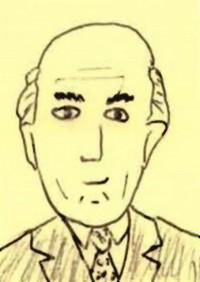
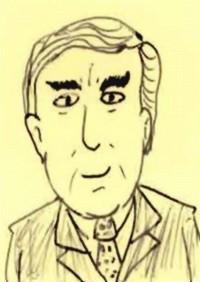
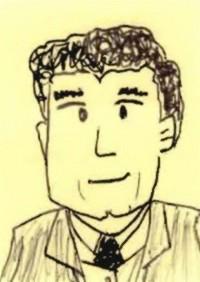
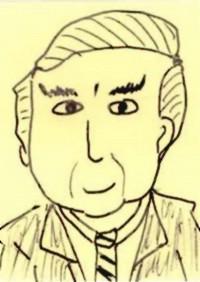
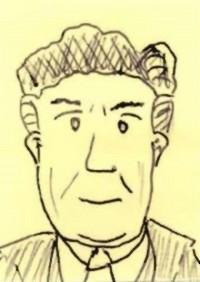
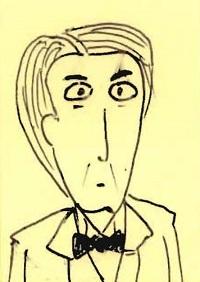
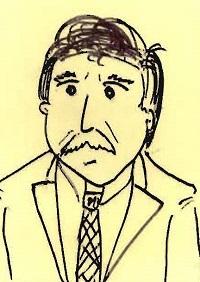
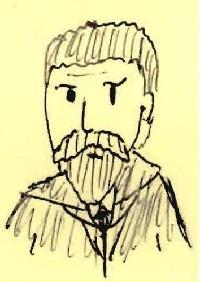
Horse 2023 - Australia's Prime Ministers - Nos 28 & 29 - Tony Abbott & Malcolm Turnbull


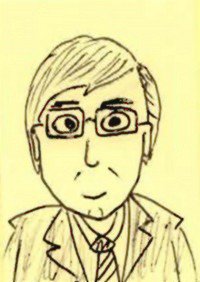
XXVIII - Tony Abbott

In the fallout from the 2007 Federal Election in which John Howard became only the second Prime Minister after Stanley Bruce to lose their own seat at the election, the Liberal Party was kind of directionless for a time.
In the face of having virtually no Opposition Leader to speak of, Kevin Rudd achieved preferred Prime Minister polling levels of 74% at one stage. Dr Brendan Nelson held the job for almost a year before Malcolm Turnbull took over and then on 1st Dec 2009, Tony Abbott became Leader Of The Opposition.

Abbott who had previously been a staffer for the Liberal Party including job a press secretary to Liberal Leader John Hewson, was parachuted into the richest electorate in the country and which has only been held by the Liberal Party or its predecessors.

2009 was a fortunate date to become Opposition Leader because it meant that Abbott had sufficient time to draw the party together and mount a challenge at the 2010 election. The 2010 election would result in a hung parliament with both the Labor Party and the Liberal/National coalition falling short of the required number of seats needed to form government. The Labor Party only formed government because of the support of the crossbench and Abbott would have to wait three more years before he became Prime Minister.
At the Sep 2013 election, Abbott's coalition won back government; taking 90 seats to 55 seats and needed no help from the crossbench.

Abbott's government was perhaps most noted for its headline position to do with asylum seekers and boat arrivals. As the Opposition Leader, Abbott promised that a government that he would lead would "stop the boats" and for the most part it did. This however would come with its own problems and after an initiative to turn back boat arrivals called Operation Sovereign Borders was launched, four mainland detention centres were closed and deals were made with countries such as Papua New Guinea and Nauru to accept refugee and asylum seeker arrivals.
In Feb 2014 a riot in the Manus Island detention centre erupted and it was reported that processing of visa applications had in fact stopped on Manus Island. The United Nations refugee agency, the UNHCR, warned Australia that its decision to send asylum seekers to Papua New Guinea could breach international law and its human rights obligations.

Things weren't all quite so polarising though. Almost under the radar of the media, Tony Abbott did flag that he would "sweat blood" to see recognition of Indigenous peoples incorporated in the federal constitution; with the hope that this would coincide with the 50th anniversary of the 1967 referendum which repealed Section 127 which said that "aboriginal natives shall not be counted" in reckoning population.

On the trade front, Abbott concluded free trade agreements with Japan, South Korea and China but it was elsewhere in foreign policy that Abbott showed his statesmanship.
With the shooting down of Malaysia Airlines Flight MH17 over Ukranian air space by presumed Russian backed troops, the Minister for Foreign Affairs Julie Bishop, led negotiations at the UN Security Council to have that crash site declared untamperable by unfriendly powers. When another  Malaysia Airlines plane, flight MH370 disappeared over the Indian Ocean on a flight from Kuala Lumpur to Beijing (so completely in the wrong direction), Abbott personally committed both the navy and the air force to looking for debris.

In September of 2015, Abbott would not survive a leadership spill when current Prime Minister Malcolm Turnbull won 61-39.

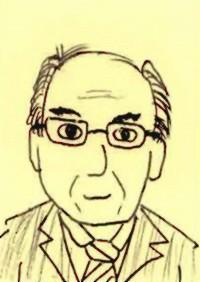
XXIX - Malcolm Turnbull

Malcolm Turnbull is perhaps more interesting for what he did before becoming Prime Minister because not yet even being seven weeks into the job, there isn't a lot to judge by in the grand scheme of things.

As a lawyer, Malcolm Turnbull was able to have the British Government's objections to an autobiography by an ex-MI5 officer Peter Wright, overruled. The book called "Spycatcher" speaks of an MI6 plot to assassinate the President of Egypt Gamal Abdel Nasser as well as of a joint MI5/CIA plot against British PM Harold Wilson. The British Government who saw it as damaging, wanted to have the book banned but Turnbull led the legal team which lifted the book's supression orders.

On the business front, Turnbull had made a wise business decision by buying a stake in tech-startup Ozemail in 1994 for $500,000 and eventually selling it to WorldCom five years later for $57m.
In the light of that, Turnbull's appointment in Abbott's cabinet as the Minister for Communications and in particular the minister responsible for the National Broadband Network, seems rather a good fit.

Since becoming Prime Minister. the heat of political debate appears to have died down a little. The Abbott Government's proposal to deregulate university fees appears to have been postponed until at least 2017 and it also appears that if there is to be a plebiscite on the subject of Same sex marriage that that might also be slated for 2017.
Where Turnbull's Government decides to go on issues like taxation policy, immigration and border control and on things like infrastructure remains to be seen; it also depends on what the electorate and the Senate will allow him to do.

October 26, 2015

Horse 2016 - Australia's Prime Ministers - Nos 26 & 27 - Kevin Rudd & Julia Gillard


XXVI - Kevin Rudd

The story of Kevin Rudd's premiership begins almost a decade before he even won the top spot. Rudd was elected as member of the seat of Grifith in 1998, at the beginning of a series of lucky events and masterful strokes by PM John Howard. Howard was a man of almost no charisma at the start of his term of office but following the sale of Telstra, the introduction of the GST, his handling of gun control issues following the massacre at Port Arthur, the terrorist attacks on Sep 11 2001 and two subsequent wars in Afghanistan and Iraq, he built his charisma as he went along; into something formidable.
The opposition Labor party lurched along with Kim Beazley at the helm for two losing elections in 1998 and 2001, Simon Crean who took over for a while, Mark Latham who was a disasater and lost the 2004 election, before handing the reins back to Kim Beazley. Kevin Rudd who had been Shadow Minister for Foreign Affairs, took over as leader of the Labor Party in 2006 and then won an 83-65 landslide in the 2007 election.

Almost as the parliament's first action, Rudd organised an official apology to the "stolen generations" of Indigenous Australians who had been taken away from their families because of the actions of Federal governments past. A series of targets to improve the lot of Indigenous Australians was also embarked upon but this would prove far harder to achieve.

The Rudd Government also made its business to repeal the Workplace Relations Amendment Act 2005, which came to be known as WorkChoices (no space), which among other things removed all companies with fewer than 101 employees from unfair dismissal laws, changed the way that minimum wages were set, reduced the powers of the the Australian Industrial Relations Commission, phased out the system of Australian Workplace Agreements and installed a new board called Fair Work Australia with more oversight.

It was on the economic front though that Rudd's Government was to face its biggest test and in 2008 it did a rather good job of management during the Global Financial Crisis.
Sparked by the US housing bubble and a series of complex insurance and equity instruments, the US economy tanked, which resulted in trillions being wiped off the value of markets and banks refusing to extend credit.

In Australia, the Rudd Government as led by Treasurer Wayne Swan, initiated an stimulus package worth A$10.4bn and a second package worth A$42bn. In addition to this, the Federal Government sured up Australian banks by underwriting deposits at major banks, kick-starting spending with a $900 splash to taxpayers and announcing the beginning of two headline programs called Building the Education Revolution which saw the building of school buildings and the beginning of the National Broadband Network.

The Rudd Government failed to pass legislation surrounding a proposed carbon emission trading scheme and copped flak with regards its Minerals Resource Rent Tax. In June of 2010, the Labor Party dumped Rudd as leader and replaced him with the first female Prime Minister Julia Gillard.


XXVII - Julia Gillard

Julia Gillard had been Deputy Prime Minister since Labour had won the 2007 election and in the June 2010 leadership spill, she was elected unopposed as leader of the party and with it as Prime Minister.

Gillard's Government was quick to establish legitimacy and 23 days after she became Prime Minister, she announced an election.
The resulting bunfight saw Labor with 72 seats, the Coalition with 72 seats and six crossbench MPs. The Greens Adam Bandt and three independent MPs Andrew Wilkie, Rob Oakeshott and Tony Windsor, threw their support behind Gillard's government with regards supply and confidence and thus Labor remained in power 76-74 after everything had washed out.

Even though the Rudd Government before the election couldn't secure passage of its  emissions trading scheme, a fixed price on carbon emissions was secured in preparation for an eventual trading scheme and this finally came into being on 1st July 2012.

Gillard's Government introduced Plain cigarette packaging laws and in ongoing education reform, sought agreement from the six state governments for its National Education Reform Agreement, following the Gonski Report.

Ms Gillard herself became the target of increased personal attack on the floor of the parliament from Opposition Leader Tony Abbott; this finally came to the boil on X when she fumed at him for fourteen minutes in what has now become known as the "misogyny speech".
The level of political discourse continued to sink, particularly over issues like asylum seekers and undocumented boats arriving on Australian territory and it was issues such as the budget and border security; particularly over mandatory detention and sending asylum seekers to places like Malaysia and Nauru, that the Labor party became increasingly fractious and by 2013, Gillard faced two leadership spills in March and June; with the second ultimately signalling the end of her premiership.

XXVI - Kevin Rudd (again)

Rudd's second tilt at the Prime Minister ship was fraught with negativity. He personally rescinded his concerns about sending asylum seekers to Nauru and Papua New Guinea for offshore processing and the Greens became increasingly concerned with their support of the government.

Wayne Swan resigned as Treasurer and Chris Bowen took over that job and although the Rudd Government tried to make some headlines with regards the constitutional recognition of  Indigenous Australians, changing position on the subject of gay marriage and enacting the  Better Schools Plan which was a watered down version of what David Gonski had outlined in his report, by the time of the 2013, the government was walking wounded.

Tony Abbott's Liberal/National coalition easily won the September 2013 election 90 seats to 55. Julia Gillard did not contest her seat and Kevin Rudd resigned from parliament within a fortnight of the election. Later, Mr Abbott would boast that he had taken out two Labor leaders and was on course for three.

October 05, 2015

Horse 1999 - Australia's Prime Ministers - No 25 - John Howard


XXV - John Howard

John Howard was elected to the seat of Bennelong in the 1974 election whilst Gough Whitlam was still Prime Minister and was part of the faction which backed Malcolm Fraser over Billy Snedden. After being Minister for Business and Consumer Affairs, he was then appointed as Treasurer in 1977; which he held until 1983 when Hawke came to power.
Following a brief spell of Andrew Peacock as Leader of the Opposition, Howard held the position of Opposition during the unsuccessful 1987 election campaign.

Politicians generally have one of two broad reactions to losing an election, they either never try again or they go away and learn and by the time of their next tilt, they come back better. Howard was of the latter of the two and following Dr John Hewson who tried to introduce a 15% GST at the 1990 election and an eight month stint by Alexander Downer which came to nothing, in January 1995 Howard was again made party leader and was rewarded with a comprehensive victory in the 1996 election, winning 94 seats.

Howard's first challenge as Prime Minister would happen when a gunman went on a killing spree at Tasmania's historic Port Arthur prison, killing 35 people and injuring 23. The Howard Government acte quickly and almost without opposition from the other side of the chamber, the National Firearms Programme Implementation Act 1996 was passed and restricted the ownership of many automatic and semi-automatic weapons.

A further series of complications arose for the Howard Government following the High Court's desision in Wik Peoples v Queensland which held that native title rights could co-exist with pastoral leases. In response to this, native title legislation eventually took more than two years to rattle through the parliament; with more than 200 amendments being made as the bill was passed back and forth between the two houses.

It is on the economic front that Howard is most remembered though because under his premiership, the taxation system of Australia was fundamentally changed.
In Howard's first term as Prime Minister, his government undertook some highly unpopular spending cuts and made changes to industrial relations regulations which deeply angered those on the left. In conjunction with these spending cuts came the partial sale of government telecommunications company Telstra; which would eventually lead to its full privatisation.
Having previously promised that a Goods and Services Tax (the GST) would "never ever" be part of Coalition policy following the supposedly "unwinnable election which previous PM Paul Keating somehow won, Howard called a snap election on 3rd October 1998. Although the Coalition lost the popular vote by a narrow margin and 14 seats, they still retained 80 seats to Labour's 67 and took that as a mandate to pass the GST legislation.
Again, months of negotiations followed including the last significant thing that the Australian Democrats ever did and wrangle that fresh food would be exempt of GST. The "A New Tax System (Goods and Services Tax) Act 1999" or GST act, was passed in mid 1999 and came into operation in July 2000.

Howard's government probably would have faced difficulty in the 2001 election if it wasn't for the events on 11th September 2001, when two planes crashed into the World Trade Centre in New York City and one into the Pentagon in Washington DC.
Following an incident when they Norwegian freighter MV Tampa was refused landing in Australia because it was carrying 438 rescued refugees (who were mostly Hazaras of Afghanistan), this changed the public's view of the Howard Government and suddenly it was seen to be strong.
Howard promised military support to the United States with the War in Afghanistan and the subsequent "War on Terror" as it came to be known, when Australian troops were also sent to help in the US-led "Multinational force in Iraq".

With the Afghanistani and Iraqi wars still in swing, Howard's Government was rewarded with a fourth term in the 2004 election but it would be the last. From 2006 and onwards, with the change in the Senate, the Coalition won control of both houses of parliament and the new sets of industrial relations changes which collectively came to be called "WorkChoices" which sent industrial disputes through the new Workplace Authority rather than the old Australian Industrial Relations Commission which became largely impotent.

Even with net debt which was cut to less than zero in 2007, this came largely on the back of a commodity boom as a result of the growth of Chinese demands for minerals. Had the Howard Government not embraced a program of asset sales, this would have never have happened. Howard's Government during this time also made five sets of income tax cuts in six taxation years.

In the November 2007 election, Howard's term came to an end; having been Prime Minister for 11 years and having been in Parliament for 33 years. After his time in parliament, the Australian and New Zealand cricket boards unsuccessfully nominated him as their candidate  for president of the International Cricket Council, in 2008 he was awarded the Companion of the Order of Australia (AC) and in 2012 he was appointed as a Member of the Order of Merit (OM) by Queen Elizabeth. He has subsequenty published several books.

August 26, 2015

Horse 1968 - Australia's Prime Ministers - No 22 - Malcolm Fraser


XXII - Malcolm Fraser

Depending on how you want to read events, Malcolm Fraser's first term of government lasted for something in the order of two and a quarter hours on that fateful afternoon of 11th November 1975.

Whitlam was offficially decommissioned as Prime Minister by the Governor-General Sir John Kerr, during their 1pm meeting. The Senate had still not been informed officially and it would have appeared really strange when at 2:24pm, the appropriation bills which formed the 1975 Budget bills passed the Senate.
At 02:34pm Fraser stood in the House of Representatives and announced that he had been appointed as the new Prime Minister by Kerr and immediately the House passed resolution after resolution defeating the "new" government, which included passing a no confidence motion in Fraser.
With supply secured, Fraser then advised Kerr that there were no fewer that 21 bills which counted as election triggers under section 57 of the Constitution and so approval was given to dissolve the parliament and an election was called for 13th December 1975.

To Whitlam's surprise, 30 seats changed hands and Fraser's Liberal/National coalition was installed as the government with 91 seats to 36. The Liberal Party by themselves won 68 seats which meant that they could have held government in their own right but they chose to remain in coalition with their partners the National Country Party who had changed their name from the Country Party.

Fraser's government sought to cut back many of the Whitlam Government's program and this meant a vast reduction in overall government expenditure. The new universal health insurance system Medibank was vastly altered, the ABC saw a series of deep cuts which would last from 1976 to 1985 and the public service began to shed jobs.

In the meantime Fraser's Government would establish the Commonwealth Ombudsman, the Human Rights Commission, the Special Broadcasting Service (SBS) as well as passing the first piece of aboriginal land law with the Aboriginal Land Rights Act 1976.

Under the Fraser government, Australia took in more than 200,000 Asian migrants with about a quarter of those being Vietnamese refugees. In order to help people resettle and start a new life, the Australian Institute of Multicultural Affairs was also established.

At the 1977 election Fraser's Government retained government but lost 5 seats in the process. Whitlam who was still Opposition leader going into the election resigned not long after. Three years later, the government lost a further 12 seats in the 1980 election but was still awarded a third term in government.

Under pressure from Fraser, the Treasurer Phillip Lynch resigned and John Howard was promoted to the position but facing a period of double digit inflation and double digit unemployment known as "stagflation" the task was never going to be easy. Fraser wanted to pass an expansionary budget in the face of a looming recession and he and Howard frequently disagreed on what that should look like. By 1983 there was significant increases in spending on national highways and aviation infrastructure, as well as increases in welfare and transfer payments. At the same time construction of the new Parliament House began and this was expected to be completed in time for the bicentenary of British settlement in 1988.
In 1982, a Federal Enquiry was launched into the Australian banking system and foreign banks were allowed to open for the first time.

Following a by-election in the seat of Flinders in January 1983, Fraser called for an election for the 5th of March. On the morning of 3rd February as Fraser was visiting the  Governor-General, the Opposition Leader Bill Hayden resigned his post and Bob Hawke replaced him as Labor leader.
Ultimately the Fraser Government would lose the 1983 election, 24 seats in the process and suffer the worst defeat by any non-Labour government ever. Fraser would not go on to lead the Liberal Party in Opposition and did not stay in Parliament too long afterwards either, resigning two months later.

July 31, 2015

Horse 1949 - Australia's Prime Ministers - No 21 - Gough Whitlam


XXI - Edward "Gough" Whitlam

For the first time in 23 years, Australia had a Labor Government. Although Labor won a 9 seat majority in the lower house, it still found itself with a hostile Senate; no Senate seats had been up for election, as they had been elected in 1970.

Although Whitlam had been sworn in as Prime Minister on November 5, the full results of the election weren't official for another two weeks. In the interim, Whitlam appointed Lance Barnard as deputy prime minister and between them, they assumed all 27 cabinet positions, with Barnard taking 14 and Whitlam 13.

During the two weeks of the "duumvirate" cabinet, where Barnard was Minster for Everything and Whitlam was Minster for Everything-Else, they ordered the establishment of proper diplomatic relations with the People's Republic of China (and formally broke off ties with Taiwan), eliminated sales tax on contraceptive pills, instructed UN Delegates to vote in favour of sanctions on South Africa die to Aparthied, officially barred discrimination on racial grounds for all sport teams in Australia and announced the end of conscription.

When the full cabinet was establised, the government abolished tertiary tutition fees, abolished the death penalty for federal crimes, established a legal aid framework which would later become the Commonwealth Legal Aid Commission, installed "Advance Australia Fair" as the national anthem and founded the Department of Urban Development to bring many people's houses up to standard by at least ensuring that they were connected to sewers.

Whitlam's government still couldn't pass the legislation that it wanted to though and by March 1974, the Senate rejected 19 bills and 10 of them on their second presentation. Whitlam's solution to this was to offer former Premier of Queensland Vince Gair, the position of Australian Ambassador to Ireland and thus create a casual vacancy in the Senate. In doing so, this would cause the election of six Senators for Queensland and not five; thus in winning 3 of those Senate seats, Whitlam would have taken control of the Senate. 
On 2 April 1974, a group of Country Party Senators kept Gair in their offices beyond the 6pm deadline required to issue the writs for the election of Queensland Senators by plying Gair with beer and prawns and thus the writs were delayed sufficiently long enough not to cause six instead of five vacancies at the election. This delaying tactic became known "the Night of the Long Prawns" but it was irrelevant anyway because Whitlam cited six bills as triggers for a double dissolution and it was held on 18 May 1974. The election changed nothing; even after the election, there was still a hostile Senate.

The Labor Government was returned (being only the second Labour Government returned to office since Federation) and at the Joint Sitting of parliament on  6-7 August 1974, the six bills which had been used to trigger the election all passed.
- Commonwealth Electoral Bill (No. 2) 1973: which added more electorates and reduced population variances.
- Senate (Representation of Territories) Bill 1973: which gave the ACT and NT two Senators each
- Representation Bill 1973: which exluded the territories from population requirements in determining the number of seats they could have 
- Health Insurance Bill 1973: which set up universal health care (which is now Medicare)
- Health Insurance Commission Bill 1973: which set up the Health Insurance Commission (now Medicare Australia)
- Petroleum and Minerals Authority Bill 1973: which set up a body to control petroleum and mining resources

The 1973 oil crisis saw a slump in commodity prices and a spike in prices for goods and services. Inflation ran at 13% and unemployment jumped from 2% to 6%. Whitlam found his budgets facing financial issues and when he wanted to fund plans for various projects such as a uranium enrichment plant, a natural gas pipeline and the final electrification of Australia's railways (which still hasn't happened), he sought funding of $4bn from London firm Dalamal and Sons. It ultimately never resulted in any loans but it galvanised the opposition into delaying passing the 1975 budget.
On the other side of the chamber, Billy Snedden lost the leadership after having failed to win government in the 1974 election and in March 1975, Malcolm Fraser became leader of the Opposition.

Even after passing legislation like the Family Law Act 1975 and Racial Discrimination Act 1975, and after setting up the Aboriginal Loans Commission and handing the Gurindji people  of the Northern Territory title deeds to their tradtional lands, the damage was done. The Appropriation Bills for 1975 were delayed and delayed until six months later when on 11th November 1975, when Whitlam went to see the Govenor-General Sir John Kerr, his government was dismissed and installed Malcolm Fraser as Prime Minister. Before all members of parliament were even aware, the Senate passed the 1975 budget and Kerr dissolved Parliament for a double dissolution election to be held in December.

Whitlam would remain as Opposition Leader for both the 1975 and 1977 elections but ultimately lose both of them. Even though Whitlam's Government has been described as frenetic, breathless and even chaotic, it arguably changed Australian politics in three short years more than any government has done before or since. Those three years still leave long shadows and a legacy today.

July 17, 2015

Horse 1939 - Australia's Prime Ministers - No 20 - William "Billy" McMahon


XX - William "Billy" McMahon

William "Billy" McMahon was one of the original 49ers. That is, he was part of the group of new members to the House of Representatives in 1949 when Menzies led the Liberal Party to government. By the time Gorton was forced to resign in 1971, McMahon had been a cabinet minister in various portfolios for 21 years; which is a record that still stands and would again take some pretty interesting circumstances to break.

As the most senior member of the Liberal caucus and the only really acceptable candidate for both side of the coalition, McMahon was the logical choice for the next Prime Minister
after Gorton resigned the post. What I don't understand though in any sense id why Gorton ran for and won the post of Deputy Leader of the Liberal Party. McMahon was more or less forced to give McMahon a cabinet position and installed him as the Minister for Defence but following a spate of leaks from cabinet meetings, McMahon demanded and got Gorton's resignation.

During Gorton's tenure as Defence Minister, in 1971 McMahon cancelled Australia's plans to build nuclear power stations which also would have included the ability to produce weapons grade plutonium. This was also in line with plans to sign the United Nations' Treaty on the Non-Proliferation of Nuclear Weapons, which would eventually be ratified two years later.

Set against the climate of the continuing Vietnam War, the new Opposition Leader Gough Whitlam called for Australia's formal recognition of China which he opposed. This was made to look somewhat foolish when US President Richard Nixon toured China in 1972.

McMahon held the 1972 election for as long as it was statutorily possible and released a pre-election budget which was denoted in the press a being a "pork barrel" budget (McMahon also accused the ABC of "tremendous bias" in its current affairs programs), which saw government spending increase, especially in the areas of rural spending and social security payments and at the same time reduced personal income tax. At the same time, unemployement rose from 2% to 6% and inflation also rose to 7%.

On the other side of politics, Gough Whitlam and the Labor Party's "It's Time" campaign played on like a bandwagon and people duly got on board. McMahon's government saw an 8 seat swing against it, which wasn't as bad as it could have been but it did bring an end to 21 years of coalition governments; thus McMahon became the longest serving Prime Minister to leading the party, having never taken it to victory at an election.
McMahon would go on to serve as Deputy leader in Billy Snedden's Shadow Cabinet and eventually Father of the Parliament before finally resigning from Parliament in 1982.

May 19, 2015

Horse 1901 - Australia's Prime Ministers - No 12 - Robert Menzies (Again)


XII - Robert Menzies (again)

Following Chifley's use of the army to break up a coal miners' strike in August of 1949 and with the House of Representatives being expanded from 74 to 121 seats, Menzies was able to exploit an anti-communist sentiment and was swept to power convincingly. Chifley had announced intentions to nationalise the banking sector and this in a climate of hope following on from a period of war, made the Labor party look suspicious.
Despite the Liberal/Country coalition holding a 74 to 47 majority in the House of Representatives, Labor still held a 34 to 26 majority in the Senate.

Menzies' government was frustrated in passing legislation and so hoped to gain an election trigger by introducing a bill to ban the Communist Party of Australia which surprisingly had picked up 2% of the vote. To Menzies' confusion and further frustration, Labour passed the bill and it would have been enacted had the High Court not ruled it as unconstitutional.
Menzies fear of the Communist Party was understandable. Whilst on holiday in England in 1948, the Soviet Union blocked the Western Allies' access to West Berlin via rail and road. In response, an airlift was organised which flew supplies into West Berlin. This coupled with the annexation of Poland, Czechoslovakia, Romania and Bulgaria was the cause of real concern.
Instead, Menzies' was able to secure a double dissolution election by trying to pass banking regulations which failed in the Senate. Although 5 seats changed hands in the House of Representatives, Menzies gained majority in the Senate which made life easier. Menzies' subsequent c through a referendum in September 1951, failed though.
Menzies' governments would go on to win the next seven elections in 1953, 1954, 1955, 1958, 1961, and 1963, but to gloss over a period of 16 years as Prime Minister is to do the man an injustice.

With help from the Stalinist USSR and Communist China, hostilities broke out on the Korean peninsula between the two separate governments which had tried to establish legitimacy. When war broke out in June 1950, Australian units which had been based in Japan were moved to Korea; Australia was the second nation behind the United States to commit its military to fighting in Korea. The Korean War would come to a ceasefire in 1953 but has still never been formally resolved.
In the midst of this, Menzies' Government entered into the ANZUS Pact with the United States and New Zealand and the treaty has very much shaped Australia's military policy ever since.
Menzies' Governments would also be in power during the Indo–Malaysian Confrontation from 1962-66 and when the Vietnam War broke out in 1962.

Before the 1954 election though, a Soviet diplomat named Vladimir Petrov announced his defection from the USSR and that there was evidence of a Soviet spy ring operating out of Australia. Given that the referendum in 1951 (which had failed) was defection from the USSR, this announcement played well and Menzies was returned to government easily.

In 1959 Reserve Bank Act, finally freed the central banking functions from the Commonwealth Bank and in its place set up the Reserve Bank of Australia; which also included the responsibility of issuing currency. In 1960, the Reserve Bank opened up more flexible interest rates and this allowed them to enact more fluid monetary policy.

Menzies' governments saw the world change vastly with the introduction of television in 1956, a shift in focus of trade from Britain to the US and legislation which saw Australia decimalise the currency and replace the Australian Pound with a new Australian Dollar.
Being Prime Minister for a shade over 16 years, he saw off Labor oppositions led by Dr Herbert Evatt and Arthur Calwell and when he finally resigned as prime minister on Australia Day 1966, he was the oldest person to have ever been Prime Minister. His replacement Harold Holt, had been Treasurer for eight years and this was seen as a logical progression.

April 21, 2015

Horse 1880 - Australia's Prime Ministers - No 16 - Ben Chifley


XVI - Ben Chifley

Joseph Benedict "Ben" Chifley took over the leadership of the Labor Party and with it the premiership, on the 13th of July 1945. Within three weeks of his appointment as Prime Minister, the Second World War came to a close and the business of rebuilding and demoblising the country had begun; and it begun with rapidity.

Famously, Chifley had left school at the age of 15 to become a railway locomotive driver and as a result, joined the Australian Federated Union of Locomotive Enginemen and the Labor Party. Chifley was probably one of the only Prime Ministers to have a genuinely working class job before entering politics and in the course of representing his union, he learned industrial law from the inside.

Perhaps what Chifley is most remembered for was a government policy which had been floating around since the mid-1930s, an Australian mass produced car. General Motors-Holden's Limited had been in war production making field guns, aircraft, and marine engines. In 1947, the Chifley Government sent an envoy to Detroit and the idea of an Australian car was born.
On 29th Nov 1948, the first Holden 48/215 rolled off the production line and 18,000 people had pre-ordered one, despite never seeing the vehicle before and it costing 94 weeks' wages or £733.

More importantly though, during Chifley's only term as Prime Minister, his government created the Commonwealth Employment Service, the CSIRO, ASIO, founded the Australian National University, introduced the pharmaceutical Benefits Scheme, set up funds for public housing, nationalised QANTAS and TAA, started the Snowy Mountains Scheme, set up the Coal Boards and Dairy Boards, expanded the central banking powers of the Commonwealth Bank and set up repatriation funds for returned servicepeople.

Chifley also was able via referendum to extend the Section 51 Constitutional powers of the Commonwealth to legislate for "maternity allowances, widows' pensions, child endowment, unemployment, pharmaceutical, sickness and hospital benefits, medical and dental services".
In just three years, Chifley's government passed 299 Acts, which was a then parliamentary record.

Chifley's government was able to pass legislation which made it illegal to give striking workers financial support and this was seen by the miners' federation and the largely dormant Communist Party of Australia as an attack on them. As a result, 23,000 coal miners went on strike 27 June 1949 to 15 August 1949 and in some mines near Newcastle, 2500 Australian Army soldiers were sent in to break the strike.
Even despite this, in the run up to the December election of 1949, Opposition Leader Robert Menzies was able to exploit this as a Communist "red scare" and in the expansion of the  House of Representatives from 74 seats to 121 seats, Menzies won all 47 extra seats as well as taking away one from Labor (Labor did steal away four seats from minor parties); thus Menzies held 74 of 121 in the new look house.

Chifley would remain as Opposition Leader from 1949 through the double dissolution election in April 1951 but died of a heart attack not long after the election.

April 10, 2015

Horse 1873 - Australia's Prime Ministers - No 15 - Francis Forde


XV - Franics Forde

There's sort of a strange legend which grew up around the Premiership of Francis "Frank" Forde.
"The only known photograph of Francis Forde as Prime Minister, is of him in military uniform; standing at a railway station."
The reason for this is that you can basically describe his week long premiership in a few sentences.
John Curtain had died in office. Forde was his deputy and took over in a temporary role. The Labor caucus voted for someone else. Game over.
That story whilst being technically correct (the best kind of correct) is a black and white snapshot of a picture full of colour and depth, and was a technicolor mess.

On the other side of the political divide, Menzies had resigned and Fadden as the leader of the minor of the two parties in the coalition, took over the job as Prime Minister. When two independents crossed the floor, Curtin passed a £1 variation budget and stole supply (and with it government) on the floor of the house. The Australian people confirmed their confidence in his government by giving his Labor party a proper majority at the next election.
Curtain though, like any leader of a large political party, had to deal with the internal factions and posturings within his own party. Curtin who was very much a Labor leftist, appointed Forde as his Deputy who was much further to the right. Curtin's premiership came to sudden and abrupt ending though - he died.
It was pretty well much always assumed that Forde would be the next leader of the party but when this was put to a formal vote just eight days later (13th July, 1945), the caucus decided differently.

Forde lost the leadership ballot against Ben Chifley and Norman Makin but would remain on as Deputy Leader of the party until the 1946 election where he lost his own seat. As Minister for Defence after the Second World War had ended, he was held as the principle actor and reason why troops were slow in being demobilised. After being ousted from his seat in Federal Parliament, he returned to the Queensland state parliament after a period as Australian High Commissioner to Canada.

During Curtin's tenure as Prime Minster though, the landscape had changed on the other side of the chamber. Following a meeting with Menzies and a few key UAP members, a conference was organised in Canberra which brought together 18 different rightist political groups including MPs and the IPA and media owner Keith Murdoch. This meeting would mark the end of the UAP and herald its successor, the Liberal Party. The party was formally announced in the Sydney Town Hall on 31st August 1945.

Had Forde remained as Prime Minister, he would have squared off against Menzies in an election race but that day never came. Labor had jotled to the left and thrown him off the cart. Frank Forde was a victim of circumstance and had the winds of political fortune been blowing in a different direction, Forde's story would have been far grander than just an interesting appendix.

March 10, 2015

Horse 1856 - Australia's Prime Ministers - No 14 - John Curtin


XIV - John Curtin

When Scullin resigned as Opposition Leader in 1935, it was expected that Francis "Frank" Forde would take over as party leader. However the leftist sections of the Labor Party which included trade unionists, sided with John Curtin and he was elected by one vote in the caucus.

Curtin would lead the Labor Party to two defeats in the 1937 and 1940 elections and was Opposition Leader whilst Lyons, Page, Menzies, Hughes and Fadden all rotated through the office of Prime Minister. As Curtin was always worried about his own leadership position, he rejected Menzies' offer to form a unity government in 1940, although he did join a non-partisan Advisory War Council in 1940 which would eventually be disbanded at the close of the war.
Menzies' government had only secured power by negotiating with two independent members on matters of supply and internal fracturing would eventually cause them to pass a £1 variation budget; thus installing Curtin's Labor Party as the new government on 7th October 1940.

Curtin was far less submissive to the requests of Britain during the war and following Japanese attack on Pearl Harbour, a year and a month after becoming Prime Minister, and the loss of two Royal Navy battleships three days later, Curtin began to express the opinion that Australia might be invaded by Japan.

On Boxing Day of 1941, Curtin had the following piece published in Melbourne's "The Herald":
The Australian Government, therefore regards the Pacific struggle as primarily one in which the United States and Australia must have the fullest say in the direction of the Democracies' fighting plan. Without any inhibitions of any kind, I make it clear that Australia looks to America, free of any pangs as to our traditional links or kinship with the United Kingdom. We know the problems that the United Kingdom faces. We know the dangers of dispersal of strength, but we know too, that Australia can go and Britain can still hold on. We are, therefore, determined that Australia shall not go, and we shall exert all our energies towards the shaping of a plan, with the United States as its keystone, which will give to our country some confidence of being able to hold out until the tide of battle swings against the enemy.
- John Curtin, The Herald, 26th Dec 1941¹

Clearly a piece like this in a daily newspaper signalled an intent for Australia to change its direction of attention. Churchill was reportedly furious at the announcement and was positively livid when Curtin placed Australian forced under the command of Allied Supreme Commander in the South West Pacific Area, Douglas MacArthur.

When Singapore fell on the 15th of February of 1942 and when the entire 8th Division of the Australian Army was captured, Churchill wanted to exert his control over Australia by shifting the 6th and 7th Divisions to Burma. When Darwin was bombed on the 19th, it was really only then that Churchill came to regard Australia's worries as serious.

Quite apart from managing Australia's war commitments, Curtin's Government assumed sole control of Income Tax from 1942, passed several key pieces of legislation with regards pensions, child endowments and made Aboriginal peoples eligible for pensions for the first time.
From a legal perspective, Curtin's Government asserted Australia's independence by finally passing the Statute of Westminster Adoption Act (1942). British Law would no longer hold supremacy.
The 1943 election saw an 18 seat swing to Curtin's government and in the accompanying half-Senate election, Labour won 19 of 19 seats.

As the war dragged on though, Curtin's heart began to give out; maybe it was the stress he incurred as a result of leading the country through the war.
Curtin died in The Lodge on the 5th of July 1945 and within nine weeks, the war would be over. General Douglas MacArthur would later say that "the preservation of Australia from invasion will be his immemorial monument"; though really, the transformation of Australia from a fragmentary state, to one which seriously looked at the provision of welfare for many of its citizens for the first time, is probably Curtin's greatest legacy.

¹http://john.curtin.edu.au/pmportal/text/00468.html

March 03, 2015

Horse 1850 - Australia's Prime Ministers - No 13 - Arthur Fadden


XIII - Arthur Fadden

When Menzies resigned as leader of the UAP because of increasing pressure to resign, the party was so completely rudderless that Billy Hughes was appointed to convene the joint UAP/Country caucus to elect the new premier. Thus Arthur Fadden was appointed at the thirteenth Prime Minister of Australia, despite coming from the smaller of the two parties in coalition.
His tenure was short-lived.

Even though Fadden's cabinet was a star studded cast which included no fewer than six Prime Ministers both past and future, it was still teetering on knifeedge.

In the 1940 federal election, when Menzies had led the coalition to victory, it still required the support of two independents Arthur Coles and Alex Wilson to secure supply; they were still annoyed at the way that Menzies had been treated.

On the 3rd of October 1941, not even six weeks after becoming Prime Minister, Fadden's government lost supply when Coles and Wilson voted against Fadden's budget; thus creating a loss of supply.
The Opposition Leader John Curtin, whose Labour Party had 32 seats, then formed its own coalition with the curiously named "Australian Labor Party (Non-Communist)" which was a break-away party led by former NSW Premier Jack Lang and the Coles and Wilson.
They then proceeded to pass exactly the same budget with Fadden's government had tried to pass but had varied it by £1.
Fadden would later go onto joke that he was like the Flood in that he had "reigned for 40 days and 40 nights".

As Opposition leader, he was always overseeing a coalition that remained in crisis and at the 1943 election, the UAP/Country coalition lost even more ground with the loss of 18 seats.

February 09, 2015

Horse 1837 - Australia's Prime Ministers - No 12 - Robert Menzies


XII - Robert Menzies

When Earl Page refused to serve under Menzies, he withdrew the support of the Country Party for the United Australia Party and so Menzies' first government was a minority government. Menzies first ministry included former PM Billy Hughes as Minister for Industry and future PM Harold Holt as Minister without portfolio assisting the two Ministers for Supply and Trade.
Menzies' and Page's hositilities continued but on the 3rd of September 1939, when Britian and France declared war on the Third Reich following its invasion of Poland on the 1st, Menzies also declared Australia to be at a state of war:

Fellow Australians. It is my melancholy duty to inform you officially that in consequence of a persistence by Germany in her invasion of Poland, Great Britain has declared war upon her and that, as a result, Australia is also at war.
- Robert Menzies, via ABC Radio, 3rd September 1939.

With this declaration of war, Earle Page offered the support of the Country Party to again form a formal coalition government but Menzies point blank refused. Even though the Country Party appointed Archie Cameron as its leader, no formal agreement or coalition was reached until the 14th of March 1940 following the loss of a by-election to a Labor candidate, on the resignation of Richard Casey, who became Australian Ambassador to the United States.
When Cameron agreed to Menzies' demand that the UAP as the major of the two coalition parties should have the casting vote in ministry posts, the formal coalition was agreed upon.

Menzies government was in trouble after three ministers were killed in an RAAF plane crash en route to Canberra and a shock 1940 election result in September which saw the UAP/Country coalition claim only 36 seats from 74 and thus fell 2 seats short of attaining majority government.

With the war intensifying, ALP leader John Curtin offered to form a unity-type government which Menzies refused but he did accept a proposal to set up an Advisory War Council in which both the government and opposition had equal representation.
Menzies left for four months to go to London to discuss strategy and the movements of Australian troops in Europe, as did Prime Ministers from Canada and New Zealand but back home with Arthur Fadden in charge as temporary PM, the domestic situation worsened and when Menzies returned to Australia, he found that he came under increasing pressure to resign, and so did so on 28th August 1941.

VII - Billy Hughes (again - kind of?)

Technically following the resignation of Menzies, Billy Hughes became leader of the UAP. His only action as leader was to convene a joint UAP-Country Party meeting to choose the next leader. The coalition chose Arthur Fadden who was sworn in as Prime Minister the next day.

December 02, 2014

Horse 1796 - Australia's Prime Ministers - No 11 - Sir Earle Page


XI - Sir Earle Page

Earle Page was first elected to the seat of Cowper on the north coast of NSW in 1919. As a member of The Farmers and Settlers Association of New South Wales, he was one of the founding members of the Country Party (the forerunner of the current National Party) and was instrumental in getting Billy Hughes to resign in 1922 in support of the then Nationalist government.
Page as leader of the Country Party, wrangled the post of Treasurer for himself under the premiership of Stanley Bruce and after the so-called Bruce-Page government was defeated by Labor in 1929, Page swung the Country Party's support to the newly formed  United Australia Party, with Joseph Lyons as leader.

Before entering into politics, Earle Page qualified as a surgeon and set up a hospital in his home town of Grafton, and apart from establishing the then rural credit scheme, Page also devised an investment fund to finance the Council for Scientific and Industrial Research, later the CSIRO. Page was knighted for his contribution to politics in 1938; and thus was firstly Dr Page and then Sir.

On 7th April 1939, Joseph Lyons died unexpectedly of a heart attack and Sir Earle Page was appointed as interim Prime Minister by the Govenor General Lord Gowrie.
Page would not last long as PM and not quite three weeks later after the UAP found a new leader in Robert Menzies, the UAP-Country coalition deposed Page; setting up Menzies as the new leader on the 26th,

Page and Menzies had a bitter dispute which played out in Melbourne's "The Herald" newspaper in which Page accused Menzies of cowardice with regards Menzies' stance on appeasement with Germany and Menzies' dispute with wharfies and dock workers who refused to load scrap iron on boats destined for Japan; the latter gained Menzies the moniker of "Pig Iron Bob".
When Menzies was sworn in as Prime Minister, Page launched into a personal attack on the floor of the parliament and withdrew the Country Party's support of the UAP; thus leaving Menzies with a minority government.

Page would never again be Prime Minister but would eventually patch up cordial relations with Menzies; serving as Minister for Commerce and eventually as Minister for Health in Menzies second and very long stint.
Page became the first chancellor of the University of New England, then Australia’s only rural university, in 1955 and he eventually retired in 1961 having been father of the house as well as the second longest ever serving federal parlimentarian in Australian history.


Three weeks as PM is hardly long enough to make a difference but his work in and around the idea of the centre-right coalition in Australia certainly is noteworthy.

October 21, 2014

Horse 1780 - Australia's Prime Ministers - No 10 - Joseph Lyons


X - Joseph Lyons

Joseph Lyons was one of eight children, whose father had lost the family's bakery business due to ill-health. Young Joseph went to work in a printer's shop at the age of 9 but was able to resume his education thanks to his two aunts.
He would eventually become a teacher and as a member of the teacher's union, joined the Labor Party in Tasmania.

He became a state member of parliament and became Treasurer and Minister for Education where he oversaw the abolition of state school fees and the setting up of many state high schools.
He would stay on through several terms of the Tasmanian state parliament and would eventually become Leader of the Opposition and then Premier of Tasmania. His state government lost the 1928 election and so he became a candidate for federal parliament in 1929; easily winning the seat of Wilmot in the Scullin Government's landslide victory.

Previous PM James Scullin's government was barely a fortnight old when the Wall Street Crash of 1929 blew apart any chance it had at normality.
Following a revolt after Scullin had reappointed Treasurer Ted Theodore, Lyons was one of six Labor MPs who defected to join the Nationalists to form the United Australia Party.
Lyons was appointed as leader of the new party as it was hoped that voters would follow him to win working-class voters. Whilst techically not defeated in an explicit  motion of no confidence, Scullin called an election after the loss in  a motion to adjourn debate.

The 1931 election saw the UAP take 34 seats which was 3 seats short of a majority and so it formed a coalition with the Country Party, which took it to 50 of 75. The 1934 election saw the coalition win 42 of 75 seats and in the 1937 election in won 44 or 75 seats.

What makes Lyon's governments interesting is that during the depression, he was able to convince unions to agree to lowering of wages for workers and despite the compaints from the Country Party, continued to impose heavy tarrifs to protect local industry.

In 1932 the NSW Premier Jack Lang refused to pay interest payments on debts that the state of NSW had accrued. In danger of defaulting, Lyons as Treasurer, stepped in and paid the debts, then passed the Financial Agreement Enforcement Act (1932). Ultimately this would lead to the Income Tax Assessment Act (1936) and the eventual surrender of the states to collect income tax revenues in their own right in 1942.

With the rise of facist governments in Germany and Italy and the beginning of Japanese belligerence, the period towards the end of the Lyons government was one of increasing overseas tension and former PM Billy Hughes was brought back into the cabinet, along with former PM Stanley Bruce who was made "Minister Without Portfolio in London". Australia in theory achieved some degree of autonomy with the passing of the Statute of Westminster 1931 but wouldn't adopt the provisions until 1942.

Lyons' government was also able to pass through a national unemployment insurance scheme, much to the annoyance of the Country Party who forced the government to repeal some sections of the act. This caused the Attorney-General and Minister for Industry, Robert Menzies to resign both posts over the issue.

On 7th April 1939, Joseph Lyons died unexpectedly of a heart attack and Sir Earle Page was appointed as interim Prime Minister. Lyons is to date the only person to have been Leader of the Opposition at both state and federal level and a State Premier and Prime Minister.

September 29, 2014

Horse 1761 - Australia's Prime Ministers - No 9 - James Scullin


IX - James Scullin

James Scullin was elected before the Great War but lost his seat of Corangamite not too long after. He moved to the inner-city seat of Yarra in Melbourne's inner east and quickly rose through the ranks of the Labor Party. In 1927 he became deputy leader of the party and there was little objection when Matthew Charlton stepped aside as Opposition leader to give Scullin the reins.
Scullin although an economic leftist, still pressed Stanley Bruce's Nationalist government quite firmly on the issues of national debt and although he lost the November 1928 election, Bruce's government became increasingly unpalatable and in the election of 12 October 1929, Scullin took government with 46 out of 75 seats, to give Labor the biggest in their history.
Scullin's cabinet was sworn in on the 22nd of October and just two days later, the stock market crash on Wall St which would herald the beginning of the Great Depression, became front page news. No government which inherited more than a billion pounds of debt and that sort of economic crash could ever hope to succeed and Scullin's government would last just two years; in a climate of total and utter economic chaos.

By the end of 1929, unemployment had already reached 13%, the price of wheat and wool which were Australia's two biggest exports had fallen through the floor and to compound the problem, because the 1929 election did not include a half-Senate election, the Senate was still loaded with Nationalists from the 1928 election.
The 1930 budget came under increasing difficulties beacause the Nationalists wanted to cut government spending, the Commonwealth Bank Board had to power to deny finance to the government unless it got what it wanted (which was also further cuts to spending) and at the same time, the Labor caucus was threatening to rip itself to pieces.

In order to appease the Senate and try to pass some sort of working budget, Treasurer Ted Theodore came up with a plan to further enact budget cuts which he hoped that the state premiers would agree to (at the time, Income Tax was collected by the states and the remitted to the federal government). NSW Premier Jack Lang dissented and soon, other state premiers followed him and they came up with the Premiers' Plan which cut spending by 20% at both state and federal level and also further cut government paid wages and pensions; accompanied with increased taxation rates.

This caused a rift within the party and Joseph Lyons who was the Postmaster-General and Minister for Works and Railways led a revolt and a group who defected with Lyons absorbed the Nationalists to form the United Australia Party. Although not technically a vote of no confidence, the group crossed the floor and successfully passed a motion to adjourn debate on 5 November 1931; and so a snap election was called.
The UAP were the logical opposition to Labor and joined the Country Party in a coalition to win government in the December 1931 election with 50 of 74 seats - Labor was reduced to just 14 and the schism was so rife in the Labor Party that the NSW members who had sided with Jack Lang's revolt, were expelled from the party at national level. "Lang Labor"would remain on the outer for the entire of the '31-'34 term and would only be readmitted in 1936.
Scullin would remain on in politics until 1949 and although he would contest the 1934 election as the Labor party leader, he was pretty well much a tired and spent force, although during World War 2, his office was next to John Curtin's and so I imagine that he would have been consulted for his advice.

James Scullin was Prime Minister in an horrendously tumultuous time. It passed no meaningful legislation and his Labor government remains the only one to have been defeated after only a single term in office.
It is worth noting that the Statute of Westminster was passed in the UK in December of 1931 which marks the start of Australia's legislative independence proper. Also, when the post of Governor-General came up for renewal, Scullin put only forward the name of the Chief Justice of the High Court, Isaac Isaacs, who was the first Australian born Governor-General; even though at the time it was seen as potentially somehow treasonous.

September 25, 2014

Horse 1758 - Australia's Prime Ministers - No 8 - Stanley Bruce


VIII - Stanley Bruce

There is a general trend in Australia politics that when the economy is doing well, the nation will tend to drift to the right and elect economically rightist governments; likewise when things turn sour, the country drifts left.

After the leader of the Country Party Earle Page had made it very clear that the party wanted Billy Hughes gone, Hughes resigned and Stanley Bruce took over as leader of the Nationalist Party and the coalition of 45/70.

At 39 years old, Bruce is still the second youngest Prime Minister to take office and it is that relative youth and spriteliness which propelled his government along.
Bruce had been sent as a delegate to the League of Nations in 1921 and argued for disarmament among nations and had in a small way, boosted Australia's image on the world stage.
He was ostensibly a business man first and foremost and as an importer, he butted heads with Billy Hughes on the issue of the Commonwealth Shipping Live by arguing that it should not be a nationalised industry. Bruce summed up his standpoint on the future of prosperity of the nation with the short slogan "Men, Money and Markets".

He said of himself that:
A plain soldier and business man. I am no politician, nor have I any desire to be one. In the course of my commercial career it has been my fate to have had much experience of politicians and their ways. What I have seen in the course of that experience has given me little respect either for the professional politician or his methods. I am desirous of seeing this country governed in the ways of clear common sense and good sound business principles, and I think that desire of mine is heartily share by the vast majority of the population.

Bruce thought that Australia needed modernising and asked the Tory government of Stanley Baldwin to make changed to trade arrangements in the British Empire.
At home, he wanted infrastructure and development schemes to be put into place and oversaw the The Main Roads Development Act (1923) as well as borrowings of £370m to build the roads and coordinate rail projects.
During Bruce's tenure as Prime Minister, parliament itself shifted from Melbourne to Canberra and the national capital began to take on the functions of administrative government.

Bruce faced problems though. As agriculture prices fell and workers groups such as unions began to make their voice heard and waterfront strikes occured in 1925. Despite this, the Nationalist/Country coalition actually firmed buy one seat to win 51/75 in the 1925 election.

The Commonwealth began to extert force over workers, by re-establishing a  Commonwealth police force, passing the Commonwealth Conciliation and Arbitration Act (1928) and the Transport Workers Act (1928) which handed the Federal Government more powers in industrial relations. In consequence, riots broke out on the Melbourne waterfront and relations with the unions and government soured so badly that in the 1929 election, Bruce became the first Prime Minister to lose his own seat.

Bruce's Nationalist Party never really figured in Australian politics again. Two years later the party would cease to exist, when it with a group of Labor Party members who crossed sides, formed the United Australia Party their time would come later.

Bruce would again win a Federal seat but never again be Prime Minister. He would in time serve as High Commissioner to the United Kingdom and as Australia's member to the League of Nations, he would in time take up the positions of the UN's Food and Agriculture Organization and later the first Chancellor of the ANU.

He strikes me as a little strange and also a victim of a confused political landscape. Bruce's government was conservative that accumulated massive debts for infrastructure which is broadly speaking leftist and yet still wasn't able to appease leftist forces; his later career is also in that track.

August 21, 2014

Horse 1738 - Australia's Prime Ministers - No 7 - Billy Hughes


VII - Billy Hughes

William Morris "Billy" Hughes was a wiley political character who was described by his opponents as a spider, a rat and a crab. He was a political journeyman who would go on to be a member of six diffent political parties, be expelled from three of them; represent four different electorates and in two states.
Before federation, he had been secretary of the Wharf Labourer's Union, first national president of the Waterside Workers' Union and eventually during the formalisation of the Labor Party would become part of the federal party.

After Andrew Fisher's health had declined and he resigned, Hughes was appointed as his successor and followed on in that same policy style; enacting legislation including an improved pension for elderly people in benevolent asylums.

Hughes and the Labor Party disagreed violently over the issue of conscription and in October of 1916 a plebiscite was held on the issue - it failed.
The disagreement was so heated that following the plebiscite, in November of 1916, Hughes was expelled and 24 member of the Labor Party followed him to form the National Labor Party although it was never formally constituted and had no structure to speak of.
For the 1917 budget, it would depend on member of the Commonwealth Liberal Party for supply they formally merged to form the Nationalist Party of Australia.

As the Nationalist Party Prime Minister, Hughes would oversee the end of the war and attend the Paris peace conference of 1919. Legend has it that during the peace conference, when negotiating repatriations that Germany was expected to pay, if Hughes didn't like what was being said, he claimed that his hearing aid wasn't working.

Hughes signed the Treaty of Versailles and asked of the then United States' President Woodrow Wilson: "I speak for 60,000 dead, How many do you speak for?" Wilson would later declare that Hughes was a "pestiferous varmint".
Hughes also demanded that Australia have representation independent of Britain in the League of Nations, however he was opposed to Japan's request for racial equality in the organisation.

Hughes would also be instrumental in Australia's taking up of preferential voting and although the governments he led would win the 1917 and 1919 elections, the 1922 election was only finally won with the help of entering into a coalition with the Country Party; a coalition which in broad principles still exists today. In February of 1923, the  Country Party leader Earle Page made his intentions clear that the coalition with Hughes as Prime Minister was untennable and rather than risk government, Hughes resigned in favour of Stanley Bruce.

Hughes would remain a member of Parliament and would change parties again, being a member of the United Australia Party and finally the Liberal Party until his death in October 1952. He was the last member to have remained from the first parliament and at 90 years old, the oldest member of an Australian parliament ever.

Aside:
The Gillette Safety Razor was awarded a patent in 1904 but it wasn't until during WW1 that Gillette won a contract to supply American soldiers that they really took off. Schick's single edge razor was developed in the 1920s and things took off from there. 
The reason I mention this is that Billy Hughes was the last PM with a moustache. One wonders if the widespread use of the razor is a coincidence or not.

August 06, 2014

Horse 1729 - Australia's Prime Ministers - Nos. 6 & 5 - Cook, Fisher and The Great War


VI - Joseph Cook

The 1913 Federal Election saw a win for the combined efforts of the Commonwealth Liberal Party but only just. Newly appointed Prime Minister Joseph Cook, led the party to the smallest possible majority in the House of Representatives of one seat; after they had provided the Speaker of the House, the number of active votes on the floor of the chamber was deadlocked. Andrew Fisher remained as leader of the Opposition.
Not only did the government have no room in the lower house, it also found itself in the minority in the Senate. Things did not look bright.

Cook found governance with the odds stacked against him and the only piece of legislation that his government passed was the 1914-15 budget in May of 1914.
Cook decided on a plan to abolish preferential employment for trade union members in the public service, which he knew Labor would reject. After they duly did so, Cook gained a section 57 double dissolution trigger which he fired off.
He was very much a victim of history, because within the six weeks between the writs and the election itself, Europe had stepped perilously down the road to war. Fisher's 1914 election campaign stood around a simple reminder that it was Labor which has favoured an Australian Defence Force which Cook opposed. Fisher was returned as PM with a 42-32 majority.

V - Andrew Fisher (again again)

Fisher's third term in government started out as a peacetime government, passing legislation with respect to customs, trade and commodities but as the war wore on and the Dardanelles Campaign fell into disaster, Fisher found himself facing internal divisions within the Labor Party, especially over the issue of conscription. The most vocal supporter of conscription was William Morris "Billy" Hughes.

Historians like to peddle the myth that as a nation, Australia was forged in the fires of the First World War. As far as policy and politics goes, nothing could be further from the truth.
When it came to support for the war, this was taken as assumed knowledge by both sides. Neither Cook. the enemy without, nor Hughes the enemy within, provided an obstacle to Australia's participation in the war. Fisher's government wasn't just assumed to be helping Britain but was expected to. Australia for the duration of the war when it came to military policy, was dictated to by the mother of all parliaments, Westminster.

As this was the first war that Australians had fought in where both the fighting men and the general public were largely literate, they read first hand of the horrors of war from both the newspapers and their own sons.
Keith Murdoch became the editor-in-chief of the London cable service run by the Sun and the Melbourne Herald in 1915. He was especially concerned that the War Office in both Britain and Australia were censoring reports coming from the disastrous Dardanelles campaign (which included Gallipoli) and wrote to Andrew Fisher. En route to London, he was even held by the Military Police in Marseille and the letter was confiscated.
Possibly on the strengths of war correspondents like Murdoch, by December of 1915, Gallipoli was evacuated and the Dardanelles campaign abandon with a high amount of efficiency.
"The conceit and self complacency of the red feather men are equalled only by their incapacity. Along the line of communications, especially at Moudros, are countless high officers and conceited young cubs who are plainly only playing at war and appointments to the general staff are made from motives of friendship and social influence."
- Keith Murdoch, 1915

As the war wore one, Fisher's health began to decline and he absented himself from the parliament, thus creating a section 38 vacancy. A by-election was held and Billy Hughes became the Prime Minister of Labor Government. Hughes though would be a journeyman and end up representing six different political parties during his career and being expelled from three of them.

Fisher would go on to become the Australian High Commissioner to the United Kingdom but would eventually suffer from dementia. He died in 1928 at the age of 66. but even now is Australia's second longest serving Labor Prime Minister.

July 29, 2014

Horse 1724 - Australia's Prime Ministers - No.5 - Fisher, Deakin & Duverger's Law


V - Andrew Fisher

Regular followers of this blog will have noted that I refer to the principle known as Duverger's law time and again. Basically Duverger's law (as attributed to French philosopher Maurice Duverger) states that in single member voting districts, over the long run, there is a tendency towards a two-party political system.
In practice as various factions and groups form coalitions, their ties gradually become more formalised; resulting in larger parties which arise out of smaller ones. Most recently in Queensland for instance, the Liberal Party and the National Party have merged their party structures to form the Liberal National Party. Queensland in Australian politics is unique as far as I know, in that I suspect that the Nationals under Sir Joh Bjelke-Petersen held government in their own right.

Meanwhile, back in November of 1909, the Labour Party which was the larger of the two parties (being Labour and the Protectionists) in an unhappy coalition in matters on supply, voted in cabinet to oust Protectionist Alfread Deakin as Prime Minister and installed their own Andrew Fisher in the position.
Fisher took both the role of Prime Minister and Treasurer and committed the Australian parliament to replacing the Pound Sterling with an Australian Pound, establishing a compensation fund for naval officers and seamen and building the trans-continental railway (this would not be achieved until 1917).

Deakin on the other side, resented being deposed by a centre-left party and the Protectionists gradually would side with Joseph Cook's Anti-Socialist Party (formerly the Free Trade Party) after George Reid stood down as party leader, and formed a "fusion" party which would become the Commonwealth Liberal Party.
Although some ex-Protectionists defected across the floor to Labour; citing Deakin's move to join with the Anti-Socialist Party as a betrayal (Member for Hume, William Lyne, even going so far as to call Deakin "Judas" and subsequently running as an independent Protectionist), the Commonwealth Liberal Party held a proper working majority on the floor of the chamber and in late May of 1909 after the passing of the budget, they dumped Fisher from office. Fisher tried unsuccessfully to convince persuade the Governor-General to dissolve parliament.

II - Alfred Deakin (Again Again)

Deakin's "fusion" of the Protectionists and the Anti-Socialist Party was enough to hold an absolute majority on the floor of the House of Representatives; rather than ask to dissolve parliament, they formed a majority government, which was more or less what would be the Commonwealth Liberal Party after the 1910 election.
Deakin wanted to purchase a Dreadnought battleship in what was fast becoming an arms race, however to pay for said purchase, Deakin wanted to raise the funds through a Federal Income Tax. The Indefatigable-class battlecruiser HMAS Australia (which would be the only capital ship ever to serve in the Royal Australian Navy) was completed in 1911.
The arguments over the Income Tax in Hansard were probably quite spicy, because as I was reading through them in the library, I kept on finding the words . Out of it though, did come a national financial agreement which would last until 1927 which meant that out of Commonwealth funding, the states would be paid £1/5/- per head of poplulation. Arguments over Commonwealth funding would become a feature of Australian politics and have continued even today with the current Prime Minister more or less arguing for the states' abolition in his 2009 book "Battlelines".

V - Andrew Fisher (again)

In the 1910 Federal Election, Fisher's Labour Party (which would change its name to 'Labor' in 1912) won 42 seats to the Liberals' 31 seats out of 75 and a clear four seats more than required for a majority in the House. At the same time a referendum was passed to change section 105 of the Constitution to allow the Federal Government to assume any of the State Government's debts at any time.

Fisher's second turn at being Prime Minister did many useful things such as establishing the Royal Australian Navy, old-age pensions, allowing for workers' compensation, establishing Australia's own circulating currency, a maternity allowance, the government-owned Commonwealth Bank (which was privatised in 1992) and keeping with its labour roots, it oversaw the regulation of working hours, wages and employment conditions in many industries.

Fisher put to the Australian people a question in 1911 to do with the nationalisation of various monopolies, which was defeated in a referendum and a further six referenda were also defeated in 1913 (which were asked along with the 1913 Federal Election).
Fisher's government was possibly the most productive government in the first half of the twentieth century but it learnt that Australians don't like their Constitution. Of the 44 referendums which have been held in Australia, only 8 have been carried.

July 24, 2014

Horse 1720 - Australia's Prime Ministers - Nos.2, 3 & 4 - Turbulence & Disagreement


II - Alfred Deakin

If Edmund Barton being a reasonable person, couldn't hold together the parliament, suffered poor health and had to resign because of it, then Alfred Deakin's first tilt at being Prime Minister was a total failure.

Barton's resignation was to coincide with the 1903 Federal Election. Deakin would officially take the leadership of the party following the election.
The Protectionist Party, again didn't manage to secure a majority in either the House of Representatives or the Senate and won 26 seats, compared with the Free Trade Party's 24 seats and Labour's 22 seats, all of which individually were short of the 38 seats required for a majority and to form government.
The Australian Labour Party which had promised to support the government on matters of supply but nothing else, didn't see eye to eye with the Protectionists on any other issue and so the government from September 1903 until April 1904 when Deakin resigned, failed to pass a single piece of legislation.

Deakin's first of three occasions as Prime Minister, was marked with in-fighting and poltical malaise. I think that it stands as the least productive government in Australian political history.
Deakin's resignation as Prime Minister was more or less a concession that the parliament was unworkable and the leader of the Labour Party, Chris Watson, who took over the job, found it no easier.


III - Chris Watson

Born in Chile and having both German and New Zealand ancestry, John Christian Watson (Chris Watson), was the first leader from any labour movement in the world to hold executive office.

Watson was a founding member of the New South Wales Labour Party in 1891; was elected to state parliament in 1894 and was a member of the first parliament in 1901. When the Labour Party formally adopted a national administration, the caucus elected him as leader of the party. Though being the Prime Minister from the smaller party of a coalition, meant that he didn't really fare much better than Deakin before him. It didn't help that the composition of the parliament was identical to when Deakin took over the premiership following the 1903 election and would remain so until the next election.

Apart from bills of supply which were necessary to keep the functions of government going, the only act which was passed during Watson's tenure as PM was the Acts Interpretation Act 1904, which as the name suggests was only administrative and not really defining policy.
Watson found the job of Prime Minister as frustrating as Deakin and he resigned the position less than four months after arriving in the job.

Watson would remain Leader of the Australian Labor Party until 1907 and even see the numbers bolstered but he would never again be Prime Minister.


IV - George Reid

George Reid was very much an economically liberal businessman whose Scottish tendencies were obviously apparant.
As a barrister, he developed a lightning wit, which is borne out by the rather famous quip when a heckler made a comment about his rotundness."What are you going to call it, George?" to which he replied "If it's a boy, I'll call it after myself. If it's a girl I'll call it Victoria. But if, as I strongly suspect, it's nothing but piss and wind, I'll name it after you."

Reid took over from Henry Parkes as leader of the NSW state Free Trade Party and took the logical position as leader of the party at Federal level, following Federation, and led the party to two successive election defeats.
After Barton, Deakin and finally Watson resigned the position of Prime Minister, the Labour party switched their alliance on matters of supply and Reid found himself in the top job. He knew that the leftist Labour party couldn't patch together their differences with the rightist Protectionists and it would only be a matter of time before they would also tire of the rightist Free Trade Party.
Reid's premiership was mostly as fruitless as the previous two and in July 1905, his predictions rang true as Labour again shifted back towards the Protectionists.

II - Alfred Deakin (Again)

George Reid accepted that the Labour party was looking for a more central role of government in the economy and he as Opposition Leader, set about to rebuild the Free Trade Party. Before the election of 1906, the Free Trade Party ran on a platform of anti-socialist policies and duly renamed itself the Anti-Socialist Party.

Deakin on the other hand, found that Labour was a bit more concliatory and even though Reid's Anti-Socialists won 26 seats to Labour's 26, with his own Protectionists falling to 21 in the 1906 election, the Protectionist/Labour coalition held together long enough to pass legislation to establish the Australian currency, Copyrights, Bureau of Census and Statistics, regulations to do with Quarantine, the Bureau of Meteorology, and Labour was able to dovetail a tariffs bill which had the effect of forcing private firms to pay "fair wages" to employees. The Australian Industries Protection Act although it could affect tariffs, still did not give the Commonwealth the power to rule over wages and conditions.

The Protectionists and Labour would eventually renew their old fights though and Deakin's bill for conscription in 1907 was defeated and very heavily argued against by former PM Chris Watson and future PM Billy Hughes.
In November of 1908, the stouch finally came to a conclusion when the Labour Party ended its support for Deakin, instead preferring its own leader Andrew Fisher.