June 22, 2022

Horse 3032 - Make Boundaries Worth Less - or - Get Rid Of The Ropes

https://www.espncricinfo.com/series/england-in-netherlands-2022-1281442/netherlands-vs-england-1st-odi-1281444/full-scorecard

ENG - 498/4 def.

NED - 266 ao. (49.4ov)

I do not mean to take anything away from Phil Salt (122), Dawid Malan (125), or Jos Buttler (162*), who all scored centuries against the Netherlands because those runs where there to be taken. I do not wish to take anything away from the Netherlands either, who although lost, stil posted a score of 266; which is something to be proud of. 

However, when England beat the Netherlands at the weekend and posted a total of 498/6 off of 50 overs, a third of the pundits thought that this England side is destined for greatness (it probably isn't), a third of the pundits questioned why England should have been playing the Netherlands in the first place (despite this very obviously being for the good of the game), and a third of the pundits questioned whether T20 has created harm for the other forms of the game (not really).

I stand like a lone clarion, yelling into the void because I ask a question which has to do with one of the fundamentals of the game. I ask about the value of scoring a boundary.

A batting side in cricket, likely derives most of its runs in boundary fours and boundary sixes. For me, this is the same kind of question, as the mechanics of basketball where there are far more 3-point shots being fired at the hoop than 2-point shots these days. Landing 3-point shots means that you only need a completion rate of 66% to get the same number of points as you do from 2-point shots. Cricket which has a similar ratio for boundary sixes and boundary fours, also means that you only need a completion rate of 66% to get the same number of 6s as you do from 4s. Basketball has been fundamentally changed over the past decade and a half because people like me read the rules and then worked out where the value for point scoring opportunity likes and then coached the players accordingly.

The biggest and most obvious difference between basketball and cricket is that basketball rewards accuracy; so the idea that you'd score more points from further away, is sensible but in cricket, because the players are at the middle and the boundary is all around them, then accuracy isn't rewarded as much as the ability to hit the ball further. 

The other big difference is that in games where there are innings and not where the teams play directly against each other, is that the score of the team batting second is obviously a dependent variable; with their win condition being set by the team that batted first. The scores of teams batting second, always has an upper bound, determined by the score set by the team batting first. Therefore, graphing these scores is stupid and a waste of time. Taking the scores of the team batting first on the other hand gives us a useful graph to look at; this is now shown below:
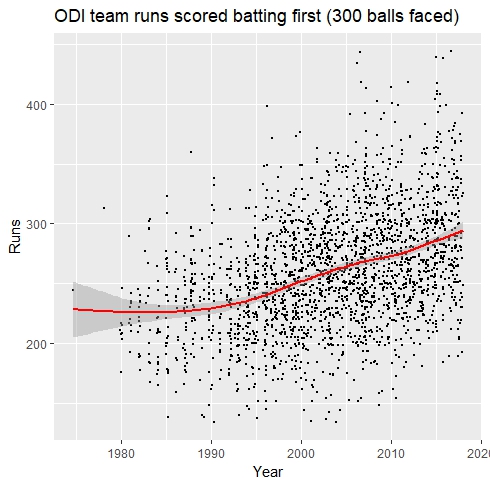
One Day International (ODI) scores actually seem to show a downward trend in the early years of ODI cricket and especially with the introduction of the tri-series World Series Cricket in Australia. The reason for this is that the professionalism of the game rose through the roof as international cricket for the first time was flush with cash. This increased professionalism then led to the first fielding coaches being employed and because fielding improved at a faster rate than either batting or bowling skills, then the seemingly boring art of fielding took off. 

From about 1992/3, the graph shoots upwards forever and the single biggest reason for the sudden and dramatic turnaround in scores and the turning point in 1992, has nothing to to with the skills of any of the players but rather, the playing fields themselves.

Cricket is a sport which is played on an oval with a boundary. Hitting the ball to the boundary gains the batting side 4 runs and hitting the ball over the boundary gains the batting side 6 runs. At parish, church, and local district level, the boundary is determined by temporary markers and ropes which are laid out. However, anything higher than this such as provincial, state, and international cricket, is played at permanent venues where the field is bound by fences.

A cricket field for a professional player, is in fact their workplace and as such, actually falls under relevant workplace safety laws. In the bad old days, this meant that there wasn't any workplace law requiring players to have protective equipment such as helmets and body armor. However, as a cricket field is a workplace and falls under relevant workplace safety laws, then this means that the field itself had to be made safer.

By bringing in boundary ropes, usually overlaid with foam blocks which are covered in advertising, the risk of injury to the players from sliding into the fences, was vastly diminished. Far far far less injuries occurred due to players sliding across the grass and into the boundary, when the boundary was now a moveable and deformable thing; rather than a solid immovable object such as a concrete drain or a wooden picket fence.

Bringing in the ropes also had the twin effect of making boundary fours easier to hit as the distance from the bat to the boundary was slightly shortened but making boundary sixes immensely easier to hit. A boundary six not only has slightly less distance to travel across the plane but also vertically as in some instances such as the MCG, the boundary fence with advertising hoardings was as much as five feet tall. A boundary six from the introduction of the ropes for the 1992/3 season, was in effect made 31% easier to hit.

When you have boundary sixes being scored where there may in the past have only been a boundary four or even an all-run two, then the reward for the same shot has increased by 50% and 200% in some instances. If you change the rewards for doing a thing in a game, as well as seeing an increased reliability in the players doing the thing, then the total rewards for doing the thing should increase and they do and have done.

Immediately we run into the old excuse that "it is the same for both sides" and whilst that is absolutely true, this never addresses the goodness or badness of the actual thing itself.

T20 cricket was invented to solve the perceived problem of fans becoming bored during an ODI match and by shortening the game to just 40% of the match duration, it is hoped that every single moment is critical. The skills gained in the T20 game have naturally spilled back into the 50-over ODI and test formats of the game and whereas Test Cricket retains its character by bashing people's attention and will into the ground, ODIs are no longer the thing which ebbed and flowed like they used to be.

An even further increased professionalism has led to batters who can now pummel the ball outside of the boundary on a semi-reliable basis; which means that batting is now a skill which has overtaken both bowling and fielding. At the same time, the available rewards for doing the same act of hitting a ball are more abundant.

The truth is that I have played at grounds where there have been local rules in play because of the oddness of the grounds. There was one ground which had a long jump pit in it; which the local cricket rules assumed was worth 3 runs and the boundary sort of came in at that point. Another ground was very short on one side because of a canal and a very very high chain-link fence. Local rules meant that the fence was the boundary and worth a paltry 2 runs but normal boundary rules applied for the rest of the field.

At international level in a Super 8's match, there are boundary fours and boundary eights. It used to be at the Super 8's tournament at Hong Kong, that hitting the ball into the tennis courts which adjoined the oval was worth 8 and out.

If cricket has no problem in applying local rules for the value of boundaries depending then if I was Grand Poohbah and Lord High Everything Else with a seat on the Privy Council and a significant amount of power to change the laws of cricket, then I would seriously look at reducing the rewards for hitting a boundary, to 3 and 4. If a boundary is so much easier to hit, then that says to me that the rewards should be less for doing so. Purists would naturally be outraged but purists are naturally outraged at anything.

June 20, 2022

Horse 3031 - Multi-Level-Madness

For the second time in six months, a client of ours who is convinced that they have started a small business, has come to us (well, me in particular) and asked me if I wanted to "join" a business opportunity, or would I know anyone (such as my wife) who would like to "join" a business opportunity. The "business opportunity" is to hawk hair-care and skin-care products from a company which I can not name due formal complaints that I have made on behalf of her which I want to stick; appears to be some kind of Multi-Level Marketing group which has finally got its claws into a new group of unsuspecting rubes in Australia. 

I make no bone about the fact that I think that this company is nothing more than a sophisticated Ponzi/Pyramid/MLM scheme. Companies and schemes such as this are able to hold out the illusion of seriousness because just like any other confidence trick, perps are always able to find vulnerable marks in an unlimited supply of them. A sucker is born every minute because having been drawn into the scheme, shame and guilt for quitting are then instantly deployed by knaves. 

The online reviews for their product are twofold. They either come in 1-star reviews which criticise hideous flaws and/or claims from the product or 5-star reviews that most look like pro forma replies.

As for the products themselves, as I have no way to judge the goodness or badness of nondescript goop in various bottles, then I pass no judgement on the quality of the product other than to say that this company must take its customers for eejits, as there is no sensible way that they can possibly worth 7 and 8 times as much as similar products which commercial hairdressers use.

I do not think that the the quality of the product being sold is necessarily relevant with regards to the business model. Reading through the documentation that comes with the starter pack itself, it appears that the vast majority of income to be made comes from bonuses and portions of profits made by other people downline who have recruited newer members. New members pay upfront costs which are then redistributed upline to the chain of partners who enrolled them. Those newer members in turn recruit underlings of their own, a portion of the subsequent fees they receive is also kicked up the chain. 

One of the features of the documentation of the program, is the strange terminology used to describe everything. A new member who is called a "Volume Partner" is invited to buy a starter kit and maybe a few goods of what appears to be fairly average hair-care and skin-care products for the price of $109. These have a "Personal Volume" index of nil. From there, the Market Partner is encouraged to take on new stock to the have of several hundred dollars, for which they will receive 30% commission as well as various PV points. They will also receive points known as "Total Volume" or if they have accumulated a small team, "Downline Volume".

In order to become a "Volume Leader" a person needs to have gained a "team" of at least 6 people under them, shifting at least 30,000 in total Downline Group Volume of stock. I worked out that at bare minimum, a Market Mentor would need a team of minions shifting at least $48,000 worth of stock; which they would have collected $68,572 in revenue and for which they would have made $20,571.60 in profit. To get anything approaching the median wage in Australia, someone will need to shift roughly $228,000 worth of stock; at that point, this no longer looks like a business which can be effectively run out of someone's garage.

What I find even more insane is the published structure within the documentation. There are in fact only 32 actual paid employees on the books of the company; which accounts for literally everyone labelled as a "Market Mentor" and above. My immediate guess is that the revenue figures which are published in the brochure are complete garbage and a more likely story is that there are 13 actual employees and 19 people who work on a part-time basis.

The structure as published in the brochure is thus:

2 - Executive Director - $386,364

4 - Associate Executive Director - $135,088

7 - Managing Volume Leader - $79,582

19 - Volume Leader - $39,176

66 - Managing Volume Builder - $7,797

480 - Volume Builder - $5,244

2280 - Managing Volume Partner - $1,524

4890 - Volume Partner - $112

It is not my job (yet) to do a forensic look at the accounts but even if you add all of these revenue figures together, then the total revenues of the group works out to be about $9.6m. Now I'm not saying that a 9 million company is anything to be sneezed at but if the hair-care and skin-care products were that great, then why the jinkies had I never heard of them before? Also, if you were a serious company, why would you share the revenues of a $9.6m company with 7500 people? That strikes me as being so unbelievable as to not believe it.

My general problem with people using anecdote and saying that something "worked for them" is that people as the heroes of their own universe, are hideously unreliable narrators. Anecdote is not evidence. Anecdote might be the beginning of evidence but only if it is part of a much broader data set. 

The most basic due diligence checks which you should do if someone asks you to become a "Partner" or wants to invite you to start a "small business" are as follows:

1 - do they want you to get an ABN?

2 - have they given you a Tax File Declaration form?

3 - are they prepared to show you any Tax Invoices that they have generated, that contain the usual statements of ABN and GST on them?

If the people who want you to "join" them, can not give you at least one of those things and the immediate relationship between you and them in a business sense can not be very reasonably and quickly established, then the product which they have arranged for you to sell, is not the actual product of the transaction. You are the product and whilst the arrangement might not actually be a pyramid scheme, you are very much a mark and a rube.

The next thing that you should test is how much people react if you leave or quit. If you are somewhere up the chain and your leaving would cause many of your followers to disappear, then that put their position in jeopardy.

I expect that the truly successful people in the program, make new members feel really special, as if they have just been introduced to something exciting. From what I can determine, the process to recruit new members involves love-bombing and gaining of trust, in what looks all the world like grooming. 

Multi-Level Marketing schemes eventually fail if they are going to because the business model is inherently unstable. To shift roughly $228,000 worth of stock basically assumes that you are already in charge of 2 Managing Volume Leaders or 5 Volume Leaders. Already that means that there is only room for about 4 such people in the organisation; which says that they only real method of accumulating that kind of turnover, is the constant recruitment of Volume Partners. As a volume partner is someone who has bought a starter pack and is highly likely to be disillusioned, then the required turnover of new Volume Partners is massive. Very quickly, this looks like a ponzi scheme.

June 18, 2022

Horse 3030 - What Group A Racing Could Have Been

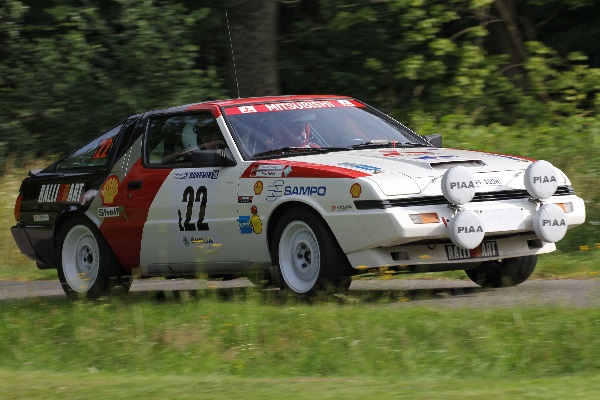
In the episode 210 of the V8Sleuth Podcast (https://www.v8sleuth.com.au/gary-scott-part-2-v8-sleuth-podcast/), Gary Scott who drove on various occasions for the Nissan works team and Brock and Mitsubishi, mentioned that Mitsubishi were considering to run a 2.6L turbocharged version of their Starion in Group A racing but nothing came of it. This line of cars which included the 1.8L Cordia and both the 2.0L and 2.6L versions of the Starion, would eventually lead to the production of the 3000GT; which was also known in various markets as the Stealth.

I knew of the existence of every single one of these motor cars but never knew that Mitsubishi had any designs about attacking Nissan in Group A Touring Car Racing. The fact that they did not, led them down another path with the Mitsubishi Galant VR4 and then the highly successful Lancer Evolution series of cars; which would win multiple World Rally Championships.

Hearing this, sent me down the road to Wondering Town and to visit all the shops on the high street. I wonder about lots of things and wonder even more what the 1993 Australian Touring Car Championship could have looked like.

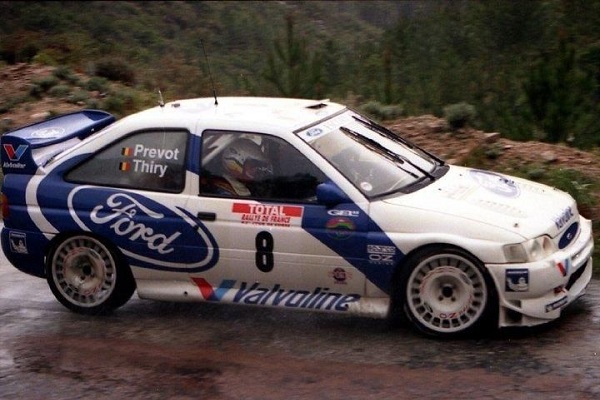
Group A motor racing had basically died in Europe but about 1991. Ford had pretty much killed the game with its RS Cosworth Sierra and then took most of the drivetrain and fitted it to the Escort to go rallying as well. Nobody else really wanted to play any more and gave up. 

In Australia, Holden had had fleeting success with their 5L V8 Commodore and Ford were happy to run their Sierra but Nissan who had been quietly working away with their R30 and R31 Skyline, killed the game in Japan and then in Australian with the R32 Skyline GTR.

Nissan carefully looked at all of the rules and decided that their RB30 engine from the R30, could be made smaller and stronger and downsized it to 2.6L, in order to take maximum advantage of both weight limits and tyre allowances. Nissan very effectively saw the rules and then built a car accordingly. Ford and Holden in Australia went apoplectic with rage and then invented a set of rules to ban anyone else from playing in their backyard and that worked for more than two decades. But what if they hadn't? What then?

Mitsubishi:

The 2.6L inline-4 in the Starion or the Astron derived engine in the Magna, was already at that goldilocks 2.6L size. If Mitsubishi had thought a little bit longer about it, then the four wheel drive system from the Galant VR4 could have been fitted to a 2.6L Turbo Magna and Mitsubihi would have had their own version of Godzilla. I think that a Mitsubishi Magna Evo could have been a potent weapon, had the three diamonds had made an effort.

Ford:

Ford already had the RS Cosworth Sierra. I do not know if they would have played with the RS Cosworth Escort in Australia had that car been sold here but I do know that Ford was in a strange place in Australia. The Ford Corsair was a repackaged Nissan Pintara because of the Button Plan, and the Ford Laser was a close cousin of the Mazda 323 because of the Ford/Mazda marriage which wouldn't break up until 2015.

Would Ford have run a Laser TX3 or a Telstar TX5? Possibly. They more than likely would not have run a Corsair as Nissan might have objected. Maybe Ford would have given us an RS Mondeo; which would have been a tasty offering.

Holden:


General Motors always confuses me. From 1980, literally the entirety of the North American lineup could have been instantly junked because the offerings from Vauxhall/Opel and Holden, were always better, for every single model until 2019. Fact.

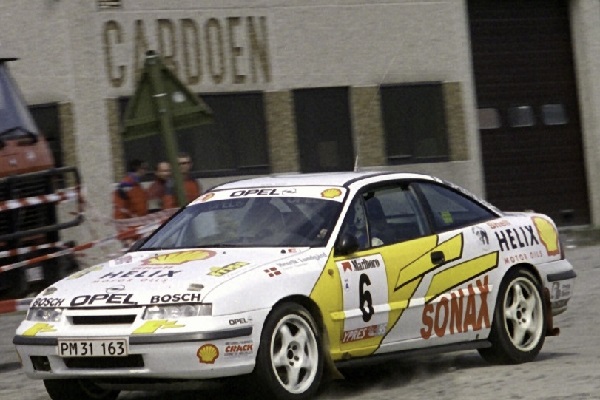
Holden already had an under-utilised weapon in the Piazza. The coupe made by Isuzu already had a 2L Turbo variant; which if developed could have taken on the RS Cosworth Sierra anbd beaten it. However, hiding in the lineup from Germany was a car which never saw its potential - the Calibra 4x4.

The Turbo Calibra 4x4 was very nearly a WRC winner. If Opel had bothered to pursue the program further, instead of being distracted by a half-hearted DTM campaign, then the 2.4L Calibra 4x4 would have been a good platform for GM to attack Nissan's GTR with. Maybe give it is SS badge to reflect the fact that Holden had been using it in motor racing for 25 years by 1992.

Toyota:

Toyota basically abandoned its Group A program in Australia after it worked out that the Supra would be penalised too heavily under the weight regulations, but they persisted in Japan; this would eventually lead to the GT500 rules in Super GT with Nissan and Honda.

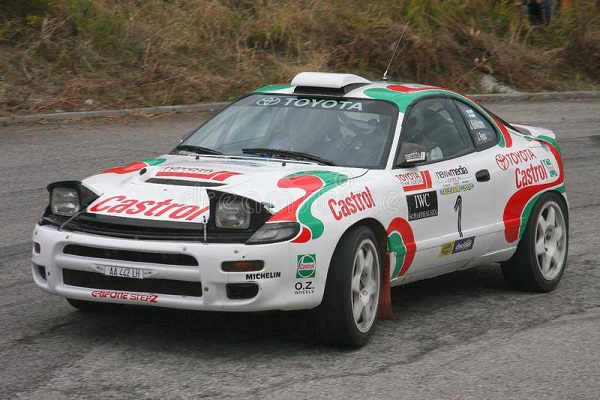
Toyota though, also had a potential Godzilla of their own with the Celica GT4. The Celica GT4 would be used very effectively in the WRC, just like Ford's Escort and Mistubiushi's Lancer. A 2.4L four wheel drive Celica, or perhaps that same drivetrain in a Camry, may have been a fun thing.

<><><><><>

In my imagination of things that never were, the five automakers in Australia would have all had their own versions of Nissan's all conquering GTR.

Magna Evo, RS Mondeo, Calibra SS, Celica GT4 and Nissan GTR - together would have made for a very delicious 1993 Group A Touring Car Championship in Australia. Instead, we got Ford and Holden changing the rules so that nobody else would be allowed to play for a long time.

As I type this in 2022, the Australian Touring Car Championship is being fought between two kinds of car which never existed for the road and one of them is from a brand which no longer exists. Next year, we will move to two different kinds of car which will never exist for the road and one of them will be from a brand which doesn't sell cars in Australia.

One of the common tropes on the Facebook page for the V8 Sleuth Podcast is people making a call to bring back Group A rules but as I survey the car market in 2022, I struggle to think of anyone who would bother to make a competitive car. I guess that there'd be the Toyota Supra, BMW M5, Ford Mustang, and Subaru WRX but all of these look like GT3 cars and not what Touring Car racing was.

The SUVification of everything, the general withering of wages, and the gouging out of all sport by Pay-TV, means that the market to see Touring Car racing wouldn't exist either. Still, it's fun to play on the racetrack of my mind and dream about what was not and what could not be.

June 16, 2022

Horse 3029 - No Job Is Too Big; No Pup Is Too Small; No Logic Is Used

In an age of electronic banking the number of cheques that are written has dwindled to the point of a mere trickle. As someone who works in an accounting firm, which has a slightly older clientele than the general population, I see more cheques than the average person. Depositing those cheques at a bank branch which employs less staff than ever before, has meant that queueing times are now an order of magnitude larger than in the past. While queueing, we are subject to whatever the bank branch's staff have put on the television to pacify their patrons; which is either Sky News Australia, or ABC Kids. 

While queueing in the bank, I have seen more episodes of Dora The Explorer, Credlin, Agenda and Paw Patrol, than is necessary. I think that there is a certain assumption on the part of a lot of producers of television, that the audience wants to be entertained but does not want to think. In this respect, Sky News Australia and Paw Patrol are eerily similar. I have seen both against my will.

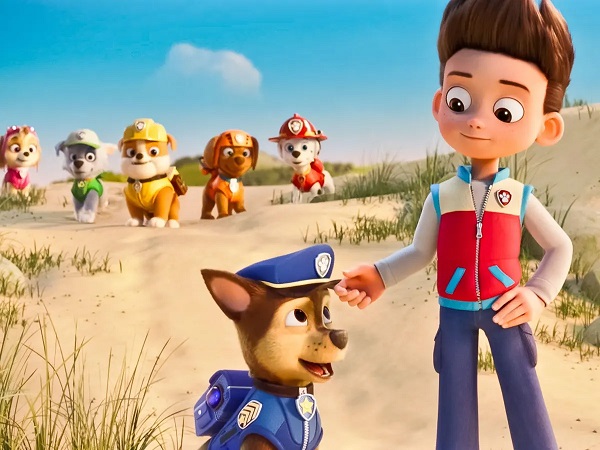
To recap: The premise of Paw Patrol appears to be that a small boy called Ryder, who for some reason lives in a tower by himself in a place called Adventure Bay, is unilaterally in charge of the only set of municipal services in town; which are run by puppies.

In any given episode of Paw Patrol, some minor complication breaks out which can only be saved by the deployment of Ryder and his unholy army of puppies which all have stereotypical skills and machinery. There is a firefighter, policeman, air rescue, aquatic rescue, and a builder for some reason.

The deployment of Ryder's puppies and their special skill, returns the town of Adventure Bay back to its idyllic normalcy until the next minor problem which can be solved within eleven minutes by Ryder's puppies.

The more times that I have seen this show, the less I understand. Paw Patrol's internal continuity raises more questions than is sensible for a 43 year old man to be asking. For a start, exactly why are there literally no other municipal services of any kind whatsoever? How did Ryder acquire the puppies? How did Ryder acquire a tower from which to deploy said puppies with an omniscient set of camera and tracking devices? Does this suggest that Ryder is the son of some Orwellian type dictator and that this place is the training ground for the child of an Inner Party member in a surveillance state? Big Brother is watching you.

Who is actually funding Paw Patrol and why are they investing millions of dollars in seemingly insane equipment for puppies to operate, instead of funding municipal council services? What exactly is the function of the Mayor of the town, considering that she has contracted the entirety of the municipal council services to one small boy and his army of puppies? How does someone as clearly incompetent as the Mayor continually get elected? Where exactly is the rest of the citizenry of the town? Has something really awful like a nuclear war happened and are we living in a post-apocalyptic nightmare scenario like The Bed-Sitting Room (1968)? How exactly have the puppies gained the power of speech?

Perhaps there is an entire other set of scenarios which might explain this. It could in fact be that Ryder has suffered some kind of massive head injury and that what he are actually watching are the dreams of a small boy in a coma in intensive care. The 'it was all a dream' device is the actual explanation for Dorothy's adventures in The Wizard Of Oz (1939).

Why is Zuma named after the former (and quite manically mad) President of South Africa? Is Marshall the firefighter something similar to Montag in Fahrenheit 451 and secretly wants to burn people's stuff and their houses? If there are no churches, or religious buildings of any kind in Adventure Bay then why is there an ancient religion that turns people into giant monkeys?

Perhaps Ryder is experiencing extreme grief of some kind and in reality, the puppies are in fact dead. What we could be witnessing is the dreams of a small boy who has lost someone very dear to him and what Paw Patrol actually is, is his brain's attempt at establishing some kind of control over the world. If Ryder is experiencing post-traumatic stress disorder, then what we are watching on screen is actually something quite sad and the producers have made sport of pathos. Does that explain where his parents went?

I have heard a suggestion that instead of either physical or emotional trauma, that Ryder might have schizophrenia and that the puppies are in fact visual hallucinations. In following up this line of enquiry, I have found out that this is indeed possible and that in some instances of schizophrenia, the existence of other voices and visual representations of those voices manifest, can be a symptom of the disorder. Again, this is a very sad scenario and hardly the sort of thing which we should consider to be entertainment. Where exactly are Ryder's parents and how come 

One of the deep problems about possessing a brain which is fed stimuli from the various senses of the nervous system, is that this leads to the philosophical conclusion that some or all of the world might not actually be real. How can one truly prove the existence of anything when even the existence of  the observer might be brought into question. In the most solipsistic explanation of the universe, literally everything beyond the scope of the mind can not be truly be guaranteed to exist; so watching Paw Patrol while standing in the queue at the bank, I am often left to wonder what exactly is going on.

If this is a show produced for an audience that wants to be entertained but does not want to think, then it is a job well done. Think too deeply about the show for more than about five minutes and you will regret it.

June 15, 2022

Horse 3028 - Here He Comes. Here Comes The Prince.

"Here he comes, here comes Speed Racer, he's a demon on wheels..."

I am officially what the young'uns of today called 'old'. As someone who was born in the tail end of Generation X, I grew up in a world where telephones were attached to the wall via wires and had their own pieces of furniture, where computers were a thing you plugged into your television set, and where there were only 5 television channels (2, 7, 9, 10, SBS). That meant that if you were on the telephone that everyone could listen in, and if you were watching television that you got to see what was playing at that particular time.

Saturday mornings were the exclusive domain of kids' television; with cartoons from Warner Bros. and Hanna-Barbera being played for the Nth time in syndication and where anime had been repackaged so that the kids weren't aware that it came from Japan. This is a land where Kimba The White Lion, Prince Planet, Astroboy and Voltron played alongside The Flintstones, Josie And The Pussycats, Bugs Bunny and before the resurgence of Disney as a force.

Speed Racer, the story of a presumably 18 year old kid who drives a sports car in a series of not very well races and in an undefined racing series, is the story of someone having unnecessary adventures; while at  the same time exhibiting incongruent traits of obedience, submission, narcissism and psychopathy on occasion. When the Wachowskis turned it into a live action movie in 2008, they interpreted the source material through the completely justified lens of the whole thing being a malarial fever dream. Everyone who saw that movie got super-extra-diabetes just by looking at it because it was so sugar/saccharine colourful.

As a boy who was and still is obsessed with watching motor racing, even then I knew that the cars on screen in this cartoon, were sometimes thinly veiled palette swaps of actual motor cars. Look through the various episodes of Speed Racer and you will find a Mercedes-Benz 300 SLR, Jaguar D-Type, Chevrolet Corvette Mark I, and Ferrari 212 Barchetta and other sports cars from the 1950s and 1960s.

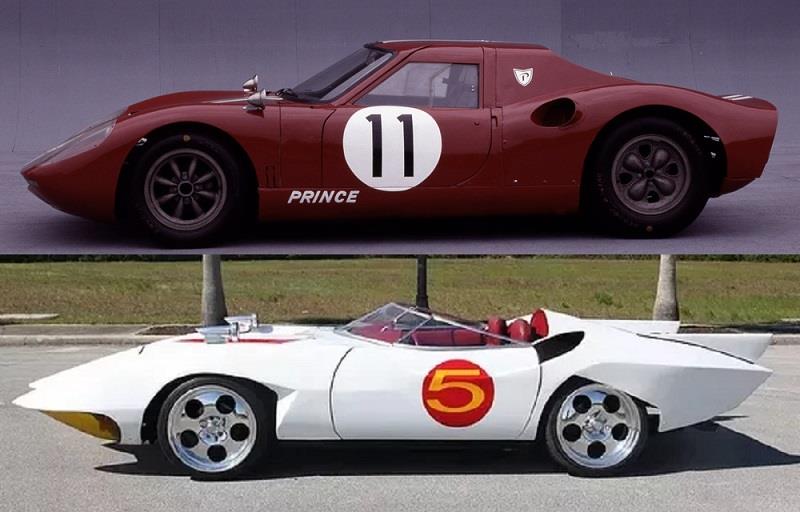
Speed Racer's car, which in-universe is the Racer Mach 5 (Mifune Maaha Go in Japanese), is supposed to be an in-house privateer effort which is built by legendary motor builder 'Pops' Racer. Exactly how this is financed in the show but given that this was the age of the 1960s and still at the height of the garagistas, then perhaps it does not need to be. Enzo Ferrari had branched out on his own after building cars for Alfa Romeo and Lancia, Colin Chapman had been successful with his Lotus company, and Jack Brabham had won the Formula One World Championship in a car that he'd build himself.

However, the story of the actual car that Speed Racer's Mach 5 is based upon, is itself a strange tale.

Honda who has already gone motorbike racing decided to turn its hand at building Formula One cars in the 1960s. Ritchie Ginther won the Mexican Grand Prix one year but that was it. Honda very quickly abandoned its motor racing program and wouldn't return as an engine builder for quite some time.

The Prince Motor Company on the other hand, decided that it could take its S54 Skyline GT sedan and go motor racing with it. Prince entered the 1964 Japanese Grand Prix for sports cars and managed to take all of the positions from second through sixth; which wasn't bad as all for a sedan which was competing against proper sports cars. They were only beaten by a Porsche 904.

Having been beaten but a mid-engine sports car, Prince decided to follow suit and mated an upgraded version of their engine (called the GR-8) to a Brabham BT8 chassis; with a Hewland 5-speed racing gearbox in the transaxle.  The 1965 Japanese Grand Prix for sports cars was cancelled due to lack of interest but before the 1966 event, Prince had found another 10% of power and their GR-8 engine was now throwing out 220bhp. The R380 would claim a 1-2 victory in 1966; be beaten by Porsche 906s in 1967, before Prince was bought by Nissan Motor Company. Nissan developed the R380 into the R381 and they were again beaten but the R380 and R381s took podium positions until 1970 and a 1-2 in the 1969 Surfers Paradise 6 Hour Race in Queensland.

Having been bought by Nissan, the Skyline name would again sit on various kinds of sedans and coupes; including the Nissan Skyline GTR, which won various Group A races around the world and is now famous as a result of Super GT racing and GT3. Given that the R380 exists before any of the Nissan Skyline GTRs do, I wonder if this slightly conquering car is the first of a line which eventually becomes Gojira. Given that it also had an inline-6, then I think that this is at least a half-way reasonable case.

What I have no idea about is what the producers of the Speed Racer anime knew of the Prince R380 when they originally commissioned the series. The Mach 5 changes whenever the demands of the series demands and on multiple occasions Speed Racer's younger brother and their pet chimpanzee hide out in the trunk, which is where the engine should be in the Prince R380. I suspect though, they simply didn't care. This was after all, a program for children's television.

June 10, 2022

Horse 3027 - Reset The Simpsons

The point of FaceTube, YouTwit, Tokgram and Instabook is that the audience and the platform make the same unwritten contract that existed in the days of print, radio and television media. I look at stuff and you sell the space to advertisers. The whole point of the algorithms as far as the platforms are concerned, is not to give the user a personalised experience but to give the super specific advertising.

In addition to wanting to show me videos of old NASCAR, Super GT, and Supercar races, as well as science, maths and history videos, the YouTube algorithm which is purely designed to keep my eyeballs paying as much attention to it as possible, has lately in its automatic unknowable wisdom, decided that I need to watch videos about Thomas The Tank Engine lore, why the puppies in Paw Patrol are expendable and how they might be actually dead, and clips from TV shows that I Here's the problem. The show is kind of permanently stuck in about 1992; in a land where a family can keep and maintain a household and a mortgage and two cars, on a single income and that's apparently normal. That may have been true in the very first iteration of the animated nuclear family genre with The Flintstones in the late 1950s  and with the updated tilt at the story with the Jetsons in the 1960s but by about 1992, the idea was already beginning to be on the slide. In 2022, it is impossible. It is so impossible in fact that NPR's Planet Money has recently run a program exploring how impossible The Simpsons would be in 2022.

don't watch; including The Simpsons.

As I am a member of Generation X and therefore old, I still remember a time before the internet and when watching real-time broadcast television was a thing. In consequence, I like many people am reasonably familiar with about the first 9 seasons of The Simpsons and of nothing beyond that.

The Simpsons was a cutting edge satirical comedy program once upon a time. However, over 30 years, the show is now about as stale as week old pizza. Or rather, it probably is as stale as week old pizza according to people who do actually watch The Simpsons. I have no idea as I doubt that I have seen a single episode of The Simpsons in about 15 years.

In principle The Simpsons now runs on tropes that it has built for itself, after having established a very vast and cohesive universe. The problem is that that world upon which it was based, no longer exists and so from everything that I have read, it no longer occupies the position on the cutting edge that it once did.

As someone who doesn't watch The Simpsons any more, it doesn't bother me. However, the YouTube algorithm thinks that because I am old enough to remember the days of yore, that I might do. It also thinks that I might like to watch videos complaining about how good The Simpsons was and how it is no longer that great.

How do you fix something which was great and now no longer is? You either keep on writing mediocrity until it is no longer viable (which is apparently the current strategy), you kill the show entirely (which is often the best way), or you refresh the show. I put forward that the answer should be in 2022 to reboot The Simpsons with a very hard reset.

A very very long running drama series like The Archers on BBC Radio 4 has characters come and go all the time. The Archers will probably go on to celebrate a century on the radio if it ever gets that far. The Simpsons doesn't quite have that luxury but it does have a very strong sense of place and the world that it has built. That is in fact its greatest strength.

We are also at a very interesting point in time where the maths is just perfect to make this work properly:

In 1992:

Homer Simpson who was born in 1951, is 41 years old.

Marge Simpson who was born in 1953, is 39 years old.

In 2022:

Bart Simpson who was born in 1981, is 41 years old.

Lisa Simpson who was born in 1983, is 39 years old.

The parallel is obvious. 

The intergenerational conflict that The Simpsons had in 1992 was that Homer Simpson seemingly had everything given to him as a Baby Boomer and His father who presumably was from either the Silent or Lost Generation, had to work for everything.

The intergenerational conflict that The Simpsons has in 2022 is that Bart Simpson has not lived in the world where anything was given to him and his father, as a Baby Boomer, is unable to appreciate this fact.

I would imagine that the 2022 version of The Simpsons probably does have Bart as the central mainstay of the show, with a wife and some kids; who themselves are living in a very different world to the one he grew up in. At some point you would imagine that Lisa is likely to have made something special of her life and perhaps Bart and Maggie as the two kids who have not, also have a sibling rivalry.

Looking the other way, the intergenerational conflict between parents and children is pretty well much universal. Children are always going to try on anything that they can get away with because of the universal conflict that children are monsters and parenthood is about fashioning them into some degree of being less monstrous. Bart and Lisa would be Generation Y parents trying to wrangle Generation Alpha children and that means that there will be different solutions to the problem.

In essence comedy is not a lot different to the operation of any other story form. All stories have some conflict which is resolved in some way. Jokes are about the most efficient story delivery system ever invented. The Simpsons as a comedy program, which has a sense of place has lost its sense of time. A hard reset would restore that sense of time.

A hard reset will invariably mean that a lot of characters will have to die. Abraham Simpson, Mr Burns, Patti and Selma Bouvier, probably Kent Brockman, and a host of others, would have logically become old. What this gives a massive opportunity to do, is to invent whole herds of characters from uncut cloth: children, co-workers, teachers, etc. 

A hard reset will risk alienating the audience but that's probably fine. If The Simpsons prime audience in 1992 was the Baby Boomers and Generation X, than I suspect that a lot of them will be like me and will have stopped watching a long time ago. Carving out a new audience is probably a better strategy at this point, if the complaint videos are anything to go by.

June 09, 2022

Horse 3026 - The Epping Snarl

Before the general election, the following article was published in the Sydney Morning Herald:

https://www.smh.com.au/politics/federal/sydney-motorists-to-be-promised-220m-upgrade-for-epping-station-bottleneck-20220509-p5aju7.html

Sydney motorists will be promised $220 million to upgrade one of the worst bottlenecks in the city’s north-west with a wider bridge across the railway at Epping Station in the key federal electorate of Bennelong ahead of the May 21 election.

The federal and NSW governments will outline the 50:50 spending plan on Tuesday with a pledge to widen the road and footpaths around the station, which has become a major growth centre with a metro station as well as rail.

- Sydney Morning Herald, 9th May 2022

Oh how the best laid plans of mice and men collapse in a heap. We have subsequently found out that sections of the Parramatta section of the light rail are to be binned and that other pipe dreams such as the northern beaches tunnel have been flushed away. Yet again, the tale of the infrastructure of Sydney, is one of announcements, dreams that never were, hubris, promises, and wind.

One would normally expect that I would be extremely approving of all public works programs; especially when the works program in question is something that I would personally benefit from. However, it seems to me that I could achieve the same net job; without having to disrupt any of the traffic and services in and around Epping.

"How could you do that?" you might ask; in a justified dollop of incredulity. How indeed? Let me tell you story about the sordid tale of motorways in Sydney and why my solution is actually more sensible than what seems like a perfectly reasonable plan.

First we need to wind the clock back to 1788. The broader city of Sydney was a blank slate upon which the planners could have drawn anything, except there were no planners and they idea that we would even plan a city was not a thing for another 100 years.

Sydney's first road ran from Sydney to Parramatta. The second road ran further west to Toongabbie. A road then went over the mountains. We then built spokes going outwards and only bothered to full in the arterial roads afterwards. The ring road project was only an invention of the 1950s and even a cursory glance at a big map of Sydney still shows spokes and wheels. In other words, Sydney was never ever planned and because it just sort of happened, then all of the traffic issues are the direct result of that lack of planning.

Sydney and Australia arrived at the motorway game very very late indeed. Before the Second World War, Germany had already embarked on an infrastructure project to criss-cross the country in autobahn. General Dwight D Eisenhower liked the idea so much, that as a result of remembering his own days in the army and trying to cross the continent, and with suggestions from Charles Erwin Wilson, the Eisenhower Interstate System was set in motion and with it, the biggest socialist piece of infrastructure in the history of the world. Britain acquired its first stretch of the M6 motorway in 1959; which almost instantly drove half of the gutless cars off of the roads in Australia. As for Australia? We were still trying to work out what was happening to the slip roads at either end of the Harbour Bridge.

In the mid-1960s, plans were set afoot to build the F1 or the Warringah Expressway through the immediate northern suburbs of Sydney. There were also plans to build what was then known as the F2 to the west of the city and northwest through Tarban Creek and probably towards the Pacific Highway at some point. Gladesville Bridge and the Tarban Creek deviation, form roughly 3 miles of motorway grade roads with fully grade-separated intersections. This is where the story gets interesting.

The F2 should have continued north up Tarban Creek; where Epping Road would have been blessed with partial freeway conditions and the configuration of the F2 would have roughly coincided with the current M2. From there the so-called F3 to Newcastle, may have been extended southwards and possibly through Fox Velley to to F2. I think that those alignments were finally achieved with the M1/M2 North extensions.

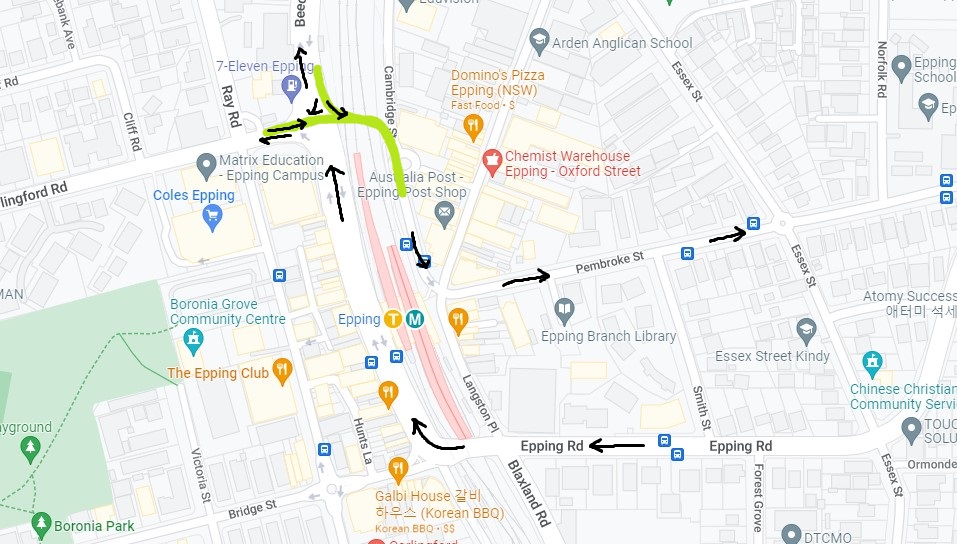
There is a bit of a hint of what might have been preparation for the F2 as Epping Road has a very short section of motorway grade road which crosses Ryde Road at right angles. The flyover is a fully grade-separated intersection which very curiously has driveways and entrances from private properties onto the slip roads. The western end of this intersection flows into the intersection of Epping Road with Balaclava Road.

However once you get over the top of the next hill, what was once three lanes of traffic, very quickly whittles down into two, before crossing over the railway line at Epping and Epping is a mess of roads which includes Beecroft Road and Carlingford Road.

The idea solution would either be to divert traffic around Epping via some kind of bypass, or a project which would eliminate traffic going through Epping in the first place. I have three solutions.

The Epping bypass already exists. In fact, It is called the M2. 

The M2 as it currently stands is a car park in both the mornings and the evenings. The reason for this is that it currently dumps traffic onto Epping Road in the East and most of its traffic onto Windsor Road in the west. The M2 has a few key set of slip roads and intersections but not really that many. Unlike the Eisenhower Interstate System in the United States or the motorways in Britain, the M2 was not necessarily built to alleviate traffic congestion as much as it was to spin a profit for the private owners of the motorway. By limiting access to only a few key points and putting a toll on the road, this acts as both a physical barrier to entry (because you can not get on the motorway unless you use a sliproad) as well as an economic barrier to entry (because only those people who can afford to pay will use the road).

If the M2 had the tolls removed (because quite frankly the idea that there should be a toll on a road at all is downright criminal and a very tory idea indeed), then this would mean that people like myself would be as inclined to use Carlingford Road and Epping Road as a rat run to avoid the tolls. I will readily confess that one of the causes of why there is congestion around Epping, is because I help to cause it. 

If the M2 had more sliproads installed which allowed more ingress and egress onto and off the motorway, then this would cause less bottlenecks as traffic would be far more diffused. If you want to empty a bucket in a hurry, then you can either turn the whole thing upside down or start drilling as many holes into the sides of it as possible.

My second solution is as bold as the first; namely that the 2222m of the Northwest Metro from Tallawong to Schofields should be built. 

Thousands of people just like me would be encouraged to leave their cars at home and take the train. An 8-car train can take as many as 2000 cars off of the roads and if 2000 cars aren't on the roads then they are also not there to cause a traffic jam in the first place.

This problem should have been addressed when the Northwest Metro was being built and the reason that it wasn't is because the then Transport Minister Gladys Berejiklian who we now know was more corrupt than a glass of lemonade with a cat poo in it, simply refused to greenlight extending the Metro into Labor electorates despite the advice given to her. Yet again, this is a very tory idea indeed.

Both of these things if implemented would help to take traffic off the roads, as well as diverting it away from Epping. Now of course as a member of the commentariat who has no power whatsoever, I can be ignored. Arguably, I am such a member.

The third solution is the nastiest. This would be to build some kind of one-way flyover from Carlingford Road, over the top of the railway line and dump traffic onto the quiet streets of the northern part of Epping. This would create a one-way circulatory system through Epping itself. It would be utterly hated by residents because that would mean that traffic would get dumped through a relatively quiet part of Epping and there is a correlation between enforceable nimbyism and the average wages that the residents of a suburb can control.

I note that as we now have an Albanese Labor Government installed and the Liberal Party lost, this 'plan' never even made it beyond the pages of a newspaper. The problem however, still remains. Or rather, it isn't really. Traffic around Epping actually isn't that bad. This promise was only made because an election was happening and like all good election promises this was just one of many announcements, dreams that never were, hubris, promises, and wind

June 06, 2022

Horse 3025 - I Have Confidence In Confidence Alone

As I type this, the 1922 Committee for the Conservative Party in the UK has confirmed that it has received 54 letters, which is necessary to hold a vote of confidence in the Prime Minister. If a vote of confidence fails and the majority of members do not express confidence in the Prime Minister, then Boris Johnson will be given formal orders that he should expect to leave Number 10 Downing Street and that his tenure is over.

In looking at why this particular moment in history exists, it is worth taking the long view to see how we got here.

The Blair Labour Government which was swept to power in 1997, oversaw the UK's involvement in two illegal wars which turned out to be both based upon lies. The British people decided that that was acceptable and so in 2000 and 2005, they were returned. Tony Blair left the job of Prime Minister and returned to the Chiltern Hundreds, in relatively quiet circumstances and left his Chancellor Of The Exchequer Gordon Brown in charge.

Brown's Government reasonably led the UK through the Global Financial Crisis of 2008 but Brown had about as much personal charm as a sack of potatoes and so the British people decided to vote for the Opposition as led by a man who was far more exciting. In David Cameron they found a charismatic leader. However, in the 2010 Election the tories who did not secure a majority of members upon the floor of the House of Commons, made a deal with the Liberal Democrats for matters on confidence and supply. Very soon the people found that they did not find anything different than a tory Prime Minister.

The period from 2010 until 2015 is marked as a period of unhappy austerity and with no ability to do much about it. The period of unhappy austerity was bookended by promises from far-right parties who promised to hold a  referendum to leave the EU.

One of Cameron's promises, as a result of an outsized piece of influence on the part of the United Kingdom Independence Party (UKIP), was top hold that referendum (on Brexit) and on the back of this, the tories won a majority of seats and thus government in their own right.

Brexit has been one giant chain of hateration and holleration since it passed and has brought down the tenures of David Cameron and Teresa May. However the terrible horrible very bad no good hateration and holleration wrought by Brexit was enough to bring down Boris Johnson. The thing that will ultimately turf him from Number 10, is not the incredible incompetence that he has shown in running executive government but rather, the indiscretion in holding parties and gatherings during the middle of a pandemic; while the rest of the citizens of the UK were huddled at home and following the rules in lockdown. This was brought to light in Sue Gray's report detailing lockdown rule-breaking in Downing Street. 

Something went wrong with reality after the change of the millennium. In the Anglosphere, the UK, the US and Australia all shifted to the right and we've had a period of rather stupid politics. Tory parties across the Anglosphere, generally have not engaged in any kind of nation building programs but have decided that the best way to keep and retain power is to wash their right-leaning supporters in cash. 

In the US this finally came to an end when enough people spoke up. In Australia this finally came to an end when rich people realised that they already have everything and so can not be wooed further. In the UK, there is seemingly no bottom to the tory barrel in terms of economic saturation but what has been found is the violation of decency.

Boris Johnson should not have been Prime Minister. If reality had been operating properly, he would have gone from being Mayor of London, to tory backbencher, then to being on Radio 4 panel shows such as "Just A Minute", the "News Quiz", and maybe "The Unbelievable Truth". What has happened instead is that he although being unsuited to being Prime Minister beforehand, rose to a job which nobody really wanted, and tried to be the comedy backbencher from the front bench. Unfortunately, this is beyond a joke and the punchline doesn't land properly.

If Boris Johnson does lose the vote of confidence, to be held by Conservative MPs from 18:00 to 20:00 BST, then he will be forced to stand down as Prime Minister. That vote will require a majority of Conservative MPs, 180 by my count, if he is to leave at all.

On a side note, this means that the period of the Triumvirate of Howling Morons has come to a close.

https://rollo75.blogspot.com/2016/11/horse-2188-trump-wins-in-2016.html

It just might be possible that by the next British General Election, that Donald Trump and Boris Johnson could be leading the governments of the anglosphere. Of course Australia would have to follow suit at some point and probably appoint Spud Dutton or worse, Christopher Pyne or Treasurer Scott Morrison, to form a grinning triumvirate of Howling Morons across the anglosphere.

- Horse 2188, 9th Nov 2016


June 03, 2022

Horse 3024 - Fragments XVII: On Conservatives, Commons, Calcium, Characters, Cars, Cackles and Cats

18T - Tories

In opposition to popular conception, the word 'tory' does not come from the word 'conservative' or 'conservatory'. The former of those two terms deals with a political position to maintain things the way they are and to change slowly if need be and the latter is to do with a room attached to the back of a house which is full of plants.

The word 'tory' is derived from the Irish 'toraigh' and means 'robbers' or 'thieves'. This sounds like a strange moniker for a political party to add to themselves and truth in point, they did not. The term exists in the wake of annexation of Ireland by the United Kingdom and in a time when there are various but unorganised factions within the House of Commons. Tories, Whigs, and Conservatives all pop up from time to time, as well as specific factions named after specific Prime Ministers, such as 'Peelites' who are named for Sir Robert Peel.

I like the use of the word 'tory' as a descriptor rather than a formal name because invariably, tories have as their grand project, taking away anything and everything that is and was owned in commonwealth and privatising it away their knavish mates. I have lived through a period of intense toryism where just about everything which was in the silverware cabinet has been hocked off to the lowest bidder. The bank, ferries, buses, telephone, electricity, companies that I use, all used to be owned by us the general public in commonwealth and have all been sold off to private tory interests.

<><><><><>

17Q - Queensland Seats

Good luck in actually trying to guess who is going to win the election and form government because this election will be won and lost in Queensland.

Western Australia, South Australia, Tasmania and the two territories account for just 23% of all of the electorates in Australia. This means that the lion's share of 77% of all electorates are in Victoria, New South Wales and Queensland. New South Wales and Victoria both have reasonably stable and uniform voting patterns which means that you can apply a uniform swing calculator and get a sensible result. Queensland on the other hand, continues to act like an airliner where everyone wants to sit on one side of the plane or the other and so Queensland lurches one way or the other.

The problem with trying to predict Queensland is that the press is an unreliable narrator. Effectively Queensland has only one newspaper in the Courier-Mail and it never ever changes its position from always backing the LNP. In Queensland state political history, the Liberal Party basically ceased to be and was absorbed by the National Party before the new thing changed its name to the Liberal National Party and became one entity. Queensland state politics lurches between the Labor Party and what used to the be National Party and runs on impossible to see margins. Although you can apply a uniform swing and plug those figures into a spreadsheet, it may as well be meaningless as almost every seat in Queensland has an uncanny ability to snap in either direction.

I think that the likely fallout of the election will be:

ALP - 80

LNP - 65

Oth - 6

but this is still dependent on Queensland being somewhat predictable. It is not. Give up now. Save yourselves!

<><><><><>

9E - Elements

One of the theories that I have read suggests that the maximum size for an atom would be at about element 137. At that point, the electrons would be travelling around the nucleus of the atom at speeds which would exceed the speed of light. That places an upper bound on the number of electron shells that an atom has and the kind of shells that can be created.

What I do not know, is what kind of chemistry could be done with elements that massive. If element 119, which presumably has a lone electron whizzing around in a distant s-block shell, comes in contact with a halogen, would that create an ionic bond and a supermassive salt? If element 119 and 117 were to share an ionic bond, short of metallic bonding, would this be the biggest possible atomic pair ever?

<><><><><>

14S - Stereotypical

It is possible to state that something is stereotypical but is it possible to call something monotypical? Something monotypical would only have one channel of quality; which is nearer in meaning to the cut down impression of the thing which is being conveyed. Reverting to a stereotype imagines the thing and the world less complexly than a multi-channel impression being conveyed in quatravox or Dolby 5.1, 8.1 or 13.1. 

If a stereotype reduces everything to just black and white, then we call that monochome. Monochrome monitors from the 1980s which either displayed things in green or even rarer orange, might have had only two states for the individual pixel in question but those two states were either on or off. If a thing is portrayed as a one-dimensional character, then isn't it better off being described as monotypical? 

Of course the opposite of a stereotypical character is something that is imagined complexly but we run into another defect of language with the use of the word 'colourful'. A 'colourful character' is the euphemism used for someone who may or may not have a borderline criminal element (allegedly). 

Also, Fanta in its adertising says that it is for 'colourful people'. This is both amusing and unfortunate when you consider that 'colourful' is the description for someone who we might reasonably assume (but can not prove) is dancing with the edge of law, and all the more shockng when you remember that Fanta is an invention of Coca-Cola in Germany, when they had their syrup supply from America cut off, due to the fact that Germany had a Nazi government.

<><><><><>

30C - How Do You Solve A Problem Like Corolla?

I genuinely think that there are no 'bad' cars on sale in Australia any more. Even the cheapest end of the market with the Chinese-built MG3 has a level of refinement and build quality which leaves some cars as little as 15 years ago in the dust. So to this lady with two kids, who occasionally wants to drive over dirt roads, the choice of which car she should get is obvious - any of them.

Which car she actually wants comes down to a matter of which packaging that she wants to wrap around herself and her two kids. If I was in that situation with two kids, then I would be wildly gesticulating for a Ford Focus hatchback, or a Mazda 3 hatchback, or upon failing both of those choice and Mrs R absolutely wanting an SUV (although I fail to see any kind of net benefit in them and she does not want one anyway), then I'd be after a Ford Puma or a Mazda CX-3.

If you really wanted to pound dirt roads all day long in comfort, then my go to choices would have been the Ford Falcon and the Holden Commodore (VF and before) because both of those two cars were extensively pounded over dirt roads beyond the point of reasonable sensibility. Seeing as neither of those two cars are made anymore, then my choice naturally reverts to something which is smallish, fun to drive, and relatively cool.

<><><><><>

20H - Watching A Hen's Night On The Bus

By the time that I got on the 100 bus from Mosman to the City, the party was in full swing and the contestants in this game of silliness were already well on the way to self-marination. The bride to be wore a tiara, a set of L-plates, and marscara which was already running down her face from when she'd been crying. This ensemble was capped off by a pink Adidas jacket which was a colour only appropriate for the race leader of the Giro d'Italia, hi-vis workers on a building site, or a six year old girl.

I suspect that if you added up the collective IQ of the herd by this stage, you'd still get change from the price of a sole Chuppa Chupp. In the semi darkened rear of the bus, I gave up trying to listen to the politics podcast that I was attempting to follow, as several women who glowed with splotches from the contents of a broken glow-stick, sang along to a mobile phone which was suffering the punishment of having to play "Eternal Flame" by the Bangles, Madonna, Atomic Kitten, or some other starlet. A music theorist would tell you that this song as sung by them, is difficult to analyse as it had no tonal centre and modulated between the Key of S and the Key of N. I am quite sure that there were sharps and flats being sung that were previously unknown to human ears.

I can only assume that the herd did what is known as "pre-loading" of fermented vegetable product; which would explain the herd's rauckousness and their level of happiness. At some point later on in the night, my assumption is that the herd would turn from singing to crying because there is an urban proverb which states that pouring gin into a lady is the same as pouring diesel into a petrol car - they both result in whining before shuddering to a screeching halt.

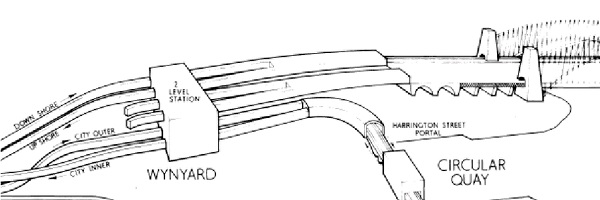
When the herd got off the bus at Wynyard, they disappeared into the bowels of the station and then off into the night. I walked onwards and upwards to Platforms 3 and 4 where I was met with a silence completely alien to the 20 minutes which had gone on immediately beforehand. 

<><><><><>

26C - A Cat's Got Stuff To Do

The thing about cats when they are outside, is that their "don't give a rip" attitude also goes with them. Outside, cats will adopt a sense of self-preservation as per normal but if they want to do something and go somewhere, they have no qualms about doing precisely what they feel like.

I have lived with cats long enough to know that their planning process for any given thing, is about as long as the average collision in the middle of an atomic acceleramoeterbob. A cat's thinking process mostly consists of "I want" phrases and "I don't want" phrases.

When placed into action, cats will just go. If you see a cat walking across the street, at no point will it look like it has no idea where it is going even though the actual plan of what it wants to do might very well be non-existent. It kind of helps that a cat is a being with a directional purpose because their form belies the very real possibility that they might not have any.

May 31, 2022

Horse 3023 - Yes But, Is It Comedy?

It has to be said that I am about as close to the coalface of pop culture as New Caledonia is to Paris. New Caledonia is part of France but to suggest that the people of New Caledonia are at all worried about the goings on of Line 4 on the Paris Metro is silly. Sure, they might hear about it on Le Journal on Canal Deux but it doesn't really affect them.

So it is with a lot of things on Netflix, Stan, and Foxtel. I am aware that streaming services exist but as I am not a subscriber, I can't say that I have seen or care about what is on these streaming services. 

I was asked in conversation recently of what I thought about Ricky Gervais' new comedy special on Netflix. I had to explain that I don't have Netflix and that even if I did, I probably wouldn't watch Ricky Gervais' comedy special on the basis that he is a one trick pony, that I have already seen that one trick, and I find him as dull as dishwater. 

Apparently in this comedy special on Netflix, Ricky Gervais makes jokes about transsexual people and I think that this is supposed to induce either glee or outrage depending on whether or not you are part of the choir that he is preaching to, or if you are part of the woke left, whatever that is supposed to be. To be perfectly honest, in principle this sounds identical to Paul Murray, Rita Panahi, Rowan Dean, Peta Credlin, and the other unfunny comedians on Sky News Australia. Admittedly they're not advertised as comedians but they also don't fulfil any useful role one a news channel either.

The purpose of comedy is to provide entertainment to the audience by the generation of mirth, whimsy, and humour. The scope of this post isn't going to discuss whether or not the comedian in question is working blue or not but in general, I personally think that there is far more skill in crafting comedy that is 'clean'. 

Comedy has its wellspring from four main sources; being: sarcasm, surrealism, surprise and superbia. Ricky Gervais in The Office, made a name for himself by playing an awkward and intolerable character. In Extras he plays more or less the same character. To be fair, I was bored by both of these.

By playing a knavish person, Gervais plays from the two wellsprings of sarcasm and superbia. Comedy that flows from sarcasm relies on the withering put down, to show the absurdity in the thing at hand. Vanity flows from a similar wellspring, but the subject is turned inwards and comedy is generated with the person who is prone to suburbia, being broken down and shown for the absurdity at hand.

Gervais' stand up routines, generally draw from the wellspring of sarcasm and mainly aim at the targets that the right is currently fighting in a culture war. That inevitably means punching downwards and because a person on stage flies solo, there is never any avenue for a right of reply. 

This is the generic problem that the authoritarian right has with doing comedy. The authoritarian right thinks that it is funny. As a straight white male, I am never the target of this kind of comedy; so I do not really have to feel or suffer the effects of this. However, as someone who is in possession of a brain which is able to analyse and pull apart ideas, I find this style of comedy immensely boring.

At this point the usual retort from the authoritarian right is that comedy is supposed to be challenging and confronting and that if you are offended or triggered, that you have somehow lost. I personally do not know what the win conditions are for comedy but I do know that I like comedy that is funny.

Comedy which is drawn from the wellspring of surprise involves the usual elements of generating plot coupons ansd then cashing them in for the punchline. Slapstick, puns, and indeed any other version of joke telling which falls into some kind of question and answer format, obviously has a payoff where all of the plot coupons are cashed in.

Comedy which is drawn from the wellspring of the surreal is usually the hardest to generate because the entire internal warped logic of the little world inside the joke has to be built from scratch.

Gervais generally doesn't build worlds. Gervais generally doesn't craft or build plot coupons which are then cashed in for some kind of payoff. In his stand up shows, he also doesn't generally make himself the target. Rather, he is a lazy comedy writer who plays to the prejudices of the crowds that he is playing to; I find that both boring and unfunny.

If you were to say that you don't like the comedy of the authoritarian right because if is boring and unfunny, you will generally get the same sort of response that you would if you explained that you find it offensive:

"If you don't like it, don't watch it."

Okay.

I am not sure how voting with my time, money, or attention to buy something else, is supposed to be any kind of withering put down. If you choose not to buy something because it is boring and unfunny, then just like the response is identical to not buying something because it is offensive, because you haven't bought it then you can double your money by folding it in half and putting it back in your pocket. In the marketplace of ideas, saying that you find something boring, seems to spark as much outrage from the people who like that sort of thing as the offence was supposed to have caused in the first place.

So no, I have not seen Ricky Gervais' new comedy special on Netflix. I do not intend to see Ricky Gervais' new comedy special on Netflix. Unless he has done something interesting which he hasn't done in the past (and he has not done anything interesting in the past), then I do not not know what I would gain from it. If I want to watch an unfunny comedy special, then I'll watch Sky News Australia. 

May 29, 2022

Horse 3022 - The Justification For The Second Amendment

With the carnage in Uvalde, Texas, and Buffalo, New York in May 2022, calls have begun again for Congress to enact gun control. This marks the 22nd school shooting in the United States in 2022 alone and even after the massacre of 20 primary school children and at Sandy Hook Elementary School a decade ago, any and all legislation introduced in response to mass killings has failed to pass the Senate. 

The central plank of legislation that continues to allow children to be slaughtered in addition to more than 10,000 people per year every year being killed, is the 2nd Amendment to the US Constitution. 

It states:

https://constitution.congress.gov/constitution/amendment-2/#:~:text=A%20well%20regulated%20Militia%2C%20being,Arms%2C%20shall%20not%20be%20infringed.

A well regulated Militia, being necessary to the security of a free State, the right of the people to keep and bear Arms, shall not be infringed.

- 2nd Amendment to the US Constitution, ratified 15th Dec 1791.

It replaced the existing right to bear arms which was contained in the English Bill of Rights Act 1688 which stated:

http://classic.austlii.edu.au/au/legis/act/consol_act/bor16881wams2c2306/s7.html

That the subjects which are protestants may have arms for their defence suitable to their conditions and as allowed by law.

- Section 7, Bill of Rights Act 1688

Already there is a material difference between the 2nd Amendment and the Bill of Rights Act which it replaced; being that the Bill of Rights Act placed limits upon the right being "suitable to their conditions and as allowed by law". I think that limits to liberty where the exercise of that liberty places the lives and property of other people is both just a reasonable. However, as someone who is 10,000km and not a citizen of the deliberately stupid country across the waves, my opinion ain't worth a hill of beans.

In that spirit, I shall now explain why despite all prevailing stupidity, the reason why 2nd Amendment to the US Constitution should stay and endure.

Here we go...

A drunkard may be bound under quite reasonable grounds, if that drunkard causes harm or has the potential to cause harm to other people or property. I think that everyone would agree that being intoxicated in the street and being disorderly is sufficient reason for that drunkard to spend a night in custody.

However, a drunkard who is found dancing in the streets and having a lovely time but who poses of threat of harm to other people or property, may be reasonably allowed to go free. One may argue that the spill over of drunkards on Bondi Beach, or slumped over in parks surrounding Sydney Harbour on New Year's Day after reveling and celebrating the arrival of a new year, although they may be unsightly and ugly, is in fact a reasonable consequence of freedom allowed. 

A drunkard who by virtue of being filled with rage and anger as a result of being intoxicated, can and might cause damage to both people and property. In the case of damage to people, this results in the tort of assault and/or battery. In the case of damage to property, this results in the tort of vandalism or some other like crime.

Not only do we place reasonable grounds upon someone who exhibits fury as the result of the consumption of and subsequent intoxication due to the effects of alcohol, we also place limits on who is permitted to supply, sell and produce alcohol. Where I live in the state of New South Wales, it is illegal for private persons to be in possession of a still. Although home brewing kits exist for the home production of beer, it is illegal for someone who possesses a home brewing kit to sell their ware to the public. As for the possession of a still, it is illegal for someone to have one; much less to sell the ware of the product of that product unless they be the holder of a liquor production licence.

Likewise when it comes to the sale of alcohol, not only is there a liquor licence which must be held by the proprietor of a shop that sells liquor but there is also a different licence which must be held by the landlord for the consumption of alcohol on the premises. Thus, there are off-licence premises which includes bottle shop where proprietors may sell alcohol that is not consumed upon the premises and there are also premises which allow for the public to bring their own alcohol to be consumed upon the premises but which does allow the proprietors to sell alcohol on the premises.

On top of this, in order to serve alcohol to the public at a licenced premises, the person who is at the bar must be the holder of another licence which is called the Responsible Service of Alcohol (RSA). This also places responsibility upon the server, to assess whether or not the person they are serving alcohol, if under suspicion of reasonable grounds, is someone who has the potential to cause harm to other people or property. Is it reasonable that a product such as alcohol, which can and does present a societal problem of harm and damage of both people's bodies and property, be subject to rules and regulations? Overwhelmingly and evidently, yes. To suggest otherwise is deliberate stupidity.

At this point we run back into the the domain of the harm principle; made famous by John Stuart Mill in his 1859 work "On Liberty". I note that this was written 68 years after the ratification of the US Constitution; which means that by then, there was the equivalent of almost five generations' of people's thought which may have been distilled into this work.

And even (it will be added) if the consequences of misconduct could be confined to the vicious or thoughtless individual, ought society to abandon to their own guidance those who are manifestly unfit for it? If protection against themselves is confessedly due to children and persons under age, is not society equally bound to afford it to persons of mature years who are equally incapable of self-government? If gambling, or drunkenness, or incontinence, or idleness, or uncleanliness, are as injurious to happiness, and as great a hindrance to improvement, as many or most of the acts prohibited by law, why (it may be asked) should not law, so far as is consistent with practicability and social convenience, endeavor to repress these also? And as a supplement to the unavoidable imperfections of law, ought not opinion at least to organize a powerful police against these vices, and visit rigidly with social penalties those who are known to practise them? 

- John Stuart Mill, On Liberty (1859)

The question then arises of whether or not it is reasonable to place a prohibition upon the sale of alcohol entirely. Enough people though that it was sufficiently reasonable enough to curb the consumption of alcohol, that this resulted in the Temperance Movement in the United States gaining a large enough influence on American politics and American society to do precisely that with the passage and ratification of the 18th Amendment to the US Constitution. The next question which follows is, was the prohibition on the sale of alcohol reasonable? Actually; surprisingly, yes.

https://www.nytimes.com/1989/10/16/opinion/actually-prohibition-was-a-success.html

The amendment prohibited the commercial manufacture and distribution of alcoholic beverages; it did not prohibit use, nor production for one's own consumption. Moreover, the provisions did not take effect until a year after passage -plenty of time for people to stockpile supplies.

Second, alcohol consumption declined dramatically during Prohibition. Cirrhosis death rates for men were 29.5 per 100,000 in 1911 and 10.7 in 1929. Admissions to state mental hospitals for alcoholic psychosis declined from 10.1 per 100,000 in 1919 to 4.7 in 1928.

Arrests for public drunkennness and disorderly conduct declined 50 percent between 1916 and 1922. For the population as a whole, the best estimates are that consumption of alcohol declined by 30 percent to 50 percent.

- New York Times, 16th Oct 1989

However, in 1933 the 21st Amendment to the US Constitution was passed during the Great Depression as both a method of raising taxation revenue in a hurry as well as to salve the sadness caused by the depressing fact that millions of Americans were out of work and unemployed. Given that prohibition actually worked despite the mythology which surrounds it and is unsupported by fact, the single biggest reason of why the 18th Amendment was repealed and with it prohibition, amounts nothing more than this: people like to drink alcohol. 

What does any of this have to do with the 2nd Amendment?

The United States of America in essence, likes to kill people. The side of politics which defends the Second Amendment because of a spurious reason of 'self-defence' is saying nothing more than they want the right to kill people coming onto their premises. Therein lies the whole reason in its entirety why the 2nd Amendment actually stays on the books. Furthermore, since they don't bear the consequences or the expense of the right, the amount of consideration that they exhibit for the people who have borne and who do consequences for the expense of the right is equally and exactly commensurate. It is nil.

People like guns. People like guns so much, that they don't want to give them up. It's okay America, you don't have to lie. The truth is that you like guns more than you think that other people have a right to life. Let's not pretend that in spite of modern weaponry being vastly unsuitable to the conditions of an urban environment, that the 2nd Amendment to the US Constitution continues to exist for any other reason.

Aside:

I think it's an evil reason and that everyone who defends the right, is either stupid or evil or both.

May 27, 2022

Horse 3021 - The Reason Why The Redemption Arc Is So Popular

One of the enduring tropes that keeps on coming up in stories, is the idea of the redemption arc. This is because one of the things that we expect of stories, is a contained narrative that has some kind of central conflict which resolves itself and we can go away happy. A protagonist (and sometimes a villain) will go through some kind of narrative progression and learn something about themselves or other people, which changes them; presumably for the better. They will learn something about the power of teamwork or friendship, maybe discover some kind of inner strength or perhaps learn about the very thing which made them so horrible. The idea of the redemption arc is a nice story structure because it speaks to our somewhat blind and stupid hope that people are generally nice; despite and perhaps in spite of the evidence that the kosmos presents.

So ingrained is the idea of the redemption arc, that we apply narrative structure to the real world and expect that the world will conform to our presupposed and designed idea; when that clearly is not the case in so many instances.

When Will Smith punched Chris Rock at the 2022 Oscars, he instantly became in the eyes of the public, an identity of notoriety or an otherwise bad person. His use of violence and his employment of angry and bad language, more than overcame the almost forgotten fact that Chris Rock had been deliberately offensive in the name of getting cheap laughs. I am not by any means condoning the actions of Will Smith but I suspect that there will be a passage of time, where an announcement is made that he is undergoing anger management training, and then at some point will be restored into the Hollywood firmament as a slightly different but still brightly shining star.

Will Smith is deemed as the kind of person who can go through a redemption arc because the presumption before this was that he is generally a nice person. Thus, he will disappear for a while in the same way that Russell Crowe did after the telephone throwing incident and then probably appear in another Hollywood film, after having being embraced by the movie community by about 2025. This is different to Mel Gibson who is still deemed to be irredeemable, after making anti-Semitic remarks.

In 2020 during the opening of the COVID-19 pandemic, sport around the world had been shut down and about the only sports which could try and present something which resembled a normal sporting broadcast was motorsports who jumped on the virtual/esports bandwagon. Various drivers from series all over the world, migrated to simulator rigs at home and this is what got one driver in trouble.

NASCAR driver Kyle Larson who was participating in a series which wasn't even broadcast, used the n-word online and news of this leaked out into the real world. The ramifications of this were almost immediate. His sponsors left him. He was fired from his employment as a race car drive at Chip Ganassi Racing and was without a job at the worst possible time. Nevertheless, when motor racing did start up again, he drove in lesser series and went on to win loads of races. 

The window of circumstance opened and Kyle Larson found himself with an opening at Hendrick Motorsport; following the departure of a seven-time NASCAR Champion. Kyle Larson made good on the faith placed in him and we went on to win a lot of races in 2021 and became the 2021 Champion. Thus, redemption arc worked out and completed itself.

The Australian Deputy Prime Minister, Barnaby Joyce, did a pretty good job of covering up an affair that he was having with a staff member inside the parliament building and so good was that cover up job, that the revelation of anything going on, only came into the light when it was announced that she was having a baby.

Extramarital business has probably been going on on places of power since the invention of any form of government; so we aren't really that surprised when it does happen. The media went through its usual washing of hands, the government announced a "Bonk Ban" and Barnaby Joyce was stood down as both the Deputy Prime Minister and the leader of the National Party.

Nevertheless, after a period of time for the general public to have immediately forgotten and therefore immediately withdrawn scathing judgement, Barnaby Joyce was voted back into the position of the leader of the National Party and with it, the Deputy Premiership.

Time and time again, with sufficient passage of time and incident of immediate outrage will fade from the public consciousness until having put sufficiently far back enough in the past, it then ceases to matter of import in the present. Of course there are some actions which are so heinous which should never be forgiven of forgotten but in general, because we all have to admit that every single one of us are flawed, imperfect, stupid, obnoxious, daft, and do stupid and horrible things, we are prepared to forgive that in other people and provided it doesn't affect the present, we're fine with it.

What's also interesting is that depending on the context of the incident, something which may have been seen as really bad by one group of people, might very easily be forgiven by the general public at large. 

This is why I have the question in principle about a former marketing manager and public speaker for a record label, who may have had an extra-marital affair with someone, and my question is one of how long it would take for that person to disappear from the public eye and then return in some kind of redemption arc. This thing is perhaps too close in the memory that it will happen in 2022 but if the parliament goes full-term, then we will be next back to the polls in 2025. From here that seems like an eternity away and so that's perfect if we are talking about a redemption arc. Is three years a sufficient amount of time for the public to conclude that they have served their time in the wilderness and that the people of the area might consider him to be their elected representative in parliament?

The problem with the redemption arc being applied to the real world is that life often doesn't resolve itself that neatly. Events and circumstances which led to someone being sent into the wilderness for a period are often changing for not only the person in question but changing of the world which is immediately around them. Sometimes the consequences of someone's actions are so horrendous that a redemption arc is simply not sensible. 

The other problem the redemption arc being applied to the real world is that is that statements made by the person who have gone into the wilderness for a period might be untrue. The person might protest that they have changed and learnt something but if that is patently untrue, then restoring a person who has not changed their ways might inadvertently cause future damage. Character is a very deep thing which is formed over decades and unless an event is shattering to the person who has been sent into exile, then they will mostly be the same person and perhaps galvanised after the event.

Having said all of this, I think that moral imperatives to forgive people stem from the unavoidable fact that without exception, everyone is terrible. By extending forgiveness to someone who has done an awful thing, we in part build character and decency in ourselves because in doing so, it demonstrates that terrible people are at least semi-capable of being our better selves.

That possibility that we actually can be better selves, is probably the thing which fuels and powers our blind and stupid hope that people are generally nice; despite evidence to the contrary. I suppose that our blind and stupid hope that the world will conform to our presupposed and designed idea of the redemption arc, probably also contains the corollary that if we ourselves were to do something horrible and awful enough that we would be banished to exile in the wilderness, that we too would go through a redemption arc but that is contingent on the kosmos, or rather the people in the kosmos, who are also terrible people, extending forgiveness to us. That might be one of the hardest paradoxes in the kosmos to unravel.

May 26, 2022

Horse 3020 - What On Earth Was John Bradfield Thinking?

As possibly the only person among 5 million of us in our fair city, my commute is from Marayong to Mosman. This means that my passage is from the west, through the city and out the other side. It also means that my commute is a slightly asymmetric journey because I take a train to Town Hall Station and then change for a bus to Mosman; whereas in the evening I take a bus to Wynyard and then change for the train home. As such, I have had hours and hours to ponder the weirdness of Wynyard Station; with two levels of platforms that are offset relative to each other.

If you knew nothing of the history of Sydney's semi-underground portion of the suburban rail network, then Wynyard Station would look like a mystery to you. The configuration of the platforms is bonkers, the numbering of the platforms is mad, and yet the vast majority of Sydneysiders probably pass through there without giving any of it a second thought. When you want to be out of a place as quickly as possible in the morning because you want to get to work, or you want to be out of a place as quickly as possible in the morning because you want to go home, then the incentive to ponder these things is way way down the list of priorities. Nevertheless, Wynyard is madder than Mad Jack McMad.

A very big cutaway diagram of Wynyard Station looks like this:


Wynyard has four platforms. Platforms 3 & 4 are upstairs which serve through traffic to Central up line and through traffic across the Harbour Bridge down line. Platforms 5 & 6 are offset and downstairs  which serve through traffic to Central up line and through traffic to Circular Quay and the City Circle down line. The usual number pattern of platforms across the Sydney Trains networks is that Platform 1 at most stations is the one which serves up line trains to Central. Central is always deemed to be the top of the imaginary hill; with all services heading towards it being designated as 'up' and all services heading towards it being designated as 'down'.

Trains on the City Circle, assume that trains on the inner anti-clockwise line are heading up and trains on the outer clockwise line are heading downline. Thus, trains to central from Town Hall, Wynyard, Circular Quay, St James and Museum on the outer clockwise line are unique in that they are heading downline to Central.

That begs the question of where platforms 1 & 2 are. They used to exist. Platforms 1 & 2 used to be the tram platforms which weren't even part of the railway network. The tunnels which head towards Town Hall in one direction and towards the Harbour Bridge in the other, are now being used as car park space; which has to be yet another insult to the good and fair people of New South Wales.

Platform 5 & 6 being offset, are not underneath platforms 1 & 2. Once upon a time when Platforms 1 & 2 existed, the stairs aligned roughly with platforms 3 & 4. The stairs for platforms 5 & 6 were off to the side and just like the booking hall at Town Hall, it used to be possible to walk between the sets of stairs and through, without entering through the ticket barriers.

Town Hall Station when it was opened, had 6 platforms but used to only use 4. Platform 1 was for the City Circle inner line. Platform 6 was for the City Circle outer line. Platform 2 was for the Harbour Bridge up line traffic to Central. Platform 3 was for the Harbour Bridge down line traffic to Milsons Point. That meant that on opening, platforms 4 & 5 were unused and would remain unused from 1926 until 1979.

St James has a similar problem in that Platform 1 was for the City Circle inner line. Platform 2 was for the City Circle outer line. However, St James is a super wide platform which has two infilled platforms which were saved in case the Eastern Suburbs Railway Line was going to be connected there. Tunnels head north from St James and downwards into an underground lake thing and probably would have been called platforms 2 & 3 had they ever been used. 

The only possible way to explain any of this is to look at the original 1915 plan as envisaged by the then Director of Works, John Bradfield. 


Probably Bradfield had originally thought that trains from Wynyard would pass underground through Circular Quay and then to the inner circle platforms at St James. They would have been on the western island platform which would have been numbered as 1 & 2. Town Hall was originally built to serve a different conceived Eastern Suburbs Railway and the configuration of platforms was built for this but not realised for decades. Assuming St James was part of the Eastern Suburbs Railway, then then line would have passed through the eastern island platform which would have been numbered as 3 & 4.

I have no idea where or how the proposed Pitt St or O'Connell St Stations are supposed to have fit into the network because every which way you draw pretend maps over the city, you're going to end up with a curve that is tighter than the single track switchback at Lidcombe. That wee section of track is only rated for 15km/h.

If we use St James as the template then it seems to me that there should be enough space underneath platforms 1 & 2 (not-used) and underneath platforms 3 & 4 to place another set of platforms, as many as four of them, which would give Wynyard 8 platforms and it the tram platforms are reclaimed, as many as 10. This very much begs the question of what Bradfield was thinking in the first place.

Maybe he had intended for Wynyard to serve as some grand underground terminal; with platforms 7 & 8 and 9 & 10, serving lines for the inner west through Rozelle, Balmain, Five Dock etc. and still had capacity for other dreams. When Wynyard was opened, the tram platforms 1 & 2 were unique in that they were the only underground tram termini in the world. The tunnels which head north towards the Sydney Harbour Bridge and south towards Town Hall, can fit full size suburban rail stock through them and I can only imagine that Bradfield's plan to head north from Milsons Point to the Northern Beaches, would have cost many many billions of pounds.

As I go across the bridge in the morning, I can not help but wonder if Bradfield's plan to build the Northern Beaches line, which would have used Platforms 1 & 2 at Wynyard, lanes 7 & 8 on the Harbour Bridge, what used to the tram station at Milsons Point, then bored into the hill where the Warringah Expressway is and then turned right, for Neutral Bay, Cremorne, Mosman, Balgowlah, Manly, and as far north we Newport, would have taken 2000 cars an hour every hour off the road. 

The whole culture of the Northern Beaches, who do not want to share public transport with each other or anyone else, had probably shaped and been shaped by the lack of any meaningful public transport infrastructure. I guess that they have gotten what they have repeatedly chosen?

I also do not know what kind of rolling stock that Bradfield imagined would be in his underground network of tunnels. When the commuter train network proper opened in 1926, Sydney was using full size main line trains over the commuter network. That complete lack of forethought accidentally allowed the space for the double deck sets to be introduced in the 1960s. 107 years after Bradfield scribbled his imaginary lines on the map of Sydney, I scoot to and from work in massive bespoke double deck T, A and B sets. In principle, the idea of running full size main line trains over the commuter network is mad; which is fitting given how mad Wynyard Station is.