Dear America,
Democracy in the United States is busted. It's broken, damaged, befuddled and confused. It's gone more haywire than a hay bailing machine that's run out of hay and is now using haywire to bail other haywire into bails. You have two mad uncles yelling at each other in the attic and meanwhile the toilet has blocked up and there's rabid badgers running around inside the pantry.
Basically what I'm saying is that in any other country in the world, a candidate like Donald Trump would usually be considered to be a bit of a nutter but in the United States, he actually stands a serious chance at running for the job in the White House. The fact that that is the prospect we now face, means you've got some serious problems.
But despite all of this, the problem is fixable.
How? I don't hear you ask because a blog post is a text based medium and unless you have some sort of fabulous mind projection powers, then it isn't really possible to send your voice to me. How is such a thing possible? What gives you Rollo, the authority to decide who gets to become President for us? You great steaming git. We don't have to put up with this. We'll vote for who we're going to vote for. Stick you, your momma too and your daddy! To the polls!
Ahah! Get mad America. Get so mad that you won't listen to me. Go and cast your votes for the same two party machines which have been running the shop since 1865. Then tell me that you've really made a difference.
Owing to the fact that the United States selects a President and with them the executive of the nation, through a process so arcane and byzantine that its been adopted by literally no other nation in the world, it means that capturing the job of Presidency should be really easy for someone in theory, who is particularly skilled at running a campaign in only a few key states.
People kind of don't elect a President in the United States. Most states in the union run a winner takes all approach when sending in their electoral college votes. Of you're in California for instance, your 53 electoral college votes are sent in as a giant red or blue chunk. Every state sends in its chunks until someone ends up with at least 270 of 538 electoral college votes.
This has some really strange implications. If a candidate for President could somehow win the electoral college votes of just the 12 most populace states, they will become President. The problem with this is that the four most populace states are California, Texas, Florida and New York; winning all four of those is already so difficult that only on very rare circumstances do the candidates from the existing party machines manage to do that.
Bizarrely, an easier strategy involves winning the electoral college votes of the least populace forty states. I know that this sounds daunting but if you were a candidate from a third party who could split the Republican and Democrat votes, then because you only need to win the most votes in those states, assuming that the Republican and Democrat candidates were still taking the rest of the votes, then a potential president could be elected with just over a third of the votes in those states; which translates to just 15% of the total number of voters in the United States.
Even better, you don’t actually need to win that many electoral college votes. You just need to win the electoral college votes of 26 states. If you won those 26 states, you’d have 112 electoral college votes which by itself would win the job in the white house but the wedge that you’d drive would be so massive that if the two majors hadn’t got to 270, another weird mechanic happens.
The Twelfth Amendment to the United States Constitution provides that:
if no person have such majority, then from the persons having the highest numbers not exceeding three on the list of those voted for as President, the House of Representatives shall choose immediately, by ballot, the President. But in choosing the President, the votes shall be taken by states, the representation from each state having one vote
- Twelfth Amendment to the United States Constitution, 15th June 1804¹
If someone doesn't win 270 electoral college votes² then the House of Representatives gets to decide; not even on a member by member basis but a state by state basis. Instead of 435 voting members, they decide as 50 states; you only need the approval of 26 of them.
If this sounds outlandish, then think about this. In 1824 Andrew Jackson won more electoral college votes but not enough for a majority and the House decided that John Q. Adams would become the 6th President of the United States; despite having fewer electoral college votes and certainly not a majority.
If you are a third party candidate, you might very well be appealing as a prospective president to the House precisely because you aren't from the other party machine.
What does this mean America? It means that if you're smart, you could send a message to both the Democrats and Republicans, that their lack of cohesive work for the past 20 years has been noticed and you won't stand for it any more. The greatest power in an election is still and always has been the great sleeping apathetic portion of the American public.
Actually, in every election, the general public always has the power to throw the existing party machines out on their ear and into the street. You don't have to stand for the status quo. The "was" and "is" of elections never has to be the "is to come".
There is a saying in American politics that "Democrats fall in love and Republicans fall in line". I think that it will be pretty obvious that the entire of the DNC will be just am elaborate piece of theatre to out Hilary Clinton on the ticket.
As for the RNC, who knows? It used to be that Republicans would eventually pick the person who lost last time or who had been patiently waiting for the shot at the top job. Logically, that would have fallen to Ryan but he's not even running. You've not got Rubio, Cruz, Carson, Paul, Rand, Trump and others in a ten way spat that I don't think is even going to resolve itself until Super Tuesday next year.
America, you could bypass all of this nonsense and just vote for someone who is neither Republican or Democrat. Don't make the states red or blue, make them green, yellow, orange or grey.
There's been an actual actor in the White House before. How about electing a statesman or a visionary? You don't have to pick Democrat or Republican. You are allowed to switch the party machines off if you want to.
Love Rollo.
PS: I live in Australia. We chose governments on the basis of who can be the most cruel, incompetent or both.
¹https://www.law.cornell.edu/anncon/html/amdt12_user.html#amdt12_hd1
²I used 270 to win for calculations: http://www.270towin.com/
³https://en.wikipedia.org/wiki/United_States_presidential_election,_1824

December 04, 2015


December 03, 2015
Horse 2034 - Kill, Blather, Rinse, Repeat
http://edition.cnn.com/2015/12/02/us/san-bernardino-shooting/
Two suspects in the mass shooting that killed 14 people at a center for people with developmental disabilities were fatally shot in a gun battle with police hours after the initial incident.
The suspects -- a man and a woman -- had assault-style rifles and handguns, San Bernardino Police Chief Jarrod Burguan told reporters. They were dressed in what he called assault-style clothing.
A third person was detained close to the scene of the shootout, but it is possible he is not connected to the shootings, Burguan said.
- CNN, 3rd Dec 2015
The killing of at least 14 people at the time of writing by three gunmen at a center for people with disabilities, in San Bernardino California, would in any other country be cause for concern. In the United States though, this is the 360th event where four or more people have been killed in 2015 alone.
The sad thing is that this is not surprising any more. In 2014 there were 51,764 "incidents" which resulted in 12,569 people being killed by guns. These figures do not include suicide.
To put this in perspective, I think that more people were killed in the United States in one year, than all the people killed on Australian soil with guns ever. Even if you include the bombing of Darwin; even if you include the 113 years of settlement by Europeans before Federation.
I think that it speaks volumes about the United States' collective value for human life that this is a nation which publicly demands the right to kill unborn babies, publicly demands the right for its citizens' to have the instruments to kill people and yet is repulsed at the idea that the government should provide health care. "Freedom" it seems, is the right to be gunned down and then go bankrupt whilst trying to pay for the consequences of someone else' freedom.

In the last few hours I've found it incredibly hollow to hear from members of the US Congress from both sides, offer the seemingly worthless platitudes that their "thoughts and prayers" are with the victims'. You know what? Faith without works is dead; just like the eleven thousand people who die every year because Congress demonstrates bad faith by not working. US currency might bear the words "In God We Trust" but I only suppose that is true if the name of your god is "Gun" or "Dollar".
These people are in the US Congress. This is the august body which when it is working properly, has the legislative power to put twelve clowns on the moon.
We choose to go to the moon. We choose to go to the moon in this decade and do the other things, not because they are easy, but because they are hard?
Am I to infer that we choose to do nothing when it comes to stemming the never ending cycle of gun violence because that too hard?
I think that the best thing that I have heard which encompasses this, was said by John Stuart Mill:
Bad men need nothing more to compass their ends, than that good men should look on and do nothing.
- John Stuart Mill, Inaugural addresse, delivered to the university of St. Andrews, 1st Feb 1867
Why has congress continued to do look on and do nothing? As with any piece of crime fiction, all you need to do is follow the money.
http://www.theguardian.com/us-news/2015/apr/21/nra-illegal-political-spending-lobbying-pac
The NRA ranks among the top political spenders in the nation, having spent more than $3m on lobbying in 2014 and more than $28m on “outside spending” – the kind of political spending that is not technically coordinated with candidates’ committees. Candidates receive contributions from the NRA’s Pacs that are more than 76 times larger than contributions from individuals, according to the Center for Responsive Politics.
- Alan Yuhas, The Guardian, 22nd Apr 2015.
If we were to assume that total of $31m was uniformly spent across all 538 members of the US Congress, then that's a little over $57,000 per candidate. When you're able to pay more than double the median wage to every single member of a legislature, then something is seriously wrong.
As I was listening to this unfold in the morning, Sydney time, an FBI spokesperons said:
"We do not know if this is a terrorist incident."
This obvious response to this would be "does it matter?" When the "Denying Firearms and Explosives to Dangerous Terrorists Act" of 2015 was introduced, the NRA yet again lobbied to have the bill defeated. The only conclusion that I can draw is that the NRA itself is a terrorist organisation. It certainly fits the legal criteria for one.
According to the FBI:
https://www.fbi.gov/about-us/investigate/terrorism/terrorism-definition
18 U.S.C. § 2331 defines "international terrorism" and "domestic terrorism" for purposes of Chapter 113B of the Code, entitled "Terrorism”:
"Domestic terrorism" means activities with the following three characteristics:
Involve acts dangerous to human life that violate federal or state law;
Appear intended
(i) to intimidate or coerce a civilian population;
(ii) to influence the policy of a government by intimidation or coercion; or
(iii) to affect the conduct of a government by mass destruction, assassination. or kidnapping; and Occur primarily within the territorial jurisdiction of the U.S.
It's certainly coerced a civilian population and influenced the polices of government by coercion; so I don't think that it's that much of a stretch to have it officially labelled as a terrorist organisation.
The world reeled in horror as terrorist tore through Paris and killed 140 people. In the United States, that number of people are killed by people with guns every four days.
The tree of liberty must be refreshed from time to time with the blood of patriots and tyrants.
- Thomas Jefferson
I can only assume that "blood of patriots" must include that which belongs to people with disabilities, the elderly and children younger than the age of ten.
America will wake up the next day, roll over and see this again and again. Kill, blather, rinse, repeat.
Two suspects in the mass shooting that killed 14 people at a center for people with developmental disabilities were fatally shot in a gun battle with police hours after the initial incident.
The suspects -- a man and a woman -- had assault-style rifles and handguns, San Bernardino Police Chief Jarrod Burguan told reporters. They were dressed in what he called assault-style clothing.
A third person was detained close to the scene of the shootout, but it is possible he is not connected to the shootings, Burguan said.
- CNN, 3rd Dec 2015
The killing of at least 14 people at the time of writing by three gunmen at a center for people with disabilities, in San Bernardino California, would in any other country be cause for concern. In the United States though, this is the 360th event where four or more people have been killed in 2015 alone.
The sad thing is that this is not surprising any more. In 2014 there were 51,764 "incidents" which resulted in 12,569 people being killed by guns. These figures do not include suicide.
To put this in perspective, I think that more people were killed in the United States in one year, than all the people killed on Australian soil with guns ever. Even if you include the bombing of Darwin; even if you include the 113 years of settlement by Europeans before Federation.
I think that it speaks volumes about the United States' collective value for human life that this is a nation which publicly demands the right to kill unborn babies, publicly demands the right for its citizens' to have the instruments to kill people and yet is repulsed at the idea that the government should provide health care. "Freedom" it seems, is the right to be gunned down and then go bankrupt whilst trying to pay for the consequences of someone else' freedom.
In the last few hours I've found it incredibly hollow to hear from members of the US Congress from both sides, offer the seemingly worthless platitudes that their "thoughts and prayers" are with the victims'. You know what? Faith without works is dead; just like the eleven thousand people who die every year because Congress demonstrates bad faith by not working. US currency might bear the words "In God We Trust" but I only suppose that is true if the name of your god is "Gun" or "Dollar".
These people are in the US Congress. This is the august body which when it is working properly, has the legislative power to put twelve clowns on the moon.
We choose to go to the moon. We choose to go to the moon in this decade and do the other things, not because they are easy, but because they are hard?
Am I to infer that we choose to do nothing when it comes to stemming the never ending cycle of gun violence because that too hard?
I think that the best thing that I have heard which encompasses this, was said by John Stuart Mill:
Bad men need nothing more to compass their ends, than that good men should look on and do nothing.
- John Stuart Mill, Inaugural addresse, delivered to the university of St. Andrews, 1st Feb 1867
Why has congress continued to do look on and do nothing? As with any piece of crime fiction, all you need to do is follow the money.
http://www.theguardian.com/us-news/2015/apr/21/nra-illegal-political-spending-lobbying-pac
The NRA ranks among the top political spenders in the nation, having spent more than $3m on lobbying in 2014 and more than $28m on “outside spending” – the kind of political spending that is not technically coordinated with candidates’ committees. Candidates receive contributions from the NRA’s Pacs that are more than 76 times larger than contributions from individuals, according to the Center for Responsive Politics.
- Alan Yuhas, The Guardian, 22nd Apr 2015.
If we were to assume that total of $31m was uniformly spent across all 538 members of the US Congress, then that's a little over $57,000 per candidate. When you're able to pay more than double the median wage to every single member of a legislature, then something is seriously wrong.
As I was listening to this unfold in the morning, Sydney time, an FBI spokesperons said:
"We do not know if this is a terrorist incident."
This obvious response to this would be "does it matter?" When the "Denying Firearms and Explosives to Dangerous Terrorists Act" of 2015 was introduced, the NRA yet again lobbied to have the bill defeated. The only conclusion that I can draw is that the NRA itself is a terrorist organisation. It certainly fits the legal criteria for one.
According to the FBI:
https://www.fbi.gov/about-us/investigate/terrorism/terrorism-definition
18 U.S.C. § 2331 defines "international terrorism" and "domestic terrorism" for purposes of Chapter 113B of the Code, entitled "Terrorism”:
"Domestic terrorism" means activities with the following three characteristics:
Involve acts dangerous to human life that violate federal or state law;
Appear intended
(i) to intimidate or coerce a civilian population;
(ii) to influence the policy of a government by intimidation or coercion; or
(iii) to affect the conduct of a government by mass destruction, assassination. or kidnapping; and Occur primarily within the territorial jurisdiction of the U.S.
It's certainly coerced a civilian population and influenced the polices of government by coercion; so I don't think that it's that much of a stretch to have it officially labelled as a terrorist organisation.
The world reeled in horror as terrorist tore through Paris and killed 140 people. In the United States, that number of people are killed by people with guns every four days.
The tree of liberty must be refreshed from time to time with the blood of patriots and tyrants.
- Thomas Jefferson
I can only assume that "blood of patriots" must include that which belongs to people with disabilities, the elderly and children younger than the age of ten.
America will wake up the next day, roll over and see this again and again. Kill, blather, rinse, repeat.
Horse 2033 - The Rather Short And Pointless Existence Of The Territory Known As Central Australia
A client of ours lives in the smallest territory on the Australian mainland, both in terms of population and size, Jervis Bay Territory. This strange phenomenon of geography was gazetted as belonging to the Australian Capital Territory in 1913 but for reasons that are unbeknownst to me, became its own territory in 1989. It doesn't really have self-government in the way that either the Australian Capital Territory or the Northern Territory does and for the purposes of Federal elections, it forms part of the House of Representatives seat of Eden-Monaro and counts towards New South Wales elections for the Senate but because it isn't part of New South Wales, the population don't vote in NSW State Elections because they are not part of the state of NSW.
The weird thing is that I know a bit about the anomalies of American Geography, such as the fact that Puerto Rico is an Unincorporated Organised territory and that Palmyra atoll with zero population is an Incorporated Unorganised territory, but when it comes to knowing the details about the geography of the country in which I live, I am mostly hopelessly ignorant.
I only found out today about the existence of another territory in Australia, albeit one that was and then was no more.
Again, for some reason that I'll not pretend to know the answer to, in 1926 the Commonwealth Government passed the Northern Australia Act. This had the effect of dividing the Northern Territory into two pieces, either side of the parallel 20° South. The act which is many pages long (see the link below*) specified that the capital of the new territory would be Stuart Town (which was renamed Alice Springs in 1933) and that the territory would be called Central Australia.
The thing that really makes no sense to me is why this was even done in the first place. The territory of Central Australia proved so pointless that the Northern Australia Act 1926 was repealed in 1931 and it was returned to the Northern Territory; which I should point out didn't even get ceremonial government until 1945 and what we would consider responsible government until 1974.
When thinking about the possible Northern Territory Statehood referendum which may or may not coincide with the 50th anniversary of the so-called "Aboriginal Referendum", in 2017, I wonder what could have possibly been going through the heads of legislators in the late 1920s.
I have already written that I think that the Northern Territory should be given statehood but even I see the very obvious objection that the whole population of the Northern Territory is less than the local government area of Blacktown City Council, where I live in metropolitan Sydney. If even now the entire of the population of the Northern Territory is only about a quarter of a million people, what were they thinking in 1926?
The short lived territory of Central Australia as far as I can ascertain, was afforded zero Senators, had a single member of the House of Representatives and who was only voted for in that capacity in two elections, was still under the umbrella of administration from Canberra and the only real capacity that it had which even looked remotely like government, was from Alice Springs local government area (which I've not worked out what it was called at the time) and a one man Government Resident of Central Australia.
This means that in the less than five years of its whole pointless existence, that the territory of Central Australia had no legislative or administrative powers whatsoever. Not that that matters terribly much because apart from the fact that most of it doesn't really have anyone living in it, as far as I can make out it never held any Territory elections either.
With nobody alive who would have voted on the legislation to create and repeal the existence of Central Australia, the only way that I'm likely to find out why this appendix ever found itself hanging off of the great intestine that is Australian geopolitical history, is to scour the parliamentary record of Hansard. The chances of me actually bothering to do that are pretty trivial but still non zero. This being the case, I'm going to do what every great historian that can't be bothered to do research does (I'm looking at you Livy); that is, I'm going to just make stuff up.
My theory is that in 1926, the population in the Northern Territory might have just eclipsed that of Tasmania in 1901. If Tasmania was a state, then why shouldn't the Northern Territory become one? I'm willing to bet that somewhere, even in 1926, that political strategists who were hoping to achieve statehood for the Northern Territory thought that this might be the best way to get some leverage with the Commonwealth. Of course I have literally no idea at all but for lack of any sensible narrative whatsoever, its the best I can come up with.
Of course the most sensible solution would be to just grant statehood to the Northern Territory and extend the state line between it and South Australia westwards and everything north of the lone would belong to the Northern Territory but the chances of that happening actually are zero.
Such a thing would never happen but it still makes more sense than why a pointless territory came into existence for less than five years and disappeared again into the annals of history and legislation.
If Victoria has on its number plates "On The Move" and Queensland has "The Sunshine State", then Central Australia can have "Why Did We Ever Even Exist?"
The weird thing is that I know a bit about the anomalies of American Geography, such as the fact that Puerto Rico is an Unincorporated Organised territory and that Palmyra atoll with zero population is an Incorporated Unorganised territory, but when it comes to knowing the details about the geography of the country in which I live, I am mostly hopelessly ignorant.
I only found out today about the existence of another territory in Australia, albeit one that was and then was no more.
Again, for some reason that I'll not pretend to know the answer to, in 1926 the Commonwealth Government passed the Northern Australia Act. This had the effect of dividing the Northern Territory into two pieces, either side of the parallel 20° South. The act which is many pages long (see the link below*) specified that the capital of the new territory would be Stuart Town (which was renamed Alice Springs in 1933) and that the territory would be called Central Australia.
The thing that really makes no sense to me is why this was even done in the first place. The territory of Central Australia proved so pointless that the Northern Australia Act 1926 was repealed in 1931 and it was returned to the Northern Territory; which I should point out didn't even get ceremonial government until 1945 and what we would consider responsible government until 1974.
When thinking about the possible Northern Territory Statehood referendum which may or may not coincide with the 50th anniversary of the so-called "Aboriginal Referendum", in 2017, I wonder what could have possibly been going through the heads of legislators in the late 1920s.
I have already written that I think that the Northern Territory should be given statehood but even I see the very obvious objection that the whole population of the Northern Territory is less than the local government area of Blacktown City Council, where I live in metropolitan Sydney. If even now the entire of the population of the Northern Territory is only about a quarter of a million people, what were they thinking in 1926?
The short lived territory of Central Australia as far as I can ascertain, was afforded zero Senators, had a single member of the House of Representatives and who was only voted for in that capacity in two elections, was still under the umbrella of administration from Canberra and the only real capacity that it had which even looked remotely like government, was from Alice Springs local government area (which I've not worked out what it was called at the time) and a one man Government Resident of Central Australia.
This means that in the less than five years of its whole pointless existence, that the territory of Central Australia had no legislative or administrative powers whatsoever. Not that that matters terribly much because apart from the fact that most of it doesn't really have anyone living in it, as far as I can make out it never held any Territory elections either.
With nobody alive who would have voted on the legislation to create and repeal the existence of Central Australia, the only way that I'm likely to find out why this appendix ever found itself hanging off of the great intestine that is Australian geopolitical history, is to scour the parliamentary record of Hansard. The chances of me actually bothering to do that are pretty trivial but still non zero. This being the case, I'm going to do what every great historian that can't be bothered to do research does (I'm looking at you Livy); that is, I'm going to just make stuff up.
My theory is that in 1926, the population in the Northern Territory might have just eclipsed that of Tasmania in 1901. If Tasmania was a state, then why shouldn't the Northern Territory become one? I'm willing to bet that somewhere, even in 1926, that political strategists who were hoping to achieve statehood for the Northern Territory thought that this might be the best way to get some leverage with the Commonwealth. Of course I have literally no idea at all but for lack of any sensible narrative whatsoever, its the best I can come up with.
Of course the most sensible solution would be to just grant statehood to the Northern Territory and extend the state line between it and South Australia westwards and everything north of the lone would belong to the Northern Territory but the chances of that happening actually are zero.
Such a thing would never happen but it still makes more sense than why a pointless territory came into existence for less than five years and disappeared again into the annals of history and legislation.
If Victoria has on its number plates "On The Move" and Queensland has "The Sunshine State", then Central Australia can have "Why Did We Ever Even Exist?"
December 02, 2015
Horse 2032 - Channel Ten Confirms Nothing
On Sunday night/Monday morning Sydney time, the last round of this year's Formula One season and was held in the capital of the United Arab Emirates, Abu Dhabi (the world's favourite destination for mailing kittens to).
It was also the last time that a Formula One race will be shown on the BBC for the conceivable future. The BBC has no immediate plans to broadcast the 2016 season and unless ITV pick it up, the amount of Grands Prix that will be shown on free-to-air TV in the UK next year, will be zero.
It doesn't get much better in Australia either. This year, only half of the Grands Prix were shown on Channel 10 or One live and given that Ten Network Holdings which is 15% owned by Foxtel Management Pty Limited and had as its one time CEO, Lachlan Murdoch, I fully expect that Network Ten will dump free-to-air broadcasts of Formula One and consequently the viewership like a plate of cold sick.
Foxtel Management Pty Limited is mostly a puppet of the Rupert Murdoch who controls Sky in the UK and his modus operandii is identical. If Rupert had his way, Aunty Beeb would be murdered, as would our own Aunty ABC and those prime television jewels, would be tucked behind paywalls where only those who have the means and are prepared to pay handsomely to see them, will do so.
Ten Network Holdings which has shown as much spine as a jellyfish, has been a willing partner and I bet that most of the meetings between CEO David Gordon and the "establishment of strategic arrangements" with Foxtel have basically amounted to Foxtel CEO Richard Freudenstein, shouting "Shut up. You're not important." to Mr Gordon, before stripping Ten Network Holdings of all of their television jewels.
As yet, Ten Network Holdings has not announced that there will even be live Formula One races (or V8Supercar races, for that matter) on free-to-air television in 2016. Apart from the Australian Grand Prix and the Bathurst 1000 which are currently protected by anti-siphoning legislation, there is no legislative protection for a free-to-air audience at all.
Formula One isn't necessarily a unique thing in the world of sport. I suspect that the only reason that sport even became as big a business as it is, is because it got an audience on free-to-air television.
In Australia, there isn't even a single example where Pay TV has grown the size of the pie. Australian Rules football became as big as it is purely because of HSV-7 in Melbourne and Rugby League did likewise because of TCN-9 in Sydney.
In the case of Rugby League, Pay TV actively damaged the game in the publicly acrimonious Super League war and in the case of Australian Rules football, although Fox Footy is the most watched Pay-TV network in Australia, Fox has actively added nothing at all to the AFL.
The thing we know as V8Supercars only exists because of the efforts of firstly the ABC and then Channel 7 to bring motor racing into peoples homes. Few remember this but it was the ABC who first broadcast the Australian Touring Car Championship and it was Channel 7 who brought innovation to motor racing broadcasts with things like Racecam and use of the helicopter. So far, Fox has actively added nothing at all to V8Supercars.
It was Kerry Packer who single handedly brought about a cricket revolution because he could show cricket on the Nine Network. The first supertests and then the widespread broadcast of One Day Internationals with World Series Cricket were all things thought up by Nine. Mind you, the ABC had already brought us summer after summer of cricket on the radio and has been doing so for 83 years. Even the Big Bash which is on Channel 10, has achieved a modicum of success.
As for football, SBS has been covering it since its inception and arguably it is the single greatest supporter of football in this country. Fox Sports might like to boast that they helped bring about the A-League but really it was Fox Sports belligerence and fighting through the courts which killed off rival Pay-TV network C7 Sport and with it the old National Soccer League.
The ABC, Seven, Nine and Ten - are all free-to-air television stations.
Football in the UK although was always massive, was built by the BBC and that story with state TV broadcasters bringing football into people's homes is repeated across Europe.
Baseball became "America's Game" purely because it was first broadcast on NBC Radio and then NBC Radio, with games being picked up for television. The NFL which was practically made for television is kind of as a result of a war between CBS, NBC and ABC.
Again, all are free-to-air television stations.
I honestly can not think of even a single example where Pay-TV has made sport better. Some might argue that the English Premier League benefited from Pay-TV but it was free-to-air ITV company London Weekend Television who brokered the deal with the "big five" clubs in England for national broadcasting rights. If anything, BSkyB stole football off free-to-air television and with it has priced out fans whose family would have been going to matches for more than a hundred years.
Now of course I know I'm having a whinge but this all says that the market has decreed that televised sport is increasingly something which is for those who have the ability to pay. Formula One might very well learn the lesson that without free-to-air television, sponsors are going to find it harder to justify spending their money. Already there are clouds hanging over the Red Bull, Toro Rosso, Marussia, Lotus and Sauber teams. Perhaps whoever is in charge of V8Supercars might like to ponder that when they wonder why in 2017, sponsors will not commit to spending as much money because thanks to Pay-TV, the whole series will be behind a paywall and therefore seen by fewer eyeballs.
One of the reasons why televised sport became so lucrative in the first place was because of a mass audience. Already it's obvious that hiding it away where fewer people can see it, is kind of like asking a snake to eat its own tale. The most visible demonstration of that is the Twenty20 cricket competition in India. In theory, televised cricket in India should be worth billions but because the Indian Premier League cricket competition has been safely hidden away by Pay-TV, I don't think that it's much of a leap to suggest that that's the prime reason why 3 out of the 11 teams founded have gone defunct. The A-League soccer completion in Australia has arguably come along in leaps and bounds since SBS started showing one match per week. Prior to 2012, the A-League could only be seen by a pathetic 7% of households in Australia.
If you want proof that free-to-air television works, look not further than Formula One itself. It was state broadcasters who turned it into worldwide phenomenon; with none other than the BBC at the centre of English language broadcasts.
The British Touring Car Championship has learnt this lesson as well and this year's season was an absolute cracker, with Gordon Shedden only winning the 2015 Championship in the very last race of the season. The BTCC realises that it needs eyeballs and so quite sensibly, the chairman of the British Motor Sports Association, Alan Gow, has kept the BTCC on the free-to-air network ITV (on ITV4).
V8Supercars on the other hand has effectively been white anted and has taken the management decision to kick its free-to-air audience in the guts; by taking the bigger pot of money on offer from Foxtel.
We could see 16 of 16 Formula One Races and 7 of 7 ATCC rounds and 5 of 5 rounds of the Australian Endurance Championship (12 of 12) live on free-to-air television in 1984 but in 2015, we got royally shafted by Channel 10 who only gave us every other race of both live. That might be worth remembering as V8Supercars slowly fades from the public gaze and drives off into the sunset; whilst leaving their free-to-air television viewers in the dust.
It was also the last time that a Formula One race will be shown on the BBC for the conceivable future. The BBC has no immediate plans to broadcast the 2016 season and unless ITV pick it up, the amount of Grands Prix that will be shown on free-to-air TV in the UK next year, will be zero.
It doesn't get much better in Australia either. This year, only half of the Grands Prix were shown on Channel 10 or One live and given that Ten Network Holdings which is 15% owned by Foxtel Management Pty Limited and had as its one time CEO, Lachlan Murdoch, I fully expect that Network Ten will dump free-to-air broadcasts of Formula One and consequently the viewership like a plate of cold sick.
Foxtel Management Pty Limited is mostly a puppet of the Rupert Murdoch who controls Sky in the UK and his modus operandii is identical. If Rupert had his way, Aunty Beeb would be murdered, as would our own Aunty ABC and those prime television jewels, would be tucked behind paywalls where only those who have the means and are prepared to pay handsomely to see them, will do so.
Ten Network Holdings which has shown as much spine as a jellyfish, has been a willing partner and I bet that most of the meetings between CEO David Gordon and the "establishment of strategic arrangements" with Foxtel have basically amounted to Foxtel CEO Richard Freudenstein, shouting "Shut up. You're not important." to Mr Gordon, before stripping Ten Network Holdings of all of their television jewels.
As yet, Ten Network Holdings has not announced that there will even be live Formula One races (or V8Supercar races, for that matter) on free-to-air television in 2016. Apart from the Australian Grand Prix and the Bathurst 1000 which are currently protected by anti-siphoning legislation, there is no legislative protection for a free-to-air audience at all.
Formula One isn't necessarily a unique thing in the world of sport. I suspect that the only reason that sport even became as big a business as it is, is because it got an audience on free-to-air television.
In Australia, there isn't even a single example where Pay TV has grown the size of the pie. Australian Rules football became as big as it is purely because of HSV-7 in Melbourne and Rugby League did likewise because of TCN-9 in Sydney.
In the case of Rugby League, Pay TV actively damaged the game in the publicly acrimonious Super League war and in the case of Australian Rules football, although Fox Footy is the most watched Pay-TV network in Australia, Fox has actively added nothing at all to the AFL.
The thing we know as V8Supercars only exists because of the efforts of firstly the ABC and then Channel 7 to bring motor racing into peoples homes. Few remember this but it was the ABC who first broadcast the Australian Touring Car Championship and it was Channel 7 who brought innovation to motor racing broadcasts with things like Racecam and use of the helicopter. So far, Fox has actively added nothing at all to V8Supercars.
It was Kerry Packer who single handedly brought about a cricket revolution because he could show cricket on the Nine Network. The first supertests and then the widespread broadcast of One Day Internationals with World Series Cricket were all things thought up by Nine. Mind you, the ABC had already brought us summer after summer of cricket on the radio and has been doing so for 83 years. Even the Big Bash which is on Channel 10, has achieved a modicum of success.
As for football, SBS has been covering it since its inception and arguably it is the single greatest supporter of football in this country. Fox Sports might like to boast that they helped bring about the A-League but really it was Fox Sports belligerence and fighting through the courts which killed off rival Pay-TV network C7 Sport and with it the old National Soccer League.
The ABC, Seven, Nine and Ten - are all free-to-air television stations.
Football in the UK although was always massive, was built by the BBC and that story with state TV broadcasters bringing football into people's homes is repeated across Europe.
Baseball became "America's Game" purely because it was first broadcast on NBC Radio and then NBC Radio, with games being picked up for television. The NFL which was practically made for television is kind of as a result of a war between CBS, NBC and ABC.
Again, all are free-to-air television stations.
I honestly can not think of even a single example where Pay-TV has made sport better. Some might argue that the English Premier League benefited from Pay-TV but it was free-to-air ITV company London Weekend Television who brokered the deal with the "big five" clubs in England for national broadcasting rights. If anything, BSkyB stole football off free-to-air television and with it has priced out fans whose family would have been going to matches for more than a hundred years.
Now of course I know I'm having a whinge but this all says that the market has decreed that televised sport is increasingly something which is for those who have the ability to pay. Formula One might very well learn the lesson that without free-to-air television, sponsors are going to find it harder to justify spending their money. Already there are clouds hanging over the Red Bull, Toro Rosso, Marussia, Lotus and Sauber teams. Perhaps whoever is in charge of V8Supercars might like to ponder that when they wonder why in 2017, sponsors will not commit to spending as much money because thanks to Pay-TV, the whole series will be behind a paywall and therefore seen by fewer eyeballs.
One of the reasons why televised sport became so lucrative in the first place was because of a mass audience. Already it's obvious that hiding it away where fewer people can see it, is kind of like asking a snake to eat its own tale. The most visible demonstration of that is the Twenty20 cricket competition in India. In theory, televised cricket in India should be worth billions but because the Indian Premier League cricket competition has been safely hidden away by Pay-TV, I don't think that it's much of a leap to suggest that that's the prime reason why 3 out of the 11 teams founded have gone defunct. The A-League soccer completion in Australia has arguably come along in leaps and bounds since SBS started showing one match per week. Prior to 2012, the A-League could only be seen by a pathetic 7% of households in Australia.
If you want proof that free-to-air television works, look not further than Formula One itself. It was state broadcasters who turned it into worldwide phenomenon; with none other than the BBC at the centre of English language broadcasts.
The British Touring Car Championship has learnt this lesson as well and this year's season was an absolute cracker, with Gordon Shedden only winning the 2015 Championship in the very last race of the season. The BTCC realises that it needs eyeballs and so quite sensibly, the chairman of the British Motor Sports Association, Alan Gow, has kept the BTCC on the free-to-air network ITV (on ITV4).
V8Supercars on the other hand has effectively been white anted and has taken the management decision to kick its free-to-air audience in the guts; by taking the bigger pot of money on offer from Foxtel.
We could see 16 of 16 Formula One Races and 7 of 7 ATCC rounds and 5 of 5 rounds of the Australian Endurance Championship (12 of 12) live on free-to-air television in 1984 but in 2015, we got royally shafted by Channel 10 who only gave us every other race of both live. That might be worth remembering as V8Supercars slowly fades from the public gaze and drives off into the sunset; whilst leaving their free-to-air television viewers in the dust.
December 01, 2015
Horse 2031 - Thirty Days Of Madness (Again) #NaNoWriMo
http://nanowrimo.org/about
National Novel Writing Month (NaNoWriMo) is a fun, seat-of-your-pants approach to creative writing. On November 1, participants begin working towards the goal of writing a 50,000-word novel by 11:59 PM on November 30.
Valuing enthusiasm, determination, and a deadline, NaNoWriMo is for anyone who has ever thought fleetingly about writing a novel.
- About, NaNoWriMo
Regular readers of this blog will notice that during the month of November, the amount of posts I put out are considerably less in number than the other eleven months. The reason for this is something call National Novel Writing Month or NaNoWriMo, which when you think about it and because it's on the internet, makes about as much sense a square boxing ring. The truth is that during this last month, I've generated more than 50,000 words in just novel writing alone.
You'd think that writing a novel would be less taxing than writing blog posts of the nature that I do but this isn't the case. Even when writing a novel, there still has to exist a sense of internal logic and if you are going to tie events together in a narrative, there exists a degree of internal continuity that you have to worry about.
Even though writing a novel means that I basically get to throw insane amounts of gibberish at the wall, it has to be sufficiently sticky enough gibberish to hold together. If you have a failure to hold things together then all you end up with is a mess.
Almost always, the first ten thousand words are the most difficult for me. Even if I have all manner of plot points mapped out and enough plot coupons to cash them all in at the end of the story, so much of novel writing is about painting word pictures and I find myself writing and rewriting things over and over. By about the twenty thousand word mark, the characters are usually well formed enough that I can play with them a bit and by the end, I'm usually so utterly sick of them that I never want to heat from them again.
If you think that novel writing sounds like a daunting task, remember that at 50,000 words, that's only 1667 words a day. If you only write on weekdays then 2000 words a day plus bursts is more than adequate to fall over the line within the month. 50,000 words is enough to produce about 180 pages of dense type in a small paperback size of 5" x 8" and so when compared to something like Tolstoy, its pretty paltry. 50,000 words is not even ten percent of some of the great Russian classics.
This was the third novel that I've written and I must say that it was easily the least enjoyable to write. The story itself which involves a time travel plot in which history's greatest monsters are all kidnapped and put into an orphanage before they grow up, did mean that I had a considerable degree of freedom to waffle on but by the end, I kind of grew tired of the principal characters and found them tedious to write for. Although having said that, even if it wasn't necessarily enjoyable to write, I still have a glorious prize of a 50,000 word novel at the end of it all. Even as I write this blog piece on 30th November, I'm already thinking about next year's novel.
I must admit that I'm not exactly the most brilliant artist in the world, I have the mechanical aptitude of a jellyfish and so spinning a spanner is not exactly my forte, I'm rather incompetent at any sort of DIY project and so writing is pretty much the only sort of thing I show any real skill at. It must also be said that I think that if my cookery skills are anything to go by, my ancestors must've caused the Great Fire of London in 1666 - it was started in a bakery and the last building on fire was in Pudding Lane. I bet that I'm sufficiently rubbish enough in the kitchen that I could manage to burn cereal somehow.
This year, the novel that I fashioned together is called "The Evil Baby Orphanage" gets its title and indeed its general premises from a series of Vlogbrothers videos* in which the Brothers Green discussed whether or not it was ethical to go back in time and kill baby Hitler. Of course baby Hitler who hasn't yet committed any atrocities can not be held guilty for what has not yet been and so they arrived at the conclusion that it was better to kidnap baby Hitler and 'prehabilitate' him. The argument goes that if you put him in conditions which would have produced a better life, then he wouldn't have grown up to be evil. I spin the concept through several degrees of bonkers from there.
I do of course realise that the only potential reader of my rubbish is me and yet, I'm fine with that. Even when I blurt a thousand or so words into this blog, unless someone from the ABC or Fairfax wants to employ me (hint hint hint) then really everything I've written is like yelling into a void and you dear reader just happen to be along for the ride.
If you expect the world you'll be disappointed but if you expect literally nothing then anything at all is a bonus.
Realistically, there are thousands upon thousands of hack writers out there who throw billions upon billions of words of gibberish at the wall hoping that they stick. The sad truth for most writers; even published ones is that there are many many books that appear in bookstores and most of them are pulped. So much of the publishing world only amounts to vanity and so the obvious question which arises from this is which does anyone bother at all? If most writers know that they are yelling into a cacophony of sound, or pouring water into the ocean, then the task of writing anything substantial is mostly pointless.
I think that most writers know that they are like a wildflower in the bush before being wiped out by a bushfire. Flame fronts pass and leave no trace at all of what was there but that's true for most people in any endeavour who have ever lived.
We don't write for the fame and ovation of the people forever because quite frankly, that's incredibly rare. We write for the same reason that Hilary went up Mount Everest - because it is there.
National Novel Writing Month (NaNoWriMo) is a fun, seat-of-your-pants approach to creative writing. On November 1, participants begin working towards the goal of writing a 50,000-word novel by 11:59 PM on November 30.
Valuing enthusiasm, determination, and a deadline, NaNoWriMo is for anyone who has ever thought fleetingly about writing a novel.
- About, NaNoWriMo
Regular readers of this blog will notice that during the month of November, the amount of posts I put out are considerably less in number than the other eleven months. The reason for this is something call National Novel Writing Month or NaNoWriMo, which when you think about it and because it's on the internet, makes about as much sense a square boxing ring. The truth is that during this last month, I've generated more than 50,000 words in just novel writing alone.
You'd think that writing a novel would be less taxing than writing blog posts of the nature that I do but this isn't the case. Even when writing a novel, there still has to exist a sense of internal logic and if you are going to tie events together in a narrative, there exists a degree of internal continuity that you have to worry about.
Even though writing a novel means that I basically get to throw insane amounts of gibberish at the wall, it has to be sufficiently sticky enough gibberish to hold together. If you have a failure to hold things together then all you end up with is a mess.
Almost always, the first ten thousand words are the most difficult for me. Even if I have all manner of plot points mapped out and enough plot coupons to cash them all in at the end of the story, so much of novel writing is about painting word pictures and I find myself writing and rewriting things over and over. By about the twenty thousand word mark, the characters are usually well formed enough that I can play with them a bit and by the end, I'm usually so utterly sick of them that I never want to heat from them again.
If you think that novel writing sounds like a daunting task, remember that at 50,000 words, that's only 1667 words a day. If you only write on weekdays then 2000 words a day plus bursts is more than adequate to fall over the line within the month. 50,000 words is enough to produce about 180 pages of dense type in a small paperback size of 5" x 8" and so when compared to something like Tolstoy, its pretty paltry. 50,000 words is not even ten percent of some of the great Russian classics.
This was the third novel that I've written and I must say that it was easily the least enjoyable to write. The story itself which involves a time travel plot in which history's greatest monsters are all kidnapped and put into an orphanage before they grow up, did mean that I had a considerable degree of freedom to waffle on but by the end, I kind of grew tired of the principal characters and found them tedious to write for. Although having said that, even if it wasn't necessarily enjoyable to write, I still have a glorious prize of a 50,000 word novel at the end of it all. Even as I write this blog piece on 30th November, I'm already thinking about next year's novel.
I must admit that I'm not exactly the most brilliant artist in the world, I have the mechanical aptitude of a jellyfish and so spinning a spanner is not exactly my forte, I'm rather incompetent at any sort of DIY project and so writing is pretty much the only sort of thing I show any real skill at. It must also be said that I think that if my cookery skills are anything to go by, my ancestors must've caused the Great Fire of London in 1666 - it was started in a bakery and the last building on fire was in Pudding Lane. I bet that I'm sufficiently rubbish enough in the kitchen that I could manage to burn cereal somehow.
This year, the novel that I fashioned together is called "The Evil Baby Orphanage" gets its title and indeed its general premises from a series of Vlogbrothers videos* in which the Brothers Green discussed whether or not it was ethical to go back in time and kill baby Hitler. Of course baby Hitler who hasn't yet committed any atrocities can not be held guilty for what has not yet been and so they arrived at the conclusion that it was better to kidnap baby Hitler and 'prehabilitate' him. The argument goes that if you put him in conditions which would have produced a better life, then he wouldn't have grown up to be evil. I spin the concept through several degrees of bonkers from there.
I do of course realise that the only potential reader of my rubbish is me and yet, I'm fine with that. Even when I blurt a thousand or so words into this blog, unless someone from the ABC or Fairfax wants to employ me (hint hint hint) then really everything I've written is like yelling into a void and you dear reader just happen to be along for the ride.
If you expect the world you'll be disappointed but if you expect literally nothing then anything at all is a bonus.
Realistically, there are thousands upon thousands of hack writers out there who throw billions upon billions of words of gibberish at the wall hoping that they stick. The sad truth for most writers; even published ones is that there are many many books that appear in bookstores and most of them are pulped. So much of the publishing world only amounts to vanity and so the obvious question which arises from this is which does anyone bother at all? If most writers know that they are yelling into a cacophony of sound, or pouring water into the ocean, then the task of writing anything substantial is mostly pointless.
I think that most writers know that they are like a wildflower in the bush before being wiped out by a bushfire. Flame fronts pass and leave no trace at all of what was there but that's true for most people in any endeavour who have ever lived.
We don't write for the fame and ovation of the people forever because quite frankly, that's incredibly rare. We write for the same reason that Hilary went up Mount Everest - because it is there.
Something has to be done with this Evil Baby Orphanage idea but I don't know what to do with it.
- John Green, 14th May 2007
If you do want to throw money at me - feel free:
https://www.createspace.com/5906116
If you do want to throw money at me - feel free:
https://www.createspace.com/5906116
November 30, 2015
Horse 2030 - F1: A Race Full of Lasts? (Round 9)

- For once, Maldonado was not at fault
The last Grand Prix of 2015 might very well be the last Grand Prix ever shown live on free-to-air television, anywhere in the world.
With Rosberg on pole and Hamilton in second, the race was never going to be anything more than a Mercedes benefit. Having secured an engine freeze and a set of regulations ensuring that only a small amount of development happens over the off-season, 2016 promises to be more of the same too.
The silver arrows shot off into the distance and were never challenged on track. Behind them though, the first lap threw up the first incident.
Whether or not Felipe Nasr tagged Fernando Alonso or it was the other way around is academic, for Alonso was speared into the side of perennial goof ball Pastor Maldonado. Alonso would later serve a five second penalty for causing the accident and although Maldonado limped back to the pits, his car suffered a severe loss of drive and the Lotus had to retire.
The opening part of the race soon settled into a rhythm and apart from Sebastian Vettel who was carving through the field, having started 15th, the nature of the Yas Marinas track ensured that the field started following each other line astern.
Daniil Kyvat was the first to break rank on lap 6, opting for a two stop strategy and hoping to buy an undercut and Massa and Ricciardo soon followed.
Before the first spree of pitstops between laps 8 and about 14, the running order was Rosberg, Hamilton, Raikkonen, Hulkenberg, Sainz, Bottas and Vettel who had clawed his way up to 7th from 15th.
When Valterri Bottas left his pit box on lap 8, he slammed into the back of Jenson Button's McLaren which was on its way into the pits. Button probably got a puncture as a result and drove the remaining ten meters to his pit box anyway, but Bottas who broke his front wing in the process, had to tour the whole way around the track to have it replaced. On top of that, he would be given a 5 second penalty for an unsafe release on his next pitstop.
By lap 12, order was asserting itself and Ricciardo swapped places with Eriksson on five occasions before finally making the move stick, for 7th place. Daniil Kyvat was beginning to benefit from having tyres which were bedding in and stormed past Nasr like he was standing still; without the benefit of DRS and took 10th.
By lap 14, Vettel actually found himself in second place after passing both Raikkonen and Hamilton in the pits. Hamilton would pass Vettel on the start/finish straight though, as Vettel's tyres faded.
Eriksson also found that his tyres rapidly found the limit of competitive performance and on the lap before he pitted he was passed by both Toro Rosso's of Carlos Sainz Jr and Max Vestappen.
When Raikkonen came up on the back of Vettel on lap 16, Vettel offered little resistance and easily flew past him into 3rd place.
McLaren's troubles continued even until the last day of the season. Ron Dennis had made statements that he thought that the McLaren chassis was well sorted but that the Honda powerplant despite making massive improvements (and collectively picking up more than 300 grid place penalties during the season) was still hideously underpowered.
When Grosjean passed Button for 11th place on lap 25, the McLaren's lack of straight line speed was on display for all to see. Even though McLaren had dialled down the level of down force on the car, even Grosjean's Renault powered Lotus was still able to sprint past the black McLaren.
A spot of irony soon followed on Channel 10 as almost immediately after this, an advert for Honda came on which boasted about the 1988 season and 15 wins from 16 places; with the strapline "McLaren and Honda, a powerful partnership re-formed." Partnership? Maybe. Powerful? Demonstrably not.
From lap 28, the field entered its final round of pitstops. When Sergio Perez pitted for new tyres in the Force India, Vettel inherited 4th place and would virtually remain there. Although he also inherited 3rd place when Raikkonen pitted, the Finn would again fly past on fresher tyres.
The final order would end up as Rosberg, Hamilton, Raikkonen, Vettel, Perez and Ricciardo as beyond about lap 45 of 55, the race became increasingly strung out and processional.
All of this does leave us with some pointed questions for 2016. Given that the rules massively favour Mercedes because they've locked in the engines, is anyone likely to mount even a half decent challenge in 2016? If Red Bull and Toro Rossi have apparently tied up the use of Renault engines next year, will 2016 be like 2015 and become yet another year of incessant whinging from Red Bull GMbH CEO, Dietrich Mateschitz? Is McLaren going to spend another year scratching around in the same hole; picking up 10th, 11th and 12th places at best because Honda is still Honda and never listen to very real complaints? Is Fernando Alonso likely to even drive or will he throw all the toys out of the pram and refuse to drive until they give him a better car?
Moreover, is Rupert Murdoch going to pull rank even further and force Ten Network Holdings Limited to dump live Formula One broadcasts. Channel 10 which once declared that it was your "Home of Motorsport" has long since decided that it would be a good idea to kick everyone out.
Will 2016 finally be the year of only one live Formula One race (the Australian Grand Prix)? I can tell you that with 16 live races in 1984 on free-to-air, television really was better 31 years ago.
Race Results:
1. Rosberg - Mercedes
2. Hamilton - Mercedes
3. Raikkonen - Ferrari
4. Vettel - Ferrari
5. Perez - Force India
6. Ricciardo - Red Bull
"The John Logie Baird Television Was Better in 1984 Memorial Cup" at the end of Round 9 in the UAE looks like this:
58 Hamilton
55 Rosberg
33 Vettel
15 Raikkonen
14 Ricciardo
13 Bottas
12 Kyvat
12 Massa
8 Perez
4 Grosjean
3 Nasr
1 Hulkenburg
The Constructor's Championship is thus:
113 Mercedes
48 Ferrari
26 Red Bull
23 Williams
9 Force India
4 Lotus
3 Sauber
November 25, 2015
Horse 2029 - The Worst Word In The English Language?
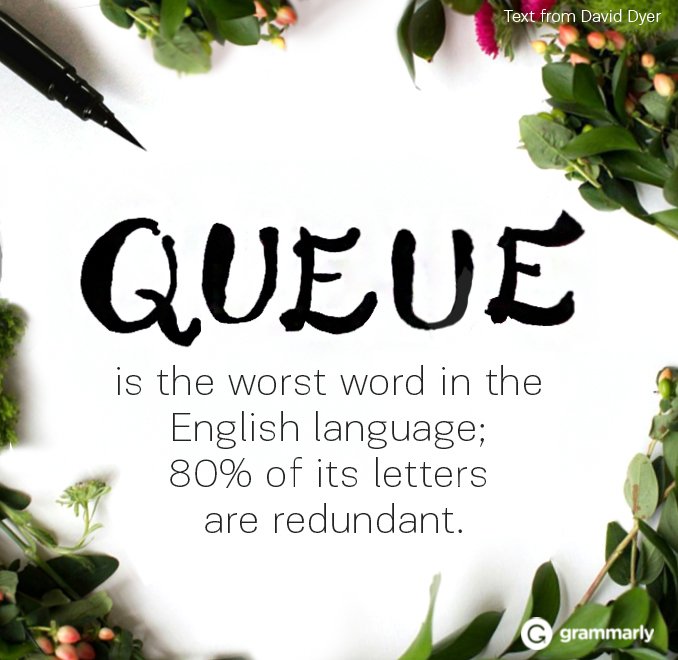
— Grammarly (@Grammarly) November 24, 2015
Have you considered this, oh Grammarly.com*? Have you thought about the implications of yout statement? Are 80% of the letters of the word "Queue" really redundant?
English is a really strange language, who was first the bastard child of low-German, Saxon, Norman and then a vagabond thief, who stole words as her nation stole countries through the cunning use of flags.
The seventeen letter of the alphabet probably came to us from the Semitic Qoph, before being hammered into shape through the ages into the Phoenician Qōp and then maybe the Greek Qoppa (Ϙ). Modern Q probably showed up in Roman, with C, K and Q being used to represent "k" and "g" sounds.
In modern English, Q is usually followed by U because the Etruscan civilization who were eventually conquered by the Romans in 264BC, rendered "kw" sounds as "QV". The letter U came to us in the middle ages as a means to differentiate V and U sounds.
All this is mostly an aside though, because although it helps to explain why Qu is almost always seen in "native" words as a digraph, it doesn't really bring us a whole lot closer to assessing the claim by Grammarly.com.
Q
If 80% of the letters of the word "Queue" are really redundant, then Q is a legitimate word. Is that true though?
The only other one letter words in the English language are "A" which is a singular indefinite article (this is "a" blog post) and the word "I" which is the perpendicular pronoun. I hope that makes sense.
If Q is a legitimate word, then it would be unique in being the only one consonant word but without a vowel modifier, it's almost unpronounceable.
Q might very well the name of James Bond's gadgeteer quartermaster or someone in the Star Trek universe who has the power to alter time, space, and reality, but even then as a single letter, it's still pronounced something like "kyoo".
Clearly one letter is not enough.
Qu
Two letters? Is that "kwu" or "kwe"?
English is already idiotic enough with its spelling to suggest that anyone might hope to know that Qu is a word. The combination "ough" is already bad enough and has anywhere between six and ten different pronunciations depending on where you are in the Anglophone world.
I take it you already know, Of tough and bough and cough and dough?
Two letters isn't enough to carry a word like this along; not with so much ambiguity in the language.
Que
Is three letters enough?
Que?
Manuel, the very cheap waiter from Barcelona in the TV comedy Fawlty Towers is famous for the uttering of this three letter word. In his own words: "I can speak English, I learn it from a book."
I know that languages are different and that the same spelling might be pronounced differently both between languages and even in the same language (like that bottle of Polish polish you use to clean furniture) but Que is recognisable enough in English that it can only be pronounced "ke"
Three letters is not enough either.
Queu
Maybe this is the point where we should stop. "Queu" sort of looks like a legitimate word. Spelling is mostly arbitrary anyway; so there's no logical reason not to stop here.
Four letters might be enough.
Queue
As usual we can blame the English language for being a thief. The word "queue" was stolen from French in about the fifteen century and probably derived from the older word "Cue" which means a "tail"; which itself came from the Roman word "cauda" and Italian "coda". We still find Codas at the end of bits of music; which is the tail to a piece.
When we steal a word in English and especially when we steal one that's already in Roman script, we tend not to muck with it a lot unless your name happens to be Noah Webster.
Rather than being redundant, although the word looks idiotic, it's sufficiently interesting enough to be memorable and since people tend to read whole words at a go, rather than sounding out all the various parts, the word serves us well because it isn't ambiguous or easily confused with something else.
The other thing to bear in mind is that the silent-e on the end, is consistent with words like "cube", and even makes it look like it rhymes with words like "blue" and "true".
Five letters might be over-engineered but it works.
I think that an argument can be made that maybe 20% of the letters of the word "Queue" are redundant but only the "e" on the end and even then, it's tenuous.
I also think that the worst word in the English language is through. Ideally, I'd like it to be spelled "ðroo" but that's another story.
*https://www.grammarly.com/grammar-check
November 21, 2015
Horse 2028 - North Sydney By-Election; Labor's No Show
The by-election for the seat of North Sydney which became vacant after the resignation of former Treasurer Joe Hockey, will be held on the 5th of December.
Realistically the only candidate who stands a chance out of the field of 13 is NSW Liberal Party President and former Hockey staffer, Trent Zimmerman, as the Federal Electiral Division of North Sydney, has been held by conservative parties since the nation's inception in 1901 except for a bried period of six years when Ted Mack held the seat from 1990 to 1996.
If you look through the list of parties contesting the election, there is one party which is conspicuous by its absence.
For those people reading on interesting readers and devices, I warn you, a kaleidoscope of colours follows.
Arts
Sustainable Population
Liberal Democrats
Voluntary Euthanasia
Future
Greens
Independent
Christian Democrats
Palmer United
Liberal
Independent
Cyclists
Bullet Train
Realistically the only candidate who stands a chance out of the field of 13 is NSW Liberal Party President and former Hockey staffer, Trent Zimmerman, as the Federal Electiral Division of North Sydney, has been held by conservative parties since the nation's inception in 1901 except for a bried period of six years when Ted Mack held the seat from 1990 to 1996.
If you look through the list of parties contesting the election, there is one party which is conspicuous by its absence.
For those people reading on interesting readers and devices, I warn you, a kaleidoscope of colours follows.
Arts
Sustainable Population
Liberal Democrats
Voluntary Euthanasia
Future
Greens
Independent
Christian Democrats
Palmer United
Liberal
Independent
Cyclists
Bullet Train
The only one notable exception which would usually contest an election is the Australian Labor Party. For reasons which I can only assume are apathy and defeatism, the ALP hasn't even bothered to field a candidate; which I think inadvertently speaks volumes.
I suspect that the Turnbull government will want to show its credentials before it goes to the next Federal Election by passing a budget. Arguably the budget is the biggest single event in the life of a political year; so that means that we're unlikely to have an election before the 10th of May 2016 in my not very well paid opinion.
The latest possible date than an election can be held is the 14th of January 2017 but that's only if a parliament runs to the absolute end of its term and the writs are drafted on the very last possible date.
For some reason, Australia likes to hold its elections in September. This is either because a budget has just passed or because it means that a government once it has won an election can wave about the magic word "mandate" around as though it were a weapon. Both sides of the divide are guilty of this and its disingenuous to pretend otherwise.
Assuming that a the next Federal Election is in September 2016. Then maybe the ALP's decision not to contest the North Sydney By-Election is purely economic. If it doesn't, then it can fold its money in half and stick it back into its pocket for use later; that seems sensible to me.
The problem in not contesting an election though is that it does effectively give a harry-handpass to the Liberal Party and if politics is about scoring political points and scoring goals, then that's either equivalent to an uncontested mark or a rushed behind. If the Liberals win the seat, the numbers don't change an iota in the House but they do win bragging rights.
I know that this sounds strange but even though an MP is elected to represent a local constituency, almost never do the people in the electorate think of it that way. If you ask most people who their MP is at any level of government, I'd bet that the majority of people don't actually know. What they do know is which party they voted for and even though the electorate likes to complain that they didn't vote for John Citizen as the Prime Minister or Billy Wonderfish if there's a spill, that's kind of a disconnect anyway because they did vote for a member of a party. The 150 little elections aren't really fought on "local issues" at all.
Given Labor's disinterest to contest a local election, what does this say about a potential national election? Are we to assume that by inference that they actually don't care? It's worth remembering that even during the period of the the beginning of the Menzies Government in 1949 to the 1972 election, Labor did bother to field candidates at every election. Doctor Herbert Evatt and Arthur Calwell who were the unluckiest Opposition Leaders in Australian political history, did both manage to win the popular vote even though their parties lost elections.
For Labor not to bother in North Sydney, I think either highlights a party which has lost its fervour or has for the moment lost its way.
Aside:
1940 - Curtin
1954 - Evett
1961 - Calwell
1969 - Whitlam
1990 - Hewson
1998 - Beazley
On six occasions, a majority of the popular vote didn't translate into a majority of seats. These six are Opposition Leaders who lost elections but won more votes.
For Labor not to bother in North Sydney, I think either highlights a party which has lost its fervour or has for the moment lost its way.
Aside:
1940 - Curtin
1954 - Evett
1961 - Calwell
1969 - Whitlam
1990 - Hewson
1998 - Beazley
On six occasions, a majority of the popular vote didn't translate into a majority of seats. These six are Opposition Leaders who lost elections but won more votes.
November 20, 2015
Horse 2027 - International Men's Day: Grow Up!
November 19th, was International Men's Day. As a man, I knew nothing about the day and quite frankly if I did, I doubt that I would have known how to celebrate it. What should I have done? I dunno, hammer nails into wood, hoon around and smoke up the tyres, lie around on the couch?
I did nothing, which is the best thing to do for International Men's Day because it's an inherently stupid day. I understand that issues like male suicide and men's health issues are important but is this day really necessary?
The point is that every day is International Men's Day and has been for a very long time.
Let's assume of a second that all the women of the world were allowed to stop working on the day of the year that the average wage that they are paid, finally runs out, relative to men.
If on average, women are paid only 82.13% of men, then the day that we should expect them all to refuse to do any work is October 28. I've got bad news for International Men's Day, the women would has stopped working 22 days before. Remember that date, it's important.
In 1975, on October 24, the Nordic country of Iceland staged what I think is probably the single greatest event in labour relations anywhere in the world. All the women of Iceland went on strike. October 24 was the date which was deemed that day of wage equivalency and so at 8am, around 90% of the women in Iceland, refused to do any work that day.
Fathers found that they had to take their children to work, as all of the schools and day-care centres were closed. All of this was also made all the more pertinent as 1975 was declared by the United Nations to be International Women's Year.
If we are going to have an International Men's Day, perhaps we should talk about the awful plight that men face, having to be paid 121.75% that of women and thanks to our "one size fits rich" superannuation system, also have to face the prospect of finishing with 50% savings in retirement.
By my reckoning, men make up 435 of 593 of all seats in Federal and State Parliaments across the country; so it's not hard to see why legislators don't really take women's issue seriously.
If the parliament really took harassment in the workplace serious, it would have taken action before Julia Gillard's now famous "misogyny" speech ever took place. The fact that it didn't indicates to me that parliament is too feeble to actively police the laws which it generates.
There are issues like harassment in the work place which men almost never face and women in public life often face the sort of threats, which even a decade ago would have been unprintable. How many times have you honestly heard of a male journalist being threatened with rape? Probably none.
Admittedly I'm not in a position of power and I don't command a six figure salary but let's be honest because I was born a white male, I won the jackpot of life. I don't face racial abuse, ethnic abuse and neither do I face abuse because of gender.
I know that this sounds stupid but I inadvertently did celebrate International Men's Day. I walked home from the train station alone at night and nothing happened.
I did nothing, which is the best thing to do for International Men's Day because it's an inherently stupid day. I understand that issues like male suicide and men's health issues are important but is this day really necessary?
The point is that every day is International Men's Day and has been for a very long time.
Let's assume of a second that all the women of the world were allowed to stop working on the day of the year that the average wage that they are paid, finally runs out, relative to men.
If on average, women are paid only 82.13% of men, then the day that we should expect them all to refuse to do any work is October 28. I've got bad news for International Men's Day, the women would has stopped working 22 days before. Remember that date, it's important.
In 1975, on October 24, the Nordic country of Iceland staged what I think is probably the single greatest event in labour relations anywhere in the world. All the women of Iceland went on strike. October 24 was the date which was deemed that day of wage equivalency and so at 8am, around 90% of the women in Iceland, refused to do any work that day.
Fathers found that they had to take their children to work, as all of the schools and day-care centres were closed. All of this was also made all the more pertinent as 1975 was declared by the United Nations to be International Women's Year.
If we are going to have an International Men's Day, perhaps we should talk about the awful plight that men face, having to be paid 121.75% that of women and thanks to our "one size fits rich" superannuation system, also have to face the prospect of finishing with 50% savings in retirement.
By my reckoning, men make up 435 of 593 of all seats in Federal and State Parliaments across the country; so it's not hard to see why legislators don't really take women's issue seriously.
If the parliament really took harassment in the workplace serious, it would have taken action before Julia Gillard's now famous "misogyny" speech ever took place. The fact that it didn't indicates to me that parliament is too feeble to actively police the laws which it generates.
There are issues like harassment in the work place which men almost never face and women in public life often face the sort of threats, which even a decade ago would have been unprintable. How many times have you honestly heard of a male journalist being threatened with rape? Probably none.
Admittedly I'm not in a position of power and I don't command a six figure salary but let's be honest because I was born a white male, I won the jackpot of life. I don't face racial abuse, ethnic abuse and neither do I face abuse because of gender.
I know that this sounds stupid but I inadvertently did celebrate International Men's Day. I walked home from the train station alone at night and nothing happened.
November 12, 2015
Horse 2026 - Hello Bruce. Australia 3 - Kyrgyzstan 0
Australia 3 def. Kyrgyzstan 0
Jedinak 40' (pen.)
Cahill 50'
Amirov 69' (o.g)
The Bruce Stadium or whatever they decide to call it these days. Hello Bruce, Bruce. Looked like a cross between a pre-school's sandpit and an explosion in a quilt factory. It was the same for both sides - complete rubbish.
After an opening flurry of shots in which six shots were rained down in six minutes, the game settled into a hard but fair tussle. Kyrgyzstan is a rugged central Asian nation in both geography and character and they showed that they were up for a physical challenge against Australia who is renowned for that kind of game.
The first major chance came after 14 minutes when Jedinak supplied a cross to the mercurial Cahill whose opening shot hit the wood work. This game would devolve into the sort of game that for every second that passed, the greater the chance that one side was going to break.
In the 16th minute, Kyrgyzstan played an impressive counter and after an Ivan Filatov shot hit the defence, it fell to Viktor Maier who was brought down in the area by James Meredith. It should have drawn a penalty but instead got nothing at all.
22 minutes in and after a Mooy corner, Luongo's shot sprayed wide and four minutes later Meredith supplied a swinging cross from the left wing which hung in the air forever but Cahill's header went wide.
Tomi Juric who was nursing an injury finally succumbed to the pain and his replacement Nathan Burns injected himself into the play with vigour and pep.
In the 28th minute, Mooy fired a rocket from about 17 yards away but the brave Azamat Baimatov threw himself in front of the ball and diffused it nobly.
There was a slight lull in play as players regrouped and although Burns sent a cross in front of the defenders, Jedinak's shot went so far high and wide that it practically came back down with snow on it.
In the 38th minute Mooy put a pass into Burns and as it bounced around in an unguarded penalty area, somehow Mark Milligan managed to miss an open goal from less than 2 yards away.
Almost a minute later, Islam Shamshiev brought down Burns in the penalty area and Jedinak stepped up to take the penalty. Jedinak's strike would have been impossible to save for even the best keepers in the world, for unless plucky keeper Pavel Matiash had grown wings and become and aeroplane, there was no hope at all that he was going to save the penalty.
Before the half time period came, another Mooy corner also found Cahill's head but didn't find the back of the net.
After the half time break though, Mooy and Cahill would again link up. After just four minutes of the second period, Mooy troubled the defenders and threaded it through a space in the back four; without even looking, he found Cahill who blasted the ball across the hapless Matiash for the second goal of the game.
For a brief period, Kyrgyzstan appeared to have found some fight but unfortunately, Shamshiev's shot showed no conviction at all and dribbled outside the right hand post. Shamshiev would be replaced later in the match by the defender Vitalij Lux, which showed that Kyrgyzstan had gone into damage control rather than attack their way out of it.
Kyrgyzstan had retreated from a fairly attacking 4-4-2 with a diamond centre to a 5-4-1 and this proved to undo them further. They became confused and cramped at the back and for the next eight minutes, Australia began to run rampant. This would finallly culminate in the substitution of Jedinak for Troisi and Australia pushed even higher, moving from 4-4-2 to 4-3-3.
With extra players forward Australia did break Kyrgyzstan; when in the 68th minute a Mooy corner, hit the back of Ildar Amirov who turned the ball into his own net.
At 3-0 up, the nails in the coffin had been hammered in and the match kind of fizzled out in the last twenty minutes. Apart from a brief period in the 91st minute when Matiash saved a Cahill strike and then saved a second shot from Troisi who benefited from the deflection, this turned into a fairly simple exercise.
With the two top teams staying on for further qualifiers for the 2018 World Cup, Australia can not really afford to rest on their laurels. Even with a game in hand, they still trail Jordan by 4 points in Group B and so will be looking to futher consolidate (ie thrash) Bangladesh in Dakar next week.
Jedinak 40' (pen.)
Cahill 50'
Amirov 69' (o.g)
The Bruce Stadium or whatever they decide to call it these days. Hello Bruce, Bruce. Looked like a cross between a pre-school's sandpit and an explosion in a quilt factory. It was the same for both sides - complete rubbish.
After an opening flurry of shots in which six shots were rained down in six minutes, the game settled into a hard but fair tussle. Kyrgyzstan is a rugged central Asian nation in both geography and character and they showed that they were up for a physical challenge against Australia who is renowned for that kind of game.
The first major chance came after 14 minutes when Jedinak supplied a cross to the mercurial Cahill whose opening shot hit the wood work. This game would devolve into the sort of game that for every second that passed, the greater the chance that one side was going to break.
In the 16th minute, Kyrgyzstan played an impressive counter and after an Ivan Filatov shot hit the defence, it fell to Viktor Maier who was brought down in the area by James Meredith. It should have drawn a penalty but instead got nothing at all.
22 minutes in and after a Mooy corner, Luongo's shot sprayed wide and four minutes later Meredith supplied a swinging cross from the left wing which hung in the air forever but Cahill's header went wide.
Tomi Juric who was nursing an injury finally succumbed to the pain and his replacement Nathan Burns injected himself into the play with vigour and pep.
In the 28th minute, Mooy fired a rocket from about 17 yards away but the brave Azamat Baimatov threw himself in front of the ball and diffused it nobly.
There was a slight lull in play as players regrouped and although Burns sent a cross in front of the defenders, Jedinak's shot went so far high and wide that it practically came back down with snow on it.
In the 38th minute Mooy put a pass into Burns and as it bounced around in an unguarded penalty area, somehow Mark Milligan managed to miss an open goal from less than 2 yards away.
Almost a minute later, Islam Shamshiev brought down Burns in the penalty area and Jedinak stepped up to take the penalty. Jedinak's strike would have been impossible to save for even the best keepers in the world, for unless plucky keeper Pavel Matiash had grown wings and become and aeroplane, there was no hope at all that he was going to save the penalty.
Before the half time period came, another Mooy corner also found Cahill's head but didn't find the back of the net.
After the half time break though, Mooy and Cahill would again link up. After just four minutes of the second period, Mooy troubled the defenders and threaded it through a space in the back four; without even looking, he found Cahill who blasted the ball across the hapless Matiash for the second goal of the game.
For a brief period, Kyrgyzstan appeared to have found some fight but unfortunately, Shamshiev's shot showed no conviction at all and dribbled outside the right hand post. Shamshiev would be replaced later in the match by the defender Vitalij Lux, which showed that Kyrgyzstan had gone into damage control rather than attack their way out of it.
Kyrgyzstan had retreated from a fairly attacking 4-4-2 with a diamond centre to a 5-4-1 and this proved to undo them further. They became confused and cramped at the back and for the next eight minutes, Australia began to run rampant. This would finallly culminate in the substitution of Jedinak for Troisi and Australia pushed even higher, moving from 4-4-2 to 4-3-3.
With extra players forward Australia did break Kyrgyzstan; when in the 68th minute a Mooy corner, hit the back of Ildar Amirov who turned the ball into his own net.
At 3-0 up, the nails in the coffin had been hammered in and the match kind of fizzled out in the last twenty minutes. Apart from a brief period in the 91st minute when Matiash saved a Cahill strike and then saved a second shot from Troisi who benefited from the deflection, this turned into a fairly simple exercise.
With the two top teams staying on for further qualifiers for the 2018 World Cup, Australia can not really afford to rest on their laurels. Even with a game in hand, they still trail Jordan by 4 points in Group B and so will be looking to futher consolidate (ie thrash) Bangladesh in Dakar next week.
November 06, 2015
Horse 2025 - In Defence Of Unknowable Terms Of Parliament
For those who would like to say that I haven't done my research and thought this through, please refer to my previous multiple thousands of words and 25 blog posts on the subject:

Links:
Horse 1716 - Parkes http://rollo75.blogspot.com.au/2014/07/horse-1716-pms-0-henry-parkes.html
Horse 1717 - Barton http://rollo75.blogspot.com.au/2014/07/horse-1717-australias-prime-ministers.html
Horse 1720 - Deakin, Watson, Reid http://rollo75.blogspot.com.au/2014/07/horse-1720-australias-prime-ministers.html
Horse 1724 - Fisher http://rollo75.blogspot.com.au/2014/07/horse-1724-australias-prime-ministers.html
Horse 1728 - Cook http://rollo75.blogspot.com.au/2014/08/horse-1728-australias-prime-ministers.html
Horse 1738 - Hughes http://rollo75.blogspot.com.au/2014/08/horse-1738-australias-prime-ministers.html
Horse 1758 - Bruce http://rollo75.blogspot.com.au/2014/09/horse-1758-australias-prime-ministers.html
Horse 1761 - Scullin http://rollo75.blogspot.com.au/2014/09/horse-1761-australias-prime-ministers.html
Horse 1780 - Lyons http://rollo75.blogspot.com.au/2014/10/horse-1780-australias-prime-ministers.html
Horse 1796 - Page http://rollo75.blogspot.com.au/2014/12/horse-1796-australias-prime-ministers.html
Horse 1837 - Menzies http://rollo75.blogspot.com.au/2015/02/horse-1837-australias-prime-ministers.html
Horse 1850 - Fadden http://rollo75.blogspot.com.au/2015/03/horse-1850-australias-prime-ministers.html
Horse 1856 - Curtin http://rollo75.blogspot.com.au/2015/03/horse-1856-australias-prime-ministers.html
Horse 1873 - Forde http://rollo75.blogspot.com.au/2015/04/horse-1873-australias-prime-ministers.html
Horse 1880 - Chifley http://rollo75.blogspot.com.au/2015/04/horse-1880-australias-prime-ministers.html
Horse 1901 - Menzies (again) http://rollo75.blogspot.com.au/2015/05/horse-1901-australias-prime-ministers.html
Horse 1916 - Holt, McEwen http://rollo75.blogspot.com.au/2015/06/horse-1916-australias-prime-ministers.html
Horse 1926 - Gorton http://rollo75.blogspot.com.au/2015/06/horse-1926-australias-prime-ministers.html
Horse 1939 - McMahon http://rollo75.blogspot.com.au/2015/07/horse-1939-australias-prime-ministers.html
Horse 1949 - Whitlam http://rollo75.blogspot.com.au/2015/07/horse-1949-australias-prime-ministers.html
Horse 1968- Fraser http://rollo75.blogspot.com.au/2015/08/horse-1968-australias-prime-ministers.html
Horse 1983 - Hawke, Keating http://rollo75.blogspot.com.au/2015/09/horse-1983-australias-prime-ministers.html
Horse 1999 - Howard http://rollo75.blogspot.com.au/2015/10/horse-1999-australias-prime-ministers.html
Horse 2016 - Rudd, Gillard http://rollo75.blogspot.com.au/2015/10/horse-2016-australias-prime-ministers.html
Horse 2023 - Abbott, Turnbull http://rollo75.blogspot.com.au/2015/11/horse-2023-australias-prime-ministers.html
Have I got your attention?
Really?
Good.
Are you sitting comfortably?
Then we'll begin.
For those who look across the past eight years of Australian democracy and accuse the system of not working, I'd like to remind everyone that since 2007 we have had five Prime Ministers but from the time that I was born up until 2007, we had just four.
Over the long run and if you include Sir Henry Parkes (who probably would have been Prime Minister if he was still alive), then all up we've had thirty Prime Ministers in 120 years. Over the long run, that's one every four years; which I think is fine.
If you look across the various systems of government, then two years between elections as they have in the United States House of Representatives is demonstrably too short because if leads to continual electioneering and gridlock in the legislature, four years is too long because it leads to weeks and weeks of campaigning which is mostly pointless and hideously expensive and five years like they have in the UK is obviously a terrible idea because it means that bad governments stay in for too long and hated governments might only really need to face the electorate twice in a decade.
I personally think that an uncertain term of about three yearsish in a not very exact sort of way, is good for democracy and also allows a government who is bold to actually force a mandate for something, as say Whitlam did in 1974 or Menzies did in 1951 (the latter failed in banning communism).
In the general scheme of things, Australian politics generally goes through periods of friction and then stability. In the opening eight years, we had six Prime Ministers as the states learned or didn't learn how to rub shoulders together, we had six Prime Ministers as the Second World War roared around the world and following the retirement of Sir Robert Menzies we also had six Prime Ministers as politics went through a generational shift.
What we're looking at now, following on from Hawke, Keating and Howard who were all Silent Generation Prime Ministers, is another generational shift where we've had four Baby Boomers. Time will of course tell if Malcolm Turnbull is finally able to achieve the sort of stability we've seen in ages past but there no reason to suggest that the hope for years to come isn't another age of parliamentary stability. The other side of the coin is that in periods of long parliamentary stability, it must really really suck to be the Leader of the Opposition who has to sit opposite that, like Doc Evett, Arthur Calwell and Andrew Peacock did.
A nominally three year parliamentary cycle at least gives an Opposition Leader a reason to keep at the job. Someone like Tony Abbott who lost the 2010 election after one of the most protracted series of bunfights in corridors that we've seen in this country, spent three years fighting tooth and nail to finally win the top spot in Australian politics and whilst commentators might like to say that it led the nation into toxic politics, it actually belies the fact that more than 500 bills passed through the parliament in that period of time; making it an especially productive period in political history. Had Abbott had to wait four or even five years in the cold, he might had lost heart and given up altogether.
One of the usual arguments which is put forward for having fixed terms is to fight against the advantage of incumbency. I think that this is mostly nonsense. It makes some degree of sense to claim that that is the case in a nation like the United States where the elections for the House of Representatives have no bearing on who actually forms cabinet government but in a country like Australia, governments are almost never swept to power, old governments are swept out of office.
The incumbency argument makes even less sense in the light that in a system that can show periods of change, then it's probably best to design a system that gives a wee bit of advantage to the incumbents because it adds to stability
Besides which, as New South Wales and Victoria have shown quite comprehensively, having fixed election dates in no way improves government; with bad governments such as the Labor government from 2007-2011 which lurched from side to side like a zombie sheep, having no way to be removed by the electorate. If New South Wales had shorter terms like the Commonwealth has, then New South Wales would have been rid of the pox much sooner.
I can tell you that the next United Kingdom general election will happen in May 2020 and that the next US Presidential Election will happen in 2016, with campaigning already starting in America now; as the the rest of the world watches on in glorious horror at the sheer profligacy and expense of it all. Surely it's much easier to just go "Snap - election in five weeks. Off you go!" and everyone is happy.
Besides which, I like the idea of having no idea when the next election is. It might be in the spring, or the winter, or an autumn; who knows? Nobody knows! I think that it also helps to keep things interesting and may we all live in interesting times.
November 05, 2015
Horse 2024 - Is Government Regulation Really Useless? Pull The Other Plug
Dear John (not your real name; you know who you are),
Subject to our conversation about the uselessness of government regulation and your assertion that all government regulation is bad, you set me the task of finding "just one area" where government regulation is good.
It took me longer to take the photograph, let alone to write this piece, than it did for me to come up with the example.
This should be an area which is close to your heart because it's also so very close to your wallet. Here is a picture.
This is a power point.
Wow.
Just wow.
Wow wow wow wow.
Wowie wowie wowie wow.
In 1937 the standard C112 plug/socket system was codified and in 1938 it was adpoted as a formal standard across Australia. This standard was superseded by AS 3112 in 1990 and formally adopted as AS/NZS 3112; currently AS/NZS 3112:2011.
Before 1937, plug and socket manufacturers were basically free to do as they chose but a series of gentlemen's agreements between plug/socket manufacturers and the State Electricity Commission of Victoria, solidified this as a working and proper thing.
It should be obvious to all and sundry that a standard electrical plug is good, fit and proper for everyone involved from plug/socket manufacturers, to electricity delivers, to appliance manufacturers, to consumers. Laws exist for the regulation, standardisation and protection of society and for something like electricity delivery, such a thing actually helps to protect people and stop buildings from burning to the ground.
You'd think that something as forgettable as a power point and plug standard would be simple to regulate but the document from Standards Australia and Standards New Zealand is 69 pages long¹.
Then there's the question of electricity delivery itself. Unbeknownst to most people, Australia's voltage is actually not 240V but a nominal 230V which was brought into line with the International Electrotechnical Commission's worldwide harminsation program, starting in 1981.
A 230V power supply can be delivered with voltages from a –6% to +10% variation on that standard; which means that this can be anything from 216.2V to 253V.
The thing is though that almost nobody in the real world, honestly knows or cares about the standard. Electricity is perfectly fungible; not only do consumers not care who generates their electric power, most of the time they're not even aware whose actually responsible for delivering it.
All they care about is that when they plug in their stuff into a wall, they get something that approximates 230 boring volts, at about 10 amperes and at a gloriously monotomous 50±5 cycles a second. Most of the time they don't even care about that; all they want is to have stuff work when they plug stuff in the wall.
Government regulations aren't inherently bad and to assert so is a lie. I mean you are free to jam forks into the wall if you so desire but the outcome might not be pleasant. On the upside, at least you won't live long to regret it.
People don't complain much either if they have to comply with other government regulations like road rules for the most part. There are lines painted on the road and people are safer driving a two tonne vehicle at 60km/h down the street than they are operating a fork. Above the age of 45 Coronary heart disease and other Cerebrovascular diseases are likely to kill people and below that Suicide is a greater cause of death than Land transport accidents².
This doesn't change the fact that the death rate for an individual over the course of their lifetime is pretty close too 100%.
People only really complain about government regulations when they impose direct costs or delays on someone, like having to pay taxes, or waiting for building approvals. The vast majority of government regulations go by totally unnoticed by people; yet they help to explain why their dinner was safe to eat, why they mostly got to and from work in as boring a manner as possible and why their workplace and house didn't spontaneously burst into flames.
Wowie wowie wowie wow. People often like to say that they'd like to use a machete to cut through red tape but the administration of boring regulation really does save the nation and some red tape holds the nation together. Think about that when you're microwaving your pizza pocket.
Pro lege,
Rollo
¹http://shop.standards.co.nz/catalog/3112:2011(AS%7CNZS)/scope?
²http://www.aihw.gov.au/deaths/leading-causes-of-death/
Subject to our conversation about the uselessness of government regulation and your assertion that all government regulation is bad, you set me the task of finding "just one area" where government regulation is good.
It took me longer to take the photograph, let alone to write this piece, than it did for me to come up with the example.
This should be an area which is close to your heart because it's also so very close to your wallet. Here is a picture.
This is a power point.
Wow.
Just wow.
Wow wow wow wow.
Wowie wowie wowie wow.
In 1937 the standard C112 plug/socket system was codified and in 1938 it was adpoted as a formal standard across Australia. This standard was superseded by AS 3112 in 1990 and formally adopted as AS/NZS 3112; currently AS/NZS 3112:2011.
Before 1937, plug and socket manufacturers were basically free to do as they chose but a series of gentlemen's agreements between plug/socket manufacturers and the State Electricity Commission of Victoria, solidified this as a working and proper thing.
It should be obvious to all and sundry that a standard electrical plug is good, fit and proper for everyone involved from plug/socket manufacturers, to electricity delivers, to appliance manufacturers, to consumers. Laws exist for the regulation, standardisation and protection of society and for something like electricity delivery, such a thing actually helps to protect people and stop buildings from burning to the ground.
You'd think that something as forgettable as a power point and plug standard would be simple to regulate but the document from Standards Australia and Standards New Zealand is 69 pages long¹.
Then there's the question of electricity delivery itself. Unbeknownst to most people, Australia's voltage is actually not 240V but a nominal 230V which was brought into line with the International Electrotechnical Commission's worldwide harminsation program, starting in 1981.
A 230V power supply can be delivered with voltages from a –6% to +10% variation on that standard; which means that this can be anything from 216.2V to 253V.
The thing is though that almost nobody in the real world, honestly knows or cares about the standard. Electricity is perfectly fungible; not only do consumers not care who generates their electric power, most of the time they're not even aware whose actually responsible for delivering it.
All they care about is that when they plug in their stuff into a wall, they get something that approximates 230 boring volts, at about 10 amperes and at a gloriously monotomous 50±5 cycles a second. Most of the time they don't even care about that; all they want is to have stuff work when they plug stuff in the wall.
Government regulations aren't inherently bad and to assert so is a lie. I mean you are free to jam forks into the wall if you so desire but the outcome might not be pleasant. On the upside, at least you won't live long to regret it.
People don't complain much either if they have to comply with other government regulations like road rules for the most part. There are lines painted on the road and people are safer driving a two tonne vehicle at 60km/h down the street than they are operating a fork. Above the age of 45 Coronary heart disease and other Cerebrovascular diseases are likely to kill people and below that Suicide is a greater cause of death than Land transport accidents².
This doesn't change the fact that the death rate for an individual over the course of their lifetime is pretty close too 100%.
People only really complain about government regulations when they impose direct costs or delays on someone, like having to pay taxes, or waiting for building approvals. The vast majority of government regulations go by totally unnoticed by people; yet they help to explain why their dinner was safe to eat, why they mostly got to and from work in as boring a manner as possible and why their workplace and house didn't spontaneously burst into flames.
Wowie wowie wowie wow. People often like to say that they'd like to use a machete to cut through red tape but the administration of boring regulation really does save the nation and some red tape holds the nation together. Think about that when you're microwaving your pizza pocket.
Pro lege,
Rollo
¹http://shop.standards.co.nz/catalog/3112:2011(AS%7CNZS)/scope?
²http://www.aihw.gov.au/deaths/leading-causes-of-death/
November 04, 2015
Horse 2023 - Australia's Prime Ministers - Nos 28 & 29 - Tony Abbott & Malcolm Turnbull
XXVIII - Tony Abbott
In the face of having virtually no Opposition Leader to speak of, Kevin Rudd achieved preferred Prime Minister polling levels of 74% at one stage. Dr Brendan Nelson held the job for almost a year before Malcolm Turnbull took over and then on 1st Dec 2009, Tony Abbott became Leader Of The Opposition.
Abbott who had previously been a staffer for the Liberal Party including job a press secretary to Liberal Leader John Hewson, was parachuted into the richest electorate in the country and which has only been held by the Liberal Party or its predecessors.
2009 was a fortunate date to become Opposition Leader because it meant that Abbott had sufficient time to draw the party together and mount a challenge at the 2010 election. The 2010 election would result in a hung parliament with both the Labor Party and the Liberal/National coalition falling short of the required number of seats needed to form government. The Labor Party only formed government because of the support of the crossbench and Abbott would have to wait three more years before he became Prime Minister.
At the Sep 2013 election, Abbott's coalition won back government; taking 90 seats to 55 seats and needed no help from the crossbench.
Abbott's government was perhaps most noted for its headline position to do with asylum seekers and boat arrivals. As the Opposition Leader, Abbott promised that a government that he would lead would "stop the boats" and for the most part it did. This however would come with its own problems and after an initiative to turn back boat arrivals called Operation Sovereign Borders was launched, four mainland detention centres were closed and deals were made with countries such as Papua New Guinea and Nauru to accept refugee and asylum seeker arrivals.
In Feb 2014 a riot in the Manus Island detention centre erupted and it was reported that processing of visa applications had in fact stopped on Manus Island. The United Nations refugee agency, the UNHCR, warned Australia that its decision to send asylum seekers to Papua New Guinea could breach international law and its human rights obligations.
Things weren't all quite so polarising though. Almost under the radar of the media, Tony Abbott did flag that he would "sweat blood" to see recognition of Indigenous peoples incorporated in the federal constitution; with the hope that this would coincide with the 50th anniversary of the 1967 referendum which repealed Section 127 which said that "aboriginal natives shall not be counted" in reckoning population.
On the trade front, Abbott concluded free trade agreements with Japan, South Korea and China but it was elsewhere in foreign policy that Abbott showed his statesmanship.
With the shooting down of Malaysia Airlines Flight MH17 over Ukranian air space by presumed Russian backed troops, the Minister for Foreign Affairs Julie Bishop, led negotiations at the UN Security Council to have that crash site declared untamperable by unfriendly powers. When another Malaysia Airlines plane, flight MH370 disappeared over the Indian Ocean on a flight from Kuala Lumpur to Beijing (so completely in the wrong direction), Abbott personally committed both the navy and the air force to looking for debris.
In September of 2015, Abbott would not survive a leadership spill when current Prime Minister Malcolm Turnbull won 61-39.

XXIX - Malcolm Turnbull
As a lawyer, Malcolm Turnbull was able to have the British Government's objections to an autobiography by an ex-MI5 officer Peter Wright, overruled. The book called "Spycatcher" speaks of an MI6 plot to assassinate the President of Egypt Gamal Abdel Nasser as well as of a joint MI5/CIA plot against British PM Harold Wilson. The British Government who saw it as damaging, wanted to have the book banned but Turnbull led the legal team which lifted the book's supression orders.
On the business front, Turnbull had made a wise business decision by buying a stake in tech-startup Ozemail in 1994 for $500,000 and eventually selling it to WorldCom five years later for $57m.
In the light of that, Turnbull's appointment in Abbott's cabinet as the Minister for Communications and in particular the minister responsible for the National Broadband Network, seems rather a good fit.
Since becoming Prime Minister. the heat of political debate appears to have died down a little. The Abbott Government's proposal to deregulate university fees appears to have been postponed until at least 2017 and it also appears that if there is to be a plebiscite on the subject of Same sex marriage that that might also be slated for 2017.
Where Turnbull's Government decides to go on issues like taxation policy, immigration and border control and on things like infrastructure remains to be seen; it also depends on what the electorate and the Senate will allow him to do.
November 03, 2015
Colt 2022.2 - Solved in 22 Seconds

Teachers deny the question was too difficult (scroll to the bottom of the article for the solution).
But strong maths students made the mistake of overthinking the question, while weaker students froze up, believing there was not enough information to solve the question.
- The Age, 2nd Nov 2015
I bet I can solve the question without even drawing a diagram:
There are 360° in a circle.
The angle between 12 lines radiating from the centre to each corner is:
360°/ 12 = 30°
12 equaliateral triangles can be drawn.
The angle sum of a triangle is 180°
The other two angles in these equaliateral triangles is:
180° - 30° = 150° (two angles)
150° / 2 = 75° (two angles)
If a line is drawn which extends from a side. Two 75° angles rotate around a point.
Angles on one side of a straight line add up to 180°
180° - (75° * 2) = 30°
Two coins are side by side; so that angle must be reflected.
30° + 30° = 60°
The Answer is D.
I win a cookie. Time elapsed (22 seconds).
Horse 2022 - F1: Angry Rosberg Remains Unbothered (Round 8)
Even before a wheel had turned at the Mexican Grand Prix at the the Autódromo Hermanos Rodríguez, engine builders were already bemoaning the fact that because the race is held at a height of at least 7000ft above sea level, engines wouldn't be able to breathe as easily in the less dense air and that precisely because the air is less dense, engines would not be able to dissipate their heat as easily.
Even after a 50 place grid penalty, the Honda engine in the back of Fernando Alonso’s McLaren was the first to expire; probably because of this reason.
Early in the race, Sebastian Vettel had a collision with Daniel Ricciardo and this meant that he dropped his third place and had too pit. Things only got worse from there. His pitstop put him to the back of the field and even though he spent most of the race on a blistering pace, he was still instructed to let Hamilton and Rosberg pass under blue flags. Vettel's race went from disappointing to humiliating when on lap 53, he spun the car into a set of barriers and then proceeded to try and clean up his mess by picking up broken pieces of Ferrari and putting them in the cockpit.
Not that Raikkonen in the other Ferrari had it any better.

Perhaps in exacting revenge for the incident in Russia (which for the purposes of this blog never existed) on lap 22 and challenging for sixth, Valtteri Bottas punted Raikkonen off the track. When quizzed on the subject of whether or not it was his or Bottas' fault, Raikkonen was quite phlegmatic about it and said that "That is life.It is racing. I haven't seen the pictures, but the end result wasn't ideal for me."
The last time both Ferraris failed to finish a Grand Prix was all the way back at the Australian GP in 2006.
After the safety car had come out and after the marshalls cleaned up Vettel's Ferrari, the Mercedes power in Bottas' Williams proved too much for the Renault in the back of Kvyat's Red Bull. Bottas breezed off into the distance and Kyvat was left to defend a late charge from his team mate Daniel Ricciardo.
The second Williams of of Felipe Massa who had sort of been nurdling around behind the leaders for virtually all the race, dribbled into sixth place.
Most of the Grand Prix was decidedly processional with very few overtaking maneuvers around the circuit. After about ten laps, the race very quickly turned into a silberwäsche with both of the Silver Arrows shooting off into the distance. Late in the race, there might have been a little bit of interest with Hamilton ignoring the Mercedes team’s directions to pit for new tyres so that he could stay out longer and hopefully get some advantage but it simply didn't work. Pretty much from the first corner, this was a Rosberg benefit race.
Maybe following on from the hat-throwing incident at the end of the Russian GP, Rosberg found some fire and it must be said that Angry-Rosberg is better than Sad-Rosberg but it's all come too late in the season.
Race Results:
1. Rosberg - Mercedes
2. Hamilton - Mercedes
3. Bottas - Williams
4. Kyvat - Red Bull
5. Ricciardo - Red Bull
6. Massa - Williams
"The John Logie Baird Television Was Better in 1984 Memorial Cup" at the end of Round 8 in Mexico looks like this:
52 Hamilton
46 Rosberg
30 Vettel
13 Bottas
13 Ricciardo
12 Kyvat
12 Massa
11 Raikkonen
6 Perez
4 Grosjean
3 Nasr
1 Hulkenburg
The Constructor's Championship is thus:
98 Mercedes
41 Ferrari
25 Red Bull
23 Williams
7 Force India
4 Lotus
3 Sauber
Even after a 50 place grid penalty, the Honda engine in the back of Fernando Alonso’s McLaren was the first to expire; probably because of this reason.
Early in the race, Sebastian Vettel had a collision with Daniel Ricciardo and this meant that he dropped his third place and had too pit. Things only got worse from there. His pitstop put him to the back of the field and even though he spent most of the race on a blistering pace, he was still instructed to let Hamilton and Rosberg pass under blue flags. Vettel's race went from disappointing to humiliating when on lap 53, he spun the car into a set of barriers and then proceeded to try and clean up his mess by picking up broken pieces of Ferrari and putting them in the cockpit.
Not that Raikkonen in the other Ferrari had it any better.
Perhaps in exacting revenge for the incident in Russia (which for the purposes of this blog never existed) on lap 22 and challenging for sixth, Valtteri Bottas punted Raikkonen off the track. When quizzed on the subject of whether or not it was his or Bottas' fault, Raikkonen was quite phlegmatic about it and said that "That is life.It is racing. I haven't seen the pictures, but the end result wasn't ideal for me."
The last time both Ferraris failed to finish a Grand Prix was all the way back at the Australian GP in 2006.
After the safety car had come out and after the marshalls cleaned up Vettel's Ferrari, the Mercedes power in Bottas' Williams proved too much for the Renault in the back of Kvyat's Red Bull. Bottas breezed off into the distance and Kyvat was left to defend a late charge from his team mate Daniel Ricciardo.
The second Williams of of Felipe Massa who had sort of been nurdling around behind the leaders for virtually all the race, dribbled into sixth place.
Most of the Grand Prix was decidedly processional with very few overtaking maneuvers around the circuit. After about ten laps, the race very quickly turned into a silberwäsche with both of the Silver Arrows shooting off into the distance. Late in the race, there might have been a little bit of interest with Hamilton ignoring the Mercedes team’s directions to pit for new tyres so that he could stay out longer and hopefully get some advantage but it simply didn't work. Pretty much from the first corner, this was a Rosberg benefit race.
Maybe following on from the hat-throwing incident at the end of the Russian GP, Rosberg found some fire and it must be said that Angry-Rosberg is better than Sad-Rosberg but it's all come too late in the season.
Race Results:
1. Rosberg - Mercedes
2. Hamilton - Mercedes
3. Bottas - Williams
4. Kyvat - Red Bull
5. Ricciardo - Red Bull
6. Massa - Williams
"The John Logie Baird Television Was Better in 1984 Memorial Cup" at the end of Round 8 in Mexico looks like this:
52 Hamilton
46 Rosberg
30 Vettel
13 Bottas
13 Ricciardo
12 Kyvat
12 Massa
11 Raikkonen
6 Perez
4 Grosjean
3 Nasr
1 Hulkenburg
The Constructor's Championship is thus:
98 Mercedes
41 Ferrari
25 Red Bull
23 Williams
7 Force India
4 Lotus
3 Sauber
November 02, 2015
Horse 2021 - Falling Effective Income Tax Rates Shouldn't Justify a GST Increase
If you listen to the vast river of complaint that flows through the airwaves every day, you very quickly develop the impression that "taxes are too high" and for just about every problem in existence that "the government should do something". Quite clearly, these two statements are in conflict because if you expect someone, including the government, to do something then that has to be paid for some how. You can not expect a plumber to come around and fix your plumbing unless you intend to pay them for their work. Likewise, if the government should do something then they will want to be paid for doing the thing; their vehicle of payment is via taxation.
The eternal conflict in politics, the great left-right divide, is the next problem of who should do what. The absolute extreme left is the position that the government should do everything and collect lots of tax; the absolute extreme right is the position that the government should do nothing and collect no tax whatsoever. Apart from the degree of social control that governments aught to legislate for and exert, politics is mostly the eternal argument between these two positions and pushing forth and back between them in order to win power.
The other thing to remember is that politics is a game which is played by people. The problem with people is that people tend to think that in the story of their lives, they are the good guy and what they think is best. They also tend to live in the present and so events in the past tend to have less weight on the formation of opinion than perhaps they aught to. If taxes are too high, then it must follow that taxes are higher than they've ever been, right? Whether or not this is actually true is mostly irrelevant since games played by people are always played in the present.
I decided to look into the past; into the story of taxation and see what was true. The following graphs are derived from calculations based on information from the Australian Bureau of Statistics and the Australian Taxation Office.
Taxation rates have more or less been on the slide since the late 1970s. Long gone are the punitive taxation rates of 60% and more, and yet there are still quite vociferous speakers, particularly on the right of politics, who think that taxes are still too high. Perhaps they are behind the latest push to increase the hateful GST from 10% to 15% because they know that this will shift the burden of taxation from the leaners at the top of the system to the heavy lifters somewhere in the middle (the people at the bottom already can't carry anything but don't worry, the GST will ensure that their legs are kicked out from underneath them - private affluence at the expense of public squalor is the order of the day).
When Joe Hockey was Treasurer, he raised the issue of bracket creep as an excuse to lower income taxation. I concur that bracket creep is indeed a thing but in the grand picture of the last 30 years, it's almost like arguing what colour to paint the fleas on a dog. Bracket creep is the notion that as people's income increases due to factors like inflation, that those increases pushes them into the next tax bracket. Fair enough, but income taxation is a marginal system and if your income is say $80,000 and your marginal tax rate is 40% and you get a pay increase of $1 which pushes you into a 45% bracket, then that 45% tax rate is only applied on that 80,001st dollar.

The eternal conflict in politics, the great left-right divide, is the next problem of who should do what. The absolute extreme left is the position that the government should do everything and collect lots of tax; the absolute extreme right is the position that the government should do nothing and collect no tax whatsoever. Apart from the degree of social control that governments aught to legislate for and exert, politics is mostly the eternal argument between these two positions and pushing forth and back between them in order to win power.
The other thing to remember is that politics is a game which is played by people. The problem with people is that people tend to think that in the story of their lives, they are the good guy and what they think is best. They also tend to live in the present and so events in the past tend to have less weight on the formation of opinion than perhaps they aught to. If taxes are too high, then it must follow that taxes are higher than they've ever been, right? Whether or not this is actually true is mostly irrelevant since games played by people are always played in the present.
I decided to look into the past; into the story of taxation and see what was true. The following graphs are derived from calculations based on information from the Australian Bureau of Statistics and the Australian Taxation Office.
Taxation rates have more or less been on the slide since the late 1970s. Long gone are the punitive taxation rates of 60% and more, and yet there are still quite vociferous speakers, particularly on the right of politics, who think that taxes are still too high. Perhaps they are behind the latest push to increase the hateful GST from 10% to 15% because they know that this will shift the burden of taxation from the leaners at the top of the system to the heavy lifters somewhere in the middle (the people at the bottom already can't carry anything but don't worry, the GST will ensure that their legs are kicked out from underneath them - private affluence at the expense of public squalor is the order of the day).
When Joe Hockey was Treasurer, he raised the issue of bracket creep as an excuse to lower income taxation. I concur that bracket creep is indeed a thing but in the grand picture of the last 30 years, it's almost like arguing what colour to paint the fleas on a dog. Bracket creep is the notion that as people's income increases due to factors like inflation, that those increases pushes them into the next tax bracket. Fair enough, but income taxation is a marginal system and if your income is say $80,000 and your marginal tax rate is 40% and you get a pay increase of $1 which pushes you into a 45% bracket, then that 45% tax rate is only applied on that 80,001st dollar.

This graph shows the effective rates¹ of income tax for half of, one time, twice and four times Average Weekly Ordinary Time Earnings² (AWOTE) since 1985. All of these income tax rates have been obtained from the ATO website and then by working out what the rates assessed would be.
You will note that the effective taxation rate for AWOTE has remained more or less constant since 1985 but that for 4x AWOTE and to a lesser extent, 2x AWOTE have fallen. The biggest fall in effective income tax rates happened in the year 2000/01; commencing on 1st July 2000.
The effective taxation rate on half of AWOTE has also fallen but the most dramatic fall happens not in any AWOTE figure but the effective taxation rate on the Median Wage. The reason for this is quite sinister.
 Median Wages have always been less AWOTE for a good reason. As a measure of central tendency, AWOTE whilst it might be a headline rate, is grossly inadequate to tell the story of what is actually going on. AWOTE which is an average includes all take home wage amounts but AWOTE includes the people at the very top of society whose wages have been increasing at many multiples that of the rest of the population.
Outgoing Telstra boss David Thodey reported back in August that his take home pay was 163 times that of the average employee of the company. His story is not atypical. In 1985 the pay mutiple of the CEO versus the average worker was typically about 20 times; in 2015 that has blown out to more than 100 times across the ASX. That means that the average CEO of an ASX 200 company takes about 3 days to take home the same wage as their average worker in the form makes in a year. That sort of rapid increase in that multiple is going to change the AWOTE figure quite markedly but the Median Wage, that is the value which slices all wages in twain, hasn't increased to anywhere near the same degree. This erosion of Median Wage as opposed to AWOTE certainly explains why the effective taxation rate on Median Wages is falling faster than everything else.
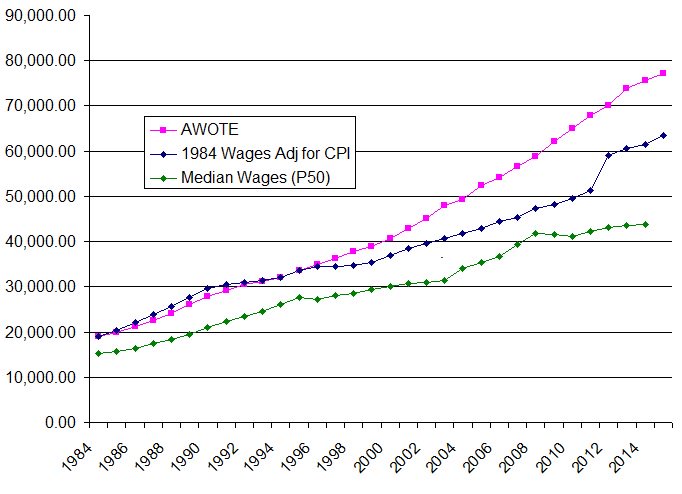
I want you to think back to Year 7 maths (yes I know that it might have been years ago but hear me out). You may remember the three measures of central tendency. The Mean or Average is all of the scores divided by the number of things. The Median is the score that splits the number of scores into two halves. The Mode is the most common score. When the Australian Bureau of Statistics quotes AWOTE wages, it's quoting Average Weekly Ordinary Time Earnings. I think that in principle, that this is simultaneously stupid and misleading and this is why:
The Commonwealth of Tiny is a small nation of ten people. In the year 20X5 it has:
5 people: income $20,000
50% unemployment.
Total wages $100,000.
Average wage: $10,000
The economy of Tiny is undergoing a serious reorganisation though. By the year 20Y5 it will have:
1 person: income $55,000; 9 people: income $5,000
0% unemployment - Yay! Unemployment has been eliminated.
Total wages: $100,000
Average wage: $10,000
Using a measure like average wages produces no change at all. The headline rate of unemployment has fallen; which means that the government has something to crow loudly about. However, more than half the income now goes to ten percent of the population and significantly more than half of the people are on half the average wage.
This might either sound like a triumph of economic planning if you happen to be one of the ten percent of people who have seen their wages skyrocket but if you are the majority of people, you are being seriously done in.
The Commonwealth of Tiny is not dissimilar to the Commonwealth of Australia. Since 1984 when the Median Wage was about 80% of Average Wages it has been steadily falling; if you follow the trend, then by 2018 the Median Wage (that is the wage which splits the population in two) will be less than 50% of the average wage.
I question the relevancy of quoting AWOTE when for half of the population, AWOTE is actually twice their wages. I'm not exactly sure which percentile of population that AWOTE actually maps to but for the Median Wage to have fallen that far it must mean that wages at the top end of the scale have increased by many many multiples. In 1984, management of companies was taking home a wage of between four and ten times that of their workforce; today it is not uncommon for management of big firms to be taking home a wage of twenty and thirty times that of their workforce with some CEOs of ASX companies raking in more than a hundred times that of their workforce. Yet at the same time, the average rate of taxation across the board is falling with people at the top enjoying the biggest tax cuts.
The argument given is that reducing tax allows firms to employ more people but the obvious hypocrisy here is that of course you can employ twice the number of people if you pay them less than half of what they would have got. This is also in the face of a massive amount of automation - when I worked at the Commonwealth Bank's money box branch at 48 Martin Place there were 24 tellers on the floor whereas when I went there last week, there were 3. Granted that the Internet has changed the way business works but I'm sure that the demands upon management have not meant that their work has become ten times harder; yet that's the reward they're given.
The implication for government of a falling Median Wage is that the tax take per person must also invariably fall.

You will note that the effective taxation rate for AWOTE has remained more or less constant since 1985 but that for 4x AWOTE and to a lesser extent, 2x AWOTE have fallen. The biggest fall in effective income tax rates happened in the year 2000/01; commencing on 1st July 2000.
The effective taxation rate on half of AWOTE has also fallen but the most dramatic fall happens not in any AWOTE figure but the effective taxation rate on the Median Wage. The reason for this is quite sinister.

Outgoing Telstra boss David Thodey reported back in August that his take home pay was 163 times that of the average employee of the company. His story is not atypical. In 1985 the pay mutiple of the CEO versus the average worker was typically about 20 times; in 2015 that has blown out to more than 100 times across the ASX. That means that the average CEO of an ASX 200 company takes about 3 days to take home the same wage as their average worker in the form makes in a year. That sort of rapid increase in that multiple is going to change the AWOTE figure quite markedly but the Median Wage, that is the value which slices all wages in twain, hasn't increased to anywhere near the same degree. This erosion of Median Wage as opposed to AWOTE certainly explains why the effective taxation rate on Median Wages is falling faster than everything else.
I want you to think back to Year 7 maths (yes I know that it might have been years ago but hear me out). You may remember the three measures of central tendency. The Mean or Average is all of the scores divided by the number of things. The Median is the score that splits the number of scores into two halves. The Mode is the most common score. When the Australian Bureau of Statistics quotes AWOTE wages, it's quoting Average Weekly Ordinary Time Earnings. I think that in principle, that this is simultaneously stupid and misleading and this is why:
The Commonwealth of Tiny is a small nation of ten people. In the year 20X5 it has:
5 people: income $20,000
50% unemployment.
Total wages $100,000.
Average wage: $10,000
The economy of Tiny is undergoing a serious reorganisation though. By the year 20Y5 it will have:
1 person: income $55,000; 9 people: income $5,000
0% unemployment - Yay! Unemployment has been eliminated.
Total wages: $100,000
Average wage: $10,000
Using a measure like average wages produces no change at all. The headline rate of unemployment has fallen; which means that the government has something to crow loudly about. However, more than half the income now goes to ten percent of the population and significantly more than half of the people are on half the average wage.
This might either sound like a triumph of economic planning if you happen to be one of the ten percent of people who have seen their wages skyrocket but if you are the majority of people, you are being seriously done in.
The Commonwealth of Tiny is not dissimilar to the Commonwealth of Australia. Since 1984 when the Median Wage was about 80% of Average Wages it has been steadily falling; if you follow the trend, then by 2018 the Median Wage (that is the wage which splits the population in two) will be less than 50% of the average wage.
I question the relevancy of quoting AWOTE when for half of the population, AWOTE is actually twice their wages. I'm not exactly sure which percentile of population that AWOTE actually maps to but for the Median Wage to have fallen that far it must mean that wages at the top end of the scale have increased by many many multiples. In 1984, management of companies was taking home a wage of between four and ten times that of their workforce; today it is not uncommon for management of big firms to be taking home a wage of twenty and thirty times that of their workforce with some CEOs of ASX companies raking in more than a hundred times that of their workforce. Yet at the same time, the average rate of taxation across the board is falling with people at the top enjoying the biggest tax cuts.
The argument given is that reducing tax allows firms to employ more people but the obvious hypocrisy here is that of course you can employ twice the number of people if you pay them less than half of what they would have got. This is also in the face of a massive amount of automation - when I worked at the Commonwealth Bank's money box branch at 48 Martin Place there were 24 tellers on the floor whereas when I went there last week, there were 3. Granted that the Internet has changed the way business works but I'm sure that the demands upon management have not meant that their work has become ten times harder; yet that's the reward they're given.
The implication for government of a falling Median Wage is that the tax take per person must also invariably fall.

Subscribe to:
Posts (Atom)