We live in a changing world. The world is heading slowly towards a state where some the things we once thought commonplace might not be around for future generations to enjoy due to issues like climate change, habitat destruction and the pressures of farming. There are some people though, who don't stand idly by and watch as the world falls to pieces; some people who care enough to make a difference; some people who will not accept the world that might be.
In particular, the members of the Pumpkins and Penguins Association of Australia (the PPAA) are fighting for the preservation and protection of pumpkins and penguins so that future plebian people can enjoy them.
We've all seen the terrible horror which is wrought every October in America, when Pumpkins have their innards scooped out and candles are inserted for Halloween. As culture creeps across the world, we're beginning to see that here too. But who cares for the pumpkins? Who says no to the insidious peril plaguing the pumpkins?
Likewise, it is possible to go to Phillip Island in Victoria and watch as the Fairy Penguins march up the beach to their nests. In days of yore they would have made the trek from the bitterly cold Southern Ocean to their little spots of calm unmolested but today they have become a public spectacle and they are in as much peril as the pumpkins.
In late 2016, the PPAA was launched to try and do something about these two vulnerable tribes of small things. Of course the obvious question is why pumpkins and penguins? What possible connection could they have with each other? The reason is simple. Both the flesh of pumpkins and penguins is essentially inedible. It is only through processes like boiling, baking and burning that pumpkins and penguins are remotely palatable.
The other connection has to do with those lamps made from pumpkins in October. Traditionally the source of candles for pumpkin lamps came from whaling but owing to conventions on the sea, most shaping has ceased and the whaling that still occurs is frowned upon. As a result, the makers of long lasting pumpkin candles have had to source new materials and this has meant massive reductions in worldwide penguin populations. As aquatic creatures who live in extremely cold conditions, penguins have a thick layer of blubber and they also produce oils. These oils and blubber are both flammable and burn so consistently that it is simply cheaper to extract material from penguins than it is to refine other oils. If you were to set a penguin on fire (heaven forbid), you would get an even burn for a long time but you would not be able to do very much with the rest of the penguin afterwards. After penguins have been processed, they are usually discarded; to the benefit of no-one.
There is the theory that it could be just as easy to stem the creeping tide of Halloween but that ignores the wider problems of pumpkins and penguins being mercilessly slaughtered every year at Christmas as well. The anonymous society S.A.N.T.A, which is already on several watch lists including Amnesty International and The International Labour Union is well known for its continued use of slave labour but it is less known for its exploitation of penguins as beast of burden. Not only are penguins are favoured because of their ability to withstand the cold but when a penguin has come to the end of its useful working life, it is mercilessly discarded after having its oils and blubber extracted.
The PPAA came together after two seemingly unconnected protest groups came into contact with each other on the steps of the Victorian State Parliament Building. After realising that they shared common grounds, the two groups merged and the Pumpkins And Penguins Association Of Australia was launched. Its first meeting took place on the south bank of the Yarra River and it very quickly grew in size from a membership of fourteen to literally tens. It is estimated that if current membership sign up trends continue, then by the year 6016 there could be as many as 147,758,563,300 members. The future could be very promising indeed.
It maintains a very visible presence at major events and displays its black, white and orange banner proudly. Although there have been some unsavoury actions taken by the militant wing of the PPAA who call themselves Ornge, which is mostly for the advocacy of pumpkin peace and rights, these are isolated and generally shunned by the rest of the association.
The PPAA' most vocal supporter is eccentric billionaire and philanthropist Leon Muss, who in addition to his continuing campaign to keep humans on Earth until at least 2028 because expeditions to Mars (which is a cold dead rock) to investigate future colony plans is patently an idiotic idea, has also contributed to the PPAA's causes through his awareness campaign on radio and television. The series of advertisements with the slogan "OH NO IT'S BURNING" has been criticised for its graphic depiction of burning penguins, using found footage which was covertly recovered from S.A.N.T.A.
In addition to this, the independent candidate for the Senate in Victoria, Ryan Ryan, made reference to the PPAA in one of his stump speeches but failed to secure the necessary funds to make it onto the Victorian Senate ballot paper.

September 17, 2016


September 10, 2016
Horse 2163 - Childcare Workers Deserve Higher Wages Because Children Are Small Humans (Humans Are Horrible)
http://www.smh.com.au/business/workplace-relations/gender-pay-strikes-to-shut-childcare-centres-20160905-gr8ynj.html
Children in daycare centres will be sent home early on Thursday, as some of the sector's 80,000 mostly female staff strike to narrow the large pay gap between men and women.
Several childcare centres in Melbourne's north and south-east will be forced to shut soon after 3pm, and staff will suspend normal activities at a centre in western Sydney, in a dramatic escalation of the early childhood workforce's battle for better wages.
- Sydney Morning Herald, 6th Sep 2016
Good.
Anyone who has worked with children in the capacity of a teacher, child care worker, in a youth or sporting organisation, or as a parent, would probably agree with me when I say that children are not just like small humans, they are small humans. Everyone is born, spends a great deal of time mewling, puking and whinging, and then we get taller. The only difference between children and say people in the legal or banking professions, is the quality and expense of their clothing. I have seen lawyers, judges and people in positions of supposedly responsible management exhibit exactly the same sort of unreasonableness as I've seen in six year olds. In the case of judges, it has unfortunately been proven that one of the factors which determines the outcome of their decisions, is whether or not they've had lunch. In other words, it matters not if you're six or sixty, how you behave can be affected by whether or not you've had din-dins.
So when I read that childcare workers are going on strike because they want to be paid more for doing a job, which can literally mean cleaning up after humans have soiled their pants and not just metaphorically speaking, I think "good on them". Working with small humans is a job which is undervalued by society and I think should be better rewarded. Notwithstanding the fact that many small humans are the offspring of equally horrible and irrational big humans, who can be equally as unreasonable.
What I don't understand is why this argument is being framed around a social justice and gender pay gap narrative. The media likes to portray this sort of thing in those terms and those terms only, mostly because the media and especially authoritarian and economically rightist media likes to portray just about every issue as a distillery of extreme positions because that helps to sell copy.
If we remove the obviously emotive framing device which is designed to make other unreasonable humans who read it, start raging and spitting invective, then what we have here is an ordinary pay dispute which must have passed the point of rational negotiation and the people supplying their labour feel that there is no other logical way to make their point known and their feelings voiced. Say what you like about the relative skills required to do the job, the point remains that having to work with small humans can be a horrible job and they feel that they're not rewarded enough for doing it.
To the hard nosed authoritarian north and the touchy feely libertarian south, y'all can stop yelling now. You're both starting to resemble those same small humans which need looking after.
What I found interesting in the course of looking at this, wasn't rates of pay or hours and working conditions but the argument that supposedly unskilled workers don't have a right to protest this. The opinion expressed on talkback radio (and this could be an argument that I need to stop paying attention to talkback radio) is that because these people don't have degrees and higher education to the same extent as teachers and university lecturers, that they shouldn't be allowed to make a protest. The sentiment is that they should just accept their conditions and of they don't like them, they should leave.
It is this sort of attitude which exactly describes in my opinion why people who work with children do deserve to be rewarded better. Not only are they asked to put up with children but they need to deal with their parents; and the sort of parents who send their children to childcare facilities are likely to be either more stressed out because they are busily trying to make ends meet and need both parents working or more likely they are single parents who are almost always mothers because faulty fathers have abrogated their responsibilities.
The truth is that there more or less has always been either an implied right to protest or a statutory right to protest. The right to free speech most definitely exists in Australian law and the Fair Work Act 2009 confirms the right to industrial action, which by the way includes the withdrawal of labour services.
http://www.austlii.edu.au/au/legis/cth/consol_act/fwa2009114/s408.html
Protected industrial action
Industrial action is protected industrial action for a proposed enterprise agreement if it is one of the following:
(a) employee claim action for the agreement (see section 409);
(b) employee response action for the agreement (see section 410);
(c) employer response action for the agreement (see section 411).
- Section 408, Fair Work Act 2009
You don't tend to hear about industrial action in the twenty first century as much as in previous years because our relationship with work itself is changing. Nevertheless, I rather like the idea in principle of a strike. With respect to the issue of labour markets, a strike has the effect of sending an immediate jolting signal that the supply curve for labour upwards; this should have the effect of creating both a new equilibrium position for the price of labour within that market. It should also be noted that the labour market is a very very sticky one when it comes to changing prices. Unlike the price of petrol and oil where the price is as viscous as the product itself, the equilibrium prices in the labour market are as sticky as a mixture of honey, concrete, bubblegum and Pritt stick, which has been turned into marshmallow sized objects and shoved up the nose of Toxteth O'Grady.
I hope that the outcome for these childcare workers is good. Working with humans is mostly horrible and working with the offspring of horrible humans is bound to be even more horrible. The obvious question which needs to be put to those people opposed to increases in rates of pay for childcare workers is would they do the job for that rate of pay if it came down to it? If the answer is "no" then you seriously have to bring into question the content of the character of such a person. I will admit that I trade in hyperbole when writing these things but the fact remains that working with children is hard and if anyone in society really deserves their wages, it's definitely childcare workers; even more so than people in the legal or banking professions, who spend far too much time mewling, puking and whinging.
Children in daycare centres will be sent home early on Thursday, as some of the sector's 80,000 mostly female staff strike to narrow the large pay gap between men and women.
Several childcare centres in Melbourne's north and south-east will be forced to shut soon after 3pm, and staff will suspend normal activities at a centre in western Sydney, in a dramatic escalation of the early childhood workforce's battle for better wages.
- Sydney Morning Herald, 6th Sep 2016
Good.
Anyone who has worked with children in the capacity of a teacher, child care worker, in a youth or sporting organisation, or as a parent, would probably agree with me when I say that children are not just like small humans, they are small humans. Everyone is born, spends a great deal of time mewling, puking and whinging, and then we get taller. The only difference between children and say people in the legal or banking professions, is the quality and expense of their clothing. I have seen lawyers, judges and people in positions of supposedly responsible management exhibit exactly the same sort of unreasonableness as I've seen in six year olds. In the case of judges, it has unfortunately been proven that one of the factors which determines the outcome of their decisions, is whether or not they've had lunch. In other words, it matters not if you're six or sixty, how you behave can be affected by whether or not you've had din-dins.
So when I read that childcare workers are going on strike because they want to be paid more for doing a job, which can literally mean cleaning up after humans have soiled their pants and not just metaphorically speaking, I think "good on them". Working with small humans is a job which is undervalued by society and I think should be better rewarded. Notwithstanding the fact that many small humans are the offspring of equally horrible and irrational big humans, who can be equally as unreasonable.
What I don't understand is why this argument is being framed around a social justice and gender pay gap narrative. The media likes to portray this sort of thing in those terms and those terms only, mostly because the media and especially authoritarian and economically rightist media likes to portray just about every issue as a distillery of extreme positions because that helps to sell copy.
If we remove the obviously emotive framing device which is designed to make other unreasonable humans who read it, start raging and spitting invective, then what we have here is an ordinary pay dispute which must have passed the point of rational negotiation and the people supplying their labour feel that there is no other logical way to make their point known and their feelings voiced. Say what you like about the relative skills required to do the job, the point remains that having to work with small humans can be a horrible job and they feel that they're not rewarded enough for doing it.
To the hard nosed authoritarian north and the touchy feely libertarian south, y'all can stop yelling now. You're both starting to resemble those same small humans which need looking after.
What I found interesting in the course of looking at this, wasn't rates of pay or hours and working conditions but the argument that supposedly unskilled workers don't have a right to protest this. The opinion expressed on talkback radio (and this could be an argument that I need to stop paying attention to talkback radio) is that because these people don't have degrees and higher education to the same extent as teachers and university lecturers, that they shouldn't be allowed to make a protest. The sentiment is that they should just accept their conditions and of they don't like them, they should leave.
It is this sort of attitude which exactly describes in my opinion why people who work with children do deserve to be rewarded better. Not only are they asked to put up with children but they need to deal with their parents; and the sort of parents who send their children to childcare facilities are likely to be either more stressed out because they are busily trying to make ends meet and need both parents working or more likely they are single parents who are almost always mothers because faulty fathers have abrogated their responsibilities.
The truth is that there more or less has always been either an implied right to protest or a statutory right to protest. The right to free speech most definitely exists in Australian law and the Fair Work Act 2009 confirms the right to industrial action, which by the way includes the withdrawal of labour services.
http://www.austlii.edu.au/au/legis/cth/consol_act/fwa2009114/s408.html
Protected industrial action
Industrial action is protected industrial action for a proposed enterprise agreement if it is one of the following:
(a) employee claim action for the agreement (see section 409);
(b) employee response action for the agreement (see section 410);
(c) employer response action for the agreement (see section 411).
- Section 408, Fair Work Act 2009
You don't tend to hear about industrial action in the twenty first century as much as in previous years because our relationship with work itself is changing. Nevertheless, I rather like the idea in principle of a strike. With respect to the issue of labour markets, a strike has the effect of sending an immediate jolting signal that the supply curve for labour upwards; this should have the effect of creating both a new equilibrium position for the price of labour within that market. It should also be noted that the labour market is a very very sticky one when it comes to changing prices. Unlike the price of petrol and oil where the price is as viscous as the product itself, the equilibrium prices in the labour market are as sticky as a mixture of honey, concrete, bubblegum and Pritt stick, which has been turned into marshmallow sized objects and shoved up the nose of Toxteth O'Grady.
I hope that the outcome for these childcare workers is good. Working with humans is mostly horrible and working with the offspring of horrible humans is bound to be even more horrible. The obvious question which needs to be put to those people opposed to increases in rates of pay for childcare workers is would they do the job for that rate of pay if it came down to it? If the answer is "no" then you seriously have to bring into question the content of the character of such a person. I will admit that I trade in hyperbole when writing these things but the fact remains that working with children is hard and if anyone in society really deserves their wages, it's definitely childcare workers; even more so than people in the legal or banking professions, who spend far too much time mewling, puking and whinging.
September 09, 2016
Horse 2162 - Porsche Sees Red Over Not Seeing Red Dust
http://www.abc.net.au/news/2016-09-08/porsche-accuses-nt-of-nanny-state-approach-to-speed-limits/7824424?pfmredir=sm
Luxury car brand Porsche has accused the Northern Territory Government of running a "nanny state" for removing controversial open speed limits on some stretches of road.
The NT, along parts of the Stuart Highway between Alice Springs and Tennant Creek, has been the only part of Australia where drivers can travel as fast as they want.
New Chief Minister Michael Gunner said that would change by the end of the year after he implemented his pre-election promise of removing the unrestricted speed zones.
- ABC News, 8th Sep 2016
Well done Porsche. Good for you.
I read this on the ABC News Website after hearing about this on the midday news on ABC Radio National and I thought to myself: "Here is a prize doofus who has probably never left the city and has no idea about the real world." Given that he is from Porsche, it's more than likely that he's never left the black top in his motor car and apart from the Hume Highway and possibly the Pacific Highway, has never been down any major stretch of highway in Australia.
One thing is certain. As someone from Porsche, it's not his company who is on the hook for the expenses incurred because someone has wiped either themselves or some innocent person out in a motor accident. No. That is picked up by the good and fair people of the Northern Territory and by extension the people of Australia through the Medicare levy.
As someone who likes driving quickly and who would very much like to build a racecar, even if it is just a 24 Hours Of Lemons car, I understand perfectly that the road is not a racetrack. Although I think that the speed limit on the Hume Highway should be raised to 150km/h in parts because the road is easily of good enough quality, I also think that there is no way in Hades that other parts of that same road should have their limits raised to 100km/h.
A dual carriageway with grade separated intersections is a good idea and in a country where the distances are massive, I think that it makes sense from a safety standpoint to raise the speed limit so that people spend less time on the road and that this would reduce accidents which are the result of fatigue. I also think that roads with no hard shoulder can not support those kinds of speeds and that in a lot of places where all you have is a two lane road with one lane in each direction, a speed limit of 100km/h is madness. Yet this is exactly the sort of road that this person from Porsche wants the limits raised on and even abolished altogether.
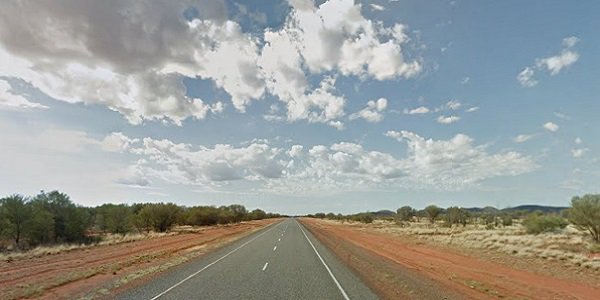
The Stuart Highway in particular, that ribbon of road that slices the country in twain, is mostly a two lane road with nothing but red dust, spiky bushes, giant bouncing rats and running suicide birds who make up the coat of arms, and death, death and more death extending in all directions. If you're eating up the miles in a low slung sports car and you happen to hit a rock while doing two miles a minute, then you should expect to join the red dust, spiky bushes, giant bouncing rats and running suicide birds, and death, death and more death, in a couple of shakes of a lamb's tail. You will become part of the landscape, part of the never never and part of the dream time as you taste the red dust clouds of death.
I wonder if he's ever experienced losing control of a car while doing 32 in a 100 zone while in the Snowy Mountains because he found black ice. I wonder if he's ever gone camping and found that a nuggety looking wombat has taken umbrage with the tyres of his car and slashed them all to shreds. I wonder if for him, the wallabies are just a rugby team that him and his school chums went to see and not some brown thing that literally decided to jump out in front of you on a poorly graded road. Probably not to all of these things.
I'd also further posit that the actual number of Porsches which pass down the Stuart Highway is numbered in double digits every year if that. Sure, the excuse given is that other companies have been given dispensation to use the roads for advertising shoots but that's a very different and specific set of circumstances and not comparable with the usual run of big four wheel drives, semis, b-doubles and road trains which pass down The Track. This is one part of the world where owning a CB radio is advisable and moving out of the way if you happen to be in a tiddler of a car, is appreciated.
I also find this pretty strange:
"We've done a pretty good job of killing off the local car industry, the manufacturing of local cars in Australia, and now it seems the Northern Territory Government's doing its best to deter international car companies from coming to Australia to spend money and invest in the local economy," Porsche's director of public relations Paul Ellis said.
- ABC News, 8th Sep 2016
Well yes, you have done a a pretty good job of killing off the local car industry. For your bit Volkswagen, you stopped building cars here in 1976. As for: "Coming to Australia to spend money and invest in the local economy" What investment would this be then? Is VAG setting up a manufacturing plant here? Not a bar of it.
I really don't think that this man from Porsche has any clue about anything like this from his cushy leather clad office. Come to think of it, the Western suburbs of both Sydney and Melbourne are probably a complete mystery to him. He probably has more in common with the folk of the 9th arrondissement in Paris than he does with the people of Spotswood or Kingswood, let alone the road that takes you from Daly St Darwin to King William St Adelaide.
Luxury car brand Porsche has accused the Northern Territory Government of running a "nanny state" for removing controversial open speed limits on some stretches of road.
The NT, along parts of the Stuart Highway between Alice Springs and Tennant Creek, has been the only part of Australia where drivers can travel as fast as they want.
New Chief Minister Michael Gunner said that would change by the end of the year after he implemented his pre-election promise of removing the unrestricted speed zones.
- ABC News, 8th Sep 2016
Well done Porsche. Good for you.
I read this on the ABC News Website after hearing about this on the midday news on ABC Radio National and I thought to myself: "Here is a prize doofus who has probably never left the city and has no idea about the real world." Given that he is from Porsche, it's more than likely that he's never left the black top in his motor car and apart from the Hume Highway and possibly the Pacific Highway, has never been down any major stretch of highway in Australia.
One thing is certain. As someone from Porsche, it's not his company who is on the hook for the expenses incurred because someone has wiped either themselves or some innocent person out in a motor accident. No. That is picked up by the good and fair people of the Northern Territory and by extension the people of Australia through the Medicare levy.
As someone who likes driving quickly and who would very much like to build a racecar, even if it is just a 24 Hours Of Lemons car, I understand perfectly that the road is not a racetrack. Although I think that the speed limit on the Hume Highway should be raised to 150km/h in parts because the road is easily of good enough quality, I also think that there is no way in Hades that other parts of that same road should have their limits raised to 100km/h.
A dual carriageway with grade separated intersections is a good idea and in a country where the distances are massive, I think that it makes sense from a safety standpoint to raise the speed limit so that people spend less time on the road and that this would reduce accidents which are the result of fatigue. I also think that roads with no hard shoulder can not support those kinds of speeds and that in a lot of places where all you have is a two lane road with one lane in each direction, a speed limit of 100km/h is madness. Yet this is exactly the sort of road that this person from Porsche wants the limits raised on and even abolished altogether.
The Stuart Highway in particular, that ribbon of road that slices the country in twain, is mostly a two lane road with nothing but red dust, spiky bushes, giant bouncing rats and running suicide birds who make up the coat of arms, and death, death and more death extending in all directions. If you're eating up the miles in a low slung sports car and you happen to hit a rock while doing two miles a minute, then you should expect to join the red dust, spiky bushes, giant bouncing rats and running suicide birds, and death, death and more death, in a couple of shakes of a lamb's tail. You will become part of the landscape, part of the never never and part of the dream time as you taste the red dust clouds of death.
I wonder if he's ever experienced losing control of a car while doing 32 in a 100 zone while in the Snowy Mountains because he found black ice. I wonder if he's ever gone camping and found that a nuggety looking wombat has taken umbrage with the tyres of his car and slashed them all to shreds. I wonder if for him, the wallabies are just a rugby team that him and his school chums went to see and not some brown thing that literally decided to jump out in front of you on a poorly graded road. Probably not to all of these things.
I'd also further posit that the actual number of Porsches which pass down the Stuart Highway is numbered in double digits every year if that. Sure, the excuse given is that other companies have been given dispensation to use the roads for advertising shoots but that's a very different and specific set of circumstances and not comparable with the usual run of big four wheel drives, semis, b-doubles and road trains which pass down The Track. This is one part of the world where owning a CB radio is advisable and moving out of the way if you happen to be in a tiddler of a car, is appreciated.
I also find this pretty strange:
"We've done a pretty good job of killing off the local car industry, the manufacturing of local cars in Australia, and now it seems the Northern Territory Government's doing its best to deter international car companies from coming to Australia to spend money and invest in the local economy," Porsche's director of public relations Paul Ellis said.
- ABC News, 8th Sep 2016
Well yes, you have done a a pretty good job of killing off the local car industry. For your bit Volkswagen, you stopped building cars here in 1976. As for: "Coming to Australia to spend money and invest in the local economy" What investment would this be then? Is VAG setting up a manufacturing plant here? Not a bar of it.
I really don't think that this man from Porsche has any clue about anything like this from his cushy leather clad office. Come to think of it, the Western suburbs of both Sydney and Melbourne are probably a complete mystery to him. He probably has more in common with the folk of the 9th arrondissement in Paris than he does with the people of Spotswood or Kingswood, let alone the road that takes you from Daly St Darwin to King William St Adelaide.
September 08, 2016
Horse 2161 - Every "Commuter" In Sydney Is Dead
It is Thursday morning, the 8th of September 2016. As of today, I am officially not a commuter.
This doesn't mean to say that I've quit my job, nor does it mean that I've ditched public transport in favour of driving to work, quite the contrary. What it does mean is that I am a pedant and that I have reasonable comprehension and literacy skills, and that I am going to take a word on its dictionary definition and not just the popular and incorrect vernacular.
In the early days of the Central Line on the London Underground, the price from any station to any other station was tuppence. This mean that regular passengers who went to work and back home again had to pay twice a day. By the end of the week, they'd bustled through the turnstiles ten times and also paid ten times. After passenger volumes had risen to the point of insufferance and because the various lines were still privately owned and in competition with each other, the Central Line decided that it would sell weekly and monthly passes for travel at discounted rates. Thus, people who had paid for a periodical pass, had their fares commuted to a lower rate. In the case of weekly passes on the Central Line, that rate would be one shilling or six trips.
It might surprise the vast majority of people as they travel forth and back across the city, that technically the act of travelling is not commuting. Commuters were named that because they'd had their fares commuted to a lower rate. Australia should be familiar with the term because from the beginning of British settlement, the first convicts who were sent to the colony of New South Wales, had their sentences commuted from death to transportation. Some would probably have argued though that transportation wasn't really a commutation of anything because Australia is a harsh country that where the wildlife and even the dirt itself is actively trying to kill you.
When Transport Minister Andrew Constance saw that people were taking advantage of the system, he obviously made it his mission to hurt as many travellers as he possibly could because the only conclusion that I can reach is that after reading about the latté sipping rat runners in active wear, who were running between tram stops in the inner city so that they could get cheaper travel, he took deep and cruel umbrage. In consequence, as of Monday this week, instead of a "free travel reward" which had actually been calculated after eliminating weekly, monthly and other periodical passes, all trips beyond the eighth will be charged at half rates where previously they were charged at a zero rate.
What this has meant is the end of the latté sipping rat runners in active wear, dashing between tram stop in the inner city, and for those of us who travel forth and back across the greater metropolitan area a direct punch in the hip pocket. By every practical definition of the word, because most of us have seen a sudden and very real fare increase, the era of the commuter is over.
On the 5th of September 2016, all commuters in Sydney died.
Because I live so far away from where I work, there is no way around it, I will pay more. The absolutely beautiful thing about this from a policy perspective is that because this happened in 2016 and not towards the end of the election cycle (with the next NSW State Election taking place in 2020) there is nary a thing that the good and fair people of NSW can do about it. There can be no backlash through the ballot box and because the election is four years away, the current sharp pain that we experience will be replaced by a permanent slow one and it will become the new normal.
I also find it galling that The Daily Telegraph who originally caused the media attention by yelling blue horror across its front page, has also gone silent on the subject. Their slogan "We're for Sydney" rings even hollower than the main bell in the clock tower at Sydney Terminal. To me this begs a deeper question about who actually made the policy, and if it was a case of looking between man and pig and pig and man and not being able to tell who is who, then that's even worse.
The pill that I found particularly hard to swallow was that only yesterday I saw the Transport Minister Andrew Constance in a hire car; which means that he personally doesn't have to live with the pain that he's inflicted. The old adage that you should walk a mile in someone else's shoes looks like Mr Constance is delivering a vial of micturition as he travels around in his lovely hire car. This is like a consignment of elderly footwear manufacturers, with the added irony that they are now paying more to travel to work.
The sad thing I see as I stand on the train to the city, is that the people who travel with me are all quietly enduring this. I look out over many pairs of blarey eyes which still haven't had the sleep wiped out of them; and I think to myself that they've mostly already swallowed the pill in silence.
By the time that this is published, I will have already arrived at work; after having paid for the ninth trip of the week. Where previously I would have paid zero for it, even paying one red cent for it means that my fare hasn't been commuted but exactly the opposite. All commuters in Sydney have officially died. Vale.
This doesn't mean to say that I've quit my job, nor does it mean that I've ditched public transport in favour of driving to work, quite the contrary. What it does mean is that I am a pedant and that I have reasonable comprehension and literacy skills, and that I am going to take a word on its dictionary definition and not just the popular and incorrect vernacular.
In the early days of the Central Line on the London Underground, the price from any station to any other station was tuppence. This mean that regular passengers who went to work and back home again had to pay twice a day. By the end of the week, they'd bustled through the turnstiles ten times and also paid ten times. After passenger volumes had risen to the point of insufferance and because the various lines were still privately owned and in competition with each other, the Central Line decided that it would sell weekly and monthly passes for travel at discounted rates. Thus, people who had paid for a periodical pass, had their fares commuted to a lower rate. In the case of weekly passes on the Central Line, that rate would be one shilling or six trips.
It might surprise the vast majority of people as they travel forth and back across the city, that technically the act of travelling is not commuting. Commuters were named that because they'd had their fares commuted to a lower rate. Australia should be familiar with the term because from the beginning of British settlement, the first convicts who were sent to the colony of New South Wales, had their sentences commuted from death to transportation. Some would probably have argued though that transportation wasn't really a commutation of anything because Australia is a harsh country that where the wildlife and even the dirt itself is actively trying to kill you.
When Transport Minister Andrew Constance saw that people were taking advantage of the system, he obviously made it his mission to hurt as many travellers as he possibly could because the only conclusion that I can reach is that after reading about the latté sipping rat runners in active wear, who were running between tram stops in the inner city so that they could get cheaper travel, he took deep and cruel umbrage. In consequence, as of Monday this week, instead of a "free travel reward" which had actually been calculated after eliminating weekly, monthly and other periodical passes, all trips beyond the eighth will be charged at half rates where previously they were charged at a zero rate.
What this has meant is the end of the latté sipping rat runners in active wear, dashing between tram stop in the inner city, and for those of us who travel forth and back across the greater metropolitan area a direct punch in the hip pocket. By every practical definition of the word, because most of us have seen a sudden and very real fare increase, the era of the commuter is over.
On the 5th of September 2016, all commuters in Sydney died.
Because I live so far away from where I work, there is no way around it, I will pay more. The absolutely beautiful thing about this from a policy perspective is that because this happened in 2016 and not towards the end of the election cycle (with the next NSW State Election taking place in 2020) there is nary a thing that the good and fair people of NSW can do about it. There can be no backlash through the ballot box and because the election is four years away, the current sharp pain that we experience will be replaced by a permanent slow one and it will become the new normal.
I also find it galling that The Daily Telegraph who originally caused the media attention by yelling blue horror across its front page, has also gone silent on the subject. Their slogan "We're for Sydney" rings even hollower than the main bell in the clock tower at Sydney Terminal. To me this begs a deeper question about who actually made the policy, and if it was a case of looking between man and pig and pig and man and not being able to tell who is who, then that's even worse.
The pill that I found particularly hard to swallow was that only yesterday I saw the Transport Minister Andrew Constance in a hire car; which means that he personally doesn't have to live with the pain that he's inflicted. The old adage that you should walk a mile in someone else's shoes looks like Mr Constance is delivering a vial of micturition as he travels around in his lovely hire car. This is like a consignment of elderly footwear manufacturers, with the added irony that they are now paying more to travel to work.
The sad thing I see as I stand on the train to the city, is that the people who travel with me are all quietly enduring this. I look out over many pairs of blarey eyes which still haven't had the sleep wiped out of them; and I think to myself that they've mostly already swallowed the pill in silence.
By the time that this is published, I will have already arrived at work; after having paid for the ninth trip of the week. Where previously I would have paid zero for it, even paying one red cent for it means that my fare hasn't been commuted but exactly the opposite. All commuters in Sydney have officially died. Vale.
September 07, 2016
Horse 2160 - How Is It Not An Invasion?
Perhaps it should be of no surprise to anyone but the twenty Senators in the 45th Parliament who have indicated their support for the removal of Section 18C of the Racial Discrimination Act 1975, are all white people - every last one. At the same time, in the House Of Representatives, we have just had the maiden speech of our first indigenous MP, Linda Burney.
This speech would have gone unnoticed by the vast majority of media if it hadn't been for the choice of one hot button word "invasion". The speech sat relatively dormant for about twelve hours into the publication of the daily Hansard transcript and then everything just sort of kicked off and went from smouldering to absolutely cat scratch insane.
http://australianpolitics.com/2016/08/31/linda-burney-alp-barton-maiden-speech.html
Let me tell you a little of the Wiradjuri story. In Wiradjuri lore Biami is the creation spirit. He is the source of both our physical and moral landscape. The story of invasion and conquest for the Wiradjuri is a brutal one. The deadly art of poisoning waterholes and flour began in Wiradjuri country. Massacre sites are dotted all over my lands
...
In Barton, from the beach in Brighton-Le-Sands you can stand and look towards Botany Bay where the First Fleet in 1788 first entered these shores. Settlement or invasion is a matter of perspective—of whether you were on the shore or on the boats in the middle of the bay. I spoke earlier of truth-telling. Perhaps another great act of honesty and healing would be a permanent remembering of those frontier wars, just down the road at our national war memorial.
- Linda Burney, Maiden Speech, 31st Aug 2016
So I thought I'd add even more wood to the glorious bonfire of public insanity by throwing on logs of actual truth and then standing back and letting the flames burn even higher, Wilder and hotter.
Let's do this in the style of a Year 9 Debate. I define the word invasion to be:
Hostile actions by a military force with the intention of gaining territory and occupying it in the name of one entity while depriving another entity of its use and enjoyment.
I don't honestly see how by any possible practical definition of the word invasion, how the events of 26th January, 1788 were anything but an invasion.
The First Fleet which came sailing through the heads in that balmy January, late in the eighteenth century consisted of six transport ships, three supply ships, three Royal Navy escort ships and the ten-gun HMS Sirius, which was Commander Arthur Phillip RN's personal ship. The whole thing was a Royal Navy operation and if the sight of eleven Royal Navy ships didn't suggest that this was an invasion, then the deployment of redcoats who were to become the New South Wales Corp's should have done.
Even if you discount the fact that the convicts probably came against their will, the suggestion that this wasn't an invasion is both ignorant of reality or deeply dishonest and denies the facts of the matter. A Royal Navy operation with the intent of taking land away from the native peoples and at the point of gun isn't an invasion? Seriously?
One only needs to look at the set of instructions which is were given to Commander Arthur Philip to get a sense of what they were tasked with.
http://www.foundingdocs.gov.au/resources/transcripts/nsw2_doc_1787.pdf
It is therefore Our Will and Pleasure that you do immediately upon your landing after taking Measures for securing Yourself and the people who accompany you, as much as possible from any attacks or Interruptions of the Natives of that Country, as well as for the preservation and safety of the Public Stores, proceed to the Cultivation of the Land, distributing the Convicts for that purpose in such manner, and under such Inspectors or Overseers and under such Regulations as may appear to You to be necessary and best calculated for procuring Supplies of Grain and Ground Provisions.
and:
It is our Will and Pleasure that in every such case you do issue your Warrant to every such to the Surveyor of Lands person as you may think competent to the discharge of that trust to make surveys of, and mark out in Lots such Lands upon the said Territory as may be necessary for their use; and when that shall be done, that you do pass Grants thereof with all convenient speed to any of the said Convicts so emancipated.
There is no sense of negotiating with or even recognising the existence of first peoples, let alone any claims that they might have on the land. Not that the Eora people who first witnessed the arrival of eleven ships coming up Sydney Harbour would have even the slightest idea of English civil and common law. As it was, it took until Mabo v Queensland (No 2) in 1992 for the nation state to recognise that the de facto ruling of Terra Nullius was invalid; so what hope would have an illiterate people who didn't even speak the language have, some 206 years earlier?
What I found almost bizarre was the reaction on talkback radio that the suggestion that the 26th of January as an invasion was racist against white people. I mean technically you could argue that that sort of language was meant to humiliate and offend and therefore be a trigger under 18C of the Racial Discrimination Act but that actually denies that other rule which lives in conjunction with that same act in that it is legally impossible to defame the dead because they can not personally take any offence whatsoever. Unless you have access to time travel or have the ability to reanimate or resurrect the dead, then such a claim would fail over instantly.
Quite obviously rolling back the effects of 228 years of settlement is both as impractical as it is impossible but I don't think that such a thing has been suggested. What Ms Burney's speech has done for only a few and rare select times in the nation's history is speak words about an injury from the perspective of the ones who have suffered an injury. It always seems weird to me that the person responsible for things like indigenous affairs of women's issues should be someone who isn't indigenous or who isn't a woman. I have said in the past that I hate the idea of recognising indigenous Australians in the Constitution because I see that as a token and rather pointless gesture*; what Ms Burnley's speech illustrates exactly why we need indigenous representation not in the words of the Constitution but with footsteps and voices from the floor of the Parliament itself; even if people don't like what they have to say. I would rather truth be told by the people who need to speak it, than voices speaking to them who really do not and can not sympathise with their experience.
*See Horse 1534: http://rollo75.blogspot.com.au/2013/08/horse-1534-aboriginal-recognition-in.html
This speech would have gone unnoticed by the vast majority of media if it hadn't been for the choice of one hot button word "invasion". The speech sat relatively dormant for about twelve hours into the publication of the daily Hansard transcript and then everything just sort of kicked off and went from smouldering to absolutely cat scratch insane.
http://australianpolitics.com/2016/08/31/linda-burney-alp-barton-maiden-speech.html
Let me tell you a little of the Wiradjuri story. In Wiradjuri lore Biami is the creation spirit. He is the source of both our physical and moral landscape. The story of invasion and conquest for the Wiradjuri is a brutal one. The deadly art of poisoning waterholes and flour began in Wiradjuri country. Massacre sites are dotted all over my lands
...
In Barton, from the beach in Brighton-Le-Sands you can stand and look towards Botany Bay where the First Fleet in 1788 first entered these shores. Settlement or invasion is a matter of perspective—of whether you were on the shore or on the boats in the middle of the bay. I spoke earlier of truth-telling. Perhaps another great act of honesty and healing would be a permanent remembering of those frontier wars, just down the road at our national war memorial.
- Linda Burney, Maiden Speech, 31st Aug 2016
So I thought I'd add even more wood to the glorious bonfire of public insanity by throwing on logs of actual truth and then standing back and letting the flames burn even higher, Wilder and hotter.
Let's do this in the style of a Year 9 Debate. I define the word invasion to be:
Hostile actions by a military force with the intention of gaining territory and occupying it in the name of one entity while depriving another entity of its use and enjoyment.
I don't honestly see how by any possible practical definition of the word invasion, how the events of 26th January, 1788 were anything but an invasion.
The First Fleet which came sailing through the heads in that balmy January, late in the eighteenth century consisted of six transport ships, three supply ships, three Royal Navy escort ships and the ten-gun HMS Sirius, which was Commander Arthur Phillip RN's personal ship. The whole thing was a Royal Navy operation and if the sight of eleven Royal Navy ships didn't suggest that this was an invasion, then the deployment of redcoats who were to become the New South Wales Corp's should have done.
Even if you discount the fact that the convicts probably came against their will, the suggestion that this wasn't an invasion is both ignorant of reality or deeply dishonest and denies the facts of the matter. A Royal Navy operation with the intent of taking land away from the native peoples and at the point of gun isn't an invasion? Seriously?
One only needs to look at the set of instructions which is were given to Commander Arthur Philip to get a sense of what they were tasked with.
http://www.foundingdocs.gov.au/resources/transcripts/nsw2_doc_1787.pdf
It is therefore Our Will and Pleasure that you do immediately upon your landing after taking Measures for securing Yourself and the people who accompany you, as much as possible from any attacks or Interruptions of the Natives of that Country, as well as for the preservation and safety of the Public Stores, proceed to the Cultivation of the Land, distributing the Convicts for that purpose in such manner, and under such Inspectors or Overseers and under such Regulations as may appear to You to be necessary and best calculated for procuring Supplies of Grain and Ground Provisions.
and:
It is our Will and Pleasure that in every such case you do issue your Warrant to every such to the Surveyor of Lands person as you may think competent to the discharge of that trust to make surveys of, and mark out in Lots such Lands upon the said Territory as may be necessary for their use; and when that shall be done, that you do pass Grants thereof with all convenient speed to any of the said Convicts so emancipated.
There is no sense of negotiating with or even recognising the existence of first peoples, let alone any claims that they might have on the land. Not that the Eora people who first witnessed the arrival of eleven ships coming up Sydney Harbour would have even the slightest idea of English civil and common law. As it was, it took until Mabo v Queensland (No 2) in 1992 for the nation state to recognise that the de facto ruling of Terra Nullius was invalid; so what hope would have an illiterate people who didn't even speak the language have, some 206 years earlier?
What I found almost bizarre was the reaction on talkback radio that the suggestion that the 26th of January as an invasion was racist against white people. I mean technically you could argue that that sort of language was meant to humiliate and offend and therefore be a trigger under 18C of the Racial Discrimination Act but that actually denies that other rule which lives in conjunction with that same act in that it is legally impossible to defame the dead because they can not personally take any offence whatsoever. Unless you have access to time travel or have the ability to reanimate or resurrect the dead, then such a claim would fail over instantly.
Quite obviously rolling back the effects of 228 years of settlement is both as impractical as it is impossible but I don't think that such a thing has been suggested. What Ms Burney's speech has done for only a few and rare select times in the nation's history is speak words about an injury from the perspective of the ones who have suffered an injury. It always seems weird to me that the person responsible for things like indigenous affairs of women's issues should be someone who isn't indigenous or who isn't a woman. I have said in the past that I hate the idea of recognising indigenous Australians in the Constitution because I see that as a token and rather pointless gesture*; what Ms Burnley's speech illustrates exactly why we need indigenous representation not in the words of the Constitution but with footsteps and voices from the floor of the Parliament itself; even if people don't like what they have to say. I would rather truth be told by the people who need to speak it, than voices speaking to them who really do not and can not sympathise with their experience.
*See Horse 1534: http://rollo75.blogspot.com.au/2013/08/horse-1534-aboriginal-recognition-in.html
September 03, 2016
Horse 2159 - The Über Way To Avoid Responsibility
It seems that tax avoiding, entitlement avoiding and corporate pirates Über have been beaten to the punch when it comes to rolling out autonomous vehicles and finally doing away with meatbag people pilots for their cars. On the 1st of September, the company Newtopia began a service in Singapore of six autonomous vehicles which will operate as taxis.
http://www.nytimes.com/aponline/2016/08/25/world/asia/ap-us-autonomous-taxis-singapore.html?_r=0
The world's first self-driving taxis began picking up passengers in Singapore starting Thursday.
Select members of the public can hail a free ride through their smartphones in taxis operated by nuTonomy, an autonomous vehicle software startup. While multiple companies, including Google and Volvo, have been testing self-driving cars on public roads for several years, nuTonomy says is the first to offer rides to the public.
- New York Times, 25th Aug 2016
This comes ahead of Über's own plans in the city of Pittsburgh to launch their own autonomous taxi fleet of Volvo XC90s.
https://www.washingtonpost.com/business/economy/why-uber-is-going-to-test-its-new-self-driving-cars-in-pittsburgh/2016/08/24/ab48c3be-696f-11e6-99bf-f0cf3a6449a6_story.html
Uber Technologies Inc. will begin using self-driving taxis to ferry customers around Pittsburgh as soon as this month, a first for the industry in a race among automobile and technology companies to make driverless cars commercially available.
Uber’s service, using specially-equipped Volvo XC90 sport-utility vehicles and Ford Focus, would appear to be the first time that commuters could hail a ride in a driverless car. But while the effort signals a breakthrough in commercialization of the technology, it won’t be a brave new world of robot cars: Two Uber employees will be sitting in the front seat of each vehicle.
- Washington Post, 24th Aug 2016
Don't get me wrong, I am not some sort of technological Luddite who wants to return to a utopia which never existed. The steady rolling on of technology is as inevitable as the obvious outcome after a sledgehammer meets a stationary egg. My objection is the same as before when it comes to companies like Über, Lyft et al. in that I don't like freebooters who extract profits from the public without paying tax and contributing to the upkeep of the infrastructure which they derive those profits from. But now I have a new series of questions and objections and I don't think that anyone has been putting any thought into the outcome at all.
Imagine that it is the year 2030. A million houses have been put up and torn down and virtually every car which currently sits on the road will have been replaced. I'd wager that a considerable proportion of those cars will be autonomous and that they will be mostly indistinguishable from other cars which are driven by human pilots.
Question: if an autonomous car knocks over a pedestrian, then who is responsible?
Question: if an autonomous car knocks over and kills a pedestrian, then who is responsible?
I have been on trains which run autonomously and the experience is unremarkable. It might be a little weird to look out the front of a train which has no driver but the novelty wears off in about thirty seconds. It is probably already likely that I have also been on an international flight where the pilots have made zero input in flying the plane. Again, up the back of the aircraft in scum class where you don't even get to watch the telly without paying extra for it, you simply wouldn't know whether or not the plane was being flown by Mikhail and Johnathan or ZX-73647 and GK-18954. The biggest difference between trains, planes and automobiles is that automobiles do not run on specific routes and would need to drive on regular streets with other cars driven by erratic meatbag pilots and in an environment full of even more erratic meatbag pedestrians; especially small meatbag erratic pedestrians who haven't yet developed road sense.
Rules with regards motor vehicle accidents have reasonably well established protocols when it comes to apportioning blame. Usually it will be the car behind which is blamed for failing to avoid a collision, or a car which has changed lanes or turned through an intersection. The rules with regards a machine and a person on the road though, haven't as yet been thought about as far as I'm aware. Given that a company like Über already skives on any responsibility that it might have by placing their drivers on the hook for motor accidents (the "sharing economy" does a very poor job when it comes to actually sharing liability), they are likely to argue that autonomous vehicles can't be held responsible for unforeseeable circumstances which they will argue are caused by humans. If the human wasn't there and didn't run into the road, there wouldn't have been an accident.
I can already see companies like Über and Lyft objecting to the legal requirement that meatbag human drivers have to comply with when it comes to Third Party Injury Insurance. The objection would spring from the argument that people should already be aware that stepping into the street is dangerous and without a human in control of an autonomous vehicle that direct responsibility to be careful no longer exists. Of course, if you can actually prove that it was the machine's fault for failing to take action to avoid an accident, then good luck in trying to seek damages and sue because almost certainly there will be legal fictions in place, such that the total value of the company which owns an autonomous vehicle will be a peppercorn. A corporation is already an ingenious device for obtaining individual profits without individual responsibility; an autonomous vehicle owned by a ten cent corporation will be an ingenious device owned by an ingenious device for obtaining individual profits without individual responsibility.
There is of course the behemoth in the room; the one which pulls the peasants' plough, and that is the issue of large trucks and buses. Companies like Penske in the United States already have their hat in the ring when it comes to autonomous trucks and they have willing partners like Mercedes-Benz and General Motors who also want to sell them. A truck is obviously something of magnitudes in order of insurable interest and so haulage companies would want the question of who is at fault in an accident answered very quickly. With a thing that moves mostly from depot to depot and does so mainly at constant speed, the intelligence of the machine would be called into question less often. Nevertheless, those sorts of issues about who is at fault in an accident are still relevant.
My grand hope is that legislators think of meatbags more than machines of metal and wheels. In the race to throw out human pilots, which is exactly what the whole drive for autonomous vehicles is based upon, I hope that legislators think of the public instead of business owners who stand to gain the most from this new technology. In places like the mines in the Pilbara operated by Rio Tinto where there already is an existing employer/employee relationship and responsibility to provide a safe worksite at law, the use of autonomous vehicles and massive ones at that, are covered by workplace safety laws. I fear that companies like Über and Lyft who already want to abrogate any responsibility that they might have to the nation and the general public, would argue that a similar relationship does not apply to them.
http://www.nytimes.com/aponline/2016/08/25/world/asia/ap-us-autonomous-taxis-singapore.html?_r=0
The world's first self-driving taxis began picking up passengers in Singapore starting Thursday.
Select members of the public can hail a free ride through their smartphones in taxis operated by nuTonomy, an autonomous vehicle software startup. While multiple companies, including Google and Volvo, have been testing self-driving cars on public roads for several years, nuTonomy says is the first to offer rides to the public.
- New York Times, 25th Aug 2016
This comes ahead of Über's own plans in the city of Pittsburgh to launch their own autonomous taxi fleet of Volvo XC90s.
https://www.washingtonpost.com/business/economy/why-uber-is-going-to-test-its-new-self-driving-cars-in-pittsburgh/2016/08/24/ab48c3be-696f-11e6-99bf-f0cf3a6449a6_story.html
Uber Technologies Inc. will begin using self-driving taxis to ferry customers around Pittsburgh as soon as this month, a first for the industry in a race among automobile and technology companies to make driverless cars commercially available.
Uber’s service, using specially-equipped Volvo XC90 sport-utility vehicles and Ford Focus, would appear to be the first time that commuters could hail a ride in a driverless car. But while the effort signals a breakthrough in commercialization of the technology, it won’t be a brave new world of robot cars: Two Uber employees will be sitting in the front seat of each vehicle.
- Washington Post, 24th Aug 2016
Don't get me wrong, I am not some sort of technological Luddite who wants to return to a utopia which never existed. The steady rolling on of technology is as inevitable as the obvious outcome after a sledgehammer meets a stationary egg. My objection is the same as before when it comes to companies like Über, Lyft et al. in that I don't like freebooters who extract profits from the public without paying tax and contributing to the upkeep of the infrastructure which they derive those profits from. But now I have a new series of questions and objections and I don't think that anyone has been putting any thought into the outcome at all.
Imagine that it is the year 2030. A million houses have been put up and torn down and virtually every car which currently sits on the road will have been replaced. I'd wager that a considerable proportion of those cars will be autonomous and that they will be mostly indistinguishable from other cars which are driven by human pilots.
Question: if an autonomous car knocks over a pedestrian, then who is responsible?
Question: if an autonomous car knocks over and kills a pedestrian, then who is responsible?
I have been on trains which run autonomously and the experience is unremarkable. It might be a little weird to look out the front of a train which has no driver but the novelty wears off in about thirty seconds. It is probably already likely that I have also been on an international flight where the pilots have made zero input in flying the plane. Again, up the back of the aircraft in scum class where you don't even get to watch the telly without paying extra for it, you simply wouldn't know whether or not the plane was being flown by Mikhail and Johnathan or ZX-73647 and GK-18954. The biggest difference between trains, planes and automobiles is that automobiles do not run on specific routes and would need to drive on regular streets with other cars driven by erratic meatbag pilots and in an environment full of even more erratic meatbag pedestrians; especially small meatbag erratic pedestrians who haven't yet developed road sense.
Rules with regards motor vehicle accidents have reasonably well established protocols when it comes to apportioning blame. Usually it will be the car behind which is blamed for failing to avoid a collision, or a car which has changed lanes or turned through an intersection. The rules with regards a machine and a person on the road though, haven't as yet been thought about as far as I'm aware. Given that a company like Über already skives on any responsibility that it might have by placing their drivers on the hook for motor accidents (the "sharing economy" does a very poor job when it comes to actually sharing liability), they are likely to argue that autonomous vehicles can't be held responsible for unforeseeable circumstances which they will argue are caused by humans. If the human wasn't there and didn't run into the road, there wouldn't have been an accident.
I can already see companies like Über and Lyft objecting to the legal requirement that meatbag human drivers have to comply with when it comes to Third Party Injury Insurance. The objection would spring from the argument that people should already be aware that stepping into the street is dangerous and without a human in control of an autonomous vehicle that direct responsibility to be careful no longer exists. Of course, if you can actually prove that it was the machine's fault for failing to take action to avoid an accident, then good luck in trying to seek damages and sue because almost certainly there will be legal fictions in place, such that the total value of the company which owns an autonomous vehicle will be a peppercorn. A corporation is already an ingenious device for obtaining individual profits without individual responsibility; an autonomous vehicle owned by a ten cent corporation will be an ingenious device owned by an ingenious device for obtaining individual profits without individual responsibility.
There is of course the behemoth in the room; the one which pulls the peasants' plough, and that is the issue of large trucks and buses. Companies like Penske in the United States already have their hat in the ring when it comes to autonomous trucks and they have willing partners like Mercedes-Benz and General Motors who also want to sell them. A truck is obviously something of magnitudes in order of insurable interest and so haulage companies would want the question of who is at fault in an accident answered very quickly. With a thing that moves mostly from depot to depot and does so mainly at constant speed, the intelligence of the machine would be called into question less often. Nevertheless, those sorts of issues about who is at fault in an accident are still relevant.
My grand hope is that legislators think of meatbags more than machines of metal and wheels. In the race to throw out human pilots, which is exactly what the whole drive for autonomous vehicles is based upon, I hope that legislators think of the public instead of business owners who stand to gain the most from this new technology. In places like the mines in the Pilbara operated by Rio Tinto where there already is an existing employer/employee relationship and responsibility to provide a safe worksite at law, the use of autonomous vehicles and massive ones at that, are covered by workplace safety laws. I fear that companies like Über and Lyft who already want to abrogate any responsibility that they might have to the nation and the general public, would argue that a similar relationship does not apply to them.
August 30, 2016
Horse 2158 - The Sweetest Argument In The World?
http://www.smh.com.au/business/world-business/australia-and-new-zealand-battling-over-manuka-the-champagne-of-honeys-20160825-gr1ibe.html
There's a fight Down Under over manuka honey, the so-called superfood famed for its antibacterial qualities. On one side, New Zealand beehive owners say they should have exclusive rights to the manuka name. On the other, Australian producers say the manuka tree that gives the sticky stuff its name is an Aussie native and their honey is just as super as its Kiwi cousin.
- The Sydney Morning Herald, 26 Aug 2016
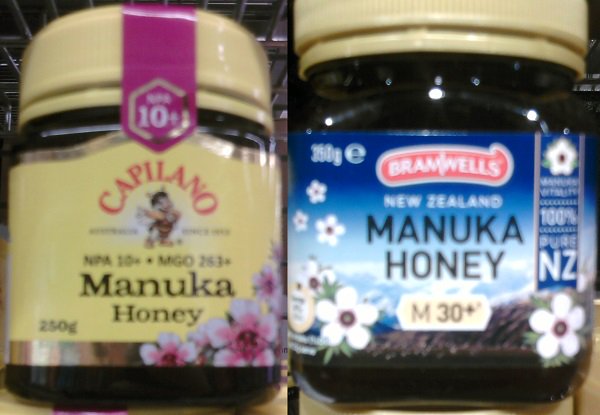
You couldn't make it up, could you? To recap, there is a campaign underway in New Zealand to restrict the use of the name Manuka Honey to New Zealand, on the basis that the word "manuka" is a Maori word.
Manuka is the name in Maori of the nectar of the mānuka tree or Leptospermum Scoparium, which after being found in New Zealand, was also found in Southeastern Australia, it is this flower which bees visit, which makes Manuka honey distinct from regular old normal Honey. The interesting thing is that there is a suburb in Canberra called Manuka which is also named after the plant and for lack of a different word in Australia, the same plant inherited the same name.
I'm not going to hide my contempt here because I think that it is utterly ridiculous that this is even being entertained and here's why.
Usually names if they are to be protected, are done so on a regional basis. Champagne for instance, can not be called champagne unless it comes from the Champagne region of France; otherwise it is just sparkling wine. Balsamic Vinegar Of Modena must come from the region surrounding Modena in Italy. Newcastle Brown Ale even has a protection order upon it, though that is somewhat clouded, and in theory must come from Newcastle Upon Tyne. Manuka, isn't a region or even a place and so, how can it possibly be held under a regional name protection order? It makes more sense that Hereford Beef should come from Hereford because at least Hereford is a real place; unlike Manuka which although is a real place, is not in New Zealand.
I can understand New Zealand's whinge because Australia has been pinching things from its annoying little brother since ages ago. Australia is world famous in New Zealand for stealing Kiwiana and passing it off as our own. Just think about Russell Crowe, the Finn Brothers and the Pavlova. We'll gladly take credit for them even though they came from New Zealand and not Australia. The Sydney Morning Herald's "Australian Of The Century" in 1999 was Sir Donald Bradman which is understandable but in second place was Phar Lap, who wasn't Australian but a New Zealander (and a horse).
We've been linked together as a pair of feuding brothers since before we were both nations. Australia and New Zealand fought alongside each other in the Boer War and New Zealand is mentioned in the Australian Constitution and would have been part of Australia if they had passed the referendum. After gaining nationhood, we continued to fight in World War I, at places like Gallipoli, the Somme and Ypres, as the Australian and New Zealand Army Corps or ANZAC; both nations celebrate ANZAC Day. Our two flags look too much like each other for comfort and many major firms do business on both sides of the ditch.
That still doesn't change the fact that when it comes to things like the Bledisloe Cup, the Olympic Games, the Commonwealth Games and the cricket, we are the best of enemies and the worst of friends.
It doesn't surprise me that there would be a claim from New Zealand on the name Manuka Honey but it kind of ignores one little thing - the English language is a vulture.
The English language stole words from everywhere it's been. The words buffalo, pyjama, jubilee, samurai, orange, banana, potato, kangaroo, billabong, have all been pilfered and put to service in the great behemoth of the English language. The word "manuka" might very well be a specific word to describe a specific thing but I just don't think that it means that the word belongs to the Maori as a thing that can be owned anymore. The word has jumped the fence, left the pasture and has joined the long paddock along with the other words; once it has escaped, I don't think it will ever be tamed again.
This also leads to an interesting dilemma. Suppose that the word "manuka" is wrangled for New Zealand use only, does that mean that businesses in the suburb of Manuka in Canberra should be forced to abandon their names? What if through some bizarre coincidence (which might become a test case), that there was an apirist in the suburb of Manuka, then what? Would a business called Manuka Honey which was from Manuka be forced to change the name of its product even though Manuka Honey was honey that came from Manuka? Would a regional claim which isn't based on the name of a region, hold legal weight over a claim that wasn't based on a region but certainly had a sense of place? Such a thing would be even more specific than just a regional claim.
The obvious question which immediately arises from this is what do you call that particular kind of honey which is made from the flowers of the manuka plant if you cannot use the word "manuka"? Other varieties are named after the plants and flowers which the bees visit, like Tasmanian Box and Redgum, so then what? I don't think that the people making the claim over the word "manuka" care even one iota about the consequences which will be wreaked; nor will they be left with the problem of coming up with a marketable alternative. It seems even more insidious that if the legal claim is successful, then you can't use a descriptor to describe the thing which needs describing.
I hope that the courts who end up deciding the fate of this, come to the proper conclusion that this is facetious and throw it out on its ear. I personally hope that this campaign fails and falls headlong into a vat of sweet sweet goo. Otherwise, this is just going to leave a bad taste in our mouths.
There's a fight Down Under over manuka honey, the so-called superfood famed for its antibacterial qualities. On one side, New Zealand beehive owners say they should have exclusive rights to the manuka name. On the other, Australian producers say the manuka tree that gives the sticky stuff its name is an Aussie native and their honey is just as super as its Kiwi cousin.
- The Sydney Morning Herald, 26 Aug 2016
You couldn't make it up, could you? To recap, there is a campaign underway in New Zealand to restrict the use of the name Manuka Honey to New Zealand, on the basis that the word "manuka" is a Maori word.
Manuka is the name in Maori of the nectar of the mānuka tree or Leptospermum Scoparium, which after being found in New Zealand, was also found in Southeastern Australia, it is this flower which bees visit, which makes Manuka honey distinct from regular old normal Honey. The interesting thing is that there is a suburb in Canberra called Manuka which is also named after the plant and for lack of a different word in Australia, the same plant inherited the same name.
I'm not going to hide my contempt here because I think that it is utterly ridiculous that this is even being entertained and here's why.
Usually names if they are to be protected, are done so on a regional basis. Champagne for instance, can not be called champagne unless it comes from the Champagne region of France; otherwise it is just sparkling wine. Balsamic Vinegar Of Modena must come from the region surrounding Modena in Italy. Newcastle Brown Ale even has a protection order upon it, though that is somewhat clouded, and in theory must come from Newcastle Upon Tyne. Manuka, isn't a region or even a place and so, how can it possibly be held under a regional name protection order? It makes more sense that Hereford Beef should come from Hereford because at least Hereford is a real place; unlike Manuka which although is a real place, is not in New Zealand.
I can understand New Zealand's whinge because Australia has been pinching things from its annoying little brother since ages ago. Australia is world famous in New Zealand for stealing Kiwiana and passing it off as our own. Just think about Russell Crowe, the Finn Brothers and the Pavlova. We'll gladly take credit for them even though they came from New Zealand and not Australia. The Sydney Morning Herald's "Australian Of The Century" in 1999 was Sir Donald Bradman which is understandable but in second place was Phar Lap, who wasn't Australian but a New Zealander (and a horse).
We've been linked together as a pair of feuding brothers since before we were both nations. Australia and New Zealand fought alongside each other in the Boer War and New Zealand is mentioned in the Australian Constitution and would have been part of Australia if they had passed the referendum. After gaining nationhood, we continued to fight in World War I, at places like Gallipoli, the Somme and Ypres, as the Australian and New Zealand Army Corps or ANZAC; both nations celebrate ANZAC Day. Our two flags look too much like each other for comfort and many major firms do business on both sides of the ditch.
That still doesn't change the fact that when it comes to things like the Bledisloe Cup, the Olympic Games, the Commonwealth Games and the cricket, we are the best of enemies and the worst of friends.
It doesn't surprise me that there would be a claim from New Zealand on the name Manuka Honey but it kind of ignores one little thing - the English language is a vulture.
The English language stole words from everywhere it's been. The words buffalo, pyjama, jubilee, samurai, orange, banana, potato, kangaroo, billabong, have all been pilfered and put to service in the great behemoth of the English language. The word "manuka" might very well be a specific word to describe a specific thing but I just don't think that it means that the word belongs to the Maori as a thing that can be owned anymore. The word has jumped the fence, left the pasture and has joined the long paddock along with the other words; once it has escaped, I don't think it will ever be tamed again.
This also leads to an interesting dilemma. Suppose that the word "manuka" is wrangled for New Zealand use only, does that mean that businesses in the suburb of Manuka in Canberra should be forced to abandon their names? What if through some bizarre coincidence (which might become a test case), that there was an apirist in the suburb of Manuka, then what? Would a business called Manuka Honey which was from Manuka be forced to change the name of its product even though Manuka Honey was honey that came from Manuka? Would a regional claim which isn't based on the name of a region, hold legal weight over a claim that wasn't based on a region but certainly had a sense of place? Such a thing would be even more specific than just a regional claim.
The obvious question which immediately arises from this is what do you call that particular kind of honey which is made from the flowers of the manuka plant if you cannot use the word "manuka"? Other varieties are named after the plants and flowers which the bees visit, like Tasmanian Box and Redgum, so then what? I don't think that the people making the claim over the word "manuka" care even one iota about the consequences which will be wreaked; nor will they be left with the problem of coming up with a marketable alternative. It seems even more insidious that if the legal claim is successful, then you can't use a descriptor to describe the thing which needs describing.
I hope that the courts who end up deciding the fate of this, come to the proper conclusion that this is facetious and throw it out on its ear. I personally hope that this campaign fails and falls headlong into a vat of sweet sweet goo. Otherwise, this is just going to leave a bad taste in our mouths.
August 27, 2016
Horse 2157 - T' Queen Is All Northern Lyke Innit
Ey up.
'Ow Northern is the Queen lyke then, eh?
In doing research for summat totally unrelated, I've found out that in addition to her Royal Corgis and racing horses, she's got both a pigeon loft where all of her pigeons wear band with ER on, but she's also got her own troop of racing whippets.
Let me just spell this out. Her son is going to inherit the family business, she's got a place up in Scotland because London is quote unquote "too hot" and she wants summat a bit more parky out and she's got pigeons and whippets.
You can blame her grandad George V for all this when in 1917, he changed family name from Saxe-Coburg Gotha which sounds dead Krauty lyke, to Windsor which is proper English. Start singing rule Britannia and Jerusalem. In fact, he were so much in hurry to show that he were English an' all, that he were first English king t' go down mine. And he were first king t' go to football match.
His son George VI weren't even going to be king until his brother had had enough and racked off tae America. He died really young because he couldn't speak all that good and were always nervous and smoked like 40 Woodbines a day. His lungs packed up an' Lizzie were Queen at age 25.
Charlie boy has been waiting for old Lizzie to pop her clogs for what seems like forever and who only knows when we'll get King Billy IV and George VII.
It ent surprise me that the Queen is all northern. If you look back tae Lizzie I, she didnae have any kids and so Jimmy VI of Scotland went och aye the noo and took the crown of England as well. Of course Charlie I was a madman and ended up splitting the kingdom in twain, so that just proves that if you have a king which is too far northern, things get right daft. Best tae pick summat a little bit more south.
Of course you dinnae want someone who's too much o't' south because then it's all Essex and Home Counties and Burberry and no-one should be bothering wi' all o' that. So that's why the Queen keeps horses and whippets.
You can just imagine her out with her book from Ladbrokes or William Hill and looking at the form guide, or walking through the paddock wi' a can of Special Brew t' give to someone's gee-gee or dish licker in Race 5. What's her spiel if someone catches her on the sly? Well who's going to suspect the Queen? And even if they did, no-one's going to grass her up because... she's the queen.
It was probably her mum that got her on to pigeons, whippets and horses. Her mum, Elizabeth Bowes-Lyons was a commoner, and in her case I expect that that meant she hung around real people. When the Second World War came around and old Adolf stupid-moustache started chuckin' bombs about, I bet that it were Lizzy Bowes-Lyons giving it a bit of Whoa and White and saying "No bairn o' mine is gaan sit around idle. She's gaan drive trucks." And Lizzie did.
Mind you, Lizzy Bowes-Lyons is probably the reason why B&H and Gordon's Gin had t' royal warrant on. She lived beyond the century, broke the ton, claimed the triple digits because she were made of tough stock o' t' Yeo (whatever in blinkies the Yeo are).
See that's the thing about the North. If it's all supposed to be grim up north, then why is it all so pretty? This is the land that gave us Peter Rabbit, Hovis bread adverts wi' boys cycling in, Yorkie chocolate, t' Angel o' t' North, Blackpool Rock, the Beatles, Gerry and Pacemakers an' Vauxhall Astras. Can't be all that grim then, eh?
An' did those feet in ancient times, walk upon England's mountains green? Yeah, where are all the mountains? Ben Nevis and Snowdon aren't even in England; so it must've been somewhere else. My suggestion is t' Pennines; and where are they? Up north!
'Ow Northern is the Queen lyke then, eh?
In doing research for summat totally unrelated, I've found out that in addition to her Royal Corgis and racing horses, she's got both a pigeon loft where all of her pigeons wear band with ER on, but she's also got her own troop of racing whippets.
Let me just spell this out. Her son is going to inherit the family business, she's got a place up in Scotland because London is quote unquote "too hot" and she wants summat a bit more parky out and she's got pigeons and whippets.
You can blame her grandad George V for all this when in 1917, he changed family name from Saxe-Coburg Gotha which sounds dead Krauty lyke, to Windsor which is proper English. Start singing rule Britannia and Jerusalem. In fact, he were so much in hurry to show that he were English an' all, that he were first English king t' go down mine. And he were first king t' go to football match.
His son George VI weren't even going to be king until his brother had had enough and racked off tae America. He died really young because he couldn't speak all that good and were always nervous and smoked like 40 Woodbines a day. His lungs packed up an' Lizzie were Queen at age 25.
Charlie boy has been waiting for old Lizzie to pop her clogs for what seems like forever and who only knows when we'll get King Billy IV and George VII.
It ent surprise me that the Queen is all northern. If you look back tae Lizzie I, she didnae have any kids and so Jimmy VI of Scotland went och aye the noo and took the crown of England as well. Of course Charlie I was a madman and ended up splitting the kingdom in twain, so that just proves that if you have a king which is too far northern, things get right daft. Best tae pick summat a little bit more south.
Of course you dinnae want someone who's too much o't' south because then it's all Essex and Home Counties and Burberry and no-one should be bothering wi' all o' that. So that's why the Queen keeps horses and whippets.
You can just imagine her out with her book from Ladbrokes or William Hill and looking at the form guide, or walking through the paddock wi' a can of Special Brew t' give to someone's gee-gee or dish licker in Race 5. What's her spiel if someone catches her on the sly? Well who's going to suspect the Queen? And even if they did, no-one's going to grass her up because... she's the queen.
It was probably her mum that got her on to pigeons, whippets and horses. Her mum, Elizabeth Bowes-Lyons was a commoner, and in her case I expect that that meant she hung around real people. When the Second World War came around and old Adolf stupid-moustache started chuckin' bombs about, I bet that it were Lizzy Bowes-Lyons giving it a bit of Whoa and White and saying "No bairn o' mine is gaan sit around idle. She's gaan drive trucks." And Lizzie did.
Mind you, Lizzy Bowes-Lyons is probably the reason why B&H and Gordon's Gin had t' royal warrant on. She lived beyond the century, broke the ton, claimed the triple digits because she were made of tough stock o' t' Yeo (whatever in blinkies the Yeo are).
See that's the thing about the North. If it's all supposed to be grim up north, then why is it all so pretty? This is the land that gave us Peter Rabbit, Hovis bread adverts wi' boys cycling in, Yorkie chocolate, t' Angel o' t' North, Blackpool Rock, the Beatles, Gerry and Pacemakers an' Vauxhall Astras. Can't be all that grim then, eh?
An' did those feet in ancient times, walk upon England's mountains green? Yeah, where are all the mountains? Ben Nevis and Snowdon aren't even in England; so it must've been somewhere else. My suggestion is t' Pennines; and where are they? Up north!
August 26, 2016
Horse 2156 - Treaty
I was sent an email from someone called Joanna Dudley, which said:
Dear Horse,
I saw your article about why you think that recognising Indigenous Australians in the preamble of the Constitution is pointless and at first I was really angry but then I saw that your solution of setting aside places like the Senate was a practical, rather than having a symbolic solution to issue. I think that your idea is unworkable and would never be seriously proposed but what do you think about a treaty.
Yours sincerely,
Joanna Dudley.
(email address withheld)
What I initially found odd about this email was where it came from. I am a little bit hesitant to reveal even where this was because of reasons of confidentiality. However, it poses an interesting question which I'll now unpack.
As far as I can make out, a treaty at law is an agreement between two entities which come together to either end hostilities, or alternatively to set up some new state of alliance of agreement. Most of the famous treaties such as the Treaty of Versailles, or the Treaty of Paris end states of war; hence the reason why the Korean War hasn't technically ended. Other treaties such as the Treaty of Waitangi or the ANZUS Treaty, set up a new state of being where the various parties work together for a new state of mutual benefit.
This tends to make me think that in general, constitutions and replaceable rules are treaties of sorts. Constitutions set up the rules which govern the rule making process of countries, provinces and states and corporations, therefore I suggest that the preamble to the US Constitution explicitly spells out that the document is itself a treaty; which was entered into voluntarily and which is binding.
The biggest hurdle that I can see which would hinder a treaty being made with indigenous Australians is the question of who such a treaty would be made with. Unlike the Maori in New Zealand, Aboriginals and Torres Straight Islanders aren't a single group but a richly diverse collection of many people groups. Opponents would argue that the nation can't make a treaty to such a varied group of entities but that is rubbish. There are loads of treaties at international law which have been entered into by many countries. Something like the European Union started out as the European Coal and Steel Community and that had six signatories, and it gradually changed and grew to more than twenty. The United Nations has instruments like the Nuclear Non Proliferation Treaty and various rights declarations such as the Universal Declaration Of Human Rights and the Declaration Of The Rights Of The Child, which have been entered into by more than one hundred different parties.
Without a single unified organisation which represents all indigenous Australian people groups, a treaty would need to be entered into by the various people groups separately. Quite frankly, I don't see that as a problem at all. Most, if not all indigenous people groups, have some sort of internal organisation such as elders and they would be the ones who would sign the treaty on behalf of their people. I really don't see how this is different in spirit to covenant arrangements which might have been made between the various groups themselves.
A grand treaty made with the first peoples of Australia might have several hundred signatories on it, from all over the country and if anything, that's a symbolic act where they'd recognise each other as well as the "big mob".
Of course the whole point of a treaty is to spell out what the various parties involved intend to do. The Australian Government as a thing hasn't really had a set of principles to work with in relation to indigenous people and as a result has tended to act in piecemeal fashion and often in an unprincipled fashion. A treaty would actually mean that the Australian Government would have to face up to the fact that the country was stolen by the cunning use of flags, and then had government and nationhood imposed upon people without their say so. No doubt there will be some commentators who will argue that indigenous Australians already receive many benefits but that is to deny the fact that they are being spoken to; rather than being spoken for.
On the other hand, although a treaty would recognise the original invasion of this great southern land, it then asks the question of indigenous peoples of how the intend to move forward. Not only would a treaty require the nation to recognise indigenous peoples, it would also require them to recognise the nation. That means that although an invasion did happen in the past, those sorts of moral claims might need to be set aside. The nation of Australia in 2016 is made up of precisely zero people who stole the land by force and all direct memories of those people has also been extinguished by the march of history. At what point can you continue to hold people accountable for the acts of people who they have never even met? Furthermore, does it even make moral sense to continue to accuse someone if through the act of a treaty, they would be trying to make good upon the actions of the past?
As with any important document like this, the puzzle lies in solving the details and so I imagine that before there was a final treaty to be signed off on, there would be a series of conventions which would undertake precisely that task. Since a constitution is a treaty of sorts between "the people" and themselves, the working out of a treaty with the first peoples of Australia would probably follow similar lines of thinking, argument, discovery and agreement.
No doubt there would be commentators who think that a treaty is unnecessary but I suspect that all of those people live in places of privilege, have never known hardship and certainly do not know what it is like to be someone who is marginalised. I'm just going to come out and accuse all of them of racism. Polite racism wrapped in the veil of conservatism is still racism; it's just a little bit more insidious; that's all.
As an Australian who has visited the New Zealand Parliament and heard references to "the spirit of Waitangi", that among other things, really makes me ashamed of this country. I think that the guiding principle of "peace, order and good government" as spelled out in Section 51 of our own Constitution, should be instructive in this case and before we even think about the idea of a republic, we should do a lot of growing up first.
I don't know exactly what a treaty between the first people's of Australia and the nation would look like but I do know that it would look better than the 228 years of neglect and dereliction that we've given to the issue so far.
Dear Horse,
I saw your article about why you think that recognising Indigenous Australians in the preamble of the Constitution is pointless and at first I was really angry but then I saw that your solution of setting aside places like the Senate was a practical, rather than having a symbolic solution to issue. I think that your idea is unworkable and would never be seriously proposed but what do you think about a treaty.
Yours sincerely,
Joanna Dudley.
(email address withheld)
What I initially found odd about this email was where it came from. I am a little bit hesitant to reveal even where this was because of reasons of confidentiality. However, it poses an interesting question which I'll now unpack.
As far as I can make out, a treaty at law is an agreement between two entities which come together to either end hostilities, or alternatively to set up some new state of alliance of agreement. Most of the famous treaties such as the Treaty of Versailles, or the Treaty of Paris end states of war; hence the reason why the Korean War hasn't technically ended. Other treaties such as the Treaty of Waitangi or the ANZUS Treaty, set up a new state of being where the various parties work together for a new state of mutual benefit.
This tends to make me think that in general, constitutions and replaceable rules are treaties of sorts. Constitutions set up the rules which govern the rule making process of countries, provinces and states and corporations, therefore I suggest that the preamble to the US Constitution explicitly spells out that the document is itself a treaty; which was entered into voluntarily and which is binding.
The biggest hurdle that I can see which would hinder a treaty being made with indigenous Australians is the question of who such a treaty would be made with. Unlike the Maori in New Zealand, Aboriginals and Torres Straight Islanders aren't a single group but a richly diverse collection of many people groups. Opponents would argue that the nation can't make a treaty to such a varied group of entities but that is rubbish. There are loads of treaties at international law which have been entered into by many countries. Something like the European Union started out as the European Coal and Steel Community and that had six signatories, and it gradually changed and grew to more than twenty. The United Nations has instruments like the Nuclear Non Proliferation Treaty and various rights declarations such as the Universal Declaration Of Human Rights and the Declaration Of The Rights Of The Child, which have been entered into by more than one hundred different parties.
Without a single unified organisation which represents all indigenous Australian people groups, a treaty would need to be entered into by the various people groups separately. Quite frankly, I don't see that as a problem at all. Most, if not all indigenous people groups, have some sort of internal organisation such as elders and they would be the ones who would sign the treaty on behalf of their people. I really don't see how this is different in spirit to covenant arrangements which might have been made between the various groups themselves.
A grand treaty made with the first peoples of Australia might have several hundred signatories on it, from all over the country and if anything, that's a symbolic act where they'd recognise each other as well as the "big mob".
Of course the whole point of a treaty is to spell out what the various parties involved intend to do. The Australian Government as a thing hasn't really had a set of principles to work with in relation to indigenous people and as a result has tended to act in piecemeal fashion and often in an unprincipled fashion. A treaty would actually mean that the Australian Government would have to face up to the fact that the country was stolen by the cunning use of flags, and then had government and nationhood imposed upon people without their say so. No doubt there will be some commentators who will argue that indigenous Australians already receive many benefits but that is to deny the fact that they are being spoken to; rather than being spoken for.
On the other hand, although a treaty would recognise the original invasion of this great southern land, it then asks the question of indigenous peoples of how the intend to move forward. Not only would a treaty require the nation to recognise indigenous peoples, it would also require them to recognise the nation. That means that although an invasion did happen in the past, those sorts of moral claims might need to be set aside. The nation of Australia in 2016 is made up of precisely zero people who stole the land by force and all direct memories of those people has also been extinguished by the march of history. At what point can you continue to hold people accountable for the acts of people who they have never even met? Furthermore, does it even make moral sense to continue to accuse someone if through the act of a treaty, they would be trying to make good upon the actions of the past?
As with any important document like this, the puzzle lies in solving the details and so I imagine that before there was a final treaty to be signed off on, there would be a series of conventions which would undertake precisely that task. Since a constitution is a treaty of sorts between "the people" and themselves, the working out of a treaty with the first peoples of Australia would probably follow similar lines of thinking, argument, discovery and agreement.
No doubt there would be commentators who think that a treaty is unnecessary but I suspect that all of those people live in places of privilege, have never known hardship and certainly do not know what it is like to be someone who is marginalised. I'm just going to come out and accuse all of them of racism. Polite racism wrapped in the veil of conservatism is still racism; it's just a little bit more insidious; that's all.
As an Australian who has visited the New Zealand Parliament and heard references to "the spirit of Waitangi", that among other things, really makes me ashamed of this country. I think that the guiding principle of "peace, order and good government" as spelled out in Section 51 of our own Constitution, should be instructive in this case and before we even think about the idea of a republic, we should do a lot of growing up first.
I don't know exactly what a treaty between the first people's of Australia and the nation would look like but I do know that it would look better than the 228 years of neglect and dereliction that we've given to the issue so far.
August 18, 2016
Horse 2155 - US Electoral Reform - Vote 1
Dear America,
We have to talk. Your system of voting is a complete nonsense. From the insane things that are the Primaries and Caucuses; all the way to the Electoral College. It is so amazingly arcane that it has subsequently been adopted by zero countries in the world.
YouTuber vlogger, podcast host and host of educational videos, Hank Green, has made a series of at least fifty videos explaining the process of how to register and how to vote in the upcoming elections in the United States. The fact that he had to, proves that the system is ridiculous.
https://www.youtube.com/channel/UC7SMwipBlDwBPEwxq8QD8sw
It isn't perhaps immediately obvious to people outside of the United States but along with the presidential election, there are also elections for the House Of Representatives and the Senate, as well as a bunch of down ballot positions for things like judges and school boards, police chiefs and the like; as well as various direct democracy and other proposing issues, which are all being decided on that first Tuesday in November. In Australia, that day is reserved for watching horses run around a one mile track twice.
What would be familiar to Australians in principle at least, is the rather annoying and downright frustrating fact that the United States isn't as united as it likes to think itself as; and the fifty states and the handful of territories, get along about as well as a bickering family. In consequence, every state likes to do things in its own way; hence the need for more than fifty videos explaining how to register and how to vote.
Contained within the US Constitution is the provision of Article IV, Section 4 that the States shall retain republican government:
https://www.law.cornell.edu/constitution/articleiv
The United States shall guarantee to every state in this union a republican form of government,
- Article IV, Section 4, U.S. Constitution (1789).
That is republican in the sense that there isn't a monarch but beyond that, the Constitution is deafeningly silent and nobody knows for sure what its really supposed to mean. In practice it means that in addition to the problem of partisan deadlock in US politics, the consequence of fifty little bickering children means that the country frequently never has systems which are cohesive across the country and attempts to change anything for the better are met with the pathetic bickering of fifty children and partisan deadlock.
I hold up the example of Australia because by sheer dumb luck, we have ended up with an Australian Electoral Commission which consistently holds well run elections; with proper mechanisms in place for dispute, elections that take place on a Saturday which is the most convenient day of the week for the most number of people, preferential voting, proportional representation in the Senate (which even though it allows wingnuts into the parliament, still reflects the will of the people), compulsory voting and under normal circumstances allows the counting and results to be known in one night.
I don't think that we realise just how blessed we are in Australia. We have ended up with one of the best systems of both deciding who should govern and the system of parliamentary democracy in the world.
Now admittedly getting anything to change in the United States is going to be a monumental task but if nothing does change then it will be like democracy Groundhog Day again and again and again, until the end of time.
In the 150 separate elections for each of the seats in the House Of Representatives in Australia, the election was conducted in exactly the same way. Only the number of boxes on the little green ballot paper for each ocf the seats changed. Likewise, the eight separate elections for the 76 seats in the Senate was also conducted in exactly the same way.
There are already volunteers in the Trump campaign who have signed up to observe that the election for the presidency isn't being rigged.What they wouldn't observe but what is immediately obvious to any outsider is that there will be fifty subtlety different methods of conducting elections. They might include paper ballots, or mechanical or electronic voting machines. Whatever they are, the fact that they're not uniform across the country is problematic to begin with.
I don't like the idea of voting machines in principle because of the possibility that they might be hacked or don't work properly. The "hanging chad" debacle in Florida in 2000, could very well have changed the entire direction of the 21st century but no-one really wants to admit it. Our own schamozzle with the 2016 Australian Census should immediately tell everyone who wants to advocate for electronic voting that they are stark raving bonkers mental. It isn't impossible to commit electoral fraud with a paper ballot system but if necessary it is possible to have both the ballot boxes overseen by police as votes are deposited, the opening of those same boxes overseen and the physical counting of votes overseen. It is also far harder to forge several thousand physical ballot papers if that is a concern.
The other major advantage that we have in Australia is that with a proper electoral commission, comes a properly managed set of electoral rolls. If you move across the city, across the state or even to a different state, the electoral commission simply updates it's rolls and that's it.
Although there might be a latent threat of people voting multiple times, the compulsion and duty at law kind of means that voting is seen as a necessary inconvenience by most of the population. I suspect that the actual number who do vote multiple times across Australia, even though we like to joke "vote early; vote often", is so small as to be irrelevant. In practice, you turn up at the polling station, get your name marked off and they hand you a ballot paper - simple.
I once voted in a state election where I was out of area on polling day. I fronted up at a polling station, gave proof of my address; where a lower house ballot paper was then faxed through to where I was, and because I was voting in a state election in the same state that I was in, they already had plenty of upper house ballot papers on hand. I'm not sure how such a thing would work in the United States but I can absolutely guarantee that the process for voting in a different state to the one you live in would be needlessly complicated and tedious, if they didn't just throw their hands in the air and fob you off with some lame excuse why you can't vote.
What I fail to understand is why the United States doesn't run federal elections and give the power to do so to the Federal Election Commission under the Supremacy Clause. In one fell swoop you could get rid of all allegations of voter fraud, voter suppression due to ID laws, and while we're at it, get rid of all the Primaries and Caucuses by holding a nationwide Single Transferable Instant Runoff Election with say 7 candidates from each of the parties. It would mean that an election campaign could be compressed into about six weeks and people wouldn't need to engage in tactical voting.
Give the Federal Election Commission some power and watch as it finally does the job properly,
We have to talk. Your system of voting is a complete nonsense. From the insane things that are the Primaries and Caucuses; all the way to the Electoral College. It is so amazingly arcane that it has subsequently been adopted by zero countries in the world.
YouTuber vlogger, podcast host and host of educational videos, Hank Green, has made a series of at least fifty videos explaining the process of how to register and how to vote in the upcoming elections in the United States. The fact that he had to, proves that the system is ridiculous.
https://www.youtube.com/channel/UC7SMwipBlDwBPEwxq8QD8sw
It isn't perhaps immediately obvious to people outside of the United States but along with the presidential election, there are also elections for the House Of Representatives and the Senate, as well as a bunch of down ballot positions for things like judges and school boards, police chiefs and the like; as well as various direct democracy and other proposing issues, which are all being decided on that first Tuesday in November. In Australia, that day is reserved for watching horses run around a one mile track twice.
What would be familiar to Australians in principle at least, is the rather annoying and downright frustrating fact that the United States isn't as united as it likes to think itself as; and the fifty states and the handful of territories, get along about as well as a bickering family. In consequence, every state likes to do things in its own way; hence the need for more than fifty videos explaining how to register and how to vote.
Contained within the US Constitution is the provision of Article IV, Section 4 that the States shall retain republican government:
https://www.law.cornell.edu/constitution/articleiv
The United States shall guarantee to every state in this union a republican form of government,
- Article IV, Section 4, U.S. Constitution (1789).
That is republican in the sense that there isn't a monarch but beyond that, the Constitution is deafeningly silent and nobody knows for sure what its really supposed to mean. In practice it means that in addition to the problem of partisan deadlock in US politics, the consequence of fifty little bickering children means that the country frequently never has systems which are cohesive across the country and attempts to change anything for the better are met with the pathetic bickering of fifty children and partisan deadlock.
I hold up the example of Australia because by sheer dumb luck, we have ended up with an Australian Electoral Commission which consistently holds well run elections; with proper mechanisms in place for dispute, elections that take place on a Saturday which is the most convenient day of the week for the most number of people, preferential voting, proportional representation in the Senate (which even though it allows wingnuts into the parliament, still reflects the will of the people), compulsory voting and under normal circumstances allows the counting and results to be known in one night.
I don't think that we realise just how blessed we are in Australia. We have ended up with one of the best systems of both deciding who should govern and the system of parliamentary democracy in the world.
Now admittedly getting anything to change in the United States is going to be a monumental task but if nothing does change then it will be like democracy Groundhog Day again and again and again, until the end of time.
In the 150 separate elections for each of the seats in the House Of Representatives in Australia, the election was conducted in exactly the same way. Only the number of boxes on the little green ballot paper for each ocf the seats changed. Likewise, the eight separate elections for the 76 seats in the Senate was also conducted in exactly the same way.
There are already volunteers in the Trump campaign who have signed up to observe that the election for the presidency isn't being rigged.What they wouldn't observe but what is immediately obvious to any outsider is that there will be fifty subtlety different methods of conducting elections. They might include paper ballots, or mechanical or electronic voting machines. Whatever they are, the fact that they're not uniform across the country is problematic to begin with.
I don't like the idea of voting machines in principle because of the possibility that they might be hacked or don't work properly. The "hanging chad" debacle in Florida in 2000, could very well have changed the entire direction of the 21st century but no-one really wants to admit it. Our own schamozzle with the 2016 Australian Census should immediately tell everyone who wants to advocate for electronic voting that they are stark raving bonkers mental. It isn't impossible to commit electoral fraud with a paper ballot system but if necessary it is possible to have both the ballot boxes overseen by police as votes are deposited, the opening of those same boxes overseen and the physical counting of votes overseen. It is also far harder to forge several thousand physical ballot papers if that is a concern.
The other major advantage that we have in Australia is that with a proper electoral commission, comes a properly managed set of electoral rolls. If you move across the city, across the state or even to a different state, the electoral commission simply updates it's rolls and that's it.
Although there might be a latent threat of people voting multiple times, the compulsion and duty at law kind of means that voting is seen as a necessary inconvenience by most of the population. I suspect that the actual number who do vote multiple times across Australia, even though we like to joke "vote early; vote often", is so small as to be irrelevant. In practice, you turn up at the polling station, get your name marked off and they hand you a ballot paper - simple.
I once voted in a state election where I was out of area on polling day. I fronted up at a polling station, gave proof of my address; where a lower house ballot paper was then faxed through to where I was, and because I was voting in a state election in the same state that I was in, they already had plenty of upper house ballot papers on hand. I'm not sure how such a thing would work in the United States but I can absolutely guarantee that the process for voting in a different state to the one you live in would be needlessly complicated and tedious, if they didn't just throw their hands in the air and fob you off with some lame excuse why you can't vote.
What I fail to understand is why the United States doesn't run federal elections and give the power to do so to the Federal Election Commission under the Supremacy Clause. In one fell swoop you could get rid of all allegations of voter fraud, voter suppression due to ID laws, and while we're at it, get rid of all the Primaries and Caucuses by holding a nationwide Single Transferable Instant Runoff Election with say 7 candidates from each of the parties. It would mean that an election campaign could be compressed into about six weeks and people wouldn't need to engage in tactical voting.
Give the Federal Election Commission some power and watch as it finally does the job properly,
August 17, 2016
Horse 2154 - Solving The Problem Of The Supreme Court Of The United States
In 2016, The International Year Of The Howling Moron, we've seen Canada elect Pierre Trudeau in the most boring Canadian election in history, Australia return the Turnbull Government with a Senate which contains more wing nuts and loose bolts than any other Senate before it, the United Kingdom all madly run for the exit door of Europe as they voted to leave, and the continuing tempest of madness that is the United States Presidential Election. The scary prospect isn't so much who will win between Hillary Clinton and Donald Trump but the fact that as commander in chief come next January, that they will have their finger on the nuclear button.
In the interim we have a growing proportion of the public increasingly becoming concerned that whomever does get to sit in the Oval Office chair in 1600 Pennsylvania Avenue, will get to decide who the ninth Justice of the Supreme Court is; with the nomination, be able to tip the court out of its 4-4 Liberal/Conservative balance.
No less than President Barack Obama himself, has expressed disappointment and frustration with the idiotic partisanship which continues to turn what should be a functioning democracy into on giant gridlocked mess.
https://twitter.com/BarackObama/status/765233486701527040

Historically the Supreme Court Of The United States went from being a forgotten little nerdy room in the basement and down a coal hole, to this weird behemoth of a thing which has the potential to make decisions which fundamentally change the nature of law in the United States. Cases such as Miranda and Roe, are often referred to as markers of the basis of rights, due to the fact that the Bill Of Rights has a very strong effect of blinkering people's vision of what their rights actually are; even though the Ninth Amendment states that the rights not specifically enumerated are retained by the people.
With the death of Justice Antonin Scalia, the court was split 4-4 along Liberal/Conservative lines (owing to the weird way that the political parties are aligned on an authoritarian/libertarian axis rather than an economic statist/laissez-faire axis) and the Republican party which controls the Senate refuses to give its "advice and consent" to anyone that President Obama might appoint; which is necessary under Article II, Section 2, Clause 2 of the Constitution.
https://www.law.cornell.edu/constitution/articleii
He shall have power, by and with the advice and consent of the Senate, to make treaties, provided two thirds of the Senators present concur; and he shall nominate, and by and with the advice and consent of the Senate, shall appoint ambassadors, other public ministers and consuls, judges of the Supreme Court, and all other officers of the United States.
- Article II, Section 2, Clause 2, US Constitution (1789)
Personally I think that this is yet another fundamental flaw with the whole three ring circus that is the US Government and one which people like Jefferson and Hamilton could have never have imagined let alone conceived of when they drew up the Constitution.
However, there is one minor little clause in there which I think if triggered would shut down this aspect of the grand shouting match; it is something which has been used in the past and would be one of the most hilarious and scandalous party pieces ever pulled off.
It is this:
https://www.law.cornell.edu/constitution/articleii
The President shall have power to fill up all vacancies that may happen during the recess of the Senate, by granting commissions which shall expire at the end of their next session.
- Article II, Section 2, Clause 3, US Constitution (1789)
In the olden days when travel was expensive and long, a recess of the Senate would have been harder to revoke. Once senators went on holiday and back home to their families in West Bananatown, East Dakota, they were harder to recall if something needed to be done. Elsewhere in the Constitution it is very clear that only the Congress has the power to enter Wars but this doesn't stop the President from using the military in short engagements. Likewise, this particular clause says that in the event of a recess of the Senate, the President has similar powers of appointment.
If I do a quick rundown of the numbers, if the Senate officially goes on recess on December 26, then there are just 30 days until the inauguration of the next president. In that period of time, this clause could be invoked and voilà, the court would again have 9 members as judges. Obama would transform from a lame duck president to a duck who has swallowed a proximity mine. It would end his Presidency with a bang and provided someone was chosen who was as close to apathetically brain dead neutral as he could find, then would go through relatively peacefully, whatever that might mean.
The sting in the tail of this metaphorical scorpion is that it might be decided by the next Senate that Obama's appointment was unconstitutional. If that be the case, then mounting a challenge would warrant going through precisely the same body which the appointment was made; which would put the court into a decision which would decide it's own fate. No sane set of judges, even ones with a fundamental split in ideology, would choose to depose themselves. Almost certainly the court would decide 5-4 in favour of the recess appointment and that would be the end of the story. There would be outrage, noise, confusion and invective spewed across television, radio and print media but eventually after the fourth estate has thrashed itself silly, it would quieten down.
In theory.
In practice, in all likelihood and in the real world (and not the world of fantastic imagination as invented by some hack with a blog), the chances of this happening are exactly 0%. If someone like Eisenhower had been in charge, he would have had no fear in doing exactly as he pleased; in full knowledge that nobody would say anything. If it had been James K Polk, who got stuff done as president, had enough and went home and died afterwards, then he would have made his recess appointment and barbecued an ox on the White House lawn. President Obama though, has three things which count against him in this case: he is entirely sensible, reasonable and calm.
This leads me immediately to thinking about what a similar set of circumstances would look like in 2020 after President Trump's chaotic four years in office. He'd make a recess appointment as per the Constitution and the chance that the media would have had to object would immediately be outshone by the tremendous bonfire of yet another idiotic thing that he said.
Likewise if President Clinton was faced with a similar set of circumstances in 2020, precisely the same outcome would happy as is happening now. Congress would be equally as hostile and I don't think that Hillary would dare make a recess appointment because like Obama she is entirely too reasonable.
In the interim we have a growing proportion of the public increasingly becoming concerned that whomever does get to sit in the Oval Office chair in 1600 Pennsylvania Avenue, will get to decide who the ninth Justice of the Supreme Court is; with the nomination, be able to tip the court out of its 4-4 Liberal/Conservative balance.
No less than President Barack Obama himself, has expressed disappointment and frustration with the idiotic partisanship which continues to turn what should be a functioning democracy into on giant gridlocked mess.
https://twitter.com/BarackObama/status/765233486701527040
Historically the Supreme Court Of The United States went from being a forgotten little nerdy room in the basement and down a coal hole, to this weird behemoth of a thing which has the potential to make decisions which fundamentally change the nature of law in the United States. Cases such as Miranda and Roe, are often referred to as markers of the basis of rights, due to the fact that the Bill Of Rights has a very strong effect of blinkering people's vision of what their rights actually are; even though the Ninth Amendment states that the rights not specifically enumerated are retained by the people.
With the death of Justice Antonin Scalia, the court was split 4-4 along Liberal/Conservative lines (owing to the weird way that the political parties are aligned on an authoritarian/libertarian axis rather than an economic statist/laissez-faire axis) and the Republican party which controls the Senate refuses to give its "advice and consent" to anyone that President Obama might appoint; which is necessary under Article II, Section 2, Clause 2 of the Constitution.
https://www.law.cornell.edu/constitution/articleii
He shall have power, by and with the advice and consent of the Senate, to make treaties, provided two thirds of the Senators present concur; and he shall nominate, and by and with the advice and consent of the Senate, shall appoint ambassadors, other public ministers and consuls, judges of the Supreme Court, and all other officers of the United States.
- Article II, Section 2, Clause 2, US Constitution (1789)
Personally I think that this is yet another fundamental flaw with the whole three ring circus that is the US Government and one which people like Jefferson and Hamilton could have never have imagined let alone conceived of when they drew up the Constitution.
However, there is one minor little clause in there which I think if triggered would shut down this aspect of the grand shouting match; it is something which has been used in the past and would be one of the most hilarious and scandalous party pieces ever pulled off.
It is this:
https://www.law.cornell.edu/constitution/articleii
The President shall have power to fill up all vacancies that may happen during the recess of the Senate, by granting commissions which shall expire at the end of their next session.
- Article II, Section 2, Clause 3, US Constitution (1789)
In the olden days when travel was expensive and long, a recess of the Senate would have been harder to revoke. Once senators went on holiday and back home to their families in West Bananatown, East Dakota, they were harder to recall if something needed to be done. Elsewhere in the Constitution it is very clear that only the Congress has the power to enter Wars but this doesn't stop the President from using the military in short engagements. Likewise, this particular clause says that in the event of a recess of the Senate, the President has similar powers of appointment.
If I do a quick rundown of the numbers, if the Senate officially goes on recess on December 26, then there are just 30 days until the inauguration of the next president. In that period of time, this clause could be invoked and voilà, the court would again have 9 members as judges. Obama would transform from a lame duck president to a duck who has swallowed a proximity mine. It would end his Presidency with a bang and provided someone was chosen who was as close to apathetically brain dead neutral as he could find, then would go through relatively peacefully, whatever that might mean.
The sting in the tail of this metaphorical scorpion is that it might be decided by the next Senate that Obama's appointment was unconstitutional. If that be the case, then mounting a challenge would warrant going through precisely the same body which the appointment was made; which would put the court into a decision which would decide it's own fate. No sane set of judges, even ones with a fundamental split in ideology, would choose to depose themselves. Almost certainly the court would decide 5-4 in favour of the recess appointment and that would be the end of the story. There would be outrage, noise, confusion and invective spewed across television, radio and print media but eventually after the fourth estate has thrashed itself silly, it would quieten down.
In theory.
In practice, in all likelihood and in the real world (and not the world of fantastic imagination as invented by some hack with a blog), the chances of this happening are exactly 0%. If someone like Eisenhower had been in charge, he would have had no fear in doing exactly as he pleased; in full knowledge that nobody would say anything. If it had been James K Polk, who got stuff done as president, had enough and went home and died afterwards, then he would have made his recess appointment and barbecued an ox on the White House lawn. President Obama though, has three things which count against him in this case: he is entirely sensible, reasonable and calm.
This leads me immediately to thinking about what a similar set of circumstances would look like in 2020 after President Trump's chaotic four years in office. He'd make a recess appointment as per the Constitution and the chance that the media would have had to object would immediately be outshone by the tremendous bonfire of yet another idiotic thing that he said.
Likewise if President Clinton was faced with a similar set of circumstances in 2020, precisely the same outcome would happy as is happening now. Congress would be equally as hostile and I don't think that Hillary would dare make a recess appointment because like Obama she is entirely too reasonable.
August 16, 2016
Horse 2153 - Ten Things I Like: No.9 - I Like Advertising
At just after 10pm Sydney time, on the opening day of the English Premier League I was sat sitting on the couch watching the team supposedly in crisis, Hull City leading 1-0 over the reigning champions Leicester City. The only reason that I am able to do this in a world where the market decides the price of everything and the value of nothing, is because someone else has paid for the cost of my entertainment. Mostly this time around it has been a fast food restaurant chain, a motor vehicle manufacturer, a health insurance company and an electrical goods company. Meanwhile, both teams have kit sponsors and there are changing adboards which line the sides of the pitch.
This sounds entirely unremarkable, until you consider the fact that the last time that I saw an English League fixture live on free-to-air television (not the FA Cup) was all the way back in 1992; which was longer ago than many of the players on the field were even alive. In short, I am as happy as Larry and it is all thanks to the wonderful thing known as advertising. I love it.
Well to be perfectly frank, I love the BBC licence even more and I love state run broadcasters because they are not driven by the need to spin a profit but if someone is going to pay for television to be made then it may as well be advertisers.
The story of advertising goes pretty much back to the beginnings of the consumer society. In the 1890s with the bright electric London Underground, advertisers took advantage of the large spaces on the walls on the other side of the railway tracks, to place billboards. Newspapers realised that they could sell space for graphics within their print space and trams and buses carried adboards while they were still being drawn by horses.
Of course it was only natural that the following inventions of radio, television and the internet would also carry advertising. I'm actually surprised that it took so long for sport to get on the advertising bandwagon, with motorsports finally carrying the colours of their sponsors in the 1960s and other sports like football, cricket and baseball only following on in the 1970s. The sport of cycling was incredibly canny, with advertisements and promotional material passing down the roads on events like Le Tour De France before the cyclists did, as early as the 1920s.
As a motorsport fan, advertising didn't just provide the means and ability to place names and colours in front of the public, it has literally coloured motor racing cars themselves. Some of the most iconic cars are instantly recognisable from the colour schemes which they carried. This includes the companies from related industries like Shell, Mobil, Valvoline and Gulf Oil but also includes those brands from the tobacco industry like Marlboro, John Player, Mild Seven and alcohol brands like Martini and Johnnie Walker who wanted to position themselves with a more glamorous status.
People often say that they don't like advertising but the simple fact of the matter is that in order to do stuff or get stuff done, you need to pay people to do it. In the late 1590s, Shakespeare's theatre company was one of the first in the world to charge admission prices to see their plays. Before that time, people voluntarily paid to see theatre productions, or rather didn't most of the time. If four hundred years ago, it wasn't economical to rely on the kindness of strangers to support a single playhouse, then to rely upon the general public to voluntarily provide the necessary resources to run something like a radio or television network, is the mark of naive madness. The entire rise of organised mass media, is predicated on the ability to raise funding either through compulsory means such as a radio or television licence, or the selling of advertising space in that media.
The commodity being sold when advertisers buy space in the media, isn't as most people presume the ability to put their messages in front of the public but the attention and mindspace of the public itself. Just like a motor car is supposed to be driven, or a gun is supposed to be fired, and advertisement is supposed to be seen or heard and a thing which fails to do its job, from an economic perspective at least, may as well be considered as nothing more than an art project.
It should go without saying that an advertisement is an investment in the mindspace of the general public and is made with the intention of collecting an increase by means of sales of goods and services, over and above the initial cost of that investment.
One can't deny that advertising itself is a shared cultural experience. Advertisments by their nature are designed to be memorable in order that you buy the thing being advertised and the thing about being memorable and being remembered by a great number of people, is the very stuff that a shared culture is built upon. "We're happy little vegemites", "not happy Jan!" and "Matter of fact, I’ve got it now" have all passed into the national psyche if not idiom. Then there are countless jingles and songs associated with advertising; which also form part of the shared cultural fabric of society.
From a purely selfish standpoint, I like it when other people pay for my stuff. In the case of radio and television, advertising is the means by which other people pay for my entertainment. Granted, radio and television is often provided by government and when properly funded often turns out to be quite excellent because it isn't constrained by the commercial motive to spin a profit but when it comes to things like sport, movies, drama and comedy, which are mostly also always commercial enterprises anyway, then advertising is the necessary and I think best way of ensuring the greatest possible access to a shared cultural experience, other than direct government funding.
This sounds entirely unremarkable, until you consider the fact that the last time that I saw an English League fixture live on free-to-air television (not the FA Cup) was all the way back in 1992; which was longer ago than many of the players on the field were even alive. In short, I am as happy as Larry and it is all thanks to the wonderful thing known as advertising. I love it.
Well to be perfectly frank, I love the BBC licence even more and I love state run broadcasters because they are not driven by the need to spin a profit but if someone is going to pay for television to be made then it may as well be advertisers.
The story of advertising goes pretty much back to the beginnings of the consumer society. In the 1890s with the bright electric London Underground, advertisers took advantage of the large spaces on the walls on the other side of the railway tracks, to place billboards. Newspapers realised that they could sell space for graphics within their print space and trams and buses carried adboards while they were still being drawn by horses.
Of course it was only natural that the following inventions of radio, television and the internet would also carry advertising. I'm actually surprised that it took so long for sport to get on the advertising bandwagon, with motorsports finally carrying the colours of their sponsors in the 1960s and other sports like football, cricket and baseball only following on in the 1970s. The sport of cycling was incredibly canny, with advertisements and promotional material passing down the roads on events like Le Tour De France before the cyclists did, as early as the 1920s.
As a motorsport fan, advertising didn't just provide the means and ability to place names and colours in front of the public, it has literally coloured motor racing cars themselves. Some of the most iconic cars are instantly recognisable from the colour schemes which they carried. This includes the companies from related industries like Shell, Mobil, Valvoline and Gulf Oil but also includes those brands from the tobacco industry like Marlboro, John Player, Mild Seven and alcohol brands like Martini and Johnnie Walker who wanted to position themselves with a more glamorous status.
People often say that they don't like advertising but the simple fact of the matter is that in order to do stuff or get stuff done, you need to pay people to do it. In the late 1590s, Shakespeare's theatre company was one of the first in the world to charge admission prices to see their plays. Before that time, people voluntarily paid to see theatre productions, or rather didn't most of the time. If four hundred years ago, it wasn't economical to rely on the kindness of strangers to support a single playhouse, then to rely upon the general public to voluntarily provide the necessary resources to run something like a radio or television network, is the mark of naive madness. The entire rise of organised mass media, is predicated on the ability to raise funding either through compulsory means such as a radio or television licence, or the selling of advertising space in that media.
The commodity being sold when advertisers buy space in the media, isn't as most people presume the ability to put their messages in front of the public but the attention and mindspace of the public itself. Just like a motor car is supposed to be driven, or a gun is supposed to be fired, and advertisement is supposed to be seen or heard and a thing which fails to do its job, from an economic perspective at least, may as well be considered as nothing more than an art project.
It should go without saying that an advertisement is an investment in the mindspace of the general public and is made with the intention of collecting an increase by means of sales of goods and services, over and above the initial cost of that investment.
One can't deny that advertising itself is a shared cultural experience. Advertisments by their nature are designed to be memorable in order that you buy the thing being advertised and the thing about being memorable and being remembered by a great number of people, is the very stuff that a shared culture is built upon. "We're happy little vegemites", "not happy Jan!" and "Matter of fact, I’ve got it now" have all passed into the national psyche if not idiom. Then there are countless jingles and songs associated with advertising; which also form part of the shared cultural fabric of society.
From a purely selfish standpoint, I like it when other people pay for my stuff. In the case of radio and television, advertising is the means by which other people pay for my entertainment. Granted, radio and television is often provided by government and when properly funded often turns out to be quite excellent because it isn't constrained by the commercial motive to spin a profit but when it comes to things like sport, movies, drama and comedy, which are mostly also always commercial enterprises anyway, then advertising is the necessary and I think best way of ensuring the greatest possible access to a shared cultural experience, other than direct government funding.
August 11, 2016
Horse 2152 - Ten Things I Like: No.8 - I Like The Silliness That Is Cricket
Regular readers of this blog will notice that a statically significant proportion of posts are about sports of various kinds. Once you mentally separate the influence of commercialisation of sport, then it becomes only one of a few pursuits in the whole of humanity where it is possible to achieve perfection within the defined parameters. Apart from mathematics which is the only truly exact science, sport is possibly the only human endeavour where you can achieve the thing you set out to do, perfectly.
I think that along with being social creatures, humans are ranking creatures. We like things that are ordered; we like comparing things; we like making lists of things (I'm looking at you Buzzfeed) and we like pitting things against other things to find out which one is the best.
Australia owes quite a lot to sport. Largely because as a nation, we didn't start with some violent revolution, sport became the nation's proxy by which it both defined and measured itself. Any credible list of great Australians must include sporting people. I remember in 1999 when the Sydney Morning Herald tried to compile such a list of the greatest Australians of the twentieth century, first place went to Sir Donald Bradman and second place went to Phar Lap; who isn't even a person.
Sport gave Australia a ready made set of conditions to compare itself and a ready made set of competitors. Australia had been sending cricket teams to England for more than two decades before it had achieved nationhood and the Australasian Olympic Team went to the 1896 games in Athens four years before federation. Australia does have a fine military tradition but let's be honest, we rather achieve glory on the sporting field than the battlefield.
I must admit, I like the absurd, the silly and the daft. This is probably why I like cricket so much. As a sport, it both covers itself in tradition and yet it makes fun of its own vaingloriousness. Because of its level of complexity, it remains mostly incomprehensible to most of the world outside of the former British Empire and inside the countries that do play the game, it achieves levels of fanaticism which are comparable to other sports.
After I got married, I suffered something of a walletectomy and she objected in the strongest possible terms at the prospect of being a cricket widow. Even though I had about as much skill with the bat as Dr Samuel Johnson had with a scalpel (he was a doctor of letters and not a medical doctor), and my prowess with the ball was mediocre, I still quite enjoyed the eternal struggle of leather unleashed at 22 yards on willow. As a player, even one with no hope of playing a standard any higher than St Miserable's Parish XI, I very quickly gained an appreciation of just how difficult it is to play this intrinsically silly game.
You can not convince me that it is a remotely sane thing to be standing out in a field for six hours. A day's play of cricket is basically the equivalent of playing three games of any other sport except with lunch and afternoon tea interspersed. The fact that the thing which a batsman is standing in front of is called "the stumps" and the bat is pretty much a long development of either a paddle or a shepherd's staff, says to me that the game can only have been invented by farmers who have hours and hours to kill in summer. The fact that someone decided to codify the rules of what is otherwise Calvinball, can only have come from a land which ignored the Romans, shunned the Vikings and resisted all attempts by the Normans to influence them with Gallic ways. Cricket is a game which mostly exists without good reason; to be played by those who lack good reason.
Only a game which takes so long to play lends itself to the generation of as many statistics as cricket. Other sports like football, baseball, basketball, motor racing, tennis, cycling et cetera et cetera et cetera have fans but only cricket has boffins. This is the game which attracts writers: EF Hornung, AA Milne and Sir Arthur Conan Doyle were all aficionados of the game and it has attracted the eyes of MPs and PMs.
Of course with such a dearth of time, of talent and statistics, the game lends itself to that most brilliant of things: waffling on. If reduced to just nine column inches in the newspaper, all you are likely to get is just a list of names and numbers. However, if you open it up to television and more importantly radio, suddenly with as much as eight hours of broadcast time to fill in a day, suddenly you find that commentators will actively go looking for all sorts of rabbit holes to dive down. I have heard talk of philosophy, fashion, politics, science and literature; all within a single day's commentary.
One of the benefits of the game moving so slowly is that you can be doing other things while listening to the cricket. In an Australian summer, I might be out in the garden but in the winter when cricket in England is piped around the world by internet radio, I have fought battles and conquered worlds. During this last match between England and Pakistan was on, I was sweeping across Asia with a horde of Mongol Cannon and Musketeers while Joe Root was sweeping and driving deliveries to all parts sundry on the boundary. The visual metaphor of modern helmeted warriors armed with clubs wasn't lost on me either.
Owing to a long series of historical accidents, I have ended up ten thousand miles away from the sceptered isle. In most sporting contests, and probably because I am addicted to disappointment, I follow England. Unlike Australian fans of sporting teams who get annoyed when they lose, England fans expect perpetual failure and don't know what to do if England wins anything. Just like when the sun comes out and in a stunning turn of events it's not raining in England, when an England team wins anything, the warm glow is so much more enjoyable.
I weathered the storm and gloom through the period of Michael Vaughan, Michael Atherton and Alex Stewart's tenures as captain; when England were genuinely rubbish and couldn't fight their way out of a wet paper bag with the top open and holes in, and so when England climbed to the top of the Test rankings a few years ago, its was almost like a reward for playing by proxy. England might not be ranked number one in the world at the moment but at least those dark days are long gone. I would hate to be a fan of the West Indies, having lived through the period where the opening lineup of Gordon Greenidge, Desmond Haynes, Richie Richardson and Viv Richards would tear bowling attacks to pieces, in what was possibly the best cricket team of all time; to now where they're kind of bobbling around number seven in the world and just not that great.
Or maybe I wouldn't hate to be a fan of the West Indies. Maybe I'd look forwards to a time when they might rise again, This is yet another reason why I like this patently absurd game. Almost more than any other sport in the world, cricket has a depth of stories of old and replenishes hope in the future by providing new heroes. It still provides that ability to make lists, to compare and rank things, and to argue forever. Raw statistics are dull and a sport like football is over in an hour and a half but cricket, which goes for six hours a day and takes five days, allows time to tell stories both about itself, the world and most importantly nothing in particular.
I think that along with being social creatures, humans are ranking creatures. We like things that are ordered; we like comparing things; we like making lists of things (I'm looking at you Buzzfeed) and we like pitting things against other things to find out which one is the best.
Australia owes quite a lot to sport. Largely because as a nation, we didn't start with some violent revolution, sport became the nation's proxy by which it both defined and measured itself. Any credible list of great Australians must include sporting people. I remember in 1999 when the Sydney Morning Herald tried to compile such a list of the greatest Australians of the twentieth century, first place went to Sir Donald Bradman and second place went to Phar Lap; who isn't even a person.
Sport gave Australia a ready made set of conditions to compare itself and a ready made set of competitors. Australia had been sending cricket teams to England for more than two decades before it had achieved nationhood and the Australasian Olympic Team went to the 1896 games in Athens four years before federation. Australia does have a fine military tradition but let's be honest, we rather achieve glory on the sporting field than the battlefield.
I must admit, I like the absurd, the silly and the daft. This is probably why I like cricket so much. As a sport, it both covers itself in tradition and yet it makes fun of its own vaingloriousness. Because of its level of complexity, it remains mostly incomprehensible to most of the world outside of the former British Empire and inside the countries that do play the game, it achieves levels of fanaticism which are comparable to other sports.
After I got married, I suffered something of a walletectomy and she objected in the strongest possible terms at the prospect of being a cricket widow. Even though I had about as much skill with the bat as Dr Samuel Johnson had with a scalpel (he was a doctor of letters and not a medical doctor), and my prowess with the ball was mediocre, I still quite enjoyed the eternal struggle of leather unleashed at 22 yards on willow. As a player, even one with no hope of playing a standard any higher than St Miserable's Parish XI, I very quickly gained an appreciation of just how difficult it is to play this intrinsically silly game.
You can not convince me that it is a remotely sane thing to be standing out in a field for six hours. A day's play of cricket is basically the equivalent of playing three games of any other sport except with lunch and afternoon tea interspersed. The fact that the thing which a batsman is standing in front of is called "the stumps" and the bat is pretty much a long development of either a paddle or a shepherd's staff, says to me that the game can only have been invented by farmers who have hours and hours to kill in summer. The fact that someone decided to codify the rules of what is otherwise Calvinball, can only have come from a land which ignored the Romans, shunned the Vikings and resisted all attempts by the Normans to influence them with Gallic ways. Cricket is a game which mostly exists without good reason; to be played by those who lack good reason.
Only a game which takes so long to play lends itself to the generation of as many statistics as cricket. Other sports like football, baseball, basketball, motor racing, tennis, cycling et cetera et cetera et cetera have fans but only cricket has boffins. This is the game which attracts writers: EF Hornung, AA Milne and Sir Arthur Conan Doyle were all aficionados of the game and it has attracted the eyes of MPs and PMs.
Of course with such a dearth of time, of talent and statistics, the game lends itself to that most brilliant of things: waffling on. If reduced to just nine column inches in the newspaper, all you are likely to get is just a list of names and numbers. However, if you open it up to television and more importantly radio, suddenly with as much as eight hours of broadcast time to fill in a day, suddenly you find that commentators will actively go looking for all sorts of rabbit holes to dive down. I have heard talk of philosophy, fashion, politics, science and literature; all within a single day's commentary.
One of the benefits of the game moving so slowly is that you can be doing other things while listening to the cricket. In an Australian summer, I might be out in the garden but in the winter when cricket in England is piped around the world by internet radio, I have fought battles and conquered worlds. During this last match between England and Pakistan was on, I was sweeping across Asia with a horde of Mongol Cannon and Musketeers while Joe Root was sweeping and driving deliveries to all parts sundry on the boundary. The visual metaphor of modern helmeted warriors armed with clubs wasn't lost on me either.
Owing to a long series of historical accidents, I have ended up ten thousand miles away from the sceptered isle. In most sporting contests, and probably because I am addicted to disappointment, I follow England. Unlike Australian fans of sporting teams who get annoyed when they lose, England fans expect perpetual failure and don't know what to do if England wins anything. Just like when the sun comes out and in a stunning turn of events it's not raining in England, when an England team wins anything, the warm glow is so much more enjoyable.
I weathered the storm and gloom through the period of Michael Vaughan, Michael Atherton and Alex Stewart's tenures as captain; when England were genuinely rubbish and couldn't fight their way out of a wet paper bag with the top open and holes in, and so when England climbed to the top of the Test rankings a few years ago, its was almost like a reward for playing by proxy. England might not be ranked number one in the world at the moment but at least those dark days are long gone. I would hate to be a fan of the West Indies, having lived through the period where the opening lineup of Gordon Greenidge, Desmond Haynes, Richie Richardson and Viv Richards would tear bowling attacks to pieces, in what was possibly the best cricket team of all time; to now where they're kind of bobbling around number seven in the world and just not that great.
Or maybe I wouldn't hate to be a fan of the West Indies. Maybe I'd look forwards to a time when they might rise again, This is yet another reason why I like this patently absurd game. Almost more than any other sport in the world, cricket has a depth of stories of old and replenishes hope in the future by providing new heroes. It still provides that ability to make lists, to compare and rank things, and to argue forever. Raw statistics are dull and a sport like football is over in an hour and a half but cricket, which goes for six hours a day and takes five days, allows time to tell stories both about itself, the world and most importantly nothing in particular.
August 10, 2016
Horse 2151 - Citizens Censorious of the Census
Who could see that coming from twenty miles away? If fourteen million people all try to log onto a website at once, then of course it's going to crash; even Blind Freddy can see that. Or rather, Visually Impaired Unnamed Person because he refused to give his name in an act of subversion.
Census 2016 will be remembered for a very long time as the night that the website collapsed and the people revolted.
I can understand the sort of paranoid hysteria that flew around in the run up to the census, where people either didn't want to put their name on it, or simply refused to fill it in altogether because human nature hasn't changed in thousands of years and people can always be made to be afraid of the "other"; especially when that other can be dehumanised and there's nothing easier to dehumanise than government bureaucracy. In this case, the existential threat is that governments once they have collected the data, might match it with other data that they already collect and then use it for nefarious purposes unknown. Never mind the fact that some of the most savage regimes which have ever existed, didn't need to collect data before they carried out their plans. Stalin, Pol Pot and Hitler (Godwin's Law invoked!), all carried out their terrible trail of destruction with the help of ordinary citizens and they never needed to collect data or carry out a census to do that.
I think that it takes a monumental leap of imagination to think that the government is going to use the data to round up people based upon their ethnicity, race, religion or nationality. In all cases where governments have done this type of thing, there had already been a prevailing level of animosity and hatred towards these groups of people by these governments and it's not like a mere census magically gave them the keys to the murder machines. Besides which, most prejudices, discrimination and vilification that people face are from other people and that's based on direct contact and not census data.
I don't know who all the wingnuts are that think that the government is carrying out some sort of terrible conspiracy but as we saw last night, the Australian Bureau Of Statistics couldn't even make one website work for one night; I don't know what they think that that same government entity might do but the evidence suggests that this is the most incompetent conspiracy ever.
As for myself, I have no problems whatsoever with giving details about myself to the government. What is the worst that they could do? Oh no, there's been a 195% increase in the number of children who were born in the area. Quick, we'd better build an evil evil government school and baby health care centre before anyone notices! Argh, this suburb is now full of older people. It would be such a tragedy to close down neonatal clinics and replace them with renal care facilities, wouldn't it? Who's going to stop this evil evil provision of services, based upon changing demographics? Man the harpoons! Let's just run from side to side like brainless sheep, shall we?
In theory Australia is a country of 24 million people. I say in theory because if 24 million people all suddenly decided to not give their details in the census, then how is the government expected to know?
As far as I can make out, the only people who really need to worry about the census, are those people who intend to carry out some nefarious project in the future. If you're not doing anything wrong then you really have no need to fear a benign and demonstrably incompetent government entity.
I for one quite like the fact that the British Government has been collecting people's names and addresses for well over two centuries. It means that if you do happen to be compiling something like a family history, then you can follow the fortunes of people in the past as their circumstances changed. The television program "Who Do You Think You Are?" regularly illustrates this as it often shows people's details from censuses of long ago. In contrast, Australia which hasn't been collecting such details, has no facility to do this at all. The best that we can hope for is to look at electoral rolls and guess at someone's life based upon what the average demographics of that electorate happened to be at the time.
As far as I'm concerned, the census in addition to providing a useful snapshot of the nation so that governments can make planning decisions based upon what currently exists, that same snapshot is useful long after we've all taken the eternal lie down and appear as a name on a lump of rock and no more censuses.
Aside:
#CensusFail in 2016 provides me with two of the best arguments against electronic voting.
Firstly, that if people are that concerned with governments collecting data by computer, then why should they trust those same governments to conduct fair elections by computer?
Secondly, if a nation of 24 million people all trying to log onto a system for the census can make it crash, what makes anyone think that an electronic system for running the election (which must be conducted in one day), is not going to crash? If you weren't able to do the census last night, then you still have about a month to complete it. If people en masse couldn't Lodge their vote in an election, then not only does that mean that the election gets mucked up but as we saw in Florida in 2000 with the "hanging chads" the very fate of the election itself can have national implications.
Census 2016 will be remembered for a very long time as the night that the website collapsed and the people revolted.
I can understand the sort of paranoid hysteria that flew around in the run up to the census, where people either didn't want to put their name on it, or simply refused to fill it in altogether because human nature hasn't changed in thousands of years and people can always be made to be afraid of the "other"; especially when that other can be dehumanised and there's nothing easier to dehumanise than government bureaucracy. In this case, the existential threat is that governments once they have collected the data, might match it with other data that they already collect and then use it for nefarious purposes unknown. Never mind the fact that some of the most savage regimes which have ever existed, didn't need to collect data before they carried out their plans. Stalin, Pol Pot and Hitler (Godwin's Law invoked!), all carried out their terrible trail of destruction with the help of ordinary citizens and they never needed to collect data or carry out a census to do that.
I think that it takes a monumental leap of imagination to think that the government is going to use the data to round up people based upon their ethnicity, race, religion or nationality. In all cases where governments have done this type of thing, there had already been a prevailing level of animosity and hatred towards these groups of people by these governments and it's not like a mere census magically gave them the keys to the murder machines. Besides which, most prejudices, discrimination and vilification that people face are from other people and that's based on direct contact and not census data.
I don't know who all the wingnuts are that think that the government is carrying out some sort of terrible conspiracy but as we saw last night, the Australian Bureau Of Statistics couldn't even make one website work for one night; I don't know what they think that that same government entity might do but the evidence suggests that this is the most incompetent conspiracy ever.
As for myself, I have no problems whatsoever with giving details about myself to the government. What is the worst that they could do? Oh no, there's been a 195% increase in the number of children who were born in the area. Quick, we'd better build an evil evil government school and baby health care centre before anyone notices! Argh, this suburb is now full of older people. It would be such a tragedy to close down neonatal clinics and replace them with renal care facilities, wouldn't it? Who's going to stop this evil evil provision of services, based upon changing demographics? Man the harpoons! Let's just run from side to side like brainless sheep, shall we?
In theory Australia is a country of 24 million people. I say in theory because if 24 million people all suddenly decided to not give their details in the census, then how is the government expected to know?
As far as I can make out, the only people who really need to worry about the census, are those people who intend to carry out some nefarious project in the future. If you're not doing anything wrong then you really have no need to fear a benign and demonstrably incompetent government entity.
I for one quite like the fact that the British Government has been collecting people's names and addresses for well over two centuries. It means that if you do happen to be compiling something like a family history, then you can follow the fortunes of people in the past as their circumstances changed. The television program "Who Do You Think You Are?" regularly illustrates this as it often shows people's details from censuses of long ago. In contrast, Australia which hasn't been collecting such details, has no facility to do this at all. The best that we can hope for is to look at electoral rolls and guess at someone's life based upon what the average demographics of that electorate happened to be at the time.
As far as I'm concerned, the census in addition to providing a useful snapshot of the nation so that governments can make planning decisions based upon what currently exists, that same snapshot is useful long after we've all taken the eternal lie down and appear as a name on a lump of rock and no more censuses.
Aside:
#CensusFail in 2016 provides me with two of the best arguments against electronic voting.
Firstly, that if people are that concerned with governments collecting data by computer, then why should they trust those same governments to conduct fair elections by computer?
Secondly, if a nation of 24 million people all trying to log onto a system for the census can make it crash, what makes anyone think that an electronic system for running the election (which must be conducted in one day), is not going to crash? If you weren't able to do the census last night, then you still have about a month to complete it. If people en masse couldn't Lodge their vote in an election, then not only does that mean that the election gets mucked up but as we saw in Florida in 2000 with the "hanging chads" the very fate of the election itself can have national implications.
August 09, 2016
Horse 2150 - Vincent Van Gogh Pun Run
You may have heard of the rather famous painter Vincent Van Gogh, who among other things is known for his peculiar ear complaint but did you know that he was just one of a whole host of interesting people who were all just as colourful as he.
His aunt Flamin Gogh - moved to Florida to take up ornithological studies of large pink birds.
His cousins Grin Gogh and Amy Gogh - decided to go to Mexico and became a popular comedy double act.
His sister Chica Gogh - moved to Illinois, where she had a long and successful career on the stage and played music in blues clubs and all that jazz.
His nephew Wells-Farr Gogh - was going to live with his mum Chica but got a job as a stagecoach driver and eventually ended up in California.
Wells-Farr's first son Bendi Gogh - was living in California with his father but failed to strike it rich in the gold rush in 1849. When he heard about gold in northern Victoria, he decided to seek his fortune there.
Wells-Farr's second son Key Larh Gogh - didn't do well in California and headed to Florida where he became a shrimp catcher.
He had a fall out his brother Yuu Gogh - who moved East and ended up in Sarajevo. Eventually his descendants would start a motor company.
Yuu would eventually marry a Thai lady named Tanh Gogh - who was an excellent ballroom dancer.
They had a son who they named Fandangh Gogh - who followed in his parents' footsteps.
Yuu's grandson, who was named Pokkimonn Gogh - made an absolute fortune from developing games for mobile devices.
Their daughter Manh Gogh - didn't pursue a career on the stage but went on to run a tropical fruit farm.
Vincent had two younger brothers. The older one, called Whiskiahgo Gogh - moved into the nightclub industry and set up shop right on Sunset Strip West Hollywood, California.
Vincent's younger brother Quan Gogh - hated that sort of iniquity and got a job in a semi government related entity.
Vincent of course didn't follow in the family business. His father Carr Gogh - ran a very successful haulage business.
His first uncle Drohn Gogh - stubbornly refused to give up the old ways of doing things and continued to run a delivery business using donkeys and drays.
His second uncle Bonh Gogh - played some loose skinned drums in a very cool beatnik skiffle band.
Unfortunately for Vincent Van Gogh, he only sold one painting in his lifetime and it was reported by his brother that before he committed suicide after being plagued by mental illness that "The sadness will last forever".
His aunt Flamin Gogh - moved to Florida to take up ornithological studies of large pink birds.
His cousins Grin Gogh and Amy Gogh - decided to go to Mexico and became a popular comedy double act.
His sister Chica Gogh - moved to Illinois, where she had a long and successful career on the stage and played music in blues clubs and all that jazz.
His nephew Wells-Farr Gogh - was going to live with his mum Chica but got a job as a stagecoach driver and eventually ended up in California.
Wells-Farr's first son Bendi Gogh - was living in California with his father but failed to strike it rich in the gold rush in 1849. When he heard about gold in northern Victoria, he decided to seek his fortune there.
Wells-Farr's second son Key Larh Gogh - didn't do well in California and headed to Florida where he became a shrimp catcher.
He had a fall out his brother Yuu Gogh - who moved East and ended up in Sarajevo. Eventually his descendants would start a motor company.
Yuu would eventually marry a Thai lady named Tanh Gogh - who was an excellent ballroom dancer.
They had a son who they named Fandangh Gogh - who followed in his parents' footsteps.
Yuu's grandson, who was named Pokkimonn Gogh - made an absolute fortune from developing games for mobile devices.
Their daughter Manh Gogh - didn't pursue a career on the stage but went on to run a tropical fruit farm.
Vincent had two younger brothers. The older one, called Whiskiahgo Gogh - moved into the nightclub industry and set up shop right on Sunset Strip West Hollywood, California.
Vincent's younger brother Quan Gogh - hated that sort of iniquity and got a job in a semi government related entity.
Vincent of course didn't follow in the family business. His father Carr Gogh - ran a very successful haulage business.
His first uncle Drohn Gogh - stubbornly refused to give up the old ways of doing things and continued to run a delivery business using donkeys and drays.
His second uncle Bonh Gogh - played some loose skinned drums in a very cool beatnik skiffle band.
Unfortunately for Vincent Van Gogh, he only sold one painting in his lifetime and it was reported by his brother that before he committed suicide after being plagued by mental illness that "The sadness will last forever".
August 08, 2016
Horse 2149 - Ten Things I Like: No.7 - I Like Big Orchestral Music
As I am sat sitting on the 06:49 train to the city, I am wearing a pair of Hub brand headphones which I bought from Woolworths for the grand total of $7. The irony isn't lost on me at all as I have just literally heard the theme tune for "A Fistful Of Dollars", then the theme tune for "A Few Dollars More" and am currently listening to the theme tune for "The Good, The Bad And The Ugly".
Elsewhere in this folder are Mason Williams' "Classical Gas", the theme of "The Magnificent Seven", Grieg's "In The Hall Of The Mountain King" and the Imperial March from "Star Wars". They're all big bold, massive pieces of music that are probably all scored in C Major and they all demand that the sound level gets turned up to the threshold of pain.
People who listen to rock music already know that the only proper way to listen to it is to turn the volume up to the point where the windows start to shake and your ears begin to bleed. Douglas Adams wrote in the Hitchhiker's Guide to the Galaxy Trilogy (of 5 books) about a about a rock band called Disaster Area who played their instruments remotely from a spaceship and the best way to listen to their music was to listen from an underground bunker on the next planet. All I can say is that that's loud enough; bring it on.
Sheer loudness isn't the same as bigness though. I think that one of the proofs of this will be in the year 2066 when through the great filter of time, the vast majority of dance music which is currently played in nightclubs will have long since been thrown into history's memory hole; never to be heard again. Even a one hit wonder like Pachelbel's Kanon dur D Minor manages to infect music a couple of centuries later.
Movie makers have long known of the power of a good soundtrack; the Academy even awards Oscars for Best Score and Best Soundtrack in films. My personal favourite examples of when music has been used so perfectly in movies actually both come from the same film. It took someone with a mind like Stanley Kubrick to use an otherwise forgotten "And So Spake Zarathustra" and Johann Strauss' "On The Beautiful Blue Danube" and marry them to the vision of spacecraft in flight. It wouldn't have even been possible for Strauss to imagine such a thing and here I am almost fifty years on the other side of the film and I can't imagine it any other way.
It is little wonder that the movie houses like Disney and the Warner Bros employed the use of orchestras for the use in something as frivolous as cartoons. Disney always knew that he was making pictures which would outlive him and let's be honest, Fantasia is still probably the most rewatched movie where there isn't an overarching plot. I can guarantee that almost nobody will know the name of the piece "The Merry-Go-Round Broke Down" but I bet that virtually everyone in the west who was born between 1930 and 2000 can hum its main theme as a result of watching Warner Bros cartoons.
Of course sport often conscripts big pieces of music for its cause. Both the Olympic Games and the European Champions' League have their own fanfares and they easily rival something that you might hear at the coronation of royalty. Mind you, if your mottos are "Citius, Altius, Fortius" and "Die Besten, Die Mannschaft, Les Grandes Equipés, The Champions", then it's safe to say that you have tickets on yourself and will sell tickets for your event at prices which could be described as equally as impressive.
The people of Australia who have heard the message that "a hard earned thirst needs a big cold beer and the best cold beer is Vic", during those scorching summers where the cricket is on the telly on Channel 9, have probably internalised the theme tunes from "The Magnificent Seven" and 1970's cop drama "Bluey" without being aware of the existence of either.
More mundanely, in a survey which decided the most popular advertisement in Britain of the twentieth century, the winner was an advert for Hovis bread; in which a kid walks his bicycle to the top of a hill in Yorkshire to deliver a loaf of bread and then rides back down again. I don't think that this can be explained by any other factor than the soundtrack was an excerpt from Dvorak's "Symphony For The New World". It's strange to think that what people remember from an eleven minute behemoth of a thing, is a one minute slice.
There's something visceral about playing a massive soundtrack over the mundane things of life. You might get a great deal of happiness from listening to your favourite songs while out in the car but start playing something like Holst's "Mars: The Bringer Of War" and even the smallest of cars suddenly feels like you are driving the starship Enterprise (NCC-1701) and the RMS Queen Mary rolled into one.
Start driving down the motorway with "The Dambusters March" on the car stereo and instead of just an engine with the cubic capacity of less than a bottle Coca-Cola under the command of the right foot, you suddenly have the power of RAF Bomber Command.
There is a far more practical reason why I like big orchestral and instrumental pieces of music in particular and it's the same reason why I can't listen to the radio or television and read at the same time. The part of my brain which is responsible for speech can only deal with one stream of input at a time. I am not cursed with an internal monologue which needs to speak every written all as I read it but nevertheless I still can not cope with both. Music invades a separate part of the brain and that means that I can turn it up loud and proud and not have it interrupt anything as I work or write.
Besides which, if I'm looking at a bunch of people who are milling around and waiting for a train or something, I can change the soundtrack for my own amusement. That might include Rezső Seress' "Suicide Song", Satie's " Gymnopédie No.1" or even more of The Blue Danube, then that's better than listening to that infernal song by Beyoncé that I've heard coming out of someone's headphones that I still can't be bothered to work out what it is. I think it says "All the single lettuce" but I really don't care.
Elsewhere in this folder are Mason Williams' "Classical Gas", the theme of "The Magnificent Seven", Grieg's "In The Hall Of The Mountain King" and the Imperial March from "Star Wars". They're all big bold, massive pieces of music that are probably all scored in C Major and they all demand that the sound level gets turned up to the threshold of pain.
People who listen to rock music already know that the only proper way to listen to it is to turn the volume up to the point where the windows start to shake and your ears begin to bleed. Douglas Adams wrote in the Hitchhiker's Guide to the Galaxy Trilogy (of 5 books) about a about a rock band called Disaster Area who played their instruments remotely from a spaceship and the best way to listen to their music was to listen from an underground bunker on the next planet. All I can say is that that's loud enough; bring it on.
Sheer loudness isn't the same as bigness though. I think that one of the proofs of this will be in the year 2066 when through the great filter of time, the vast majority of dance music which is currently played in nightclubs will have long since been thrown into history's memory hole; never to be heard again. Even a one hit wonder like Pachelbel's Kanon dur D Minor manages to infect music a couple of centuries later.
Movie makers have long known of the power of a good soundtrack; the Academy even awards Oscars for Best Score and Best Soundtrack in films. My personal favourite examples of when music has been used so perfectly in movies actually both come from the same film. It took someone with a mind like Stanley Kubrick to use an otherwise forgotten "And So Spake Zarathustra" and Johann Strauss' "On The Beautiful Blue Danube" and marry them to the vision of spacecraft in flight. It wouldn't have even been possible for Strauss to imagine such a thing and here I am almost fifty years on the other side of the film and I can't imagine it any other way.
It is little wonder that the movie houses like Disney and the Warner Bros employed the use of orchestras for the use in something as frivolous as cartoons. Disney always knew that he was making pictures which would outlive him and let's be honest, Fantasia is still probably the most rewatched movie where there isn't an overarching plot. I can guarantee that almost nobody will know the name of the piece "The Merry-Go-Round Broke Down" but I bet that virtually everyone in the west who was born between 1930 and 2000 can hum its main theme as a result of watching Warner Bros cartoons.
Of course sport often conscripts big pieces of music for its cause. Both the Olympic Games and the European Champions' League have their own fanfares and they easily rival something that you might hear at the coronation of royalty. Mind you, if your mottos are "Citius, Altius, Fortius" and "Die Besten, Die Mannschaft, Les Grandes Equipés, The Champions", then it's safe to say that you have tickets on yourself and will sell tickets for your event at prices which could be described as equally as impressive.
The people of Australia who have heard the message that "a hard earned thirst needs a big cold beer and the best cold beer is Vic", during those scorching summers where the cricket is on the telly on Channel 9, have probably internalised the theme tunes from "The Magnificent Seven" and 1970's cop drama "Bluey" without being aware of the existence of either.
More mundanely, in a survey which decided the most popular advertisement in Britain of the twentieth century, the winner was an advert for Hovis bread; in which a kid walks his bicycle to the top of a hill in Yorkshire to deliver a loaf of bread and then rides back down again. I don't think that this can be explained by any other factor than the soundtrack was an excerpt from Dvorak's "Symphony For The New World". It's strange to think that what people remember from an eleven minute behemoth of a thing, is a one minute slice.
There's something visceral about playing a massive soundtrack over the mundane things of life. You might get a great deal of happiness from listening to your favourite songs while out in the car but start playing something like Holst's "Mars: The Bringer Of War" and even the smallest of cars suddenly feels like you are driving the starship Enterprise (NCC-1701) and the RMS Queen Mary rolled into one.
Start driving down the motorway with "The Dambusters March" on the car stereo and instead of just an engine with the cubic capacity of less than a bottle Coca-Cola under the command of the right foot, you suddenly have the power of RAF Bomber Command.
There is a far more practical reason why I like big orchestral and instrumental pieces of music in particular and it's the same reason why I can't listen to the radio or television and read at the same time. The part of my brain which is responsible for speech can only deal with one stream of input at a time. I am not cursed with an internal monologue which needs to speak every written all as I read it but nevertheless I still can not cope with both. Music invades a separate part of the brain and that means that I can turn it up loud and proud and not have it interrupt anything as I work or write.
Besides which, if I'm looking at a bunch of people who are milling around and waiting for a train or something, I can change the soundtrack for my own amusement. That might include Rezső Seress' "Suicide Song", Satie's " Gymnopédie No.1" or even more of The Blue Danube, then that's better than listening to that infernal song by Beyoncé that I've heard coming out of someone's headphones that I still can't be bothered to work out what it is. I think it says "All the single lettuce" but I really don't care.
Subscribe to:
Posts (Atom)