Cricinfo is useful because of the myriad of statistics it carries. No doubt it probably has complete scorecards for every Test Match going back to 1877. Of the 2135 matches to date (as at 10th Aug 2014), there is one statistic which it can not possibly determine and that's simply because it is based on future expectations - the declaration.
The question posed about making a declaration is almost never one of what has been successful but what will be successful. I believe I have the perfect guide to making a declaration in a Test Match and surprisingly, it has nothing to do with the number of runs anyone has.
The problem with Cricinfo's stats is that they deal in things like runs, overs and averages; they almost never deal with that specter at the feast - time. Time though is one of those things which a Test Match runs on. The crowd is certainly aware of it and if you look at the number of wickets which fall immediately before the end of a day's play or just before the end of session, the stats kind of also hint at this unacknowledged fact.
Having said that, it should be obvious to all that the only way to win a Test Match is to have the opposition complete two innings. That usually requires taking twenty wickets but if they have declared their either or both of their innings, that might not follow.
Making the opposition complete those two innings requires a handle on that elusive one thing about a Test Match which is known, time. It is known from the outset that there are five days in a Test Match and as such, the timetable for when you should make a declaration follows very nicely.
First Innings:
Score as many runs as possible.
The declaration should come on Day 3 and on the 45th over of the day. At that point there are exactly two-and-a-half days of play left. A first innings declaration will require the bowlers to bowl the batting side out twice and that time will be needed. If the opposition's first innings is a flop and the follow-on can be enforced, do so; a follow-on results in victory 92% of the time and not doing so only results in victory 68% of the time.
Second Innings:
Score as many runs as possible.
The declaration should come on Day 4 and on the 67th over of the day. At that point there are one-and-a-quarter days of play left. A second innings declaration will only require the bowlers to bowl the batting side out once and that time will be needed.
Third Innings:
Score as many runs as possible.
The declaration should come on Day 4 and on the 67th over of the day. At that point there are one-and-a-quarter days of play left. A third innings declaration will also only require the bowlers to bowl the batting side out once and that time will be needed.
Fourth Innings:
All fourth innings are only chasing down the target set for them. Unless the captain for some reason actually wants to lose the match, there is no reason to declare a fourth innings. I couldn't find any evidence that anyone had ever declared a fourth innings in Test history; I suppose that any captain who is foolhardy to do such a thing would immediately be investigated for match fixing.
There is an argument that it could conceivably be done at county or provincial level but only really if you wanted to rig a league table to make an impending knockout phase of a competition easier for yourself*.
Making a declaration as I see it is almost entirely dependent on time. A team which is in the place where a declaration seems like a good idea, should leave sufficient time to allow their bowlers to take the necessary wickets for victory, bearing in mind that every single batting side in theory is only ten balls away from total collapse.
If there are 450 overs in a Test Match, then there should be roughly 112.3 overs in an innings. Actual start times will vary from country to country and even venue to venue depending on if the ground has lights installed or not. The number of actual overs remaining is materially less important than time. Because cricket is very much a mind game, the declaration itself is a weapon and I think that if a side which is batting, leaves a whiff of victory lingering in the air for the opposition, that they're likely to start biting. If a declaration is left too late, then the whiff dissipates and the whole match has the danger of turning stale.
If you do happen to care about runs scored, then the average for all batsmen in test matches is 2.83 runs per over which works out to be 254.7 runs per day. The test of how many runs are needed is really a material test against that standard; which by the way is up from 2.61 runs per over and only 234.9 runs per day, thirty years ago. The question of how many runs are needed should then be drawn up against that.
The thing is that I can make wild judgements like this because I'm not actually out on the field of play during a Test Match. I am a cold number cruncher who has the benefit of looking at what works on paper; cricket is not played on paper, it is played on a green oval, by players with better skills than I... at cricket... but maybe not at maths... unless they like a really good maths person.
*In the 1954 FIFA World Cup, I think that West Germany deliberately threw their match against Hungary and lost 8-3. Hungary topped the group and met Brazil in the knockout round; whilst West Germany would go on to play Hungary and subsequently win the tournament.

August 13, 2014


August 12, 2014
Horse 1733 - Law and Order
I love the law.
No really I do. I haven't taken leave of my senses and gone mad (though that does sound sort of fun). I'll also go so far as to say that I think that everyone loves the law deep down; even if they don't know that they do.
Any particular rule in any context, nails down either a particular method of conduct or establishes some standard. Laws are either proscriptive in that they say what aught to be done, or descriptive in say how something aught to be done. Laws are a fixed node in the scheme of things which define what, how or even why things should be.
Laws are really good at nailing down what should be, because law itself appeals to our good sense for order. I think that people have an innate need for order.
The obvious example to show that we do have an innate need for order is the often vocal and loud outrage what that order is broken. Even the words we use to describe that brokenness are charged with emotion: Violated, Offended, Insulted, Broken, Damaged. When order is broken, there is a real sense of aggrievement.
As a result, we expect those to administer and enforce law and order to do so without fear or favour. Again this appeals to out innate need.
When a judge hands down a decision, we expect and hope that that decision will be precisely the same if a vulnerable person, a person of little means, the CEO of a multi-billion dollar corporation or the king came before them.
For about a decade and a half, my job has in some way been connected to some aspect of the law or another. I've been in and out of courts and they all seem pretty familiar to me. I feel quite at ease knowing that the procedures and layout remain pretty well much the same for extended periods of time.
I do however find it particularly disturbing that there are individuals who also find the court system quite familiar. Not the lawyers, judges and police officers but the repeat offenders of the law, who seem to swan in and out of courts as though they own the place.
People who repeatedly violate the law show a distinct lack of respect for the law (in plural) and for our collective good order.
Not only should the courts be the same for whoever is in front of it but they should also exact the same penalties for like violations of the law.
The oft quoted saw of "an eye for an eye and a tooth for a tooth" explains pretty succinctly the concept of exact retribution; that is that the law should in so far as much as it is capable, make sure that a given penalty is equal to the crime which has been perpetrated.
However, the greater context of where it is found, not only speaks of exact retribution but goes on to speak of restoration and that all should be equal before the law.
Anyone who injures their neighbour is to be injured in the same manner: fracture for fracture, eye for eye, tooth for tooth. The one who has inflicted the injury must suffer the same injury. Whoever kills an animal must make restitution, but whoever kills a human being is to be put to death. You are to have the same law for the foreigner and the native-born. I am the Lord your God.
- Leviticus 24:19-22
When it comes to people who are obviously criminals (which by the way should be only for courts to decide), I think that it is important that they have their day in court. I think that it is important that everyone has their day in court, including the most vile of offenders, because I think that not only it is important that people have their have their voices heard but also that they should be made to answer for what they've done.
Yes, there should always be a presumption of innocence until proven guilty but if someone has been found to have broken the law then it is important for an orderly society that that issue is dealt with by an impartial judge. If it is not, then individuals very quickly descend into a spiral of revenge and revenge knows no limits; taken to a logical extreme it can lead to mass bloodshed (and one only needs to look at Gaza and Israel to see that currently being played out).
All of this stems from a comment on Twitter that "A terrorist is not a citizen" which I suppose is an emotive comment. The truth is that terrorists are citizens of one country or another and simply being a terrorist doesn't and shouldn't strip them of their citizenship. Because terrorists are citizens, they should also have a right to their day in court but more importantly, we as a society have a right to make people answer for what they've done.
When people do feel aggrieved, invariably what they demand is justice. Justice and jurisprudence has to do with our philosophy of the law; what it is and what it does. To be honest, I don't care if it's terrorism, or larceny, or bribery or corruption or murder, I think that the law speaks to our innate need for order and that people should be judged according to proper procedure because without law, we have anarchy and anarchy is disorder.
No really I do. I haven't taken leave of my senses and gone mad (though that does sound sort of fun). I'll also go so far as to say that I think that everyone loves the law deep down; even if they don't know that they do.
Any particular rule in any context, nails down either a particular method of conduct or establishes some standard. Laws are either proscriptive in that they say what aught to be done, or descriptive in say how something aught to be done. Laws are a fixed node in the scheme of things which define what, how or even why things should be.
Laws are really good at nailing down what should be, because law itself appeals to our good sense for order. I think that people have an innate need for order.
The obvious example to show that we do have an innate need for order is the often vocal and loud outrage what that order is broken. Even the words we use to describe that brokenness are charged with emotion: Violated, Offended, Insulted, Broken, Damaged. When order is broken, there is a real sense of aggrievement.
As a result, we expect those to administer and enforce law and order to do so without fear or favour. Again this appeals to out innate need.
When a judge hands down a decision, we expect and hope that that decision will be precisely the same if a vulnerable person, a person of little means, the CEO of a multi-billion dollar corporation or the king came before them.
For about a decade and a half, my job has in some way been connected to some aspect of the law or another. I've been in and out of courts and they all seem pretty familiar to me. I feel quite at ease knowing that the procedures and layout remain pretty well much the same for extended periods of time.
I do however find it particularly disturbing that there are individuals who also find the court system quite familiar. Not the lawyers, judges and police officers but the repeat offenders of the law, who seem to swan in and out of courts as though they own the place.
People who repeatedly violate the law show a distinct lack of respect for the law (in plural) and for our collective good order.
Not only should the courts be the same for whoever is in front of it but they should also exact the same penalties for like violations of the law.
The oft quoted saw of "an eye for an eye and a tooth for a tooth" explains pretty succinctly the concept of exact retribution; that is that the law should in so far as much as it is capable, make sure that a given penalty is equal to the crime which has been perpetrated.
However, the greater context of where it is found, not only speaks of exact retribution but goes on to speak of restoration and that all should be equal before the law.
Anyone who injures their neighbour is to be injured in the same manner: fracture for fracture, eye for eye, tooth for tooth. The one who has inflicted the injury must suffer the same injury. Whoever kills an animal must make restitution, but whoever kills a human being is to be put to death. You are to have the same law for the foreigner and the native-born. I am the Lord your God.
- Leviticus 24:19-22
When it comes to people who are obviously criminals (which by the way should be only for courts to decide), I think that it is important that they have their day in court. I think that it is important that everyone has their day in court, including the most vile of offenders, because I think that not only it is important that people have their have their voices heard but also that they should be made to answer for what they've done.
Yes, there should always be a presumption of innocence until proven guilty but if someone has been found to have broken the law then it is important for an orderly society that that issue is dealt with by an impartial judge. If it is not, then individuals very quickly descend into a spiral of revenge and revenge knows no limits; taken to a logical extreme it can lead to mass bloodshed (and one only needs to look at Gaza and Israel to see that currently being played out).
All of this stems from a comment on Twitter that "A terrorist is not a citizen" which I suppose is an emotive comment. The truth is that terrorists are citizens of one country or another and simply being a terrorist doesn't and shouldn't strip them of their citizenship. Because terrorists are citizens, they should also have a right to their day in court but more importantly, we as a society have a right to make people answer for what they've done.
When people do feel aggrieved, invariably what they demand is justice. Justice and jurisprudence has to do with our philosophy of the law; what it is and what it does. To be honest, I don't care if it's terrorism, or larceny, or bribery or corruption or murder, I think that the law speaks to our innate need for order and that people should be judged according to proper procedure because without law, we have anarchy and anarchy is disorder.
August 11, 2014
Horse 1732 - 18C Stays - Good!
Last week Prime Minister Tony Abbott announced that his government was going to drop its policy of trying to amend or repeal section 18C of the Racial Discrimination Act 1975.
Good.
Personally, I think that the only reason that any policy to change the provisions of 18C was ever pursued in the first place was because one of the Liberal Party's friends, Andrew Bolt, was found guilty of breaching the act. The solution is simple, if you don't like the law, repeal the act.
If Andrew Bolt had never been charged (or had never written his piece which caused him to breach the law in the first place), then I seriously doubt whether is would have even caused a blip on the radar at all. After all, the law had sat quietly for 36 years without anyone even saying "boo".
I also read in various newspaper that people had threatened to cancel their membership of the Liberal Party because this had been dropped. Who are these people? They were never specifically named; which makes me wonder if they even existed at all.
The existence of 18C it is argued, impinges on the right to free speech. This also opens up a tirade of indignation, complaining that Australia doesn't have a bill of rights (despite the fact that we have two in legal operation and possiblt three, being the Bill of Rights Act 1689, the Scottish Claim of Right 1689 and the Universal Declaration of Human Rights 1948 - see Horse 882) and that free speech should be protected.
There is an inconvenient truth behind this though, in that the argument that 18C impinges on the right to free speech is one hundred percent correct. It is supposed to. That is the point of law.
Law exists for the regulation, standardisation and protection of society.
Standards exists for instance, to do with cabling and wiring inside peoples' houses to ensure that your house doesn't burn down because of an electrical fire. Real Estate laws exist to enable the proper transfer of property, to ensure that claims over parcels of land, real property and strata holdings aren't argued about later. There are environmental laws which are designed to ensure that our water is fit to drink and the air is fit to breathe.
Law by its nature does curtail people's rights. Law exists for the grand intent to try and protect people from being hurt.
Let's revisit one of my favourite cases in Australian law:
http://www.austlii.edu.au/au/cases/cth/UKPCHCA/1936/4.html
"'Free' in itself is vague and indeterminate. It must take its colour from the context. Compare, for instance, its use in free speech, free love, free dinner and free trade. Free speech does not mean free speech; it means speech hedged in by all the laws against defamation, blasphemy, sedition and so forth; it means freedom governed by law."
- James vs Commonwealth of Australia 1936
Australia inherited Common Law principles from Great Britain and under those principles, one of the basic assumptions is that peoples' rights are unlimited unless hedged in by law. You are free to do pretty much as you like unless there is a law which specifies otherwise. The exercise of peoples' rights though, should not give rise to the wanton hurt of other people.
The right to bear arms (which was codified in the Bill of Rights Act 1689) is hedged in in New South Wales, by the Crimes Act 1900. The right to bear arms does not and should not give rise to the right to stab, shoot, hit or kill people.
The right to free passage, ingress and egress, is hedged in in New South Wales at least, by the Inclosed Lands Protection Act 1901. The right to go wherever to go where ever you feel like, does not and should not give rise to the right to walk into someone's house and sit on their sofa.
The right to drive a motor car is hedged in in New South Wales, by the Road Transport Act 2013. The right to drive a motor car does not and should not give rise to the right to drive like a hoon where ever you feel like.
To expand on that last point, if the speed limit is 80km/h, you still have the freedom to drive at 72km/h, 78km/h, 31km/h, 4km/h, or any speed you like, provided that you don't exceed that limit. People would find it hard to argue that speed limits, or even the white line down the centre of the street radically impinges on their right to drive a motor car. In fact, it does precisely the opposite. It ensures a safe environment to do so; if you want proof of this, just think about all of the journeys you've made where nothing of interest happened at all.
Section 18C of the Racial Discrimination Act 1975, specifically hedges in the right to free speech, by defining where the exercise of that free speech is likely to hurt someone.
http://www.austlii.edu.au/au/legis/cth/consol_act/rda1975202/s18c.html
Offensive behaviour because of race, colour or national or ethnic origin
(1) It is unlawful for a person to do an act, otherwise than in private, if:
(a) the act is reasonably likely, in all the circumstances, to offend, insult, humiliate or intimidate another person or a group of people; and
(b) the act is done because of the race, colour or national or ethnic origin of the other person or of some or all of the people in the group.
- Racial Discrimination Act (1975), Section 18C
George Brandis the Attorney-General should as the chief law officer of the Commonwealth of Australia should of all people have been aware of what 18C was trying to achieve. When he infamously said that people have the right to be a bigot, that may have been true but what was never adequately explained by him, is why there is benefit to society in expressly offending, insulting, humiliating or intimidating another person or a group of people, on the grounds of race, colour or national or ethnic origin.
As I was writing this on the train, I looked up and came to the conclusion that there was probably at least one person from six of seven continents on the train with me (I don't know how many people have ever been born in Antarctica). If I was to stand up and expressly offend or insult people on the grounds of race, colour or national or ethnic origin on the train, even if 18C didn't exist, I'd think it perfectly justified that lots of people should be very angry with me. What benefit is there in making enemies of people?
I think that demanding the right to hurt someone on these grounds is akin to demanding the right to walk into peoples' houses, thus trampling the law of trespass; akin to demanding the right to drive at 180km/h through the streets; akin to demanding the right to stab, shoot, hit or kill people.
Okay, so maybe that's indulging in hyperbole but the question still stands as to who are these people who are demanding the right to do as they please and deliberately hurt people?
One of the paradoxes of living in a "free" society is that we are not actually absolutely free to do as we please. Rights can and should be hedged in by law because none of us ever truly are and those of us who think that we should be, often prove by their actions that we probably shouldn't be.
Good.
Personally, I think that the only reason that any policy to change the provisions of 18C was ever pursued in the first place was because one of the Liberal Party's friends, Andrew Bolt, was found guilty of breaching the act. The solution is simple, if you don't like the law, repeal the act.
If Andrew Bolt had never been charged (or had never written his piece which caused him to breach the law in the first place), then I seriously doubt whether is would have even caused a blip on the radar at all. After all, the law had sat quietly for 36 years without anyone even saying "boo".
I also read in various newspaper that people had threatened to cancel their membership of the Liberal Party because this had been dropped. Who are these people? They were never specifically named; which makes me wonder if they even existed at all.
The existence of 18C it is argued, impinges on the right to free speech. This also opens up a tirade of indignation, complaining that Australia doesn't have a bill of rights (despite the fact that we have two in legal operation and possiblt three, being the Bill of Rights Act 1689, the Scottish Claim of Right 1689 and the Universal Declaration of Human Rights 1948 - see Horse 882) and that free speech should be protected.
There is an inconvenient truth behind this though, in that the argument that 18C impinges on the right to free speech is one hundred percent correct. It is supposed to. That is the point of law.
Law exists for the regulation, standardisation and protection of society.
Standards exists for instance, to do with cabling and wiring inside peoples' houses to ensure that your house doesn't burn down because of an electrical fire. Real Estate laws exist to enable the proper transfer of property, to ensure that claims over parcels of land, real property and strata holdings aren't argued about later. There are environmental laws which are designed to ensure that our water is fit to drink and the air is fit to breathe.
Law by its nature does curtail people's rights. Law exists for the grand intent to try and protect people from being hurt.
Let's revisit one of my favourite cases in Australian law:
http://www.austlii.edu.au/au/cases/cth/UKPCHCA/1936/4.html
"'Free' in itself is vague and indeterminate. It must take its colour from the context. Compare, for instance, its use in free speech, free love, free dinner and free trade. Free speech does not mean free speech; it means speech hedged in by all the laws against defamation, blasphemy, sedition and so forth; it means freedom governed by law."
- James vs Commonwealth of Australia 1936
Australia inherited Common Law principles from Great Britain and under those principles, one of the basic assumptions is that peoples' rights are unlimited unless hedged in by law. You are free to do pretty much as you like unless there is a law which specifies otherwise. The exercise of peoples' rights though, should not give rise to the wanton hurt of other people.
The right to bear arms (which was codified in the Bill of Rights Act 1689) is hedged in in New South Wales, by the Crimes Act 1900. The right to bear arms does not and should not give rise to the right to stab, shoot, hit or kill people.
The right to free passage, ingress and egress, is hedged in in New South Wales at least, by the Inclosed Lands Protection Act 1901. The right to go wherever to go where ever you feel like, does not and should not give rise to the right to walk into someone's house and sit on their sofa.
The right to drive a motor car is hedged in in New South Wales, by the Road Transport Act 2013. The right to drive a motor car does not and should not give rise to the right to drive like a hoon where ever you feel like.
To expand on that last point, if the speed limit is 80km/h, you still have the freedom to drive at 72km/h, 78km/h, 31km/h, 4km/h, or any speed you like, provided that you don't exceed that limit. People would find it hard to argue that speed limits, or even the white line down the centre of the street radically impinges on their right to drive a motor car. In fact, it does precisely the opposite. It ensures a safe environment to do so; if you want proof of this, just think about all of the journeys you've made where nothing of interest happened at all.
Section 18C of the Racial Discrimination Act 1975, specifically hedges in the right to free speech, by defining where the exercise of that free speech is likely to hurt someone.
http://www.austlii.edu.au/au/legis/cth/consol_act/rda1975202/s18c.html
Offensive behaviour because of race, colour or national or ethnic origin
(1) It is unlawful for a person to do an act, otherwise than in private, if:
(a) the act is reasonably likely, in all the circumstances, to offend, insult, humiliate or intimidate another person or a group of people; and
(b) the act is done because of the race, colour or national or ethnic origin of the other person or of some or all of the people in the group.
- Racial Discrimination Act (1975), Section 18C
George Brandis the Attorney-General should as the chief law officer of the Commonwealth of Australia should of all people have been aware of what 18C was trying to achieve. When he infamously said that people have the right to be a bigot, that may have been true but what was never adequately explained by him, is why there is benefit to society in expressly offending, insulting, humiliating or intimidating another person or a group of people, on the grounds of race, colour or national or ethnic origin.
As I was writing this on the train, I looked up and came to the conclusion that there was probably at least one person from six of seven continents on the train with me (I don't know how many people have ever been born in Antarctica). If I was to stand up and expressly offend or insult people on the grounds of race, colour or national or ethnic origin on the train, even if 18C didn't exist, I'd think it perfectly justified that lots of people should be very angry with me. What benefit is there in making enemies of people?
I think that demanding the right to hurt someone on these grounds is akin to demanding the right to walk into peoples' houses, thus trampling the law of trespass; akin to demanding the right to drive at 180km/h through the streets; akin to demanding the right to stab, shoot, hit or kill people.
Okay, so maybe that's indulging in hyperbole but the question still stands as to who are these people who are demanding the right to do as they please and deliberately hurt people?
One of the paradoxes of living in a "free" society is that we are not actually absolutely free to do as we please. Rights can and should be hedged in by law because none of us ever truly are and those of us who think that we should be, often prove by their actions that we probably shouldn't be.
August 09, 2014
Horse 1731 - Super GT DTM Supercars
http://www.theage.com.au/afl/afl-news/prepare-for-supercar-racing-without-the-v8-at-least-in-the-name-20140802-zzsi6.html
V8 Supercars is investigating a future that is not tied to the V8 engines that have been the signature of top-level touring car racing in Australia for two decades.
Among the options to be considered are turbocharged four or six-cylinder motors in addition to the traditional V8s and dropping the V8 tag in a possible rebranding to simply Supercars.
- The Age, 2nd Aug 2014
As the premier category of motorsport in this country, it must be pretty scary to realise that within 3 years, two of the manufacturers will not be producing the cars for the road upon which the race cars are based. Admittedly, motor racing in Australia could very well exist without Holden and Ford (and indeed an event like the Bathurst 12hr does so quite happily), but the effects of two tribes at war with each other for almost 50 years both going missing, are unknown.
There is a solution that I see though; one which the two "older" manufacturers would learn to live with and which the current three "newer" manufacturers might well enjoy.
http://www.autosport.com/news/report.php/id/107154
The DTM is set to ditch V8 engines in favour of two-litre turbos within three seasons as part its drive to become a global formula.
The series has set a target of 2016 to go down the same route as Super GT in Japan, which next year will adopt small-capacity, direct-injection four-cylinder turbos for its GT500 class.
The revelation of the plans comes in the wake of rules accord signed with the Super GT organiser last October, under which the Japanese series is embracing the philosophy of the DTM regulations, and the firming up in March of plans for DTM America with a start date set for either 2015 or '16.
- Autosport, 3rd May 2014
If the DTM and Japan's Super GT have decided to run to common rules, then what's wrong with Australia's Supercars also doing likewise? It means that teams could compete overseas using the machinery that they already use and that teams from other countries could play in Australia's backyard.
Currently the V8 Supercars has five manufacturers: Holden, Ford, Erebus (Mercedes), Volvo and Nissan. Of those, Nissan already competes in Japan's Super GT with a version of its GTR and Mercedes already competes in the DTM (Deutsche Tourenwagen Masters).
If there is a convergence of rules, then conceivably there could be as many as many as nine different manufacturers which would all have cross elligible cars: Holden, Ford, Mercedes, Nissan, Volvo, Toyota, Honda, Audi and BMW. Perhaps it DTM America decides to throw its hat into the ring, there might be extra GM brands and possible a few others as well.
As it is, when it comes to building a V8 Supercar, teams have to fabricate most of the cars from scratch anyway. There are common components and I suppose that having an international technical committee might muddy the waters somewhat but at least everyone would be playing by the same rules.
The VE Commodore and the VF which replaced it, is both longer and wider than the rules allow and so the racecar is significantly modified. As for the "V8 engines that have been the signature of top-level touring car racing in Australia for two decades" they may have been in motor racing but they've not been in road cars for more than a decade. The five-litre V8s last saw road use back in 2002 with the Falcon AU and the Commodore VT.
Maybe if the Supercars switched to a turbocharged 2-Litre formula, the racecars might at least begin to show at least a passing resemblance to what's on the roads. The flip side to this though is that if NASCAR in the United States is anything to go by, where the race cars share no components with road-going cars at all and still maintains its gloss, then this is hardly an issue.
The Mercedes C-Class, BMW M4 and Audi RS5 in the DTM and the Honda HSV-010 GT, Nissan GT-R, and Lexus SC 430, are all physically smaller than the cars used in Australia. Presumably, Holden would choose to their Cruze or Malibu, Ford most likely the Mustang or maybe the Mondeo and Nissan and Mercedes would simply import their existing cars. This leaves Volvo which might run their S40 or their current S60.
What I think is important is that the manufacturers actually bother to make an effort. The success of any motorsport category relies on having sufficient numbers of entrants. The Australian Touring Car Championship in 1992 only had factory support for the Holden Racing Team and from Nissan Motor Sport. Ford's official interest in motorsport in Australia had ended in 1979 and apart from brief sojourns by Jaguar and Volvo, most competitors were left to fend for themselves. In 1993, Holden and Ford actually bothered to show up.
The problem at the moment is that potentially neither Holden or Ford might be bothered to show up; especially if they don't see any commercial advantage for doing so. Ford Performance Racing which is supposed to be the main Ford team, was threatened with closure and the only other real runner in Dick Johnson Racing, faced its own internal monetary problems. If Holden pulled the plug on the Holden Racing Team then that essentially leaves us in a similar sort of place as 1987 when the Holden Dealer Team disintegrated, Ford didn't have a works team and the only factory support came from Volvo and Nissan (sounds familiar).
Maybe Supercars should think about joining the DTM and Super GT. It might be a survival tactic.
V8 Supercars is investigating a future that is not tied to the V8 engines that have been the signature of top-level touring car racing in Australia for two decades.
Among the options to be considered are turbocharged four or six-cylinder motors in addition to the traditional V8s and dropping the V8 tag in a possible rebranding to simply Supercars.
- The Age, 2nd Aug 2014
As the premier category of motorsport in this country, it must be pretty scary to realise that within 3 years, two of the manufacturers will not be producing the cars for the road upon which the race cars are based. Admittedly, motor racing in Australia could very well exist without Holden and Ford (and indeed an event like the Bathurst 12hr does so quite happily), but the effects of two tribes at war with each other for almost 50 years both going missing, are unknown.
There is a solution that I see though; one which the two "older" manufacturers would learn to live with and which the current three "newer" manufacturers might well enjoy.
http://www.autosport.com/news/report.php/id/107154
The DTM is set to ditch V8 engines in favour of two-litre turbos within three seasons as part its drive to become a global formula.
The series has set a target of 2016 to go down the same route as Super GT in Japan, which next year will adopt small-capacity, direct-injection four-cylinder turbos for its GT500 class.
The revelation of the plans comes in the wake of rules accord signed with the Super GT organiser last October, under which the Japanese series is embracing the philosophy of the DTM regulations, and the firming up in March of plans for DTM America with a start date set for either 2015 or '16.
- Autosport, 3rd May 2014
If the DTM and Japan's Super GT have decided to run to common rules, then what's wrong with Australia's Supercars also doing likewise? It means that teams could compete overseas using the machinery that they already use and that teams from other countries could play in Australia's backyard.
Currently the V8 Supercars has five manufacturers: Holden, Ford, Erebus (Mercedes), Volvo and Nissan. Of those, Nissan already competes in Japan's Super GT with a version of its GTR and Mercedes already competes in the DTM (Deutsche Tourenwagen Masters).
If there is a convergence of rules, then conceivably there could be as many as many as nine different manufacturers which would all have cross elligible cars: Holden, Ford, Mercedes, Nissan, Volvo, Toyota, Honda, Audi and BMW. Perhaps it DTM America decides to throw its hat into the ring, there might be extra GM brands and possible a few others as well.
As it is, when it comes to building a V8 Supercar, teams have to fabricate most of the cars from scratch anyway. There are common components and I suppose that having an international technical committee might muddy the waters somewhat but at least everyone would be playing by the same rules.
The VE Commodore and the VF which replaced it, is both longer and wider than the rules allow and so the racecar is significantly modified. As for the "V8 engines that have been the signature of top-level touring car racing in Australia for two decades" they may have been in motor racing but they've not been in road cars for more than a decade. The five-litre V8s last saw road use back in 2002 with the Falcon AU and the Commodore VT.
Maybe if the Supercars switched to a turbocharged 2-Litre formula, the racecars might at least begin to show at least a passing resemblance to what's on the roads. The flip side to this though is that if NASCAR in the United States is anything to go by, where the race cars share no components with road-going cars at all and still maintains its gloss, then this is hardly an issue.
The Mercedes C-Class, BMW M4 and Audi RS5 in the DTM and the Honda HSV-010 GT, Nissan GT-R, and Lexus SC 430, are all physically smaller than the cars used in Australia. Presumably, Holden would choose to their Cruze or Malibu, Ford most likely the Mustang or maybe the Mondeo and Nissan and Mercedes would simply import their existing cars. This leaves Volvo which might run their S40 or their current S60.
What I think is important is that the manufacturers actually bother to make an effort. The success of any motorsport category relies on having sufficient numbers of entrants. The Australian Touring Car Championship in 1992 only had factory support for the Holden Racing Team and from Nissan Motor Sport. Ford's official interest in motorsport in Australia had ended in 1979 and apart from brief sojourns by Jaguar and Volvo, most competitors were left to fend for themselves. In 1993, Holden and Ford actually bothered to show up.
The problem at the moment is that potentially neither Holden or Ford might be bothered to show up; especially if they don't see any commercial advantage for doing so. Ford Performance Racing which is supposed to be the main Ford team, was threatened with closure and the only other real runner in Dick Johnson Racing, faced its own internal monetary problems. If Holden pulled the plug on the Holden Racing Team then that essentially leaves us in a similar sort of place as 1987 when the Holden Dealer Team disintegrated, Ford didn't have a works team and the only factory support came from Volvo and Nissan (sounds familiar).
Maybe Supercars should think about joining the DTM and Super GT. It might be a survival tactic.
August 07, 2014
Horse 1730 - Ancient Chemistry (Was It Even Chemistry?)
In doing the research for something else, it occurred to me that not only do the meaning of words change but our understanding of what people might have thought, may have also changed. If words hold meaning and those words change, then do the underlying ideas get lost somehow?
Empedocles (c.450BC) conceived that the universe was made up of four "roots" (literally rhizomata) of earth, air, fire and water. I find it curious that these map nicely to the four states of matter which are solid, gas, plasma and liquid.
The Greeks also thought that if you were to keep on crushing things into ever smaller particles, eventually there would be the "atomon" or the "uncuttable". I also find it curious that with 21st century particle accelerators, we're still looking for (or maybe have found) elementary particles which include quarks, leptons and bosons.
Also as far as I can make out, the ancient world knew of thirteen things that we would consider "elements"; those being:
Gold, Silver, Copper, Zinc, Lead, Tin, Antimony, Iron, Mercury, Sulphur, Arsenic, Chromium and Carbon.
The Alchemists' dream of turning lead into gold is not only possible, it has been done; it's just that it is hideously expensive and doesn't make economic sense to pursue. To get at even the fourteenth element known, required German alchemist Hennig Brand, something in the order of 60 vats of urine, which he had to distill and then refine the residue. The ancient world already had a pretty good handle on the smelting of metals; so I doubt that their concept of "earth" was what we think that they think that it was.
I've batted liquid Mercury around a table top with a pen and I've even played the trick of making a spoon out of Gallium and smirking as it turns to liquid in the gentle warmth of someone's cup of tea. We've all seen ice, water and steam and so I'm wondering, if it's obvious to us that a liquid thing is made of the same stuff as a solid thing, why wouldn't the ancients have also noticed that? Just where would liquid and solid Mercury fit into the classical four roots?
Granted that science has taught us more "stuff" but are we actually any smarter? Ancient farmers knew that in order to prolong the life of a field, you had to rotate crops and then leave fields fallow for a time to rest. I think it strange that we can prove by experiment that global warming exists* and yet we still deliberately choose to buck the science.
I don't think that the ancient world was anywhere near as insensible or ignorant as we might suspect. People were more aware of the physical world around them and more than likely, knew how to interpret thing in their environment (like the weather) better than we do. I bet that they noticed far more different kinds of minerals than we do and smelled a far wider range of smells than we do, simply because they were outside and had far better practical training at it than we do.
The Greeks for instance referred to the sky as being bronze. Xenophanes described the rainbow as having three bands of color: purple, green/yellow, and red. I don't think that it was because he was colourblind but rather that there were different cultural connotations than we have. By comparison, there is no lead in a lead pencil and a Jerusalem Artichoke is not from Jerusalem and is not an artichoke.
The four roots of earth, air, fire and water, could very well have been a different sort of cultural designation for what kind of stuff stuff is, rather than the actual sort of stuff that stuff is made from. I don't know if it's fair to accuse them of being less smart.
*CO2 is 0.001977g/L whereas Air is 0.001280g/L
If we release more CO2 into a closed container (ie the atmosphere) then due to ideal gas laws, the temperature of those gases must rise. A denser gas in the same sized container should have more collisions between the molecules and therefore be warmer.
Empedocles (c.450BC) conceived that the universe was made up of four "roots" (literally rhizomata) of earth, air, fire and water. I find it curious that these map nicely to the four states of matter which are solid, gas, plasma and liquid.
The Greeks also thought that if you were to keep on crushing things into ever smaller particles, eventually there would be the "atomon" or the "uncuttable". I also find it curious that with 21st century particle accelerators, we're still looking for (or maybe have found) elementary particles which include quarks, leptons and bosons.
Also as far as I can make out, the ancient world knew of thirteen things that we would consider "elements"; those being:
Gold, Silver, Copper, Zinc, Lead, Tin, Antimony, Iron, Mercury, Sulphur, Arsenic, Chromium and Carbon.
The Alchemists' dream of turning lead into gold is not only possible, it has been done; it's just that it is hideously expensive and doesn't make economic sense to pursue. To get at even the fourteenth element known, required German alchemist Hennig Brand, something in the order of 60 vats of urine, which he had to distill and then refine the residue. The ancient world already had a pretty good handle on the smelting of metals; so I doubt that their concept of "earth" was what we think that they think that it was.
I've batted liquid Mercury around a table top with a pen and I've even played the trick of making a spoon out of Gallium and smirking as it turns to liquid in the gentle warmth of someone's cup of tea. We've all seen ice, water and steam and so I'm wondering, if it's obvious to us that a liquid thing is made of the same stuff as a solid thing, why wouldn't the ancients have also noticed that? Just where would liquid and solid Mercury fit into the classical four roots?
Granted that science has taught us more "stuff" but are we actually any smarter? Ancient farmers knew that in order to prolong the life of a field, you had to rotate crops and then leave fields fallow for a time to rest. I think it strange that we can prove by experiment that global warming exists* and yet we still deliberately choose to buck the science.
I don't think that the ancient world was anywhere near as insensible or ignorant as we might suspect. People were more aware of the physical world around them and more than likely, knew how to interpret thing in their environment (like the weather) better than we do. I bet that they noticed far more different kinds of minerals than we do and smelled a far wider range of smells than we do, simply because they were outside and had far better practical training at it than we do.
The Greeks for instance referred to the sky as being bronze. Xenophanes described the rainbow as having three bands of color: purple, green/yellow, and red. I don't think that it was because he was colourblind but rather that there were different cultural connotations than we have. By comparison, there is no lead in a lead pencil and a Jerusalem Artichoke is not from Jerusalem and is not an artichoke.
The four roots of earth, air, fire and water, could very well have been a different sort of cultural designation for what kind of stuff stuff is, rather than the actual sort of stuff that stuff is made from. I don't know if it's fair to accuse them of being less smart.
*CO2 is 0.001977g/L whereas Air is 0.001280g/L
If we release more CO2 into a closed container (ie the atmosphere) then due to ideal gas laws, the temperature of those gases must rise. A denser gas in the same sized container should have more collisions between the molecules and therefore be warmer.
August 06, 2014
Horse 1729 - Australia's Prime Ministers - Nos. 6 & 5 - Cook, Fisher and The Great War

VI - Joseph Cook
The 1913 Federal Election saw a win for the combined efforts of the Commonwealth Liberal Party but only just. Newly appointed Prime Minister Joseph Cook, led the party to the smallest possible majority in the House of Representatives of one seat; after they had provided the Speaker of the House, the number of active votes on the floor of the chamber was deadlocked. Andrew Fisher remained as leader of the Opposition.
Not only did the government have no room in the lower house, it also found itself in the minority in the Senate. Things did not look bright.
Cook found governance with the odds stacked against him and the only piece of legislation that his government passed was the 1914-15 budget in May of 1914.
Cook decided on a plan to abolish preferential employment for trade union members in the public service, which he knew Labor would reject. After they duly did so, Cook gained a section 57 double dissolution trigger which he fired off.
He was very much a victim of history, because within the six weeks between the writs and the election itself, Europe had stepped perilously down the road to war. Fisher's 1914 election campaign stood around a simple reminder that it was Labor which has favoured an Australian Defence Force which Cook opposed. Fisher was returned as PM with a 42-32 majority.
V - Andrew Fisher (again again)
Historians like to peddle the myth that as a nation, Australia was forged in the fires of the First World War. As far as policy and politics goes, nothing could be further from the truth.
When it came to support for the war, this was taken as assumed knowledge by both sides. Neither Cook. the enemy without, nor Hughes the enemy within, provided an obstacle to Australia's participation in the war. Fisher's government wasn't just assumed to be helping Britain but was expected to. Australia for the duration of the war when it came to military policy, was dictated to by the mother of all parliaments, Westminster.
As this was the first war that Australians had fought in where both the fighting men and the general public were largely literate, they read first hand of the horrors of war from both the newspapers and their own sons.
Keith Murdoch became the editor-in-chief of the London cable service run by the Sun and the Melbourne Herald in 1915. He was especially concerned that the War Office in both Britain and Australia were censoring reports coming from the disastrous Dardanelles campaign (which included Gallipoli) and wrote to Andrew Fisher. En route to London, he was even held by the Military Police in Marseille and the letter was confiscated.
Possibly on the strengths of war correspondents like Murdoch, by December of 1915, Gallipoli was evacuated and the Dardanelles campaign abandon with a high amount of efficiency.
"The conceit and self complacency of the red feather men are equalled only by their incapacity. Along the line of communications, especially at Moudros, are countless high officers and conceited young cubs who are plainly only playing at war and appointments to the general staff are made from motives of friendship and social influence."
- Keith Murdoch, 1915
As the war wore one, Fisher's health began to decline and he absented himself from the parliament, thus creating a section 38 vacancy. A by-election was held and Billy Hughes became the Prime Minister of Labor Government. Hughes though would be a journeyman and end up representing six different political parties during his career and being expelled from three of them.
Fisher would go on to become the Australian High Commissioner to the United Kingdom but would eventually suffer from dementia. He died in 1928 at the age of 66. but even now is Australia's second longest serving Labor Prime Minister.
August 05, 2014
Horse 1728 - Israel and Palestine (again)
I've been asked by someone who wishes to remain anonymous to write a piece on "what I think about Palestine and Israel". Usually when this happens I expect that they expect me to side with Israel, and this is is probably some sort of bait. Let it be known, that I am aware that I'm being baited and that this fish with bite anyway.
This is the bottom line. These are my two penneth worth.
If you support Palestine - you are wrong.
If you support Israel - you are wrong.
Hamas by its charter and by its actions has made it its objective to destroy the state of Israel. Hamas has also been designated as a terrorist organisation by 35 countries.
Maybe if Hamas bothered to pay attention to its own name, it might find that it is an acronym in Arabic for the "Islamic Resistance Movement". If it purports to be "Islamic" then maybe it needs to go back and look at the Qu'ran:
Recall that Moses said to his people (the Jews), “O my people, remember GOD’s blessings upon you: He appointed prophets from among you, made you kings, and granted you what He never granted any other people.
“O my people, enter the holy land (Israel) that GOD has decreed for you, and do not rebel, lest you become losers.”
- Sura 5:20-21
And We said thereafter to the Children of Israel, “Dwell securely in the land (of promise)”: but when the second of the warnings came to pass, We gathered you together in a mingled crowd.
- Sura 17:104
Likewise, Israel by its declared law and by its actions continues to be very belligerent towards Palestine. In Israeli law, it has openly declared that several countries including Palestine are declared enemies and that for me is as stupid as the Hamas charter. Israel currently isn't recognised as a nation by 32 nations, and in many respect acts as a terrorist organisation.
Maybe Israel bothered to pay attention to its own name, it might find that it is descended from the patriarchs Israel and Abraham. If it purports to be "Jewish" and the logical holder of the promises then maybe it needs to go back and look at the Torah and Tanakh:
Do not mistreat or oppress a foreigner, for you were foreigners in Egypt.
- Exodus 22:21
The foreigner residing among you must be treated as your native-born. Love them as yourself, for you were foreigners in Egypt. I am the LORD your God.
- Leviticus 19:34
The LORD watches over the foreigner and sustains the fatherless and the widow, but he frustrates the ways of the wicked.
- Psalm 146:9
To be honest, I am beyond care as to who started what and who is at fault. I could care less but I honestly fail to see how.
What really bothers me is the people who suffer. We are talking about families, mothers, fathers, children, aunts, uncles, friends and whole networks of communities of people who should be going about their business in boring and quiet enjoyment. What is the actual difference between a Jew and an Arab, or between someone of the Jewish and Israeli faiths?
Maybe a rephrasing of one of Shylock's speeches in The Merchant of Venice is worthwhile:
Hath they not both eyes, hands, organs, dimensions, senses, affections, passions; fed with the same food, hurt with the same weapons, subject to the same diseases, healed by the same means, warmed and cooled by the same winter and summer as each other? If you cut them, do they not bleed? If you tickle them, do they not laugh? If you poison them, do they not die?
I refuse to see "Israeli" or "Palestinian" differences in this conflict. In my experience, people are pretty well much the same over the world and the vast majority want to just go home, enjoy time with their families; whilst they battle the everyday tasks of paying the rent, the gas, the electric, the water, the rates, keeping a roof over their heads and putting food on the table.
The fact that I wrote a practically identical piece two years' ago shows that precisely nothing has been learned in this whole stupid conflict (see Horse 1406).
On the news last night, we saw how various nations came together to remember the centenary of the beginning of the First World War. What did that war teach us? Nothing. War almost never teaches us who is right; it only teaches us who has avoided being blown to pieces and who is left.
9 million people lay butchered and for what purpose? A few borders moved a few miles. Big deal. If the leaders of Europe had just decided to meet in that rail car four years earlier, then everyone could have gone home again and it would have been game over before it started.
A hundred years later, Prince William addressed many leaders in Belgium:
http://www.standard.co.uk/news/uk/william-and-kate-join-commemoration-for-wwi-heroes-inlige-and-prince-says-war-within-europe-is-now-unthinkable-9646025.html
"The fact that, Mr. Presidents, you are here today to represent Germany and Austria, and that other nations – then enemies – are here too, bears testimony to the power of reconciliation.
Not only is war between us unthinkable, but former adversaries have worked together for three generations to spread and entrench democracy, prosperity and the rule of law across Europe, and to promote our shared values around the world."
- Evening Standard, 4th August 2014
Are we likely to see such a speech invoking the "power of reconciliation" between Israel and Palestine soon? Not likely. It is both telling and incredibly stupid that the Tenth Emergency Special Session of the United Nations General Assembly has had to be recalled over the Israeli-Palestinian conflict no less than eighteen times. Just grow up people!
It always makes my blood boil that people decide to send other peoples' sons off to war and send rockets and bombs into other peoples' houses, without the faintest regard for them. Would it hurt the leaders and the decision makers from either side to stop and actually tour the areas of the places they've destroyed?
How about Benjamin Netanyahu pays a visit to the suburb of Jabalia and personally apologises to the people whose families have been killed. When he sees the pain and anguish writ large upon the faces of the poor souls who have to clean up and repair the damage from the results of his policies, would he think harder next time before ordering rockets be fired?
If Khaled Mashal were to tour hospitals in Tel Aviv or Sderot, would he take up the chance to explain the reasons why more than 3500 rockets have been fired, to those people who have been left injured or homeless, or have lost family and friends?
Yes, I know that I've successfully taken the bait here and written a stream of invective but at some point, someone has to yell "STOP" to the idiots who think that laying waste to people and their families is a price that should be exacted, merely because they happen to live next door.
We remember 11-11-18 because that's the day that the guns fell silent. In my opinion, that was the only truly sensible action of the whole war. I pray for the day that this conflict between Israel and Palestine because equally, the only truly sensible day will be when the violence stops.
If you support Palestine - you are wrong.
If you support Israel - you are wrong.
If you support and pray for innocent people - you are right.
This is the bottom line. These are my two penneth worth.
If you support Palestine - you are wrong.
If you support Israel - you are wrong.
Hamas by its charter and by its actions has made it its objective to destroy the state of Israel. Hamas has also been designated as a terrorist organisation by 35 countries.
Maybe if Hamas bothered to pay attention to its own name, it might find that it is an acronym in Arabic for the "Islamic Resistance Movement". If it purports to be "Islamic" then maybe it needs to go back and look at the Qu'ran:
Recall that Moses said to his people (the Jews), “O my people, remember GOD’s blessings upon you: He appointed prophets from among you, made you kings, and granted you what He never granted any other people.
“O my people, enter the holy land (Israel) that GOD has decreed for you, and do not rebel, lest you become losers.”
- Sura 5:20-21
And We said thereafter to the Children of Israel, “Dwell securely in the land (of promise)”: but when the second of the warnings came to pass, We gathered you together in a mingled crowd.
- Sura 17:104
Likewise, Israel by its declared law and by its actions continues to be very belligerent towards Palestine. In Israeli law, it has openly declared that several countries including Palestine are declared enemies and that for me is as stupid as the Hamas charter. Israel currently isn't recognised as a nation by 32 nations, and in many respect acts as a terrorist organisation.
Maybe Israel bothered to pay attention to its own name, it might find that it is descended from the patriarchs Israel and Abraham. If it purports to be "Jewish" and the logical holder of the promises then maybe it needs to go back and look at the Torah and Tanakh:
Do not mistreat or oppress a foreigner, for you were foreigners in Egypt.
- Exodus 22:21
The foreigner residing among you must be treated as your native-born. Love them as yourself, for you were foreigners in Egypt. I am the LORD your God.
- Leviticus 19:34
The LORD watches over the foreigner and sustains the fatherless and the widow, but he frustrates the ways of the wicked.
- Psalm 146:9
To be honest, I am beyond care as to who started what and who is at fault. I could care less but I honestly fail to see how.
What really bothers me is the people who suffer. We are talking about families, mothers, fathers, children, aunts, uncles, friends and whole networks of communities of people who should be going about their business in boring and quiet enjoyment. What is the actual difference between a Jew and an Arab, or between someone of the Jewish and Israeli faiths?
Maybe a rephrasing of one of Shylock's speeches in The Merchant of Venice is worthwhile:
Hath they not both eyes, hands, organs, dimensions, senses, affections, passions; fed with the same food, hurt with the same weapons, subject to the same diseases, healed by the same means, warmed and cooled by the same winter and summer as each other? If you cut them, do they not bleed? If you tickle them, do they not laugh? If you poison them, do they not die?
I refuse to see "Israeli" or "Palestinian" differences in this conflict. In my experience, people are pretty well much the same over the world and the vast majority want to just go home, enjoy time with their families; whilst they battle the everyday tasks of paying the rent, the gas, the electric, the water, the rates, keeping a roof over their heads and putting food on the table.
The fact that I wrote a practically identical piece two years' ago shows that precisely nothing has been learned in this whole stupid conflict (see Horse 1406).
On the news last night, we saw how various nations came together to remember the centenary of the beginning of the First World War. What did that war teach us? Nothing. War almost never teaches us who is right; it only teaches us who has avoided being blown to pieces and who is left.
9 million people lay butchered and for what purpose? A few borders moved a few miles. Big deal. If the leaders of Europe had just decided to meet in that rail car four years earlier, then everyone could have gone home again and it would have been game over before it started.
A hundred years later, Prince William addressed many leaders in Belgium:
http://www.standard.co.uk/news/uk/william-and-kate-join-commemoration-for-wwi-heroes-inlige-and-prince-says-war-within-europe-is-now-unthinkable-9646025.html
"The fact that, Mr. Presidents, you are here today to represent Germany and Austria, and that other nations – then enemies – are here too, bears testimony to the power of reconciliation.
Not only is war between us unthinkable, but former adversaries have worked together for three generations to spread and entrench democracy, prosperity and the rule of law across Europe, and to promote our shared values around the world."
- Evening Standard, 4th August 2014
Are we likely to see such a speech invoking the "power of reconciliation" between Israel and Palestine soon? Not likely. It is both telling and incredibly stupid that the Tenth Emergency Special Session of the United Nations General Assembly has had to be recalled over the Israeli-Palestinian conflict no less than eighteen times. Just grow up people!
It always makes my blood boil that people decide to send other peoples' sons off to war and send rockets and bombs into other peoples' houses, without the faintest regard for them. Would it hurt the leaders and the decision makers from either side to stop and actually tour the areas of the places they've destroyed?
How about Benjamin Netanyahu pays a visit to the suburb of Jabalia and personally apologises to the people whose families have been killed. When he sees the pain and anguish writ large upon the faces of the poor souls who have to clean up and repair the damage from the results of his policies, would he think harder next time before ordering rockets be fired?
If Khaled Mashal were to tour hospitals in Tel Aviv or Sderot, would he take up the chance to explain the reasons why more than 3500 rockets have been fired, to those people who have been left injured or homeless, or have lost family and friends?
Yes, I know that I've successfully taken the bait here and written a stream of invective but at some point, someone has to yell "STOP" to the idiots who think that laying waste to people and their families is a price that should be exacted, merely because they happen to live next door.
We remember 11-11-18 because that's the day that the guns fell silent. In my opinion, that was the only truly sensible action of the whole war. I pray for the day that this conflict between Israel and Palestine because equally, the only truly sensible day will be when the violence stops.
If you support Palestine - you are wrong.
If you support Israel - you are wrong.
If you support and pray for innocent people - you are right.
August 04, 2014
Horse 1727 - The Liverpool 7 Kit
Formula One has finally taken the step this year of letting drivers choose a number that they will be able to have during their career; I think that this was way overdue. A number in a sporting context is a bit like a personal brand; something that lasts and something makes someone instantly identifiable.
You can see this in all sorts of sports, such as Michael Jordan's 23, Peter Brock's 05, Jerry Rice's 80, Jackie Robinson's 42, Babe Ruth's 3 - all of these are burned into the psyche of fans forever.
Equally, when a club has the same kit number that is passed on, it also can create a chain of mystique and for me (being heavily biased) the most prized kit in all of football, even more so than the Brazil, Argentina or Barcelona 10, is the Liverpool 7.
Admittedly the Liverpool 9 kit has had some real class pass through it like Ian Rush, Robbie Fowler and the 8 kit has seen the likes of Stan Collymore, Emile Heskey and now Steven Gerrard who surely must go down as one of the greats.

But the Liverpool 7 kit... have a look at this line up:
Kevin Keegan, Kenny Dalglish, Ian Rush, Nigel Spackman, John Aldridge, Peter Beardsley, David Speedie, Dean Saunders, Nigel Clough, Steve McManaman, Vladimir Smicer, Harry Kewell, Robbie Keane, Luis Suarez.
Some stars, some duds and two liabilities.
The last on that list Luis Suarez, whilst being a supremely gifted player and winning both the Player of the Year and the Premier League's Golden Boot with 31 goals last season, is definitely a liability. The £75m paid for him by Barcelona is certainly apt compensation for a player whose career has now included a racial abuse charge and three biting incidents.
His departure leaves the famed Liverpool 7 kit vacant and I think that it should be awarded to Raheem Sterling.
As a winger he scored 9 goals last season (which isn't bad at all) but it is his workrate which is immense. As the 2013/14 season wore on and Liverpool caught a whiff of a league title, Sterling seemed to rise to a prescence which was far bigger than the space around him.
I'm actually a little disappointed that new signing Rickie Lambert was given the 9 kit. Sterling, Sturridge and Gerrard I think would form one of those golden triangles which previous 7s, 8s and 9s have done in seasons' past.
In the World Cup in Brazil, Sterling was one of only a few England players who as the tornament wore on, continued to play as though every game was winnable; as Liverpool fans should remember, even if you are 3-0 down at half time, no game can be or should be written off. That sort of attitude should be rewarded with a famous prize.
Liverpool came tantalisingly close to winning the league title for the first time in a quarter of a century last season. Somehow I think it would be fitting if the number 7 kit was allocated to a player, who was destined for greatness. He's even had the number 7 kit for the England squad, which rather ironically, somehow seems a lesser prize than a Liverpool 7.

Sterling 7, I suspect, would burn its own legend into the sporting psyche as other number 7s have done in the past like Dalglish, Keegan and even Beckham and dare I say it, the second best player that I've ever seen, Eric Cantona*.
If but hopefully when, the league trophy finally does come to rest at Anfield Rd L4, I'd hope that Raheem Sterling would be wearing the 7 kit in the celebratory photo. Legends last longer than just a season and I hope that this is written into that story.
Sterling 7. Please make it so.
You can see this in all sorts of sports, such as Michael Jordan's 23, Peter Brock's 05, Jerry Rice's 80, Jackie Robinson's 42, Babe Ruth's 3 - all of these are burned into the psyche of fans forever.
Equally, when a club has the same kit number that is passed on, it also can create a chain of mystique and for me (being heavily biased) the most prized kit in all of football, even more so than the Brazil, Argentina or Barcelona 10, is the Liverpool 7.
Admittedly the Liverpool 9 kit has had some real class pass through it like Ian Rush, Robbie Fowler and the 8 kit has seen the likes of Stan Collymore, Emile Heskey and now Steven Gerrard who surely must go down as one of the greats.
But the Liverpool 7 kit... have a look at this line up:
Kevin Keegan, Kenny Dalglish, Ian Rush, Nigel Spackman, John Aldridge, Peter Beardsley, David Speedie, Dean Saunders, Nigel Clough, Steve McManaman, Vladimir Smicer, Harry Kewell, Robbie Keane, Luis Suarez.
Some stars, some duds and two liabilities.
The last on that list Luis Suarez, whilst being a supremely gifted player and winning both the Player of the Year and the Premier League's Golden Boot with 31 goals last season, is definitely a liability. The £75m paid for him by Barcelona is certainly apt compensation for a player whose career has now included a racial abuse charge and three biting incidents.
His departure leaves the famed Liverpool 7 kit vacant and I think that it should be awarded to Raheem Sterling.
As a winger he scored 9 goals last season (which isn't bad at all) but it is his workrate which is immense. As the 2013/14 season wore on and Liverpool caught a whiff of a league title, Sterling seemed to rise to a prescence which was far bigger than the space around him.
I'm actually a little disappointed that new signing Rickie Lambert was given the 9 kit. Sterling, Sturridge and Gerrard I think would form one of those golden triangles which previous 7s, 8s and 9s have done in seasons' past.
In the World Cup in Brazil, Sterling was one of only a few England players who as the tornament wore on, continued to play as though every game was winnable; as Liverpool fans should remember, even if you are 3-0 down at half time, no game can be or should be written off. That sort of attitude should be rewarded with a famous prize.
Liverpool came tantalisingly close to winning the league title for the first time in a quarter of a century last season. Somehow I think it would be fitting if the number 7 kit was allocated to a player, who was destined for greatness. He's even had the number 7 kit for the England squad, which rather ironically, somehow seems a lesser prize than a Liverpool 7.
Sterling 7, I suspect, would burn its own legend into the sporting psyche as other number 7s have done in the past like Dalglish, Keegan and even Beckham and dare I say it, the second best player that I've ever seen, Eric Cantona*.
If but hopefully when, the league trophy finally does come to rest at Anfield Rd L4, I'd hope that Raheem Sterling would be wearing the 7 kit in the celebratory photo. Legends last longer than just a season and I hope that this is written into that story.
Sterling 7. Please make it so.
August 01, 2014
Horse 1726 - Carriage T6576 - Seeing And Not Observing
I was coming back from a solicitors' offices in the city when I got a phone call on the mobile, offering me a lift from North Sydney railway station back to our office. They said that they were on the train from Parramatta and so I asked them two questions:
1. What is the number of the carriage you are in?
2. Are you upstairs or downstairs.
They said that they were upstairs and in carriage T6576. Instantly I knew I could find them pretty easily and met them on the train back to North Sydney.
"Wait? What?!" I don't hear you ask as this is a literary device and at any rate, this is a text-based medium and so I couldn't actually hear you if you'd said it anyway (which you're not going to).
For me to ask to seemingly esoteric questions and then derive meaning from the answer, requires two pieces of learned knowledge.
Firstly, that T6576 is a car in a Waratah train (an A-set).
I know for instance that every Waratah train carries a set number of A-XX. The eight cars in the set are numbered from the No1 end to the No2 end thusly:
63XX, 53XX, 55XX, 65XX, 66XX, 56XX, 54XX and finally 64XX.
T6576 is therefore the fourth or fifth car in the train of set A76, depending on which way it is running.
Secondly, due to the way in which trains run through Central station in Sydney, all trains from Parramatta, will arrive on Platform 16.
Now I'm not by any means a trainspotter (though I perfectly understand the rational behind such a hobby. It's roughly the same sort of idea as coin collecting or shopping for clothes or trinkets that you don't need, at the mall) and I'm not a transport worker, but because I happen to catch as many as a dozen trains a week, I am observant.
I know for instance that the yellow lights which line tunnels, will go out, pretty close to 30 seconds before a train arrives; that's handy to know because if you were down a tunnel for some reason, it'd save you from becoming a big red smear.
I don't think that I'm particularly brilliant either. I just don't care for the same things as the other people in the trains care about. I'm not sitting tapping away on social media, or playing angry birds or watching movies or whatnot.
When you pay attention to the same things day in and day out, instead of just letting them all whizz by at the speed of boredom, you start to notice changes in things.
I imagine that in the days of the ancients (Egypt, China, Greece, Rome) and well before the night sky had been utterly ruined with man made light pollution, that the night sky would have been like a veritable road map with thousands upon thousands of constellations to look at.
What happens for instance if some thing in the night sky moved?
That sounds like a daft thing to say but in the night sky, there are five wanderers visible to the naked eye; we even get our modern word "planet" from the Greek word for a wanderer.
Mercury, Venus, Mars, Jupiter and Saturn - all of these slowly traverse the heavens and whilst it might sound dumb to us that they might have thought it fitting to name them after their gods, just think how scary it might have been to realise that in the "fixed" crystal vault of the heavens, there were five wanderers who smashed that notion to pieces.
Of course with ever increasingly powerful telescopes, we found even more wanderers and even had to change our definition of what a planet was (we couldn't handle more than 38 of them), and so the question I'm finding myself asking is were the ancients actually more observant of these things?
I think of the tale of Jennifer Owen who from 1972 in a thirty year period, who just in a small suburban garden in Leicester, catalogued and observed the mammals, birds, frogs, lizards, insects and spider which she saw. In 30 years, she found roughly 8000 different species and discovered 4 which had never been previously recorded.
She even wrote a book about it: http://www.nhbs.com/wildlife_of_a_garden_a_thirty_year_study_tefno_177572.html
It's funny because after re-reading the Sherlock Holmes series, I find this little piece in "A Scandal in Bohemia":
“You see, but you do not observe. The distinction is clear. For example, you have frequently seen the steps which lead up from the hall to this room.”
“Frequently.”
“How often?”
“Well, some hundreds of times.”
“Then how many are there?”
“How many? I don't know.”
“Quite so! You have not observed. And yet you have seen. That is just my point. Now, I know that there are seventeen steps, because I have both seen and observed.”
- A Scandal in Bohemia, Arthur Conan Doyle (1891)
To be perfectly honest, Sherlock has the advantages of being fictional and therefore having problems which have solutions (because no-one really wants to read a crime novel where the case isn't solved, do they?) and I will admit that there are some stories which are a case of deus ex machina, or pulling a rabbit out of a hat (other euphemisms are available) but the point is that Sherlock Holmes probably wasn't remarkable, he too was just more observant.
Mind you, this sort of criticism that people see but do not observe is not terribly new at all:
When evening comes, you say, ‘It will be fair weather, for the sky is red,’ and in the morning, ‘Today it will be stormy, for the sky is red and overcast.’ You know how to interpret the appearance of the sky, but you cannot interpret the signs of the times.
- Matthew 16:2-3
I'm not even sure that as I look around a railway carriage twice daily that people are even aware that the sky is red and overcast. I can hear music blaring away from someone a few seats over as they desperately try to keep the world at bay; trying to not even see or observe. I see are a myriad of screens out and people tapping away furiously like cats at a red dot convention.
What happens for instance if some thing in their night sky moved?
1. What is the number of the carriage you are in?
2. Are you upstairs or downstairs.
They said that they were upstairs and in carriage T6576. Instantly I knew I could find them pretty easily and met them on the train back to North Sydney.
"Wait? What?!" I don't hear you ask as this is a literary device and at any rate, this is a text-based medium and so I couldn't actually hear you if you'd said it anyway (which you're not going to).
For me to ask to seemingly esoteric questions and then derive meaning from the answer, requires two pieces of learned knowledge.
Firstly, that T6576 is a car in a Waratah train (an A-set).
I know for instance that every Waratah train carries a set number of A-XX. The eight cars in the set are numbered from the No1 end to the No2 end thusly:
63XX, 53XX, 55XX, 65XX, 66XX, 56XX, 54XX and finally 64XX.
T6576 is therefore the fourth or fifth car in the train of set A76, depending on which way it is running.
Secondly, due to the way in which trains run through Central station in Sydney, all trains from Parramatta, will arrive on Platform 16.
Now I'm not by any means a trainspotter (though I perfectly understand the rational behind such a hobby. It's roughly the same sort of idea as coin collecting or shopping for clothes or trinkets that you don't need, at the mall) and I'm not a transport worker, but because I happen to catch as many as a dozen trains a week, I am observant.
I know for instance that the yellow lights which line tunnels, will go out, pretty close to 30 seconds before a train arrives; that's handy to know because if you were down a tunnel for some reason, it'd save you from becoming a big red smear.
I don't think that I'm particularly brilliant either. I just don't care for the same things as the other people in the trains care about. I'm not sitting tapping away on social media, or playing angry birds or watching movies or whatnot.
When you pay attention to the same things day in and day out, instead of just letting them all whizz by at the speed of boredom, you start to notice changes in things.
I imagine that in the days of the ancients (Egypt, China, Greece, Rome) and well before the night sky had been utterly ruined with man made light pollution, that the night sky would have been like a veritable road map with thousands upon thousands of constellations to look at.
What happens for instance if some thing in the night sky moved?
That sounds like a daft thing to say but in the night sky, there are five wanderers visible to the naked eye; we even get our modern word "planet" from the Greek word for a wanderer.
Mercury, Venus, Mars, Jupiter and Saturn - all of these slowly traverse the heavens and whilst it might sound dumb to us that they might have thought it fitting to name them after their gods, just think how scary it might have been to realise that in the "fixed" crystal vault of the heavens, there were five wanderers who smashed that notion to pieces.
Of course with ever increasingly powerful telescopes, we found even more wanderers and even had to change our definition of what a planet was (we couldn't handle more than 38 of them), and so the question I'm finding myself asking is were the ancients actually more observant of these things?
I think of the tale of Jennifer Owen who from 1972 in a thirty year period, who just in a small suburban garden in Leicester, catalogued and observed the mammals, birds, frogs, lizards, insects and spider which she saw. In 30 years, she found roughly 8000 different species and discovered 4 which had never been previously recorded.
She even wrote a book about it: http://www.nhbs.com/wildlife_of_a_garden_a_thirty_year_study_tefno_177572.html
It's funny because after re-reading the Sherlock Holmes series, I find this little piece in "A Scandal in Bohemia":
“You see, but you do not observe. The distinction is clear. For example, you have frequently seen the steps which lead up from the hall to this room.”
“Frequently.”
“How often?”
“Well, some hundreds of times.”
“Then how many are there?”
“How many? I don't know.”
“Quite so! You have not observed. And yet you have seen. That is just my point. Now, I know that there are seventeen steps, because I have both seen and observed.”
- A Scandal in Bohemia, Arthur Conan Doyle (1891)
To be perfectly honest, Sherlock has the advantages of being fictional and therefore having problems which have solutions (because no-one really wants to read a crime novel where the case isn't solved, do they?) and I will admit that there are some stories which are a case of deus ex machina, or pulling a rabbit out of a hat (other euphemisms are available) but the point is that Sherlock Holmes probably wasn't remarkable, he too was just more observant.
Mind you, this sort of criticism that people see but do not observe is not terribly new at all:
When evening comes, you say, ‘It will be fair weather, for the sky is red,’ and in the morning, ‘Today it will be stormy, for the sky is red and overcast.’ You know how to interpret the appearance of the sky, but you cannot interpret the signs of the times.
- Matthew 16:2-3
I'm not even sure that as I look around a railway carriage twice daily that people are even aware that the sky is red and overcast. I can hear music blaring away from someone a few seats over as they desperately try to keep the world at bay; trying to not even see or observe. I see are a myriad of screens out and people tapping away furiously like cats at a red dot convention.
What happens for instance if some thing in their night sky moved?
July 30, 2014
Horse 1725 - "Lucy" And Only Using 10% Of Our Brain
The film "Lucy" starring Scarlett Johannson and Morgan Freeman opens this week and already, there's two things surrounding the discussion of the premise of this film which I find really annoying:

Firstly:
The idea that we only use 10% of our brain is demonstrably idiotic.
I propose an experiment. We need to find a volunteer who genuinely believes this to be true and offer, completely free of charge to them, to remove 50% of their brain. It'll be fine. If they only using 10% of their brain then surely, of the remaining 90% that they're not using, then they won't miss a giant chunk removed. We're still going to leave behind 40% of unused brain behind; so what are they complaining about?
This pop culture fallacy came about because of a comment in Dale Carnegie's famous 1936 book, "How to Win Friends and Influence People".
Let's be totally frank about this, Dale Carnegie's book (which presumably not many people have read any more) is actually trying to be helpful. He wrote this during the height of the Depression, during which time, there must've been some hideous things done to employees in the name of eking out what little profits were out there to be gained. Some of the sections in the book include:
- Become genuinely interested in other people.
- If you're wrong, admit it quickly and emphatically.
- Talk about your own mistakes before criticizing the other person.
- Use encouragement. Make the fault seem easy to correct.
- Show respect for the other person's opinions. Never say "You're Wrong."
Honestly, what's wrong with any of those? Those ideas and concepts seem perfectly reasonable to me. Not only that, but you can sum up the whole of "How to Win Friends and Influence People" with two general statements.
Either expressed positively:
- Love your neighbor as yourself.
Or expressed negatively:
- Don't be a knave.
What I find especially annoying about this first aspect of this is that Carnegie wasn't writing a science book and was so far obviously using this as a metaphor, to encourage people to think mindfully about their actions, that it is beyond the pale.
It's like when actors encourage people to "break a leg" before they go on stage. This is equally obviously used in an ironic way, unless you can find some actor who is so genuinely filled with black bile and rage, that they genuinely mean it.
Secondly:
This is nothing more than click bait. Take Mythbusters' Adam Savage's tweet for instance:
Actually, Gizmodo does nail the answer in the very last paragraph.
http://gizmodo.com/where-the-10-percent-of-our-brains-myth-comes-from-a-1598507369
So when you see Scarlett Johansson gaining powers of telekinesis and beyond as she unlocks more and more of her brain's potential, know that all she's really tapping into are one screenwriter's flight of fancy.
- Gizmodo, 30th July 2014
Yes. That's precisely the point here isn't it? This is a screenwriter's flight of fancy.
IT'S A MOVIE PEOPLE!
I don't for instance hear complaints that being bitten by a radioactive spider, doesn't cause the recipient to gain superpowers; or that Krypton which is a Group 8 element and a Noble Gas, will not readily form a metallic oxide or silicate; or even that petrol actually burns relatively slowly and so cars generally do not explode with the alarming regularity that they do in movies.
I more than likely won't see the film "Lucy" and so this whole post is delving into meta-territory.
More worrying though is this upcoming film:
Quite frankly the Peruvian Government has something to answer for. How an un documented and unaccompanied minor is able to be smuggled into the United Kingdom is beyond me. On top of that, he has no visible means of support once he has been deposited there; and no, marmalade sandwiches, however tasty they might be, are at best only one lunch. Then there is the distinct problem of how they managed to teach a bear to speak and learn a foreign language. I wonder for instance if the "Home for Retired Bears in Lima" isn't some sort of euphemism for something deeply sinister.
Maybe this is something for MI5 to look into.
Firstly:
The idea that we only use 10% of our brain is demonstrably idiotic.
I propose an experiment. We need to find a volunteer who genuinely believes this to be true and offer, completely free of charge to them, to remove 50% of their brain. It'll be fine. If they only using 10% of their brain then surely, of the remaining 90% that they're not using, then they won't miss a giant chunk removed. We're still going to leave behind 40% of unused brain behind; so what are they complaining about?
This pop culture fallacy came about because of a comment in Dale Carnegie's famous 1936 book, "How to Win Friends and Influence People".
Let's be totally frank about this, Dale Carnegie's book (which presumably not many people have read any more) is actually trying to be helpful. He wrote this during the height of the Depression, during which time, there must've been some hideous things done to employees in the name of eking out what little profits were out there to be gained. Some of the sections in the book include:
- Become genuinely interested in other people.
- If you're wrong, admit it quickly and emphatically.
- Talk about your own mistakes before criticizing the other person.
- Use encouragement. Make the fault seem easy to correct.
- Show respect for the other person's opinions. Never say "You're Wrong."
Honestly, what's wrong with any of those? Those ideas and concepts seem perfectly reasonable to me. Not only that, but you can sum up the whole of "How to Win Friends and Influence People" with two general statements.
Either expressed positively:
- Love your neighbor as yourself.
Or expressed negatively:
- Don't be a knave.
What I find especially annoying about this first aspect of this is that Carnegie wasn't writing a science book and was so far obviously using this as a metaphor, to encourage people to think mindfully about their actions, that it is beyond the pale.
It's like when actors encourage people to "break a leg" before they go on stage. This is equally obviously used in an ironic way, unless you can find some actor who is so genuinely filled with black bile and rage, that they genuinely mean it.
Secondly:
This is nothing more than click bait. Take Mythbusters' Adam Savage's tweet for instance:
The 10% myth proved that a compelling story is a terrific way to propagate bad information. http://t.co/8NPVRxSfp1 (via @Gizmodo) 1/2
— Adam Savage (@donttrythis) July 29, 2014
Actually, Gizmodo does nail the answer in the very last paragraph.
http://gizmodo.com/where-the-10-percent-of-our-brains-myth-comes-from-a-1598507369
So when you see Scarlett Johansson gaining powers of telekinesis and beyond as she unlocks more and more of her brain's potential, know that all she's really tapping into are one screenwriter's flight of fancy.
- Gizmodo, 30th July 2014
Yes. That's precisely the point here isn't it? This is a screenwriter's flight of fancy.
IT'S A MOVIE PEOPLE!
I don't for instance hear complaints that being bitten by a radioactive spider, doesn't cause the recipient to gain superpowers; or that Krypton which is a Group 8 element and a Noble Gas, will not readily form a metallic oxide or silicate; or even that petrol actually burns relatively slowly and so cars generally do not explode with the alarming regularity that they do in movies.
I more than likely won't see the film "Lucy" and so this whole post is delving into meta-territory.
More worrying though is this upcoming film:
Quite frankly the Peruvian Government has something to answer for. How an un documented and unaccompanied minor is able to be smuggled into the United Kingdom is beyond me. On top of that, he has no visible means of support once he has been deposited there; and no, marmalade sandwiches, however tasty they might be, are at best only one lunch. Then there is the distinct problem of how they managed to teach a bear to speak and learn a foreign language. I wonder for instance if the "Home for Retired Bears in Lima" isn't some sort of euphemism for something deeply sinister.
Maybe this is something for MI5 to look into.
July 29, 2014
Horse 1724 - Australia's Prime Ministers - No.5 - Fisher, Deakin & Duverger's Law

V - Andrew Fisher
Regular followers of this blog will have noted that I refer to the principle known as Duverger's law time and again. Basically Duverger's law (as attributed to French philosopher Maurice Duverger) states that in single member voting districts, over the long run, there is a tendency towards a two-party political system.
In practice as various factions and groups form coalitions, their ties gradually become more formalised; resulting in larger parties which arise out of smaller ones. Most recently in Queensland for instance, the Liberal Party and the National Party have merged their party structures to form the Liberal National Party. Queensland in Australian politics is unique as far as I know, in that I suspect that the Nationals under Sir Joh Bjelke-Petersen held government in their own right.
Meanwhile, back in November of 1909, the Labour Party which was the larger of the two parties (being Labour and the Protectionists) in an unhappy coalition in matters on supply, voted in cabinet to oust Protectionist Alfread Deakin as Prime Minister and installed their own Andrew Fisher in the position.
Fisher took both the role of Prime Minister and Treasurer and committed the Australian parliament to replacing the Pound Sterling with an Australian Pound, establishing a compensation fund for naval officers and seamen and building the trans-continental railway (this would not be achieved until 1917).
Deakin on the other side, resented being deposed by a centre-left party and the Protectionists gradually would side with Joseph Cook's Anti-Socialist Party (formerly the Free Trade Party) after George Reid stood down as party leader, and formed a "fusion" party which would become the Commonwealth Liberal Party.
Although some ex-Protectionists defected across the floor to Labour; citing Deakin's move to join with the Anti-Socialist Party as a betrayal (Member for Hume, William Lyne, even going so far as to call Deakin "Judas" and subsequently running as an independent Protectionist), the Commonwealth Liberal Party held a proper working majority on the floor of the chamber and in late May of 1909 after the passing of the budget, they dumped Fisher from office. Fisher tried unsuccessfully to convince persuade the Governor-General to dissolve parliament.
II - Alfred Deakin (Again Again)
Deakin's "fusion" of the Protectionists and the Anti-Socialist Party was enough to hold an absolute majority on the floor of the House of Representatives; rather than ask to dissolve parliament, they formed a majority government, which was more or less what would be the Commonwealth Liberal Party after the 1910 election.
Deakin wanted to purchase a Dreadnought battleship in what was fast becoming an arms race, however to pay for said purchase, Deakin wanted to raise the funds through a Federal Income Tax. The Indefatigable-class battlecruiser HMAS Australia (which would be the only capital ship ever to serve in the Royal Australian Navy) was completed in 1911.
The arguments over the Income Tax in Hansard were probably quite spicy, because as I was reading through them in the library, I kept on finding the words
V - Andrew Fisher (again)
In the 1910 Federal Election, Fisher's Labour Party (which would change its name to 'Labor' in 1912) won 42 seats to the Liberals' 31 seats out of 75 and a clear four seats more than required for a majority in the House. At the same time a referendum was passed to change section 105 of the Constitution to allow the Federal Government to assume any of the State Government's debts at any time.
Fisher's second turn at being Prime Minister did many useful things such as establishing the Royal Australian Navy, old-age pensions, allowing for workers' compensation, establishing Australia's own circulating currency, a maternity allowance, the government-owned Commonwealth Bank (which was privatised in 1992) and keeping with its labour roots, it oversaw the regulation of working hours, wages and employment conditions in many industries.
Fisher put to the Australian people a question in 1911 to do with the nationalisation of various monopolies, which was defeated in a referendum and a further six referenda were also defeated in 1913 (which were asked along with the 1913 Federal Election).
Fisher's government was possibly the most productive government in the first half of the twentieth century but it learnt that Australians don't like their Constitution. Of the 44 referendums which have been held in Australia, only 8 have been carried.
July 27, 2014
Horse 1723 - Australia: Can't Be A Real Country For Much Longer
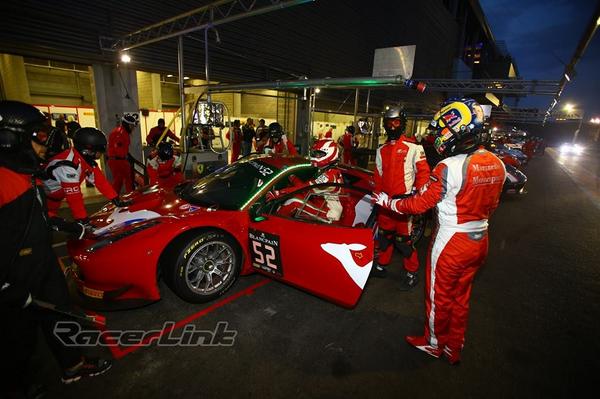
The Spa 24 Hour race began at midnight this morning Eastern Standard Time and in one of the AF Corse Ferrari 458 Italias, along with Italian drivers Michele Rugolo, Andrea Piccini and Australian compatriot Steve Wyatt, is V8 Supercar driver Craig Lowdnes.
The Spa 24 Hour race has been run since 1924 and has at various stages been run with GT Cars, Touring Cars, with the winners being as diverse as the BMW 1800 (New Class) to the Maserati MC12.
This post is not a tale about this years' Spa 24 Hour race though, but rather a quote by Frank Zappa; namely:
You can't be a real country unless you have a beer and an airline. It helps if you have some kind of a football team, or some nuclear weapons, but at the very least you need a beer.
I have no idea in what context this quote was made or even why but it illustrates something I think is reasonably important about how the world and indeed a country itself, has its image projected. In terms of motorsport, when we think of Italy for instance, immediately you think of the tifosi and Ferrari, Germany has its "Silver Arrows" of Mercedes and the Auto Union (now Audi) and Britain has a history of garagistas which includes Aston Martin, Lotus and McLaren, but Australia? It's pretty light on for the rest of the world.
Australia has two notable motorsport projections onto the world stage. Sir Jack Brabham won the Formula One World Championship in 1966 in a car that he built and designed himself (which is impossible today) and... The 1986 Spa 24 Hour race.

Actually, I tell a lie. It was a little more than just the 1986 Spa 24 Hour race. There was also a few rounds of the 1986 European Touring Car Championship as well as a less successful journey to the 1987 Spa 24 Hour race.
As far as I can tell, Australian forays into international motorsport have been few and far between. I imagine that in 1986 and 1987, the happy grumble of a 5-Litre V8 would have been very distinct against the whine of turbos coming from Volvo 240s, Ford Sierra XR4s and the smooth sounds of the BMW 635; only really the 3.5 Litre V8 in the Rover 3500 Vitesses (SD1) would have been comparable.
The sounds of V8s in Corvettes has been heard in GT racing across Europe now for quite some time, and I always wondered why Holden with all its knowledge, know how and experience never really bothered to take on Detroit and beat head office.

The future looks pretty bleak right now.
Frank Zappa's comment that you can't be a real country unless you have a beer and an airline, might be a case of hyperbole but it's worth remembering that in 2017 after the end of car manufacturing in Australia, we will be the only member of the G20 who doesn't produce their own car. Holden as a brand may or may not even exist by then either.
I look at events like the Spa 24 Hours and Le Mans 24 Hours races and think that Australia as a nation, only has a short window of time before there will be no manufacturers to build a car to race on the world stage.
My my; hey hey, it's better to burn now, than to fade away. I don't want to see Australia just fade away. I'd like to see one of the manufacturers (probably Holden) go out with a swan song of ten minutes of noise and confusion; blurted out with the speakers all the way up to eleven; coming out of a 20,000 watt RSL.
I'd like to see a V8 Ute down Mulsanne, or blasting its way past Porsches up Eau Rouge. The window of opportunity for that to happen though is very quickly closing and whilst its nice that Craig Lowdnes is driving a Ferrari at Spa this weekend, I always wondered why no-one ever bothered to go back and make the grandstands rumble like they did almost 30 years ago.
Australia has an airline and a beer and some kind of a football team but soon, we won't have a car... and that's a shame.
July 26, 2014
Horse 1722 - Why Is A Che Guevara Beanie A Thing?
During the winter in Sydney as temperatures head southwards and into single digits, the unofficial uniform scarves and to a lesser extent hats and beanies, comes and settles on the commuting population like some giant flock of woollen migratory birds.
As I write this on Tuesday morning¹, perched on some lady's head at Parramatta Station is a Che Guevara beanie.
I can understand that people like to clad themselves in things that they like to associate themselves with and things they like; I myself I have a wardrobe replete with various football kits and scarves²; I can understand say, a fan of One Direction or 5 Seconds Of Summer³, wanting the merchandise because the mentality in principle is identical. People are very tribal and this extends from our need to belong and to be validated.
Why then is this lady wearing a Che Guevara beanie? Why is a Che Guevara beanie a thing?
Gavrillo Princip is in some quarters of Serbia, regarded as something of a national hero. Princip was the chap who fired the shot that killed Archduke Franz Ferdinand of Austria and thanks to a weird "assassination of Archdukes" clause, started of the chain of events that tilted Europe to total war. Princip fired that shot because he resented yet another foreign power ruling over his country and he wanted to live in a land which was united for all Slavic peoples.
I suppose that the modern Serbs who see him as a hero, and in the light of a history which included Tito and a Yugoslavia which looked vastly different to how Princip might have imagined it, I guess I can sort of understand how Princip might be viewed as even noble in his actions.
Gavrillo Princip, Al Capone, Ned Kelly, Bonnie & Clyde, Captain Moonlight, Bluebeard... all of these people were criminals it must be said and yet there's something of a myth which surrounds them.
Napoleon and his armies marched across Europe and hacked apart six million people and yet even Napoleon is seen today by some as having leadership qualities that n be learnt from.
Wind the clock forward to the year 2245 or even 2345, two hundred years after the end of World War Two and I ask will people look back and see people like Hitler or Stalin as impressive?
We might recoil and be repulsed at the very suggestion of that thought but after everyone that was immediately affected has died, then what? Are we likely to see Hitler or Stalin beanies? Probably maybe...
I mean I have a tie with former Liverpool manager Bill Shankly but unlike Che Guevara (even though they wore both different shades of red) the difference is that "he made the people happy".
How does an Argentine Marxist revolutionary who fought in the Cuban Revolution, which saw Fidel Castro installed as leader of a Communist dictator, which in turn led to poltical executions and a mass exodus of Cubans, become "cool" enough to put on a beanie?
I'm pretty sure that we've seen people dressed up as pirates for fun. I think that that probably has to do a lot with Gilbert and Sullivan's 1879 musical "The Pirates of Penzance". I have seen on the back window of peoples' cars, Ned Kelly's last words "such is life". Occasionally I've even seen stickers on cars (especially utes) of Ned in his makeshift upturned rubbish bin helmet and a couple of guns as well.
Maybe people just think that badness is cool?
Whatever the case, I don't think I'm going to understand why a Che Guevara beanie even exists. I do know that if I was in Che's marketing team, I would have argued for a higher cut on the image rights though.
¹this is the 22nd of July; so hello to everyone in the future.
²I'm currently wearing a Liverpool FC scarf as I scribble this. Most blog posts start out in an exercise book.
³this is where I insert a pop culture reference in a bathetic attempt to look "cool" and down with the kids, yo.
As I write this on Tuesday morning¹, perched on some lady's head at Parramatta Station is a Che Guevara beanie.
I can understand that people like to clad themselves in things that they like to associate themselves with and things they like; I myself I have a wardrobe replete with various football kits and scarves²; I can understand say, a fan of One Direction or 5 Seconds Of Summer³, wanting the merchandise because the mentality in principle is identical. People are very tribal and this extends from our need to belong and to be validated.
Why then is this lady wearing a Che Guevara beanie? Why is a Che Guevara beanie a thing?
Gavrillo Princip is in some quarters of Serbia, regarded as something of a national hero. Princip was the chap who fired the shot that killed Archduke Franz Ferdinand of Austria and thanks to a weird "assassination of Archdukes" clause, started of the chain of events that tilted Europe to total war. Princip fired that shot because he resented yet another foreign power ruling over his country and he wanted to live in a land which was united for all Slavic peoples.
I suppose that the modern Serbs who see him as a hero, and in the light of a history which included Tito and a Yugoslavia which looked vastly different to how Princip might have imagined it, I guess I can sort of understand how Princip might be viewed as even noble in his actions.
Gavrillo Princip, Al Capone, Ned Kelly, Bonnie & Clyde, Captain Moonlight, Bluebeard... all of these people were criminals it must be said and yet there's something of a myth which surrounds them.
Napoleon and his armies marched across Europe and hacked apart six million people and yet even Napoleon is seen today by some as having leadership qualities that n be learnt from.
Wind the clock forward to the year 2245 or even 2345, two hundred years after the end of World War Two and I ask will people look back and see people like Hitler or Stalin as impressive?
We might recoil and be repulsed at the very suggestion of that thought but after everyone that was immediately affected has died, then what? Are we likely to see Hitler or Stalin beanies? Probably maybe...
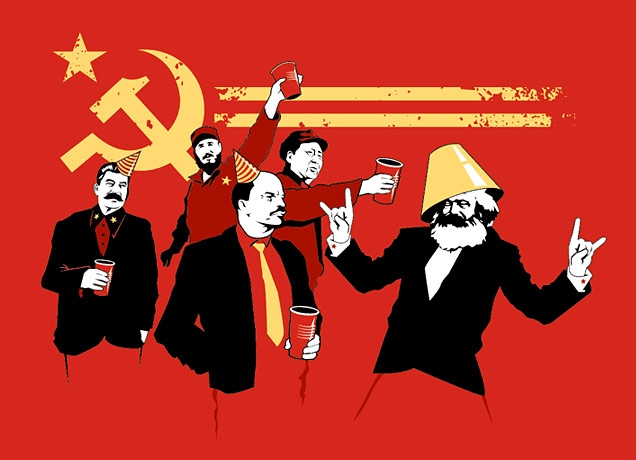
I mean I have a tie with former Liverpool manager Bill Shankly but unlike Che Guevara (even though they wore both different shades of red) the difference is that "he made the people happy".

How does an Argentine Marxist revolutionary who fought in the Cuban Revolution, which saw Fidel Castro installed as leader of a Communist dictator, which in turn led to poltical executions and a mass exodus of Cubans, become "cool" enough to put on a beanie?
I'm pretty sure that we've seen people dressed up as pirates for fun. I think that that probably has to do a lot with Gilbert and Sullivan's 1879 musical "The Pirates of Penzance". I have seen on the back window of peoples' cars, Ned Kelly's last words "such is life". Occasionally I've even seen stickers on cars (especially utes) of Ned in his makeshift upturned rubbish bin helmet and a couple of guns as well.
Maybe people just think that badness is cool?
Whatever the case, I don't think I'm going to understand why a Che Guevara beanie even exists. I do know that if I was in Che's marketing team, I would have argued for a higher cut on the image rights though.
¹this is the 22nd of July; so hello to everyone in the future.
²I'm currently wearing a Liverpool FC scarf as I scribble this. Most blog posts start out in an exercise book.
³this is where I insert a pop culture reference in a bathetic attempt to look "cool" and down with the kids, yo.
July 25, 2014
Horse 1721 - How To Read The Bible For The First Time... Again... Again
I concede that this sounds like an idiotic title for a blog post but bear with me, because I kind of think that even reading the Bible in different ways, can change our mindset enough so that something different can come out. Let me start this post with an even more idiotic way of talking about how to read the Bible.
I once saw a production of Henry V by William Shakespeare, in which everyone on stage was wearing national rubgy kits with names and numbers on the back. This was exceptionally helpful because there are is at least an English XV, a French XV and a couple of Scots. The other thing which I found helpful was the use of outrageous accents.
Shakespeare's plays for a time were often performed in a "traditional" style which after 200 years became highly stilted and stylised. It was as though someone was moving chess pieces about the stage and because Shakespeare wrote for an often rowdy crowd, it would have been a far cry from the lively performances first put on in the theatre. This brings me nicely to the main point.
How something is delivered is often important in conveying understanding and what people actually retain. To understand something and to emotionally engage with the Bible, probably very much helps in the process of owning it, using it and wearing it out (pun intended - think about it).
Think about the Old Testament. For a great deal of time; before any of the gospels and letters were written, this is all that the early Christians actually had.
This is going to sound foreign to Christians I suspect, but in a synagogue, Jewish people will read the Torah (that is the five books of the law of Moses, the Pentateuch) in 54 weekly portions known as "parshahs". The reason why there are 54 is that over the course of a year, the whole of the Torah will have been read.
Rather than reading the Torah, it is chanted and the very last portion of the Torah is read on a holiday called "Simchat Torah", or literally "Rejoicing In The Law". The reason that I'm told that the Torah is read in 54 portions on a continuous basis is to show the idea that the Torah is a circle and never ends.
I rather like that concept. The idea that observing the law (whilst of itself doesn't save someone of their sins) is not only a continuous process but a discipline, I think is probably something worth impressing.
There are three ways to read the Bible; four to properly understand it.
Statements of the form "There are X of a thing; X+1 things et cetera" are commonplace in the Old Testament; they indicate that the list is incomplete.
In the book of Amos for instance, this form is used no less than 8 times at the beginning. Whilst that's helpful to know, even when reading something like this, there are helpful conventions.
In some synagogues (and again I really have no idea how widespread this is), at the end of each of those "There are X of a thing; X+1 things et cetera" which mention in turn the sins of Damascus, Gaza, Tyre, Edom, Ammon and Moab, the congregation will cheer (as I was told by a client of ours at work) but for the last two of Judah and Israel, the congregation will sigh.
In most protestant churches, we don't tend to think of reading the Bible as that much of a participatory thing. The closest that we get I suppose is when there is a collective reading, it can sound like a low murmur. The example from the synagogue to me, suggests something a bit closer in tone to British pantomime - "Oh yes it is"; Oh no it isn't".
So on the first day of the seventh month Ezra the priest brought the Law before the assembly, which was made up of men and women and all who were able to understand. He read it aloud from daybreak till noon as he faced the square before the Water Gate in the presence of the men, women and others who could understand. And all the people listened attentively to the Book of the Law.
- Nehemiah 8:2-3
I wonder if when Ezra for instance, was reading the law how he went about doing it. People didn't exactly have television sets back then and so merely reading "the Law" sort of sounds a little dull to me.
One of the traditions of Purim, involves making a din with boos whenever the name of Haman is mentioned. This stems from the mitzvahs in the Torah in Exodus 17 to "blot out the name of Amalek" because Haman was an "Agagite" which is taken to be from King Agag of the Amalekites.
This hardly seems like a passive sort of congregation, who just sit quietly whilst someone up the front reads to them; though I don't want to disregard the sense that God's word does demand a degree of reverence.
I do wonder though, how passive a congregation is supposed to be though. I think of the young man named Eutychus, who when sitting in a third story window listening to Paul go "on and on", fell sound asleep and dropped three stories to his death below... he got better though.
Then again, I also wonder about the New Testament and particularly about the letters of Paul. They were written in extremely long, breathless, tumbly, bumbly, wibbly-wobbly Koine Greek. Koine was the Greek of the marketplace and scholars who would have studied Aristotle or Plutarch etc. would have been aghast at the way that the language was being mauled.
Even worse is the gospel of Mark. I get the distinct impression that Mark was written both in a hurry and with the intent of trying to convey a sense of excitement. If you were going to write down the story of Jesus who died and rose again to save mankind from their sins and restore man to God, wouldn't you just want to blurt out everything that you possibly could at nineteen to the dozen?
Actually, even when I'm thinking about the process of compiling my notes for this post, the tone of voice of the client of ours I spoke to, rings out loud and clear. He's not a Haredi Jew but I suppose that he is kind of... orthodox? I don't know. Okay, I struggle to use the word "Jewish" as an adjective here; so let's just say that he's a jewy Jewish Jewish person. Anyway, the point is that I've wondered if a lot of people in the Bible would have spoken with those sorts of mannerisms.
I'm not exactly a scholar by a long shot; so I'm not exactly writing from any authority here but isn't it at least worth considering thinking about and perhaps trying to read the Bible with a degree of colour and character about it? If something is God-breathed and is useful for teaching, rebuking, correcting and training in righteousness, then I'm pretty sure it will stand up to bothering to read it in a new light... again.
Every piece of writing does to some degree, belong to the people reading it. If it takes a new perspective to make an effort to own the Bible, then surely that's a good thing, no?
I once saw a production of Henry V by William Shakespeare, in which everyone on stage was wearing national rubgy kits with names and numbers on the back. This was exceptionally helpful because there are is at least an English XV, a French XV and a couple of Scots. The other thing which I found helpful was the use of outrageous accents.
Shakespeare's plays for a time were often performed in a "traditional" style which after 200 years became highly stilted and stylised. It was as though someone was moving chess pieces about the stage and because Shakespeare wrote for an often rowdy crowd, it would have been a far cry from the lively performances first put on in the theatre. This brings me nicely to the main point.
How something is delivered is often important in conveying understanding and what people actually retain. To understand something and to emotionally engage with the Bible, probably very much helps in the process of owning it, using it and wearing it out (pun intended - think about it).
Think about the Old Testament. For a great deal of time; before any of the gospels and letters were written, this is all that the early Christians actually had.
This is going to sound foreign to Christians I suspect, but in a synagogue, Jewish people will read the Torah (that is the five books of the law of Moses, the Pentateuch) in 54 weekly portions known as "parshahs". The reason why there are 54 is that over the course of a year, the whole of the Torah will have been read.
Rather than reading the Torah, it is chanted and the very last portion of the Torah is read on a holiday called "Simchat Torah", or literally "Rejoicing In The Law". The reason that I'm told that the Torah is read in 54 portions on a continuous basis is to show the idea that the Torah is a circle and never ends.
I rather like that concept. The idea that observing the law (whilst of itself doesn't save someone of their sins) is not only a continuous process but a discipline, I think is probably something worth impressing.
There are three ways to read the Bible; four to properly understand it.
Statements of the form "There are X of a thing; X+1 things et cetera" are commonplace in the Old Testament; they indicate that the list is incomplete.
In the book of Amos for instance, this form is used no less than 8 times at the beginning. Whilst that's helpful to know, even when reading something like this, there are helpful conventions.
In some synagogues (and again I really have no idea how widespread this is), at the end of each of those "There are X of a thing; X+1 things et cetera" which mention in turn the sins of Damascus, Gaza, Tyre, Edom, Ammon and Moab, the congregation will cheer (as I was told by a client of ours at work) but for the last two of Judah and Israel, the congregation will sigh.
In most protestant churches, we don't tend to think of reading the Bible as that much of a participatory thing. The closest that we get I suppose is when there is a collective reading, it can sound like a low murmur. The example from the synagogue to me, suggests something a bit closer in tone to British pantomime - "Oh yes it is"; Oh no it isn't".
So on the first day of the seventh month Ezra the priest brought the Law before the assembly, which was made up of men and women and all who were able to understand. He read it aloud from daybreak till noon as he faced the square before the Water Gate in the presence of the men, women and others who could understand. And all the people listened attentively to the Book of the Law.
- Nehemiah 8:2-3
I wonder if when Ezra for instance, was reading the law how he went about doing it. People didn't exactly have television sets back then and so merely reading "the Law" sort of sounds a little dull to me.
One of the traditions of Purim, involves making a din with boos whenever the name of Haman is mentioned. This stems from the mitzvahs in the Torah in Exodus 17 to "blot out the name of Amalek" because Haman was an "Agagite" which is taken to be from King Agag of the Amalekites.
This hardly seems like a passive sort of congregation, who just sit quietly whilst someone up the front reads to them; though I don't want to disregard the sense that God's word does demand a degree of reverence.
I do wonder though, how passive a congregation is supposed to be though. I think of the young man named Eutychus, who when sitting in a third story window listening to Paul go "on and on", fell sound asleep and dropped three stories to his death below... he got better though.
Then again, I also wonder about the New Testament and particularly about the letters of Paul. They were written in extremely long, breathless, tumbly, bumbly, wibbly-wobbly Koine Greek. Koine was the Greek of the marketplace and scholars who would have studied Aristotle or Plutarch etc. would have been aghast at the way that the language was being mauled.
Even worse is the gospel of Mark. I get the distinct impression that Mark was written both in a hurry and with the intent of trying to convey a sense of excitement. If you were going to write down the story of Jesus who died and rose again to save mankind from their sins and restore man to God, wouldn't you just want to blurt out everything that you possibly could at nineteen to the dozen?
Actually, even when I'm thinking about the process of compiling my notes for this post, the tone of voice of the client of ours I spoke to, rings out loud and clear. He's not a Haredi Jew but I suppose that he is kind of... orthodox? I don't know. Okay, I struggle to use the word "Jewish" as an adjective here; so let's just say that he's a jewy Jewish Jewish person. Anyway, the point is that I've wondered if a lot of people in the Bible would have spoken with those sorts of mannerisms.
I'm not exactly a scholar by a long shot; so I'm not exactly writing from any authority here but isn't it at least worth considering thinking about and perhaps trying to read the Bible with a degree of colour and character about it? If something is God-breathed and is useful for teaching, rebuking, correcting and training in righteousness, then I'm pretty sure it will stand up to bothering to read it in a new light... again.
Every piece of writing does to some degree, belong to the people reading it. If it takes a new perspective to make an effort to own the Bible, then surely that's a good thing, no?
July 24, 2014
Horse 1720 - Australia's Prime Ministers - Nos.2, 3 & 4 - Turbulence & Disagreement
II - Alfred Deakin
If Edmund Barton being a reasonable person, couldn't hold together the parliament, suffered poor health and had to resign because of it, then Alfred Deakin's first tilt at being Prime Minister was a total failure.
Barton's resignation was to coincide with the 1903 Federal Election. Deakin would officially take the leadership of the party following the election.
The Protectionist Party, again didn't manage to secure a majority in either the House of Representatives or the Senate and won 26 seats, compared with the Free Trade Party's 24 seats and Labour's 22 seats, all of which individually were short of the 38 seats required for a majority and to form government.
The Australian Labour Party which had promised to support the government on matters of supply but nothing else, didn't see eye to eye with the Protectionists on any other issue and so the government from September 1903 until April 1904 when Deakin resigned, failed to pass a single piece of legislation.
Deakin's first of three occasions as Prime Minister, was marked with in-fighting and poltical malaise. I think that it stands as the least productive government in Australian political history.
Deakin's resignation as Prime Minister was more or less a concession that the parliament was unworkable and the leader of the Labour Party, Chris Watson, who took over the job, found it no easier.

III - Chris Watson
Born in Chile and having both German and New Zealand ancestry, John Christian Watson (Chris Watson), was the first leader from any labour movement in the world to hold executive office.
Watson was a founding member of the New South Wales Labour Party in 1891; was elected to state parliament in 1894 and was a member of the first parliament in 1901. When the Labour Party formally adopted a national administration, the caucus elected him as leader of the party. Though being the Prime Minister from the smaller party of a coalition, meant that he didn't really fare much better than Deakin before him. It didn't help that the composition of the parliament was identical to when Deakin took over the premiership following the 1903 election and would remain so until the next election.
Apart from bills of supply which were necessary to keep the functions of government going, the only act which was passed during Watson's tenure as PM was the Acts Interpretation Act 1904, which as the name suggests was only administrative and not really defining policy.
Watson found the job of Prime Minister as frustrating as Deakin and he resigned the position less than four months after arriving in the job.
Watson would remain Leader of the Australian Labor Party until 1907 and even see the numbers bolstered but he would never again be Prime Minister.

IV - George Reid
As a barrister, he developed a lightning wit, which is borne out by the rather famous quip when a heckler made a comment about his rotundness."What are you going to call it, George?" to which he replied "If it's a boy, I'll call it after myself. If it's a girl I'll call it Victoria. But if, as I strongly suspect, it's nothing but piss and wind, I'll name it after you."
Reid took over from Henry Parkes as leader of the NSW state Free Trade Party and took the logical position as leader of the party at Federal level, following Federation, and led the party to two successive election defeats.
After Barton, Deakin and finally Watson resigned the position of Prime Minister, the Labour party switched their alliance on matters of supply and Reid found himself in the top job. He knew that the leftist Labour party couldn't patch together their differences with the rightist Protectionists and it would only be a matter of time before they would also tire of the rightist Free Trade Party.
Reid's premiership was mostly as fruitless as the previous two and in July 1905, his predictions rang true as Labour again shifted back towards the Protectionists.
II - Alfred Deakin (Again)
George Reid accepted that the Labour party was looking for a more central role of government in the economy and he as Opposition Leader, set about to rebuild the Free Trade Party. Before the election of 1906, the Free Trade Party ran on a platform of anti-socialist policies and duly renamed itself the Anti-Socialist Party.
Deakin on the other hand, found that Labour was a bit more concliatory and even though Reid's Anti-Socialists won 26 seats to Labour's 26, with his own Protectionists falling to 21 in the 1906 election, the Protectionist/Labour coalition held together long enough to pass legislation to establish the Australian currency, Copyrights, Bureau of Census and Statistics, regulations to do with Quarantine, the Bureau of Meteorology, and Labour was able to dovetail a tariffs bill which had the effect of forcing private firms to pay "fair wages" to employees. The Australian Industries Protection Act although it could affect tariffs, still did not give the Commonwealth the power to rule over wages and conditions.
The Protectionists and Labour would eventually renew their old fights though and Deakin's bill for conscription in 1907 was defeated and very heavily argued against by former PM Chris Watson and future PM Billy Hughes.
In November of 1908, the stouch finally came to a conclusion when the Labour Party ended its support for Deakin, instead preferring its own leader Andrew Fisher.
July 23, 2014
Horse 1719 - 5A

Tucked away in our garage is a black and white National television set (even from before the days of National Panasonic) and curiously it has in between channels 5 and 6, the mysterious channel 5A.
5A?!
For reasons that I've never been able to ascertain, in VHF channels which carried sound and vision were stepped in 7MHz increments. Bands I and II, started in the mid 40s and 50s and kept on going into the lower range which coincided with FM radio, and then jumped 36MHz to go from Channel 5 to 5A and then 37MHz to go from Channel 5A to Channel 6.
Even more bizarre is that there is are two gazetted steps of 7Mhz in Band III which run from Channels 9 to 9A and then 10.
As I look at my telly in confusion, I also realise that I probably am officially "old". Let's just say that it's likely that the number of moons that I'm likely to see are probably fewer in number than those that I've already seen.
As we move to digital, the kids of today will never have the joy of tuning into 5A to avoid the snow and confusion on Channel 2 to pick up the ABC. How many people will remember that NBN in Newcastle was not Channel 9 but Channel 3? How about the odddity that Darwin didn't have Channel 9 but Channel 8 and for a very long time didn't even have a Channel 7?
Okay, I find the fact that 5A is a confusing thing but the fact that 9A apparently was a thing but never had a button or a turn dial space on televisions, is bonkers.
The fact that I have an old television which through change of technology is now useless, is entirely unremarkable. There must be lots of people who have old things which they haven't thrown away and no doubt, there probably is some residual value to some collector out there.
However, I'd like to express a little sadness for my old black and white telly.
"She (Random) brandished the watch at him. `You don't understand that there's somewhere this belongs? Somewhere it works? Somewhere that it fits?'
- Mostly Harmless (the fifth of the Hitchhikers' trilogy), Douglas Adams (1992)
My old old black and white telly through no fault of its own, doesn't perform the purpose for which it was intended. You can switch it on all you like but because all of the analogue transmitters are now silent, it will be intently listening for a transmission and never pick anything up ever again.
The somewhere this belongs, the somewhere it works and the somewhere that if fits is a place called the past. The opening line of L.P. Hartley's 1953 book "The Go-Between" says "The past is a foreign country: they do things differently there."
The label for Channel 5A remains a curious relic of the past with an ever increasing lack of context. Channel 9A which I didn't even know existed until I'd looked this up, probably already has passed out of the collective consciousness. I am showing my age here but the things I remember most about Channel 5A were Astro Boy and Sesame Street. Channel 5A was the other station that you could watch if Channel 2 wasn't working for some reason.
Today with a uniform channel allocation across the country, the ABC now lives on 2 and 21 but that all seems a bit mundane compared with the idea that there was a Channel 5A.
Oh yes, don't forget... Channel 8
July 22, 2014
Horse 1718 - It's Full Of Stars
http://www.politico.com/story/2014/07/washington-dc-statehood-president-obama-109186.html#ixzz389kz1fk9
“I think I’ve long believed that D.C. pays — folks in D.C. pay taxes like everybody else. They contribute to the overall well-being of the country like everybody else. They should be represented [in Congress] like everybody else,” Obama said. “And it’s not as if Washington, D.C., is not big enough compared to other states. There has been a long movement to get D.C. statehood, and I’ve been for it for quite some time.”
- US President, Barack Obama, via Politico, 21st Jul 2014
http://www.forbes.com/sites/travisbrown/2014/07/17/six-californias-initiative/
Thanks to the signatures of more than 807,000 concerned Californians, an ambitious idea has moved that much closer to becoming a reality. The “Six Californias” Initiative, sponsored by Silicon Valley venture capitalist Tim Draper, seeks to create areas that are more governable, more productive, and more successful.
- Forbes, 17th Jul 2014
http://www.economist.com/blogs/economist-explains/2013/10/economist-explains-15#sthash.UsrXH9QG.dpuf
Only in 2012 did statehood advocates finally come out on top: in a ballot with two separate questions, a majority voted both in favour of changing the island’s status and for becoming a state if a change did occur. Critics argued that the referendum’s design was rigged to produce a pro-statehood outcome, since even people who voted against a change in status were still asked to select a preferred arrangement other than the current one.
- The Economist, 21st Oct 2013
http://www.slate.com/articles/news_and_politics/history/2012/11/texas_secession_how_the_lone_star_state_could_mess_with_the_rest_of_us.html
Put plainly, Texas agreed to join the union in 1845 on the condition that it be allowed to split itself into as many as five separate states whenever it wanted to, and contingent only on the approval of its own state legislature. For more than 150 years, this right to divide—unilaterally, which is to say without the approval of the U.S. Congress—has been packed away in the state's legislative attic, like a forgotten family heirloom that only gets dusted off every now and then by some politician who has mistaken it for a beautiful beacon of hope.
- Slate, 14th Nov 2012
Okay, let's just run through the summary.
minus: California (-1)
plus: Jefferson, North California, Silicon Valley, Central California, West California, South California (+6)
minus: Texas (-1)
plus: New Texas, Trinity, Gulfland, Plainland, El Norte (+5)
plus: District of Columbia (+1)
plus: Puerto Rico (+1)
All up: 50 - 2 + 13 = 61
It's fun to imagine new flags for the United States. Ever since 1818 when the flag was changed to have 20 stars for the then 20 states (and 13 stripes for the original 13 colonies), every time a new state was added to the union, another star was added on the next 4th of July.
"Old Glory" changed pretty regularly until 1912 when for 47 years following the admission of Arizona and New Mexico, the flag stayed at 48 stars. Alaska was added in 1959 and the flag had 49 stars for one year until 1960 when the 50th and as yet final star was added for Hawaii.
I like the American flag. In the United States its presence is ubiquitous and can be seen on not only official state buildings but on a whole host of private buildings, people's houses and draped over all sorts of things.
The American Flag is as easily as powerful at marking "Brand America" as the Union Flag is for Great Britain or l'Tricolore is for France.
But what is the likelihood of ever seeing a 61 star state flag? I'd say pretty minimal. The admission of extra states to the union is contingent on two things.
Firstly, convincing everyone in the territory which is to become a state that statehood is a good idea.
Secondly, convincing everyone in the rest of the United States that granting said territory statehood is a good idea.
New States may be admitted by the Congress into this Union; but no new States shall be formed or erected within the Jurisdiction of any other State; nor any State be formed by the Junction of two or more States, or parts of States, without the Consent of the Legislatures of the States concerned as well as of the Congress.
- Article Four, Section 3, Clause 1, US Constitution.
Now I know that this is going to sound very wibbly-wobbly and like a tangled ball of nonsense but how a nation of people feels about itself, depends on how that nation of people feels about itself.
Most obviously that sense of itself is when a nation compares itself to another one (usually in the context of asserting independence), however if you look at the concept of statehood within a bigger thing called a nation, there's often far less of a distinction. No doubt the people of Sacremento, San Francisco, Los Angeles or San Diego are probably nominally fine with calling themselves Californians.
If you look at the admission of the last two states into the union, Alaska and Hawaii, they were set against the backdrop of the Cold War. Alaska and Hawaii were both physically within the realm of the reach of firepower of what was then the USSR and so it made perfect sense that they wanted "to form a more perfect Union" with the United States. I don't know how statehood would necessarily protect you against an all-out nuclear war but at least you'd have a say in congress, whilst you were being blown to pieces. It's one thing to have annihilation, you don't also need anarchy.
I just don't know if in 2014, whether the same sort of impetus exists for a potential 13 extra states to join.
For extra states to join the United States, I suspect that the biggest requirement is that it has to "feel right" and I'm not sure that that is the case.
Weird Aside:
A shop in Dallas, Texas sold a 61-star flag:
http://www.wfaa.com/news/local/Dallas-store-sells-US-flag-with-61-stars-97280689.html
"I kind of let them know there are 50 states in the United States, and they need to correct this — or at least get the Chinese supplier to correct this,"
- WFAA-TV Channel 8, 27th Jun 2010.
Naturally, Americans are very very very protective of their flag. Maybe, that the Chinese flag supplier has access to time travel... and that their 61-star flag is from the future!
(Who honestly didn't see this coming?)
“I think I’ve long believed that D.C. pays — folks in D.C. pay taxes like everybody else. They contribute to the overall well-being of the country like everybody else. They should be represented [in Congress] like everybody else,” Obama said. “And it’s not as if Washington, D.C., is not big enough compared to other states. There has been a long movement to get D.C. statehood, and I’ve been for it for quite some time.”
- US President, Barack Obama, via Politico, 21st Jul 2014
http://www.forbes.com/sites/travisbrown/2014/07/17/six-californias-initiative/
Thanks to the signatures of more than 807,000 concerned Californians, an ambitious idea has moved that much closer to becoming a reality. The “Six Californias” Initiative, sponsored by Silicon Valley venture capitalist Tim Draper, seeks to create areas that are more governable, more productive, and more successful.
- Forbes, 17th Jul 2014
http://www.economist.com/blogs/economist-explains/2013/10/economist-explains-15#sthash.UsrXH9QG.dpuf
Only in 2012 did statehood advocates finally come out on top: in a ballot with two separate questions, a majority voted both in favour of changing the island’s status and for becoming a state if a change did occur. Critics argued that the referendum’s design was rigged to produce a pro-statehood outcome, since even people who voted against a change in status were still asked to select a preferred arrangement other than the current one.
- The Economist, 21st Oct 2013
http://www.slate.com/articles/news_and_politics/history/2012/11/texas_secession_how_the_lone_star_state_could_mess_with_the_rest_of_us.html
Put plainly, Texas agreed to join the union in 1845 on the condition that it be allowed to split itself into as many as five separate states whenever it wanted to, and contingent only on the approval of its own state legislature. For more than 150 years, this right to divide—unilaterally, which is to say without the approval of the U.S. Congress—has been packed away in the state's legislative attic, like a forgotten family heirloom that only gets dusted off every now and then by some politician who has mistaken it for a beautiful beacon of hope.
- Slate, 14th Nov 2012
Okay, let's just run through the summary.
minus: California (-1)
plus: Jefferson, North California, Silicon Valley, Central California, West California, South California (+6)
minus: Texas (-1)
plus: New Texas, Trinity, Gulfland, Plainland, El Norte (+5)
plus: District of Columbia (+1)
plus: Puerto Rico (+1)
All up: 50 - 2 + 13 = 61
It's fun to imagine new flags for the United States. Ever since 1818 when the flag was changed to have 20 stars for the then 20 states (and 13 stripes for the original 13 colonies), every time a new state was added to the union, another star was added on the next 4th of July.
"Old Glory" changed pretty regularly until 1912 when for 47 years following the admission of Arizona and New Mexico, the flag stayed at 48 stars. Alaska was added in 1959 and the flag had 49 stars for one year until 1960 when the 50th and as yet final star was added for Hawaii.
I like the American flag. In the United States its presence is ubiquitous and can be seen on not only official state buildings but on a whole host of private buildings, people's houses and draped over all sorts of things.
The American Flag is as easily as powerful at marking "Brand America" as the Union Flag is for Great Britain or l'Tricolore is for France.
But what is the likelihood of ever seeing a 61 star state flag? I'd say pretty minimal. The admission of extra states to the union is contingent on two things.
Firstly, convincing everyone in the territory which is to become a state that statehood is a good idea.
Secondly, convincing everyone in the rest of the United States that granting said territory statehood is a good idea.
New States may be admitted by the Congress into this Union; but no new States shall be formed or erected within the Jurisdiction of any other State; nor any State be formed by the Junction of two or more States, or parts of States, without the Consent of the Legislatures of the States concerned as well as of the Congress.
- Article Four, Section 3, Clause 1, US Constitution.
Now I know that this is going to sound very wibbly-wobbly and like a tangled ball of nonsense but how a nation of people feels about itself, depends on how that nation of people feels about itself.
Most obviously that sense of itself is when a nation compares itself to another one (usually in the context of asserting independence), however if you look at the concept of statehood within a bigger thing called a nation, there's often far less of a distinction. No doubt the people of Sacremento, San Francisco, Los Angeles or San Diego are probably nominally fine with calling themselves Californians.
If you look at the admission of the last two states into the union, Alaska and Hawaii, they were set against the backdrop of the Cold War. Alaska and Hawaii were both physically within the realm of the reach of firepower of what was then the USSR and so it made perfect sense that they wanted "to form a more perfect Union" with the United States. I don't know how statehood would necessarily protect you against an all-out nuclear war but at least you'd have a say in congress, whilst you were being blown to pieces. It's one thing to have annihilation, you don't also need anarchy.
I just don't know if in 2014, whether the same sort of impetus exists for a potential 13 extra states to join.
For extra states to join the United States, I suspect that the biggest requirement is that it has to "feel right" and I'm not sure that that is the case.
Weird Aside:
A shop in Dallas, Texas sold a 61-star flag:
http://www.wfaa.com/news/local/Dallas-store-sells-US-flag-with-61-stars-97280689.html
"I kind of let them know there are 50 states in the United States, and they need to correct this — or at least get the Chinese supplier to correct this,"
- WFAA-TV Channel 8, 27th Jun 2010.
Naturally, Americans are very very very protective of their flag. Maybe, that the Chinese flag supplier has access to time travel... and that their 61-star flag is from the future!
(Who honestly didn't see this coming?)
July 21, 2014
Horse 1717 - Australia's Prime Ministers - No.1 - Edmund Barton

I - Edmund Barton
Edmund Barton was Australia's First Prime Minister. He almost was not; twice.
Barton became a member of parliament for the Electoral district of University of Sydney; this was before many people even had the right to vote. Barton was nominally a member of the faction in state parliament who supported Free Trade, though was appointed Attorney-General of New South Wales under Premier George Dibbs's Protectionist government (who supported the imposition of tariffs). Yet Barton doesn't even get his first mention in the history books for being Attorney-General.
On 7th Feb 1879, an England cricket tour led by England's second ever captain, George Harris, was playing against a New South Wales side at what is now the Sydney Cricket Ground. Edmund Barton was one of the umpires at that match.
The other umpire, whom it was suspected of being employed by the English in a match-fixing scandal, gave Australian batsman Billy Murdoch "run out" and a riot broke out. which Barton helped to diffuse. The publicity as a result of that, probably helped him get elected in the first place.
As a result of being Attorney-General of NSW, Barton was a member of a delegation sent to London to help persuade the British House of Commons to pass the bills which would create the new Commonwealth of Australia. In that delegation was also Alfred Deakin and the main author of the constitution, Samuel Griffith who was the Premier of Queensland.
Barton though almost missed out on being the first Prime Minister of the new commonwealth because the Governor-General John Hope, the 7th Earl of Hopetoun (Lord Hopetoun), had thought it logical that the Premier of New South Wales Sir William Lyne, should be the Prime Minister on the grounds of seniority until a proper nationwide election was held.
Lyne though was a strong Protectionist and an anti-federalist; and many potential ministers such as Deakin, simply refused to serve in any cabinet that he might lead. Lyne in time turned down the position and Lord Hopetoun instead appointed Barton as the caretaker Prime Minister until an election was held. This in time would become known as the "Hopetoun Blunder".
When the 1901 election finally came around, Barton's Protectionist Party won 31 seats to George Reid's Free Trade Party who claimed 28; both were short of the 38 out of 75 seats required to form government in their own right.
Seeing as both the Protectionists and the Free Traders were both centre-right parties and wouldn't negotiate with each other, Barton had to secure supply on the floor of the house by forming a sort of coalition with the members from the state Labor Parties who still hadn't formally established a national administration (actually, only the Free Trade Party was the only properly national party).
In just over two years, the parliament under Edmund Barton would go from a relatively unordered group of members from six states to something that looked a bit more like the current two-party system. Essentially the parliament the parliament was made up of what would become two factions of the Liberal Party and the Labor Party as a third and minor party but as kingmaker.
Barton's Protectionist government lived up to its name and within the year it had introduced with amounted to the White Australia policy and enacted testing of immigrants to keep potential migrants from Asia and the Pacific out. Immigration tests could be done in various European languages, which since Asian migrants couldn't very well pass at the time, would not be accepted as migrants. This might sound all a bit strange to a modern set of sensibilities (on the basis of racism and common decency), considering that to pass the legislation the centre-right Protectionist party needed help from a centre-left Labor Party but it's worth remembering that in 1901, society was quite different and the Labor Party particularly in Queensland, thought that Pacific Islanders would undercut white people in terms of wages prices and thus take their jobs.
Barton's government did pass legislation to extend the franchise to women in 1902; so I suppose that in that respect they appear relatively progressive.
In addition to removing the formal customs duties between the states, the Barton Government moved on matters such as imposing tariffs on foreign goods and establishing the armed forces.
Barton's government faced a crisis when his Minister for Trade and Customs, Charles Kingston, found it increasingly difficult to negotiate legislation which would impose very high tariffs to protect fledging Australian manufacturing industries and so resigned in July 1902. This brought into question Barton's ability to lead the party and the stress probably got to him, as he collapsed in his offices in parliament. Due to declining health, Barton resigned his position as Prime Minister in September of 1903 and was succeeded by Alfred Deakin who largely left the cabinet unchanged. Barton would later go on to as Chief Justice of the High Court of Australia.
I think that what Edmund Barton teaches us is that politics is a difficult game. He was a reasonable man and that is evidenced by the fact that he was selected to be the care taker Prime Minister before the first election. The problem is that reasonableness is sometimes not enough. The parliament sometimes has the nickname of the "bear pit" because unwary people can get metaphorically mauled in there; Barton was one of those.
Subscribe to:
Posts (Atom)